Is Wrapping a Car Yourself Feasible? A Guide to DIY Car Wrap Installation Difficulty at Home
You’re standing in your garage, vinyl in hand, wondering if you can really change your car’s color without professional help. I’ve been there, staring down the long, flat hood of my Ford F-150 and the delicate curves of my Porsche 911, asking myself the same question.
Based on wrapping those vehicles and others, this article will walk you through honestly assessing your patience and skill, the absolute must-have tools, proper paint surface decontamination, techniques for handling simple flat panels versus complex bumpers and mirrors, and how to finish edges without lifting.
Misjudge the adhesive or rush the application, and you will be peeling off a wrinkled, bubbled mess that could leave permanent residue on your clear coat.
Who Should (and Shouldn’t) Try a DIY Car Wrap?
Can you wrap a car yourself? Absolutely. I have done sections on my own cars. The real question is whether you should try a full diy wrap on your own car. That answer depends on you.
The ideal candidate has extreme patience. I mean the kind of patience you need to watch paint dry, literally. You need good dexterity. Your hands should be steady for cutting vinyl millimeters from your clear coat. A simple car is best. Think my Honda Odyssey, with its large, flat panels. A garage is your biggest ally. It gives you a clean, controlled space.
If you lack any of these, reconsider.
You should avoid a DIY wrap if you are a perfectionist. My black BMW 3 Series shows every flaw. A wrap will have seams and slight imperfections. You must accept that. Avoid it if you own a complex bodied car. My Porsche 911 has curves and vents that demand a pro’s touch. Do not try it if you lack 2-3 full days. This is not a weekend afternoon project. And never expect a “perfect” finish on your first try. You will learn through mistakes.
Many ask, can I wrap my car outside? You can, but I do not recommend it. Wind will blow dust onto your adhesive. Sun can overheat the vinyl, making it stretch poorly. A shaded, windless spot is critical. I wrapped a mirror cap on my Ford F-150 outside once. A gust of wind ruined it. A garage is vastly superior. It offers still air and consistent light.
DIY Wrap Cost vs. Professional: The Real Numbers
Let’s talk about diy car wrap cost. Online forums like Reddit often quote low numbers. The real diy car wrap price includes everything.
First, the vinyl. For a full sedan, a roll of quality cast vinyl costs $500 to $800. Tools are not optional. A professional heat gun is $50. A good squeegee set is $30. Precision knives are $20. Isopropyl alcohol, spray bottles, and microfiber towels add another $50. Then, budget for waste. You will make cuts too deep or stretch a panel too far. Add at least $200 for wasted material from mistakes. Your true diy cost is $800 to $1,100.
Now, compare that to a professional. A full wrap on a sedan or SUV averages $2,500 to $4,000. So, you might save $1,500 to $2,000. But consider DIY car wrap vs paint job. A quality repaint starts around $5,000. Wrapping is a cheaper color change, but it is not free.
The hidden cost is your time. A professional crew wraps a car in two days. Your first attempt will take 30 hours or more, spread over a week. Is saving $2,000 worth those hours of frustrating, meticulous work? For my daily driver, maybe. For a show car, never.
Tools & Chemicals: The DIY Wrap Arsenal
Do not buy a cheap kit. The tools are often flimsy. Buy each item separately for better quality. This is your mandatory list.
- High quality cast vinyl. Not calendared. Cast vinyl, like 3M or Avery, stretches and conforms without shrinking back. Calendared vinyl is for flat signs, not car curves.
- A professional grade heat gun with adjustable temperature. A hair dryer lacks the heat and control. You need to warm vinyl gently, not melt it.
- A dedicated hard and soft squeegee set. Use the hard squeegee for flat panels. The soft one wraps around curves without scratching.
- Precision wrap knives. OLFA blades are my choice. They are sharp and replaceable. Dull knives tear vinyl.
- 70% isopropyl alcohol mix. Mix it with distilled water in a spray bottle. Higher percentages evaporate too fast. Use this to clean the paint perfectly before applying vinyl.
- A spray bottle for application solution. A few drops of baby shampoo in water helps the vinyl slide before you squeegee it down.
- Lint free microfiber towels, 350 GSM or higher. Cheap towels leave fibers that get trapped under the vinyl. I use the same ones I use on my Tesla’s glass.
- Painter’s tape. Use it to mark lines and hold vinyl in place before cutting.
- A clean, well lit space. You must see every speck of dust and every bubble. My garage has LED shop lights for this reason.
Buying tools separately costs more upfront, but it saves you from failure. I learned this on my Mazda Miata. A cheap kit’s vinyl would not stretch over the fender. It ripped. Quality tools feel different in your hand. They make the work possible.
Your Car’s Shape Dictates the Difficulty
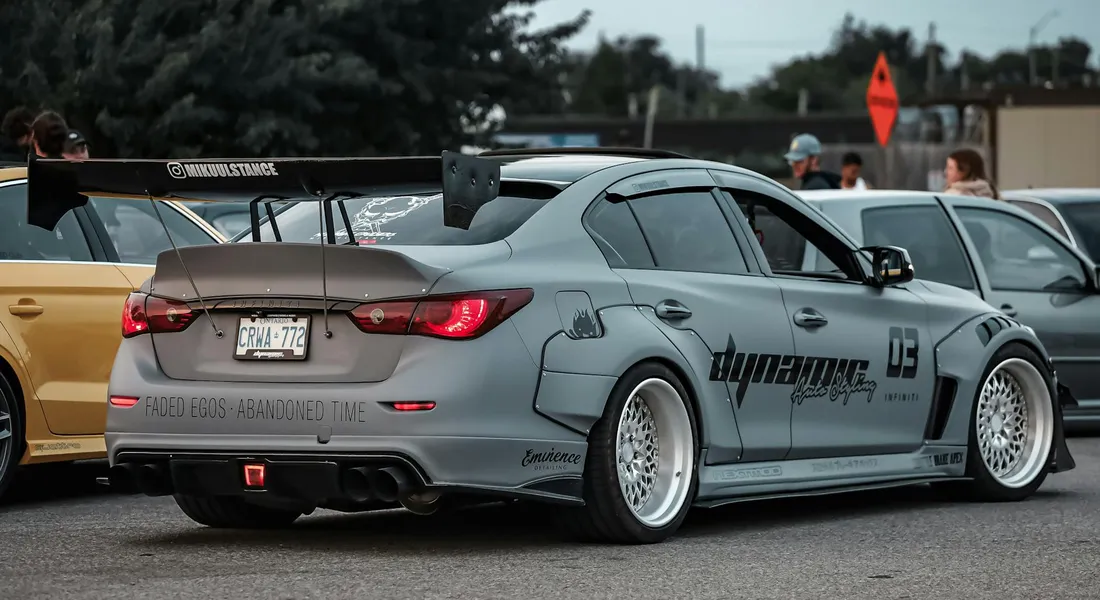
Can any car be wrapped? Yes. Absolutely. Any vehicle—from a boxy old Volvo to a curvy new Corvette—can be covered in vinyl. The real question is not “can it,” but “how hard will it be.” The answer varies wildly based on one thing: geometry.
Think of vinyl wrap like a thick, sticky gift wrap. Laying it flat on the hood of a trunk is simple. Making it conform to a complex, moving shape without wrinkling, tearing, or lifting is where the art lies. Your first project’s success depends heavily on the canvas you choose.
I learned this on my own cars. Wrapping the roof, hood, and doors of my Tesla Model 3 was a solid 6 out of 10 in difficulty. The panels are famously flat, the door handles are recessed, and the body lines are sharp but manageable. It’s a forgiving design for a beginner.
Then there’s my 1995 Mazda Miata. Wrapping its front bumper is a 10/10 nightmare. The bumper is one giant, compound curve. It bulges out, wraps around the sides, and dives into tight crevices by the headlights. A single panel here has more challenging geometry than the entire side of my Tesla. Tackling this as your first wrap is a recipe for wasted material and frustration.
What Makes a Panel “Hard” to Wrap?
It comes down to curves and corners. Simple panels are mostly flat with gentle curves. Hard panels look like they were sculpted by wind.
- Deep Body Lines and Sharp Creases: These are the pronounced grooves running along your doors or fenders. The vinyl must be stretched down into the valley and stay stuck. On my black BMW, the character line along the side is so sharp it can easily cause the film to split if you over-stretch it. You need heat, patience, and a hard squeegee to work it in slowly.
- Complex Bumpers and Fascias: These are the hardest parts on most cars. They are not one curve but many curves intersecting. My Honda Odyssey’s front bumper has a concave section under the grille, convex curves around the fog lights, and sharp corners at the edges. Each of these zones requires a different stretching technique and often needs to be done in sections with seams or relief cuts.
- Large Concave or Convex Curves: A big, smooth dome (convex) like a modern fender is challenging but doable with strategic stretching. A large inward curve (concave), like the area behind the rear wheel on my Porsche 911, is brutal. The film wants to bridge the gap. You must use a lot of heat and tension to pull it into the cavity, which risks thinning the vinyl and compromising its durability.
Choose a simple, flat panel for your first attempt. A hood, a roof, or a trunk lid on a sedan gives you a fighting chance to learn the feel of the material without fighting physics.
A Quick Note on Wrapping Rims
The outline asks: can car rims be wrapped? Technically, yes. You will see videos of it. I must tell you this is an expert-level application. Rims experience extreme forces-heat from brakes, impact from road debris, and constant bombardment by water and chemicals. Even professionally installed rim vinyl requires frequent inspection and maintenance.
For a DIYer, the combination of tight concave curves, the need for precise seam placement, and the extreme wear environment makes it a poor first project. The film will likely fail quickly at the edges, looking worse than the original wheel. If you want to change your wheel color, consider plasti-dip for a temporary change or proper powder coating for a permanent solution. Save the wrap for the body.
The Step-by-Step Reality of a DIY Wrap
Let’s walk through what it really takes. This is where most hopeful projects hit the wall. It looks easy in a time-lapse video. The reality is a test of patience, touch, and humility.
1. The Non-Negotiable Prep Work
You cannot skip this. If your paint isn’t perfectly clean, the vinyl will not stick. I mean surgical clean. On my black BMW, I spend more time prepping for a wrap than I do on some full paint corrections. However, it’s all worth it when you wash and maintain a vinyl car wrap properly afterward.
Start with a decontamination wash. Use a strong car shampoo and a wash mitt you trust. Rinse thoroughly. Then, you must clay bar the entire surface. Run your hand inside a plastic sandwich bag over the paint; if it feels gritty, it is not ready for vinyl. The clay will grab every speck of embedded rail dust and fallout. Any piece left behind becomes a visible bump under the wrap.
After claying, a full isopropyl alcohol wipe-down is mandatory. Mix 70% isopropyl alcohol with 30% distilled water in a spray bottle. Soak a clean microfiber, wring it out, and wipe every square inch of the panel. This strips all wax, sealant, and oils. Your paint should squeak. If you applied a ceramic coating last year, you must polish it off entirely. The vinyl adhesive will not bond to silicone.
2. The First Panel: A Humbling Experience
Start with a flat, simple panel. A hood or a door on your kid’s Odyssey is a better teacher than the front bumper of your 911. Measure your vinyl, leaving at least 3-4 inches of excess on all sides. Rough cut your piece.
Peel back about a foot of the backing paper. This is the “tack and slide” phase. With a helper holding the loose vinyl, position the sticky edge along the top of the panel. Lightly tack it down. Now, slowly peel the backing paper away with one hand while using a soft squeegee in the other to gently press the vinyl down. Your goal here is to lay the vinyl without major wrinkles, working out small air pockets as you go.
The feel is everything. Hold the squeegee at a shallow, 45-degree angle. Use firm, overlapping strokes from the center outward. You will see bubbles. Do not panic. Most are just trapped air you can push to the nearest edge. The first panel teaches you that vinyl has a mind of its own. It will want to crease. It will stick where you don’t want it to. This is where many people quit.
Detailer’s Pro-Tip: The Heat Gun Dance
Heat is your tool for shaping, but it is also your enemy. I have melted a test piece on my old Miata’s fender. You learn fast.
Keep the heat gun moving. Constantly. Use a low or medium setting and sweep it in a 6-inch circular pattern over the area you’re working on. Never, ever focus the heat on one spot. To test the temperature, hold the back of your hand close to the vinyl. It should feel warm and pliable, not hot to the touch.
You use heat to relax the vinyl’s memory, allowing it to stretch gently over curves like a wheel arch or mirror. Do not force it. Apply light tension with your gloved hand and warm the material until it relaxes and conforms. Later, after trimming, you use heat again to “post-heat” or “activate” the adhesive. A final, careful pass along every sealed edge ensures the adhesive flows and locks down, preventing lift.
3. Trimming & Sealing Edges: The Make-or-Break Moment
Now your vinyl is on, but you have inches of overhang. You need to cut it away. This moment is pure tension. Use a brand new, sharp blade in your wrap knife. I change blades every panel or two. A dull blade will tear and drag.
Apply light pressure. Let the sharpness of the blade do the work. Your other hand stretches the vinyl taut away from the cut line. The goal is to cut through the vinyl without touching the clear coat beneath. One slip, one twitch, and you are looking at a deep scratch in your paint that requires repair. For complex areas, you “knick” the vinyl-making small, shallow cuts to help it lay flat before a final trim.
Once trimmed, you must seal every edge. This is the post-heat I mentioned. Go back along every cut line with your heat gun on low, warming the edge and using a soft microfiber to rub it down firmly. This embeds the adhesive. If you skip this, you will be chasing lifted edges with a credit card in a week. The vinyl will collect dirt and begin to peel. Properly post-heated edges should be smooth, flat, and invisible to your fingernail.
Common DIY Wrap Disasters & How to Fix Them
Every first-time wrapper creates a masterpiece of mistakes. I have wrinkled more vinyl than I care to admit. The key is not to panic. Most errors are fixable if you catch them before the adhesive fully sets. Let’s walk through the usual suspects and how to fix them.
Wrinkles, Bubbles, and Lifted Edges
These three are the trifecta of vinyl wrap frustration. They look bad, but you can often save the film without starting over.
A wrinkle is a permanent fold in the material, and it’s almost always caused by rushing. You try to lay down too much film at once, or you stretch it over a complex curve without enough heat. A bubble is a trapped pocket of air or slip solution. Lifted edges happen when contamination (dust, lint) gets under the film or you didn’t seal the edge properly.
Here is how you fight back.
- For a fresh wrinkle or bubble, peel the vinyl back just past the problem area. Mist a little fresh slip solution on both the panel and the adhesive side of the vinyl. This re-activates the glue and gives you slip to work with.
- Lay the film back down slowly. Use your squeegee from the center out, pushing the air or the wrinkle toward the nearest edge. Apply firm, even pressure.
- For a lifted edge, clean the area under the lift with isopropyl alcohol and a lint-free cloth. Heat the edge of the vinyl and the panel thoroughly. Press the edge back down with the hard edge of your squeegee, holding it for a few seconds to let the adhesive bond.
You will ask, when is a section a total loss? If you’ve stretched the vinyl so thin it looks shiny and distorted, or if a wrinkle has creased and contaminated the adhesive, it’s done. You must peel it off, discard that piece, and cut a new one. Trying to save a badly compromised piece wastes more time and material.
Longevity Concerns: How Long Will My DIY Wrap Last?
A professional wrap, installed in a climate-controlled booth, typically lasts five to seven years. Your home garage result will be different. With minor imperfections, a careful DIY wrap might look great for one to three years before edges begin to lift or sun exposure causes noticeable color change. This is the real answer to DIY car wrap longevity, much shorter than vinyl wraps applied professionally. Your prep and post-care decide its fate.
Care is non-negotiable. Hand wash only. The spinning brushes at a tunnel wash will grab and peel any weak edge instantly. Use a mild car shampoo and soft microfiber mitts. Dry with a clean drying towel to prevent water spots.
After a few months, protect it. A spray sealant made for vinyl wraps adds a slick layer that repels dirt and UV rays. I use one on my Porsche’s PPF every few months. It makes cleaning bug splatter off the front bumper much easier.
Now, can you PPF a wrapped car? Technically, yes. Paint Protection Film can be applied over a vinyl wrap. It adds a sacrificial, self-healing layer against scratches and stains. But this is a pro-level, expensive upgrade. Applying PPF requires even more skill than vinyl. For a DIY project, it’s often better to just enjoy your wrap and plan to re-wrap or remove it when it shows its age. Adding another complex film on top multiplies the difficulty and cost. So when weighing vinyl wrap versus paint protection film, consider what you value most: appearance, cost, and maintenance. The right choice often comes down to your goals for protection vs. aesthetics.
Smart Alternatives to a Full DIY Wrap
Committing to wrapping your entire car is a massive project. I learned that the hard way on a quiet weekend with my Ford F-150. You do not have to choose between a full professional job and a risky solo mission on your daily driver. There are smart, middle-ground paths that let you build real skill without the sleepless nights.
Start With a Single Panel or Roof Wrap
Your first wrap should not be a bumper. Start with a single, flat panel like a hood or roof. These surfaces are forgiving. A mistake here is easier to fix or redo without ruining the car’s look. It builds your confidence with the vinyl’s stretch and the heat gun’s touch. Remember, even if you make a mistake, fixing a car wrap repair is easier on flat surfaces.
I practiced on the roof of my white Tesla Model 3. The large, flat surface was perfect for learning how to lay the film without trapping air bubbles. Mastering a roof or hood teaches you the core skills of squeegee work and post-heating without the pressure of complex curves.
For a true beginner project, look inside your car. Wrapping interior trim pieces like glossy dashboard accents or door handles is excellent practice. The vinyl is smaller, the stakes are lower, and you get a feel for adhesive behavior. The piano black trim in my BMW 3 Series was a constant swirl magnet; wrapping it in a matte vinyl was a practical solution that looked great.
Consider a Professional for the Hard Parts
Be honest about your limits. A hybrid approach saves money and sanity. You handle the large, flat sections like the roof, hood, and door skins. Then, you pay a professional to tackle the bumpers, mirrors, and door handles.
Bumpers are a different world. They have deep recesses, sharp contours, and compound curves that demand advanced stretching and relief cutting. Hiring a pro for just the complex areas guarantees a clean finish where eyes naturally go, while you still get the hands-on experience. I wrapped the doors on my Honda Odyssey but left the front and rear bumpers to a shop. The result was seamless, and I avoided the frustration of ruined material on the toughest parts.
What About Shrink Wrap for Storage?
People often hear “wrap” and think of the thick plastic used to bundle boats or protect cars in storage. That is shrink wrap, and it is not a cosmetic vinyl. Shrink wrap is a polyethylene film meant for short-term outdoor protection; it will ruin your paint if left on as a permanent layer. You apply it with a heat gun to create a tight, waterproof seal, then you cut it off when the storage period ends. A cosmetic vinyl wrap uses a flexible, adhesive-backed material designed to look good and last years. Do not mix up the two processes.
Your DIY Wrap Verdict
After wrapping the hood of my F-150 and the mirrors on my Miata, I know the single most important rule: flawless surface preparation is everything. Without it, even premium vinyl will not stick right or look smooth.
Ignore this, and you will waste money on a bubbled, peeling mess that shows every dirt speck underneath.
Industry References
- HOW TO VINYL WRAP A CAR AND CARE FOR IT – THE FULL DIY GUIDE
- DIY Car Wrap Step By Step Guidelines – vinylfrog
- How to Vinyl Wrap a Car | DIY FULL GUIDE – RAXTiFY
Max Gunther
Max is an automotive enthusiast having worked as a car mechanical and in interior detailing service for over 25 years. He is very experienced in giving your old car, a new fresh vibe. He has detailed many cars and removed very tough smells and stains from all kinds of cars and models, always ensuring that his work and advice helps his customers. He brings his first hand experience to his blog AutoDetailPedia, to help readers breath new life into their car interiors.