How Do You Repair Deep Scratches in Car Paint? Assessment, Primer, and Removal Techniques
Seeing a deep scratch cut into your car’s clear coat is a gut punch. You need to know if it’s a DIY fix or a professional job before rust sets in.
I will guide you through my hands-on process, covering how to assess scratch depth accurately, select the right primer for adhesion, and execute removal techniques for large damage.
Skip proper assessment and primer, and you risk permanent rust or a repair that oxidizes and peels.
Key Takeaways: The Reality of Fixing Deep Scratches
A deep scratch is different. You feel it catch your fingernail. It shows white or grey. That means it has cut through the clear coat and into the color layer, sometimes all the way to the primer or bare metal. You cannot polish this away. The fix is a process of building the paint back up, layer by layer.
The core process is always the same. Clean the area. Assess the depth. Sand to create a smooth, tapered edge for new paint to grip. Apply primer if you see bare metal. Fill the scratch with color paint in thin layers. Apply new clear coat. Then, sand and polish that clear coat until it blends seamlessly with the surrounding factory finish. Protect your work with wax or sealant.
You need to block off a good chunk of a day for a single scratch, with most of that time spent waiting for paint to dry. The active work might only be 45 minutes, but you must allow 20-30 minutes between each thin coat of paint and clear coat to flash off. From wash to final polish, plan on 2 to 4 hours of real-world time.
This is an intermediate skill. It is not just wiping something on. It requires patience, a steady hand for applying tiny amounts of paint, and some comfort with a polisher. If you have successfully compounded out swirls before, you have the foundation for this.
The cost to do it yourself is almost all in the tools and materials. A quality touch-up paint pen, sandpaper, primer, and a bottle of compound might total $50. A professional repair for the same scratch could be $300 or more. For one or two isolated scratches, doing it yourself is very cost-effective. You are paying with your time and focus, not your wallet.
Your Deep Scratch Repair Arsenal: Tools & Chemicals
Gathering the right tools first is 80% of the battle. Using the wrong cloth or skipping a step will show in the final result. Here is exactly what you need on your workbench.
Rubbing Alcohol (99% Isopropyl): This is your degreaser. Before you sand or paint anything, you must wipe the area with alcohol to remove every trace of wax, oil, or detail spray. The 99% version evaporates fastest, leaving zero residue. Do not use a glass cleaner or a quick detailer for this step.
Microfiber Towels: You need two types. Use a softer, lower GSM (around 250) towel for wiping away alcohol and cleaning sanding residue. For the final buffing of polish, you need a plush, high-GSM towel (350 or higher) to be gentle on your fresh clear coat. I keep a stack of the cheap ones for dirty jobs and my premium towels for final touches.
Sanding Blocks (Foam-Backed): Your fingers create pressure points. A small foam block keeps the sandpaper perfectly flat. You need two grits: 2000-grit to level the edges of the scratch and 3000-grit to refine the area before polishing. Always use them wet-keep a spray bottle of water handy to lubricate the surface.
Touch-Up Paint: Get an exact factory match. Your car’s color code is on a sticker in the driver’s door jamb. Options are a pen with a ball tip, a small brush-in-a-bottle, or a spray can. For a single scratch, the brush-in-a-bottle gives the most control. For a longer scrape, light sprays from an aerosol can work better. Doing this as a diy car paint touch up can save money and give you control. It’s a practical skill to learn for minor car repairs. My BMW’s Jet Black paint taught me that even a perfect match might look slightly off in certain light-that’s normal.
Scratch Repair Primer: This is non-negotiable if you see any dull grey primer or, worse, shiny bare metal in the scratch. Color paint will not adhere properly to metal. This primer is a thin, high-adhesion layer that goes on first. It is usually in a small pen applicator.
Clear Coat Pen: This is the final paint layer that gives depth and gloss. After your color paint is filled and dry, you apply the clear coat. Do not skip this. Your new paint will look flat and chalky without it, and it will not be protected.
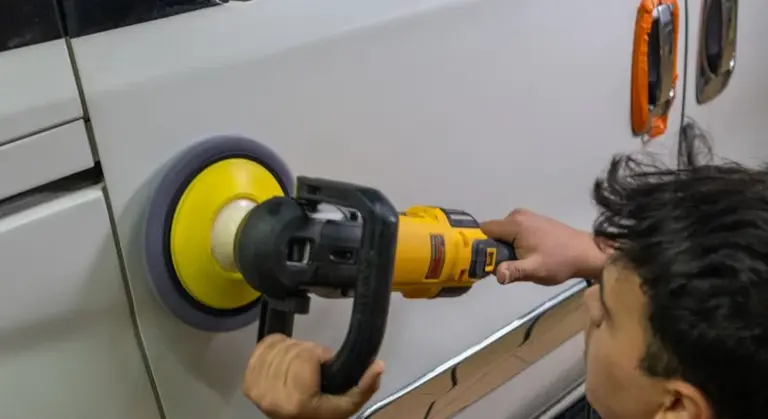
Dual-Action Polisher and Compound/Polish: After the new clear coat cures, it will be hazy and rough from the sanding. A DA polisher is the only way to restore gloss. A 15mm or 21mm throw model is forgiving for beginners. You will need a medium-cut compound to remove sanding marks, followed by a fine polish to bring up the shine. Doing this by hand will not work.
Grit Guard: Use this in your wash bucket during the initial clean. The last thing you need is to swirl the entire panel while trying to fix one scratch. It keeps dirt at the bottom of the bucket, away from your wash mitt.
Painter’s Tape and Note Cards: Masking is crucial. Use painter’s tape to protect the surrounding area from accidental polish splatter. A stiff note card is my secret weapon. You can slide its edge into the seam of a body panel to create a perfect masking line without getting tape adhesive where you do not want it.
The First Question: Can You Fix a Deep Scratch on Your Car?
Yes, but it depends on the depth of the scratch and what you want the final result to be.
You need to understand the difference between a detailer’s fix and a body shop repair. My goal as a detailer is to make the damage visually disappear without repainting the entire panel. I do this by filling the scratch with touch-up paint or leveling the clear coat with polish. A body shop will sand the area much larger, spray new base coat, and blend it into the surrounding paint for a perfect, invisible match. That process is more expensive and invasive, but sometimes it’s the only way for severe damage on a car you care deeply about, like my Porsche.
The Fingernail Test and Scratch Layer Identification
First, clean the area. Get some detail spray and a clean microfiber towel. Wipe the scratch down so you can see it clearly without dirt or wax in the way.
Now, do the test. Gently drag your fingernail across the scratch, perpendicular to it. Don’t press hard.
- If your fingernail does not catch in the groove, the scratch is likely only in the clear coat.
- If your fingernail does catch, the scratch has reached the color layer or deeper.
This tells you the depth. To understand what that means, picture your car’s paint as a layered system.
- Clear Coat: The top, transparent layer. It provides gloss and protection.
- Base Coat (Color): The layer underneath that gives your car its color, like Jet Black or Classic Red.
- Primer: A grey layer that helps the color paint stick to the metal.
- Metal: The bare body of the car itself.
A scratch gets deeper as it goes through these layers. Your repair method changes at each level.
Clear Coat Scratch
These are the most common “deep-looking” scratches that you can actually fix without any paint. The scratch has disrupted the clear coat, making a white or hazy line that catches the light. Because it hasn’t reached the color, you can often remove it by carefully polishing the area to level the surface. On my black BMW, which is a swirl magnet, 90% of the marks that make me wince are just clear coat defects that polish right out. They look terrible under gas station lights, but with the right pad and compound, they vanish.
Base Coat Scratch
Here, the scratch has cut through the clear coat and into the colored paint. You’ll see that the color is missing from the groove. It might look dark or black, but you won’t see a distinct grey (primer) or silvery (metal) color. This type of scratch requires touch-up paint to fill in the missing color after a thorough cleaning. On my grey Honda Odyssey, a shopping cart left a perfect example. The scratch was dark, but the base metal wasn’t exposed. A small bottle of OEM touch-up paint and a steady hand made it almost invisible from a few feet away. Proper techniques were crucial in blending the touch-up paint seamlessly.
Primer or Metal Scratch
This is what we truly call a deep scratch. You will see a clear, sharp line of grey primer or, worse, the shiny silver of bare steel or aluminum. This is the answer to the common search for “deep scratch repair to metal car.” Any scratch that exposes bare metal is an emergency because rust can start forming incredibly fast, especially in wet or salty conditions. I learned this the hard way on my old Mazda Miata’s rocker panel. A chip from a stone turned into a small rust bubble in one season. For this repair, you must use a primer specifically for automotive touch-up before applying your color paint. The primer provides adhesion and a barrier against corrosion. You cannot skip this step, especially when trying to repair rusted scratches on car paint.
Getting Ready: Prep Work That Makes or Breaks the Repair
I learned this on my Jet Black BMW, the swirl magnet. I rushed to fix a scratch once. I made it worse. A haze ring around the repair showed everything I did wrong. Ninety percent of a bad paint repair comes from poor preparation, from not respecting the surface before you touch it. This isn’t just cleaning. It’s setting the stage.
Step 1: The Surgical Clean
You cannot fill or sand over dirt. It will tunnel under your work and lift later. Start with the whole panel. Use a lubricating car shampoo and the two-bucket method. One bucket for soapy water, one with clear water to rinse your mitt. This pulls dirt away instead of grinding it in.
Rinse thoroughly. Dry with a clean, plush microfiber towel. Now focus on the scratch itself. The surrounding paint has wax and oils. They will repel your primer or touch-up paint.
Take a fresh, lint-free microfiber cloth. Pour some 70% isopropyl alcohol on it. Wipe the scratch and a good inch around it. Use firm, straight strokes. You will see the cloth pick up yellow or brown residue. That’s the old protectants leaving. You are done when the cloth comes away clean and the paint squeaks under your finger. Let it air dry completely.
Step 2: Masking and Creating a “Work Zone”
On my F-150’s bumper, I learned this the hard way. Compound dust gets everywhere. Sanding can slip. You need a fence. Get painter’s tape, the kind with clean release for delicate surfaces. Get a few index cards or note cards.
Run a strip of tape along one side of the scratch, about a half-inch away. Slide the note cards under the tape so they shield the good paint, creating a narrow channel that exposes only the scratch. Tape the other side. Now your scratch is in a clean, isolated trench.
This cardboard and tape dam keeps every bit of sanding debris and polishing splatter off the undamaged paint. It feels fussy. It saves you hours of clean-up and prevents you from accidentally dulling the finish around your repair. Leave this mask on until after you’ve sanded and compounded.
The Repair Process: Filling, Painting, and Blending
This is where your patience pays off. You have a clean, prepared scratch. Now you fill it back up, layer by layer, to match the factory paint. I treat this like surgery. Slow, precise, and with the right light. Let’s walk through it.
Step 1: Leveling the Scratch Edges (Wet Sanding)
Think of the scratch like a canyon with sharp cliff walls. You cannot just pour paint in. It will not stick well, and it will look terrible. Your job is to turn those cliffs into gentle slopes.
You do this by wet sanding. I use a small sanding block wrapped in 3000-grit sandpaper. Keep a spray bottle of water handy. You spray the area, then sand lightly. Only sand along the length of the scratch, never side to side across it. This feathers the hard edge so the new paint has a smooth transition.
Feel the surface with your finger. When the scratch edge no longer catches your nail, you are done. On my black BMW, I learned this the hard way. Sand too much, and you burn through the clear coat on the surrounding paint. Then you have a bigger, uglier problem. Go slow. Use plenty of water. Check often.
Step 2: Applying Primer (For Metal/Deep Primer Scratches)
If your scratch reached bare metal, this step is not optional. Skip it, and rust will start under your new paint in weeks. Primer seals the metal and gives the color coat something to grip.
Do not brush it on like wall paint. Use the tip of a toothpick or a fine artist’s brush. Dab a tiny amount of primer directly into the scratch. Let it dry completely. This might take 30 minutes. Apply another thin layer. I usually do two or three. Primer is your foundation, and a good foundation prevents future failure. On my Ford truck’s frame, I use this same method for stone chips. It stops the rot.
Step 3: Applying the Color Coat
This is the art part. You must use the “drop-fill” method. Do not use the brush that comes with the touch-up bottle. It is too clumsy.
Shake your paint pen or bottle well. Dip just the very point of a toothpick into the paint. You want a tiny bead on the end. Carefully lower that bead into the scratch. Let capillary action pull it in. Place dots of paint along the entire length of the scratch.
Your goal is to fill the scratch from the bottom up, without getting paint on the surrounding clear coat. One thick layer will shrink, crack, and look like a glob. I put on a layer, then walk away for an hour. I come back, check it under light, and add another. On my red Miata, filling a deep chip took five thin layers over two days. It was worth the wait.
Step 4: Applying the Clear Coat
The color coat is dull and unprotected. Clear coat brings back the shine and shields the color. Apply it exactly like the color coat. Use a fresh toothpick for a clean application.
Here is the key: you need to overfill the repair slightly. Build the clear coat just above the level of the surrounding paint. You will sand this down later to make it perfectly flush, so a small overfill is necessary. I apply two or three layers of clear, letting each dry fully. When you look at it from an angle, you should see a slight raised line where the scratch was.
Detailer’s Pro-Tip: The Magnifying Glass and Side Lighting
Your eyes will trick you. Good lighting reveals the truth. After each layer dries, I use a cheap magnifying glass. I look closely to see if the scratch is truly filled to the top.
Then, I use a bright work light. I hold it low, almost parallel to the paint surface. I move it slowly across the repair area. This raking light shows every high spot, low spot, and texture difference between your repair and the factory paint. It tells you exactly where to sand next. On my Porsche’s clear coat, this trick shows the smallest imperfection. It is the best tool you have for a near-invisible fix.
After the Paint Dries: Sanding, Polishing, and Protecting
When your touch-up paint dries, it will look lumpy and awful. This is normal, so do not get discouraged. The paint has to overfill the scratch to ensure it is completely covered. This is especially true for paint touch up bumper scratches, where the plastic bumper’s curves can reveal uneven patches. In the next steps, we’ll show how to blend and finish for a seamless bumper repair. Now, we make it flat and shiny again.
Step 1: Sanding the Repair Flat
You need to level that overfilled paint with the surrounding surface. Careful wet-sanding is the only way to do this without causing more damage. I use a 3000-grit sanding pad soaked in clean water. On my black BMW, the “Swirl Magnet,” I work with the panel wet and under good light. Use very light pressure and sand in straight, gentle strokes only over the repaired area. Stop the moment it feels perfectly smooth and level with the factory paint. A uniform hazy film will spread over the spot-this is the clear coat being evenly abraded, and it means you are done.
Step 2: Cutting and Polishing to Restore Clarity
The sanding haze must be removed to restore clarity. This is a two-part job.
- Cutting: I mount a medium-cut foam pad on my dual-action polisher. Apply a dime-sized amount of a reliable cutting compound to the pad. Work on a small, 2×2 foot section at a time. The polisher should do the work; just guide it. This step removes the haze and any slight ridges.
- Polishing: Switch to a soft foam polishing pad and a fine finishing polish. This second step is what erases the micromarring from the compound and brings back the deep, wet gloss. On my red Porsche, this is where a scratch truly vanishes. Wipe the area clean with a microfiber towel. The repair should now be invisible.
Step 3: Applying a Protective Layer
Fresh paint has no protection. You must seal it immediately to lock in your work. I avoid traditional waxes here and go for a synthetic sealant or a ceramic spray coating. Apply it over the entire panel, not just the repair. This gives you uniform, durable protection against UV rays, bird droppings, and road grime. Let me clear up a common thought: a wax cannot fill a deep scratch. But a good sealant will protect the repair you just made, making it last for months.
When to Call a Pro: Weighing DIY Against Professional Repair
This is where you need to be honest with yourself. I love fixing things, but I’ve learned the hard way that some jobs are better left to a specialist with a spray booth. Ask yourself these four questions.
- How many scratches are there? One or two isolated spots is a DIY project. A whole side of the car covered in key marks means it’s time for a pro.
- How long and deep are they? A short, thin scratch you can fix. A foot-long gouge that catches your fingernail across a door and fender is a different story.
- What is your patience level? A proper touch-up involves cleaning, sanding, priming, painting in layers, and leveling. It takes hours over several days. If that sounds stressful, call someone.
- What is the vehicle’s value and your goal? Making my 1995 Miata look good from ten feet away is a win. On my black BMW, where perfection matters, a pro gets the call for major damage.
The answers to those questions will point you clearly toward your driveway or a professional shop.
What Does Professional Repair Cost?
People search “deep scratch repair cost” and “deep scratch repair near me” hoping for a simple answer. It’s not simple, but here’s the real-world breakdown. Costs vary widely depending on depth, location, and finish, so a single figure rarely applies. In the next section, we’ll break down typical price ranges and the factors that drive the repair deep scratch cost.
A mobile detailing pro or paint specialist can often do a localized touch-up and blend for a single deep scratch. They’ll clean it, fill it, and polish the surrounding area to make it nearly invisible. This typically costs between $150 and $300 per scratch, depending on size and location.
For a cluster of scratches or damage that spans a panel seam, a partial panel repaint and blend is needed. A body shop will paint the entire door or fender and blend the new paint into the adjacent panels so it matches. This is where cost jumps, usually starting around $500 to $800 per panel and going up from there for complex colors.
Scenarios Where DIY Usually Fails
Some damage is simply unrepairable with a touch-up pen in your driveway. Recognizing this saves you time, money, and heartache.
Massive damage or plastic bumper tears. If the scratch is so deep it has deformed the metal or cracked a plastic bumper, filler and repainting are required. This is structural and cosmetic work for a body shop.
Complex tri-stage pearl or metallic paints. My Tesla’s white paint has a pearl midcoat. Matching this by hand is incredibly difficult. Even professionals struggle to blend these colors seamlessly without painting entire sections. A bad match will look like a cloudy patch.
A Note on Interior Plastic Trim
The process for a deep scratch repair on interior plastic car trim is similar to paint. You clean, sand, and fill. The difference is in the products. You must use a flexible plastic primer and dye-based interior paint or a vinyl/plastic coating. Regular automotive paint will crack and flake off. Always test your color match in an inconspicuous spot first, like under the dashboard. Similarly, this approach applies to repair scratches on interior plastic trim. For tougher marks, trim-specific repair techniques can help blend the finish more seamlessly.
Keeping It Safe: How to Avoid Deep Scratches Going Forward
Fixing a deep scratch is a project. Preventing the next one is a habit. After you’ve repaired the damage, the goal shifts. You want to build a defense system for your paint. This isn’t about living in fear of your car. It’s about smart routines that become second nature.
Wash Technique is Everything
I will say this until I’m blue in the face. Most scratches don’t come from the road, they come from your wash mitt. A dirty mitt or sponge grinds grit into the clear coat, creating a web of fine scratches called swirl marks. On my black BMW, they show up like a spiderweb in the sun. The cure is simple but non-negotiable: use proper techniques to remove scratches and swirl marks.
- Two Buckets, Two Guards. One bucket holds your clean shampoo solution. The other is your rinse bucket, filled with clean water and a grit guard at the bottom. After you wipe a panel, you dunk and scrub your mitt on the grit guard to trap the dirt before reloading with clean soap. This keeps the grime out of your wash water.
- Top to Bottom. Always start at the roof and work down. The lower panels are the dirtiest. You don’t want to drag that heavy dirt upward.
- Patience with Drying. Use a large, clean microfiber drying towel. Don’t scrub or drag it. Gently pat and pull the water off the surface. A forced air dryer is even better for touchless drying.
Smart Parking and Debris Management
Parking far away is good advice, but it’s not the whole story. You need to read the environment. Think about what’s above and beside your parking spot, not just how far it is from the door.
- Avoid the Cart Corridor. Don’t park at the end of a parking row next to the cart coral. Park in the middle of a row, between two nice cars if you can. People are less likely to ding a car if theirs is at risk.
- Look Up for Tree Trouble. Sap, bird droppings, and falling berries or seeds are acidic. They etch paint quickly. Parking under a tree might give you shade, but it can also give you permanent spots. My Tesla’s white paint shows every single sap droplet.
- Mind the Wind. In dusty or sandy areas, try to park with the wind at your car’s back, not hitting the side. It sounds minor, but a constant blast of fine sand acts like sandpaper on your clear coat.
The Power of a Paint Sealant
Think of a high-quality synthetic sealant as a sacrificial shield. It’s a tough, transparent layer that sits on top of your clear coat. When a shopping cart lightly grazes the door or a branch swipes the side, the sealant takes the hit first. It can often absorb the energy of a minor scrape that would have otherwise cut into your paint.
I use a spray sealant on my F-150 after every few washes. It takes me ten minutes. A good sealant makes the surface slicker, so contaminants have a harder time bonding, and minor abrasions slide right off. Compared to a traditional wax, a modern sealant lasts longer (6-12 months) and provides better chemical and scratch resistance. It’s the easiest insurance policy you can buy for your paint.
Dealing with Interior Scratches
The inside of your car gets scratched too. Hard plastic trim, piano black surfaces, and even leather can get scuffed by shoes, pet claws, tools, and cargo. Prevention here is about creating a buffer. Understanding the common causes of interior scratches helps you tailor prevention strategies to keep surfaces pristine. Knowing these causes lets you plan targeted protections next.
- Protect High-Traffic Areas. Use all-weather floor mats. They contain the grit from your shoes. For cargo areas in SUVs or minivans like my Odyssey, a rubberized trunk mat is essential. It stops grocery bags, strollers, and sports gear from scraping the bare carpet or plastic.
- Use a Matte-Finish Protectant. For interior plastic and vinyl trim, use a protectant that leaves a matte, non-greasy finish. A shiny, slick dressing actually attracts dust and can make scuff marks more visible. A matte protector adds a light layer of UV blockers and oils that keep the plastic supple and more resistant to light scratches.
- Keep It Clean. Grit on your floor mats gets kicked up onto door sills and lower dash panels. Regular vacuuming and wiping down these areas with a soft microfiber cloth removes the abrasive particles before they get ground in.
Protecting Your Repair for Years to Come
After fixing everything from key marks on my F-150 to door dings on the 911, I know the foundation of any good repair is an honest assessment and meticulous prep. Get these two things right, and your work will blend in so well you’ll forget the scratch was ever there.
Cut corners here, and you’ll watch that repaired spot fail, leaving a glaring blemish that shouts “DIY gone wrong.”
References & External Links
- Repair & Renew Scratch Remover for Cars | Repair & Restore |
- r/Cartalk on Reddit: I doubt there is anything I can do to fix this, but am I able to clean up these deep scratches on my car without having to go to a professional?
- Not All Scratch Removers Work-These Are the Ones That Smoothed Out the Scrapes on Our Car
Max Gunther
Max is an automotive enthusiast having worked as a car mechanical and in interior detailing service for over 25 years. He is very experienced in giving your old car, a new fresh vibe. He has detailed many cars and removed very tough smells and stains from all kinds of cars and models, always ensuring that his work and advice helps his customers. He brings his first hand experience to his blog AutoDetailPedia, to help readers breath new life into their car interiors.