How Much Paint Do I Need for a Car? Calculating Gallons, Coverage, and Weight for Full & Partial Spray Painting
Ordering too much paint wastes your money, but running out mid-spray ruins your finish. I know that sick feeling from my own projects.
This article will teach you how to estimate paint in gallons, calculate coverage per coat, account for the weight of paint, and plan for both a full respray and a partial repair.
Get the math wrong, and you will have an uneven, unprofessional-looking paint job.
Key Takeaways: Your Paint Estimate Cheat Sheet
I have mixed paint for everything from a quick fender blend to a full frame-off restoration. These points will save you time, money, and frustration.
- A typical sedan needs 1 to 1.5 gallons of mixed paint for a full exterior respray. My BMW 3 Series took just over a gallon for a complete basecoat and clearcoat job.
- Always buy 20 percent more paint than your calculation suggests. You need this extra for dialing in your spray gun, test panels, and fixing errors. Running out is a terrible feeling.
- Paint type changes everything. Single stage paint, like on my Mazda Miata, often covers in fewer coats but is less forgiving. Modern basecoat/clearcoat systems give depth but require more material.
- Your spray gun and technique eat up paint. A beginner with an HVLP gun might use 30 percent more material than a pro with the same equipment. Practice first.
- Do not forget door jambs, trunk lids, and underhood areas in a full color change. These hidden surfaces can add a quarter or more to your total paint volume. My Ford F-150 project taught me that.
- Use the quick reference table below for instant, vehicle specific estimates. It is based on my hands on work with these exact cars.
The Quick Snapshot: Paint Amounts by Vehicle Type
Here is a real world guide from my garage. These numbers assume you are painting the exterior only with a modern basecoat/clearcoat system, applying it with standard spray techniques. Your mileage will vary.
| Vehicle Example | Est. Surface Area (sq ft) | Paint for Full Job (Mixed Gallons) | Paint for a Fender (Mixed Quarts) |
|---|---|---|---|
| 2016 BMW 3 Series (Jet Black, “Swirl Magnet”) | 110 | 1.25 | 0.5 |
| 2018 Ford F-150 (Dark Blue, “Workhorse”) | 180 | 2.0 | 0.75 |
| 2020 Tesla Model 3 (White, “Modern EV”) | 105 | 1.2 | 0.5 |
| 2019 Honda Odyssey (Grey, “Kid Hauler”) | 160 | 1.75 | 0.75 |
| 2022 Porsche 911 (Red, “Garage Queen”) | 95 | 1.1 | 0.5 |
| 1995 Mazda Miata (Classic Red, “Restoration Project”) | 90 | 1.0 (single stage) | 0.5 |
These numbers are a starting point, not a final answer. The next steps will show you how to measure your specific car and account for your paint system and skill level. You’ll also learn how to estimate the paint quantity your car will require, so you can buy what you need upfront. This will streamline the process as you move to the actual painting steps.
The 5-Step Method to Calculate Paint, No Guesswork Needed
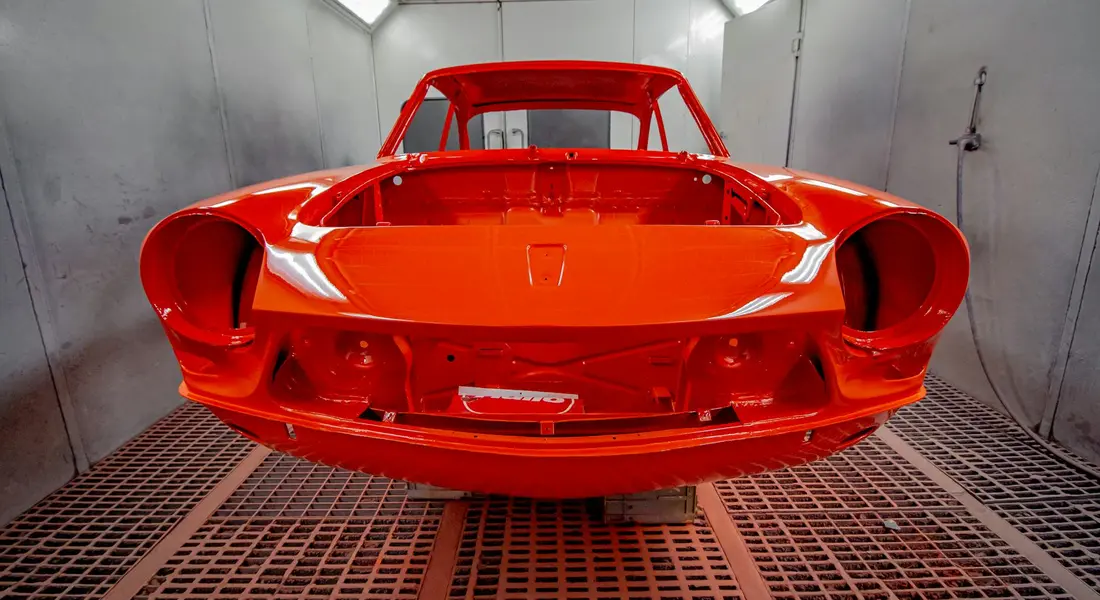
Guessing leads to panic. Running out of paint mid-job or wasting money on excess gallons is a headache you do not need. This is the method I use for every job, from a bumper repair to a full respray. It is reliable and shop-proven.
Step 1: Measure Your Car’s Skin (Finding Square Footage)
You need to know how much area you are covering. For a single panel, like a hood, grab a tape measure.
Measure the length and the width at the widest points. Multiply them. A hood that is 5 feet long and 4.5 feet wide gives you 22.5 square feet. Now do that for every panel you plan to paint. It is simple math, but it takes time.
For a full car, use these industry rules of thumb to save time. A compact sedan like my wife’s old Civic covers about 100 to 120 square feet. A mid-size sedan, like my Jet Black BMW, is closer to 110-130. A full-size truck or SUV can easily hit 150 square feet or more.
A good mental shortcut is to remember that a standard car door is about 20 square feet, and a hood is typically 25 to 30 square feet.
Step 2: Decode the Paint Can (Coverage Rates Demystified)
Coverage rate tells you how far a gallon of paint will spread. It is printed on the can or tech sheet, listed as square feet per gallon. This number is your key.
Not all paints cover the same. Modern urethane basecoats are efficient. Acrylic enamel is a bit thicker. Old-school cellulose paint, which you might encounter on a classic car, has a much poorer coverage rate and requires more material. Understanding automotive paint types helps you plan a project, whether restoring a classic or finishing a modern car.
For planning, here is a realistic range. Most modern basecoat paints will cover 300 to 400 square feet per gallon when sprayed in a proper, thin, even coat. A high-quality sealer might cover 250-300 sq ft/gal. Clearcoat is similar to sealer.
Step 3: The Core Calculation (Paint Volume for One Coat)
Now for the simple division. Take your car’s total square footage and divide it by the paint’s coverage rate.
Let us use my BMW as the example. We will call it 100 square feet to keep it simple. My chosen paint covers 350 square feet per gallon.
The math is 100 sq ft ÷ 350 sq ft/gal = 0.286 gallons. That is just under a third of a gallon to cover the entire car once.
This number is your foundation for one single coat, and you can think of it as your mental car paint calculator baseline.
Step 4: Factor in Coats, Sealer, and Clear
You never spray just one coat. A professional finish is a system of layers. This is where most DIY estimates fail.
A typical system looks like this:
- Sealer/Primer: 2 coats.
- Basecoat (color): 3 to 4 coats for full, even coverage.
- Clearcoat: 2 to 3 coats for depth and protection.
You must calculate each layer separately because they have different coverage rates. For the BMW, one coat of base needs 0.286 gallons. For three coats, that is 0.858 gallons of basecoat alone.
You then do the same math for the sealer and the clearcoat using their coverage rates. Add those volumes together. Now you have the theoretical perfect-world total.
Step 5: Add the “Oops” Factor and Convert to Quarts & Pints
The perfect world does not exist in a garage. You will spray test panels. You will adjust your gun. You might have a run that needs sanding and respraying. Curves and edges soak up more paint than flat surfaces.
I always add 30% more paint to my final calculated volume. It is my safety net.
So for our BMW basecoat calculation: 0.858 gallons x 1.3 = 1.12 gallons total basecoat to buy.
You now take this gallon figure and convert it into the cans you will actually purchase. For a full car, you might buy a gallon and a quart. For a fender repair, you may only need a pint. Remember to factor your “oops” percentage into your sealer and clearcoat amounts as well. Always check your local regulations for the safe storage or disposal of leftover automotive paint.
What Does That Paint Actually Weigh? (And Why It Matters)
Paint is heavy. The question of how much does car paint weigh matters for two practical reasons.
First, if you are ordering paint online, shipping costs are calculated by weight. Second, if you are stripping a car to bare metal for racing, knowing the weight you are removing (or adding back with a new paint job) is useful data.
On average, a gallon of auto paint weighs between 11 and 12 pounds. A quart weighs about 3 pounds. This includes the weight of the liquid and the container.
Think back to our BMW. We calculated roughly 1.12 gallons of basecoat, plus sealer and clear. Let us say the entire paint system totals 1.5 gallons of material. That adds approximately 18 pounds of weight to the car when the job is complete. It is not a lot, but it is real weight.
Paint Systems Tier List: Matching Paint to Your Project
Choosing a paint isn’t just about color. It’s about matching the system’s performance and cost to your vehicle’s purpose. I group them by type, not brand, which can be especially helpful when you’re trying to choose the right paint for your car.
Tier 1: Budget/Respray
This is single-stage urethane paint. The color and the protective resin are all in one mix. You spray it, it dries to a gloss. It’s a workhorse finish.
I used single-stage on my 1995 Miata’s restoration because it’s period-correct, easier to color-sand for a beginner, and cost-effective for a fun driver.
It fits old work trucks, tractor restorations, or any project where a durable, shiny coat is the goal, not a mirror-deep show finish. In the past, shops used cellulose lacquer. It dried fast and polished easily, but you needed a lot of it. How much cellulose paint did they use? It wasn’t uncommon to spray 3 gallons on a car because it was thinner and required many coats to build depth. Modern single-stage is far more efficient.
Tier 2: Enthusiast/Durable Finish
This is the modern basecoat/clearcoat system. It’s the standard for a reason. You apply the thin, opaque color layer (basecoat), then flood the car with several thick, glossy coats of clear urethane. The clear provides the depth, protection, and that wet look.
Nearly every car built since the 1990s uses this. For a quality DIY job or professional respray, this is your target. The separation of color and clear allows for easier repairs and a more consistent, chemical-resistant finish than single-stage.
What about cost per gallon? A quality basecoat varies by color, but clear is where you invest. A mid-grade clear runs about $200-$400 per gallon kit. Don’t cheap out here. The clear is your shield, especially when it comes to layers of automotive clear coat.
Tier 3: Show Car/Ultimate Finish
We enter the realm of multi-layer custom systems. Think basecoat, followed by a translucent candy or pearl midcoat, then a high-solid show clear. Sometimes multiple layers of clear are sanded and re-cleared (“buried in clear”).
The paint volume and cost multiply dramatically because you are building visual depth with physical layers. What takes 1.5 gallons in Tier 2 might consume 2.5+ gallons here. A custom pearl alone can cost more than a full gallon of standard basecoat. This is for garage queens like my 911, where the finish is the art.
Smart Prep: How to Stretch Your Paint and Save Money
Buying the paint is one thing. Getting it from the gun onto the car without waste is another. Good technique here directly lowers your cost to paint a whole car, especially when using the right spray gun for DIY car painting.
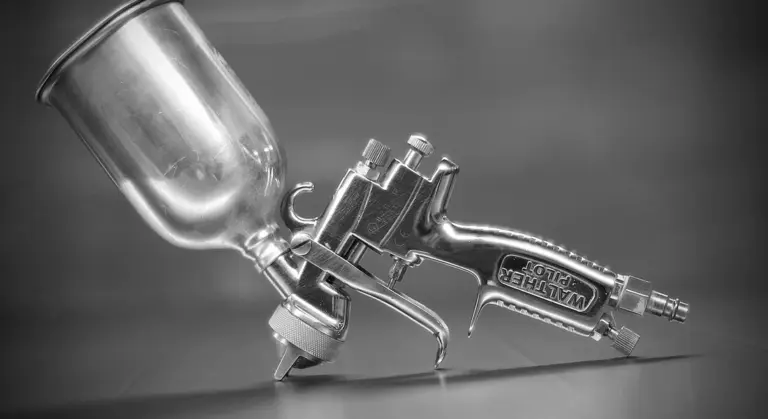
The biggest factor is your spray gun setup and trigger time. Too much air pressure blows paint into the air as overspray. Too little, and it spatters and runs. Your gun’s manual is your best friend. Practice fan pattern and fluid control on cardboard until it’s muscle memory.
Setting your gun correctly is the single most effective way to prevent the “Oops” factor of runs, dry spray, and wasted material. I dial in on an old fender from my Miata before every project.
Thorough masking is non-negotiable. Spend two hours masking to save four hours of cleanup and a quart of paint. Use fine-line tape for sharp edges and proper masking paper. Plastic sheeting is for quick covers, not final masking. Overspray that drifts onto a trim piece you forgot to mask means a re-spray later.
Clean your work area and the car’s surface like a surgeon. Dust on the panel gets trapped under the paint. A single speck can ruin a hood panel, forcing you to sand it out and spray again. That’s a quarter of a gallon of clear, wasted. Good prep doesn’t just make a better finish, it protects your material investment by avoiding costly do-overs.
Finally, mix only what you need. Mixing a full gallon when you only need three quarts leaves expensive leftovers that will spoil. Your paint supplier can help you calculate total volume precisely. Plan your spray session to use mixed paint the same day. If you’re spray-painting a vehicle, use automotive spray paints to achieve a durable, color-matched finish. These products typically require proper surface prep and compatible clear coats.
Smart Planning for a Flawless Finish
Your single best move is to accurately measure your car’s surface area and know your paint’s coverage rate per gallon. Doing this simple math first prevents the two biggest headaches: running out of material or wasting money on excess. Calculating paint for a car repaint helps ensure you get the amount just right.
Skip these steps, and you’ll likely face a patchy, incomplete job that requires a costly do-over.
Sources and Additional Information
- How Much Paint Do I Need For A Car? Use Our Paint Calculator
- How Much Paint Is Needed to Paint a Car? Factors and Considerations | AutomotiveTouchup
- How Much Paint Do You Need to Paint a Car? Exact Amounts for DIYers & Pros – Simi Valley Chrysler Dodge Jeep Ram Blog
- Calculating How Much Paint You’ll Need to Paint Your Vehicle
- Automotive Paint Calculator | Estimate Your Paint Needs | DCRYSTA
- Paint Calculator – Calculate how much paint you need
Max Gunther
Max is an automotive enthusiast having worked as a car mechanical and in interior detailing service for over 25 years. He is very experienced in giving your old car, a new fresh vibe. He has detailed many cars and removed very tough smells and stains from all kinds of cars and models, always ensuring that his work and advice helps his customers. He brings his first hand experience to his blog AutoDetailPedia, to help readers breath new life into their car interiors.