What Is the Best Temperature to Wax a Car? Can You Wax in Cold Weather?
You look at your car and think about waxing it, but the cold air makes you hesitate, worried the wax won’t work right. I get that feeling every winter with my own vehicles.
We will cover the exact temperature range where wax performs best, how cold air changes the way sealants and pastes behave, and a safe method for applying protection during winter months.
Waxing outside the proper conditions creates a streaky, gummy film that fails to shield your paint.
Key Takeaways: The Quick Answer on Temperature and Waxing
- The ideal air temperature for waxing is between 60°F and 80°F (15°C to 27°C) in a shaded, calm area.
- The core challenge of cold weather waxing is the product becoming too thick to spread thin and bond correctly.
- The primary risk of hot weather waxing is the product drying too fast, making it difficult to remove and potentially scratching your paint.
You can wax your car in winter, but it requires more preparation and careful product selection. You should especially consider the properties of the wax and how they perform in colder temperatures. The single most important factor for success is the temperature of your car’s paint surface, not just the air temperature reading on your phone.
How Temperature Changes the Way Wax Works
Think about a jar of honey. In a warm kitchen, it pours smoothly. Straight from the fridge, it’s a thick, stubborn paste. Car wax behaves the same way. Temperature directly controls the wax’s viscosity, or how easily it flows and spreads. This isn’t just about making the job harder for you. It’s about the chemical process. Modern waxes and sealants need to flow out into a microscopically thin, even layer so their protective polymers can properly cross-link and bond to your clear coat.
Why Wax Needs Warmth to Spread and Bond
The protective ingredients in a wax or sealant are like a specialized glue for your paint. For the best bond, they need specific conditions. A moderate warmth helps the product’s carriers and solvents evaporate at the correct rate. This allows the protective elements to settle into the paint’s microscopic pores and imperfections, creating a uniform shield. Using the glue analogy, cold weather is like trying to glue something in a freezer. The process slows to a crawl and the bond will be weak. Excessive heat is like using a blowtorch on that glue. It dries it out, makes it brittle, and ruins its ability to stick. Layering waxes and sealants is a practical way to reinforce that shield. Each additional layer adds protection and depth, while keeping the bond cohesive.
The Cold Weather Problem: Thick Paste, Thin Protection
So, can you wax a car in 40 degree weather? Technically, yes. But you won’t like the results. As the temperature drops, the wax hardens. Your smooth paste or liquid becomes gummy. When you apply it, it doesn’t level out. It leaves thick, streaky smears on the panel. Because it’s not spreading thin, the protective layer is uneven and weak. The worst part comes at removal. That gummy, unleveled wax has hardened into a crust. Removing it requires significant pressure, turning your soft microfiber towel into a sanding block that can instill fine swirls, especially on dark paint like my BMW. You’re left with a subpar layer of protection and possibly new scratches to fix later.
The Hot Weather Problem: Fast Flash, Lasting Haze
This brings us to the common question: is it okay to wax your car in the sun? The short answer is no. Direct sun on a dark paint surface can push its temperature well over 120°F (49°C). At those temperatures, the solvents in your wax evaporate almost instantly. The product “flashes” dry before you’ve even finished the panel. It dries as a hazy, chalky film that is baked onto the paint. Removal is a fight. The wax turns to a gritty dust as you buff, creating abrasive particles that can mar your finish. You’ll sweat, struggle, and likely end up with a patchy, hazy result that offers little consistent protection. It’s a brutal lesson I learned once on my black BMW and never repeated. If you’re looking to protect car paint from sun damage, there are smarter, safer strategies. I’ll cover those in the next section.
The Goldilocks Zone: Finding the Best Temperature to Wax
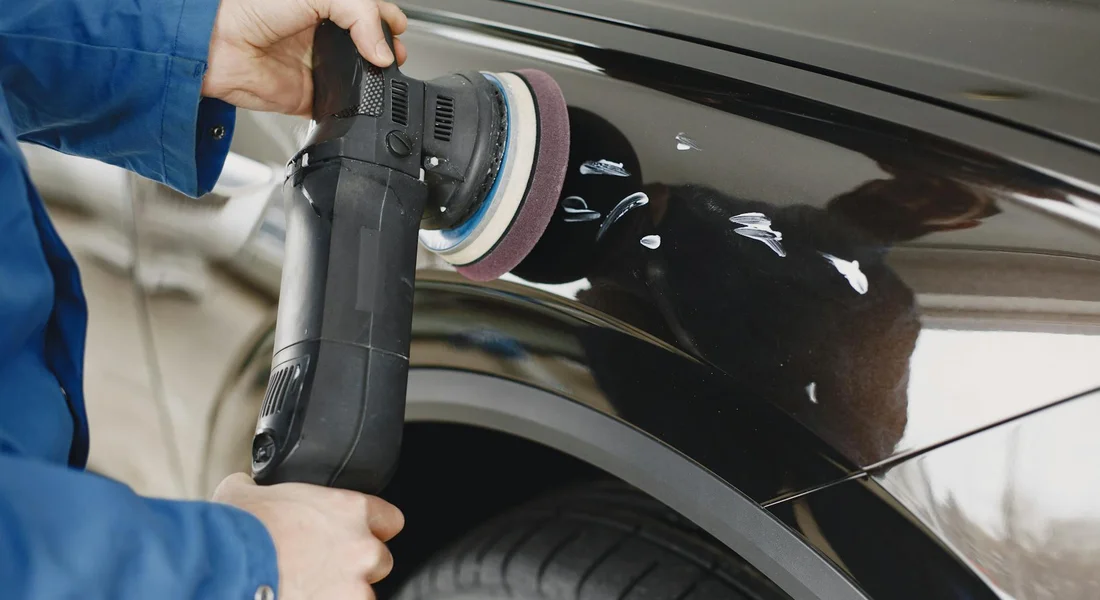
You want the simple answer. Here it is. The best temperature to wax a car is between 60 and 80 degrees Fahrenheit. That’s 15 to 27 degrees Celsius. Stick to this range, and the whole process is smooth. Outside of it, things get difficult fast. Once the temperature is right, the way you apply the wax matters—the waxing techniques you use affect finish and durability. In the next steps, we’ll link these tips to practical waxing techniques you can apply for the best shine.
The Ideal Range: Fahrenheit vs. Celsius
Think of 60-80°F (15-27°C) as the wax’s comfort zone. In this range, the product stays soft and spreadable. It applies in a thin, even layer. More importantly, it cures properly. The solvents can evaporate at the right speed, leaving behind a hard, protective layer.
Removal is the real test, and this temperature range makes it effortless. The wax dries to a light haze you can wipe away with a microfiber towel using little pressure. On my black BMW, working in 70-degree shade, the wax buffs off to a deep, hologram-free shine. Try this in colder weather, and the wax stays gummy. In hotter weather, it can bake on and become a chore to remove.
Surface Temperature is King: Why Your Paint Thermometer Matters
The air temperature in the shade is just a suggestion. The temperature of your car’s paint panels is the law. A dark car sitting in sun can be 30+ degrees hotter than the air. A light car in the shade can be cooler.
I use a simple infrared thermometer from the hardware store. I point it at the hood, a door, and the trunk before I even get my wax out. Checking several panels prevents a nasty surprise, like trying to wax a scorching hot hood that instantly dries the product.
Look at my fleet. On the same 75-degree day, my white Tesla’s bumper might read 78°F. My black BMW’s hood in the sun could be 110°F. My red Porsche’s roof in the garage might be a perfect 72°F. They all need different timing. The rule is simple: wax a cool surface in the shade, never a hot one in the sun.
Waxing at Night: Navigating Dew and Chill
Can you wax a car at night? Sometimes. The main enemy is not the darkness, it’s condensation. As the temperature drops after sunset, it can hit the dew point. Moisture forms on your paint. Applying wax over dew traps water underneath, ruining the bond. That’s why it’s crucial to wax your car only after it’s been properly washed and dried.
For night waxing to work, you need a warm, dry evening where the temperature will stay well above the dew point all night. A still night in the 70s is a good candidate. A fall night quickly dropping into the 50s is a terrible one. Always check the dew point forecast for your area; if the temperature will drop to meet it within a few hours, your wax job is at risk.
The Cold Truth: Can You Wax a Car in Winter or Cold Weather?
Winter is hard on paint. Salt, grime, and acidic road film attack your clear coat. I get why you’d want to add protection. I feel it with my F-150, which sees every storm. But waxing in the cold is a compromise.
Pushing the Limit: What Really Happens Below 50°F (10°C)
What happens if you wax below 50 degrees? You fight the product. Traditional paste and liquid waxes thicken. They become difficult to spread thin. They may not cure fully, staying soft and sticky.
When you go to buff it off, it doesn’t turn to dust. It smears. You end up using excessive force, which can mar soft paint. The final result is often a streaky, hazy finish that offers little real protection, maybe washing away in a few weeks. You’ve wasted time and product. This is the most common outcome when someone asks, “Can I wax my car in the winter?” outside in the cold.
The Absolute Freeze-Out: When It’s Too Cold to Even Try
At or below freezing, 32°F (0°C), stop. Can you apply car wax if it is freezing? Technically, you can smear it on. But it will not work. The chemistry is broken.
Most waxes and sealants are designed to emulsify and cross-link in specific conditions. In freezing temps, the product can actually separate or crystallize on the panel. It cannot form a proper bond. You are just putting a cold, greasy film on your car that will attract dirt and wipe off at the next wash. It’s pointless and can trap contaminants against your paint.
Making Winter Waxing Work: The Garage Detailer’s Playbook
If you need winter protection and have a garage, you have a fighting chance. The goal is to manage your small environment.
Step 1: Creating a Micro-Climate
Even an unheated garage is often 10-15 degrees warmer than outside. Park your car inside and close the door. Let it sit for several hours to warm up. If you have a safe, portable electric space heater, you can run it for an hour to take the deep chill out of the air. Never use open flame heaters, propane torches, or any unsafe heating method in an enclosed space with detailing chemicals. The goal is to get the ambient air to the mid-40s or 50s (°F), which makes a huge difference.
Step 2: Choosing the Right Winter Wax
Product choice is critical. Traditional carnauba paste waxes are the most temperature-sensitive. Synthetic liquid sealants are more tolerant. The best choice for cold weather is often a high-quality spray wax or sealant.
These are formulated to be easy on, easy off. I keep a bottle of a well-known spray sealant for my Odyssey and F-150 during winter. After a rinse-less wash in the garage, I can mist it on, spread it lightly, and buff it off without the struggle of a paste. Look for terms like “all-temperature” or “quick detailer” with sealant properties.
Step 3: The Pre-Warm Technique for Paste Wax
If you must use a paste wax, warm the product, not the car with a heater. Bring the sealed jar inside your house for a full day to reach room temperature. Take it to the garage just before use. This ensures the wax is soft and pliable. Apply it to one panel at a time, buffing immediately while it’s still thin. Do not let it haze fully in the cold, or you may never get it off.
Paint Damage Prevention: Common Mistakes When Waxing in Less-Than-Ideal Conditions
Waxing when it’s too hot or too cold invites specific errors. These mistakes do not just waste your time. They can leave your paint looking hazy, covered in swirls, and poorly protected. I learned this the hard way on my jet black BMW. Let’s walk through the common pitfalls so you can avoid them.
Mistake 1: Waxing a Hot Hood or a Cold Trunk
Your car’s surface temperature is rarely the same all over. A hood baking in the sun can be 30 degrees hotter than the shaded trunk lid. Apply wax to a hot panel, and it will flash dry almost instantly. It becomes a chalky, impossible-to-spread mess. On a cold panel, the wax turns gummy and sticky. It refuses to level out, leaving streaks and a blotchy application. You must check each panel with the back of your hand before you start. If it feels warm to the touch, let it cool. If it feels frigid, consider warming it slightly if you can. A simple infrared thermometer from the hardware store takes the guesswork out completely.
Mistake 2: Impatience with Curing Time in the Cold
Cold air slows everything down, especially wax curing. In 50-degree weather, your wax might need 15 minutes to haze. At 35 degrees, it could take 30 minutes or more. Getting impatient and wiping it off too soon smears a greasy film across your paint. Wait too long, and it sets up like concrete, making removal a brutal, scratch-inducing workout. The universal fix is the “swipe test.” Use a clean, dry fingertip to swipe a small line through the waxed area. If it smears, it’s still wet. If it leaves a clear, hazy line, it’s ready to buff off. This simple check saves your arms and your paint.
Mistake 3: Using a Soaking Wet or Icy Cold Applicator
A foam applicator pad straight from a cold bucket of water is a triple threat. The water dilutes your wax, weakening its protection. The cold stiffens the foam, so it doesn’t flex and spread product evenly. In freezing temps, that moisture can actually freeze, making the pad useless. Always wring your applicator pad completely dry with your hands before loading it with wax. Better yet, keep your clean, dry pads inside your house or garage so they start at room temperature. A warm pad helps the wax flow smoothly from the first touch.
Mistake 4: Ignoring the Forecast for Dew or Frost
This one has bitten me more than once. Applying wax in the late afternoon as temperatures drop seems smart, but if dew or frost is coming, it will ruin your work. Moisture settles on the wax as it tries to cure. The result is a spotted, watery, and uneven finish that you cannot buff out. Always check the dew point forecast for the evening before you start a wax job. If heavy moisture is expected, save the project for a drier day. It is better to have no wax than a ruined wax job. This is one of the common car waxing mistakes to avoid.
Technique Tweak: How to Wax Successfully When Temperatures Aren’t Perfect
You do not always get a 70-degree day in the shade. When you must wax in less-than-ideal weather, a few professional adjustments make all the difference. These are the tricks I use to keep my F-150 protected through upstate New York winters.
Pro-Tip: Warming Your Wax and Pads for Cold-Weather Flow
Cold paste wax is thick and hard to spread. Cold liquids become sluggish. You can gently warm them for better performance. Place your sealed bottle or jar of wax in a bucket of warm water for about ten minutes before you begin. Not hot water, just warm from the tap. This thins the product slightly so it applies like it would on a mild day. Tuck your dry applicator pad inside your jacket while you set up. Your body heat will warm it perfectly, making it soft and pliable for a smooth application.
Pro-Tip: The “Small Section” Method for Hot or Cold Days
In perfect conditions, you might wax an entire door or half a hood at once. When temperatures are extreme, you must shrink your work area. On a hot day, work on a section the size of a single window. On a cold day, make it even smaller, like one quarter of the hood. Working on a much smaller panel lets you control the wax’s working time before it dries out or gums up on you. Apply, then immediately do your swipe test on that small area. This method requires more steps, but it guarantees an even layer and easy removal every time.
Pro-Tip: The Perfect Buffing Cloth for Temperature Extremes
Your removal towel is as important as your applicator. In cold weather, wax residue is thicker and more stubborn. A thin towel will just push it around. Use a plush, high-GSM microfiber towel for the initial buff in the cold. Its deep piles will absorb the heavy residue without grinding it into the paint. On a hot day, a warm panel is more prone to light marring. After the initial wipe, follow up with a second, clean, and lighter finishing towel for a final, gentle pass. This two-towel method adapts your technique to the weather.
Pro-Tip: The Winter Shortcut – Spray Wax as a Maintainer
Committing to a full paste wax in a freezing garage is not always practical. That is where spray waxes and quick detailers shine. After a winter wash, while the car is still wet or slightly damp, mist a spray wax over a panel and dry it with a towel. A quality spray wax adds a solid layer of protection and gloss in minutes, with no harsh buffing required. It will not last as long as a dedicated sealant or paste wax, but it is a perfect maintainer. I use this on my Honda Odyssey between big details to fight off salt and grime. Think of it as a booster shot for your paint’s health during the harsh months.
Waxing With Confidence, Rain or Shine
For a flawless finish, always apply your wax or sealant to clean, cool paint in a shaded area when temperatures are comfortably between 60° and 80°F. If you’re facing a cold garage, switch to a spray sealant and work on one warm, dry panel at a time to guarantee it bonds properly.
Skip these steps, and the product will simply smear or fail to cure, leaving your paint exposed and your hard work wasted.
Research and Related Sources
- How Often Should You Wax Your Car? Here’s When To Do It
- r/AutoDetailing on Reddit: How cold is too cold for applying compound, polish, and wax?
- Waxing a Car in Hot Weather: Does It Actually Help or Hurt? – BLISS Car Wash
- Car Waxing Temperature: When Is the Best Time to Wax Your Car? – CarsDirect
- What Temperature Do You Apply Wax? | Autopia Forum-Auto Detailing & Car Care Discussion Forum
Max Gunther
Max is an automotive enthusiast having worked as a car mechanical and in interior detailing service for over 25 years. He is very experienced in giving your old car, a new fresh vibe. He has detailed many cars and removed very tough smells and stains from all kinds of cars and models, always ensuring that his work and advice helps his customers. He brings his first hand experience to his blog AutoDetailPedia, to help readers breath new life into their car interiors.