How Do You Stop Car Paint from Peeling and Fix the Damage?
Seeing paint flake off your car is more than ugly; it’s a warning sign that the protective layer is failing and the metal beneath is at risk.
I’ve battled this on my own vehicles, like my daily-driven Ford F-150, and I’ll share my hands-on methods, covering why factory paint fails, the washing and sealing routine that prevents it, safe cosmetic repair for peeled spots, and how a quality sealant acts as a shield.
Let peeling paint go untreated, and you invite rust, severe clear coat failure, and a bill for a full repaint.
What is Paint Peeling, Really? (It’s Not One Thing)
When you see paint coming off your car, it’s easy to call it all “peeling.” But in my shop, we break it down into two main types: blistering and peeling. Knowing which one you’re dealing with tells you a lot about the cause and the fix.
- Clear Coat Failure: This is your top, glossy layer giving up. It gets hazy or chalky first, then starts to flake off in thin, clear or cloudy pieces. The color coat underneath is usually still there, but it looks dull and faded.
- Primer/Paint Separation: This is more serious. Here, the actual color paint loses its grip on the primer or metal. It peels off in bigger, thicker flakes, often taking everything down to the bare panel.
Think of it like skin damage. Clear coat failure is like a sunburn peeling. It’s surface-level. Primer separation is like a deep blister popping. The problem is much further down.
Now, let’s clear up a common mix-up. “Orange peel” is not paint peeling. Orange peel is that bumpy, textured look in the paint, like the skin of an orange. It happens during spraying at the factory or a body shop. It’s a finish issue, not an adhesion failure. You can often sand and polish orange peel to make it smoother, which I’ll cover later.
Remember, the peeling itself is just a symptom. The real disease is always one of three things: brutal UV rays, water getting where it shouldn’t, or a bond that was never strong enough from the start.
Why Is My Car’s Paint Peeling? (The Usual Suspects)
Figuring out the “why” is your first step to a solution. Use this list like a detective’s checklist. Look at where the peeling is, how it looks, and your car’s history.
The Silent Killer: Sun and UV Damage
Sunlight is public enemy number one for your clear coat. Day after day, UV radiation breaks down the chemical bonds that hold that protective layer together. It gets brittle, loses its flexibility, and finally cracks and flakes away.
My 1995 Mazda Miata, “Restoration Project,” is a textbook case. Its classic red paint was pink and chalky when I got it. Decades of sunbaking had completely destroyed the clear coat on the hood and trunk. This is the direct answer to the common question, ‘car paint peeling from sun’-it’s a slow, cumulative breakdown, not an instant event. Regular maintenance and repairing sun damage are crucial.
Contrast that with my 2022 Porsche 911, the “Garage Queen.” Its brilliant red is still deep and glossy because it’s rarely parked in direct sun for long, and it’s always coated with a UV-blocking sealant. The difference is all about protection and exposure.
The Chemical Attack: Harsh Washes and Environmental Fallout
What you clean your car with matters just as much as how you clean it. Automatic brush washes are a double threat. The swirling brushes trap dirt and grind it into the paint, while the harsh, alkaline soaps they use strip waxes and degrade the clear coat over time.
Strong degreasers or household cleaners (never use these) can do the same. Even “soft” things like sprinkler water high in minerals or acid rain from industrial fallout can leave deposits that etch into the surface.
This links directly to another FAQ: ‘car paint peeling from washing in the sun.’ Washing a hot car in direct sunlight causes soap and chemicals to dry too fast, leaving concentrated residues that can speed up the degradation process. Always wash in the shade or in the early morning, especially if you want to avoid paint damage from car washes.
The Factory Flaw: A Bad Paint Job to Start With
Sometimes, the problem was baked in from day one. At the factory or a repair shop, if the metal wasn’t cleaned and prepped perfectly, if there was oil, dust, or moisture during painting, or if low-quality paint was used, the bond was weak. It might hold for a few years, but eventually, it lets go.
I’ve seen this on hoods and roofs after a cheap repaint. The peeling follows no logical pattern from wear-it just starts in random spots. There’s not much a detailer can do to stop this from happening if the foundation is bad. It often requires a full repaint.
The Hidden Wound: Impact Damage and Underlying Rust
A tiny stone chip on your hood might seem harmless. But if it breaks through the paint layers to the metal, it’s an open door. Moisture and road salt seep in, rust starts to form underneath, and that rust pushes the paint off from below.
This starts a chain reaction. You’ll see a small chip grow into a bigger flake, often on the front edges of hoods, fenders, and doors where impacts are common. This is why sealing any chip or deep scratch immediately with a dab of touch-up paint is a critical piece of prevention. It’s a simple step that blocks the moisture and stops the peeling before it can begin.
How Do I Stop My Car Paint From Peeling? (Prevention is Everything)
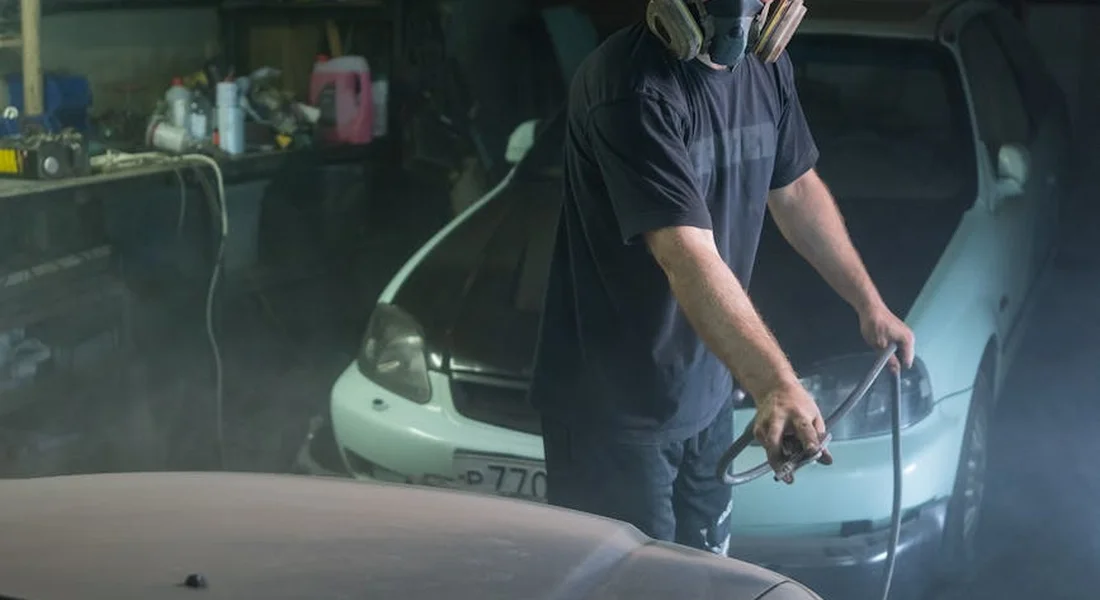
Think of this as building a shield. Your daily habits with the car are what save you from a multi-thousand dollar repaint bill later. It is not complicated. It is about consistency.
Your Wash Technique is Your First Defense
You must wash your car the right way. Every single time. The two-bucket method is not a suggestion, it is the law if you care about your paint. I learned this the hard way with my Jet Black BMW, the one I call the “Swirl Magnet.” One wash with a single bucket and a dirty mitt left fine scratches everywhere. Those scratches weaken the clear coat’s edge, giving peeling a place to start.
Use a dedicated car shampoo. Never dish soap. Dish soap strips away protective waxes and can dry out the paint. Wash in the shade, on a cool surface. A hot panel in the sun makes soap dry too fast and causes water spots. Dry it thoroughly with a clean microfiber towel. Leaving water to evaporate leaves minerals behind that etch the finish.
Create a UV & Contaminant Barrier
Your paint needs a sacrificial layer. This top coat takes the beating from the sun, acid rain, and bird droppings so your factory clear coat does not. That’s how you guard against environmental damage to your car paint. A protectant creates a shield against UV, pollutants, and weathering. Applying a protectant is the single best thing you can do to prevent peeling from environmental attack.
You have choices. For my dark blue F-150 work truck, I often use a simple spray wax after a rinse. It adds shine and a few weeks of protection in five minutes. A synthetic sealant lasts months and beads water fiercely. For maximum defense, a ceramic or graphene coating can last years, creating a rock-hard shell. Here is a simple breakdown.
The right one for you depends on your car and your time. But any of them is better than nothing.
Common Prevention Mistakes (What Not to Do)
I see people make these errors every week. Avoid them.
- Washing a hot car in direct sun. It causes streaking and premature drying.
- Using abrasive polishes or rubbing compounds too often. You are grinding away your clear coat, not maintaining it.
- Letting contaminants bake on. Bird droppings are acidic. Tree sap is glue. Bug splatter, like the kind that plasters my white Tesla’s flat front, bonds to paint when heated. Remove them within a day or two.
- Using a cheap car cover on a dirty car. The cover will grind that dirt into the paint like sandpaper with every gust of wind.
Parking and Storage: The Long Game
Where you park matters for the long term. A garage is the best protection, a carport is a very good alternative, and a quality, clean car cover is a smart backup for outdoor storage. Park away from lawn sprinklers. The constant water and minerals speed up oxidation. If you live near factories or the ocean, industrial fallout and salt are your enemies. Wash them off regularly.
Can I Fix Peeling Paint Myself? A Realistic DIY Guide
Let us be honest. Fixing peeling paint is not like applying a wax. You need a steady hand, patience, and to know your limits. I will tell you what you can realistically handle in your driveway.
Assessment: Is This a DIY Job?
Look at the damage. Be critical. If the peeled area is smaller than a quarter and only the clear coat is lifting, you might be able to fix it. If the base color paint is coming off in flakes or sheets, or if the spot is larger than your palm, the job is for a professional body shop. Trying to fix a large panel failure yourself will likely make it look worse.
The “Spot Fix” Kit: What You’ll Need
For a small clear coat peel repair, you need the right tools. People often search for a ‘car paint peeling repair kit’. You can assemble a better one yourself. Essentials include: repairing clear coat damage and matching the paint color.
- Isopropyl alcohol (for final degreasing)
- Fine grit sandpaper (2000 to 3000 grit, for wet sanding)
- Automotive primer (if bare metal is exposed)
- OEM touch-up paint (matched to your car’s paint code)
- Clear coat touch-up
- A fine polishing compound
Matching the paint code exactly is non-negotiable, and you must work in a clean, shaded, and dust-free space. A garage is ideal. A breezy driveway is not.
Step-by-Step: Repairing a Small Clear Coat Peel
- Clean & Degrease: Wash the entire panel. Then, wipe the repair area with isopropyl alcohol on a microfiber cloth. This removes every trace of wax and oil.
- Feather the Edge: This is the most critical step. Use a small piece of 3000-grit sandpaper, keep it wet, and gently sand the rough, lifted edge of the clear coat. You are not sanding it flat. You are sanding it smooth so it transitions seamlessly into the good paint. Stop before you hit color.
- Layer the Paint: Shake your touch-up paint well. Apply a tiny dot of color. Use the brush or a fine toothpick. Let it dry completely. This can take an hour. Apply another thin layer. Repeat until the color is just slightly higher than the surrounding paint. Patience here defines the result.
- Seal It: Apply the clear coat over the color. Make the clear coat area a little wider than the color patch. This helps it blend. Let it cure. Follow the product’s instructions, but give it at least 24 hours, ideally 48.
- Sand and Buff: Once the clear coat is fully hard, use 3000-grit wet sandpaper again to level the repair spot until it is flush with the rest of the panel. Then, use a polishing compound on a soft pad by hand or with a dual-action polisher to restore the gloss and blend everything together.
What About Fixing Orange Peel Texture in Paint?
This is different. Orange peel is that bumpy texture in the paint, like the skin of the fruit. It is often from the factory or a repair. Fixing orange peel texture is about correcting an imperfect finish, not repairing a failure. The process for how to get orange peel out of car paint involves wet sanding the entire panel with very fine grit (like 1500-2000) to level the surface, followed by multiple stages of compounding and polishing to bring back the mirror shine.
It is an advanced job. You are removing clear coat. Do it wrong, and you burn through to the color. I only attempt it on my own cars after a lot of practice on old panels. For most owners, this is a professional detailer’s task.
How Long Will a DIY Paint Peel Fix Last?
It depends completely on your preparation and the root cause of the peel. A well-executed spot repair on a stable section of paint, topped with a sealant or wax, can last for years. But if you fixed just the symptom and the surrounding clear coat is already degrading from sun damage or a factory defect, the peeling will likely spread outward from your repair. Watch it closely. If it starts again, the panel needs professional attention.
When to Call a Professional: Wraps, Repaints, and Real Costs
Sometimes, you look at the damage and know. The DIY ship has sailed. Maybe the clear coat peel covers the whole roof. Maybe the base coat is flaking off in sheets down to the primer. I hit this point with my old Miata’s hood; the single-stage paint was so thin and brittle, trying to correct it just made it worse. There’s no shame in it. A true professional knows when to call another professional. My job here is to be your trusted advisor, to help you understand what you’re walking into so you can get a fair deal and a lasting fix.
Getting a Quote: What “Paint Peeling Repair Near Me” Really Means
You type “car paint peeling repair near me” into a search bar and get a hundred results. They are not all the same. You need to know which pro to call for your specific problem.
There are three main paths, and picking the wrong one wastes everyone’s time.
- The Detailer (for very minor correction): This is for early-stage issues. Think small spots of clear coat failure on a roof edge, or light oxidation that looks like peeling from a distance. A high-end detailer with a polisher and serious skill can sometimes blend and refine a small area. If the paint is physically lifting or flaking, they will tell you to call a body shop. Their estimate answers the “can this be saved” question.
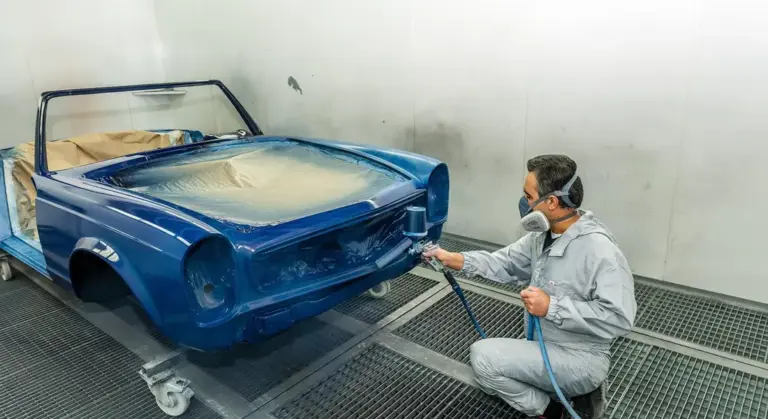
- The Body Shop (for panel repaint): This is for true repair. When paint is missing, a detailer cannot put it back. A body shop will sand the panel down to a stable layer, apply fresh primer, basecoat, and clear coat. This is the only way to truly fix peeled paint. Asking for a “car paint peeling repair cost” here means getting a quote for refinishing a panel, or the whole car.
- The Wrap Specialist (for covering, not fixing): This is a different solution. A wrap shop does not repair paint. They can cover a panel or the whole vehicle with vinyl film, but only if the underlying surface is perfectly smooth and stable. All peeling must be sanded off first, often by a body shop. Wrapping over peeling paint is a guaranteed failure; the vinyl will not stick and the edges of the peel will show through.
Professional Repair Cost Breakdown
Let’s talk numbers. I’ll give you ranges, but you must remember these swing wildly based on your city, the shop’s reputation, and your car. A hood repaint on a common white Honda Civic costs less than the same job on my Jet Black BMW. Black shows every flaw, demanding more labor.
- Spot Repair by a Detailer: $150 to $400. This is for that minor clear coat blend I mentioned. It’s not a repaint, it’s an attempt to salvage and protect what’s left.
- Full Hood or Roof Repaint: $800 to $1,500+. This is a typical body shop job for a single panel. The “+” is for luxury cars, complex colors like tri-coats, or if rust repair is needed underneath.
- Full Vehicle Repaint (Quality): $3,000 to $10,000+. Yes, it’s a huge range. A basic single-color respray starts low. A show-quality job with door jambs, engine bay work, and multiple layers of clear coat hits the top end and beyond.
The main cost driver is not the paint in the can; it’s the skilled labor to prepare the surface. Sanding, masking, priming-this takes hours. Good prep is the difference between a repair that lasts five years and one that fails in one.
Should I Wrap or Repaint My Car After Major Peeling?
This is a practical question. My red Porsche has a full wrap, but that’s to protect perfect factory paint from rock chips. It’s armor, not a bandage. For a car with peeling paint, the choice between vinyl wrap and repaint comes down to your goal and budget. Vinyl wrap is not the same as paint protection film.
Think of it this way:
- Vinyl Wrap: A cosmetic cover. It can hide the problem on a budget. You get a color change or a fresh look for less money than a full repaint, and it’s reversible. But it does not fix the underlying paint. If the peeling continues under the vinyl, it will ruin the wrap.
- Repaint: The permanent solution. It fixes the structure of your finish. It adds value and longevity. It is the only choice if you want the car “right” for the long haul.
The golden rule for both options is the same: all peeling must be completely removed and the surface made glass-smooth and stable. You cannot wrap over a crumbling cliff edge. You cannot paint over it. Any reputable shop, wrapper or painter, will insist on this first. The prep work might cost the same for either path.
Maintaining Your Car After a Professional Fix
You’ve spent good money. Now, protect that investment. A new paint job or a fresh wrap needs a different start than your weathered factory finish did.
First, curing time. Fresh paint needs weeks to fully harden. Your body shop will give you specific instructions. Usually, no wax or sealant for 30-90 days. You can wash it gently with a pH-neutral shampoo. My rule is to not even let bird droppings sit on it during this period.
After curing, the maintenance habits we discussed earlier become your new religion. The two-bucket wash for your fresh black BMW paint. The gentle, alcohol-free cleaners for your new wrap. Consistent sealing every 3-6 months. Parking in the shade. It all applies, but now you’re protecting a much more valuable surface. A professional fix gives you a second chance. Your care routine determines how long that chance lasts.
Maintaining Your Paint’s Health
From correcting the single-stage paint on my old Miata to protecting the soft clear coat on my Tesla, I have found that proactive, gentle care is the only real way to prevent paint peeling. Make a habit of washing with soft microfiber and sealing your paint twice a year; this routine defends against the UV rays and contaminants that cause peeling.
Neglect that routine, and a tiny chip will spread into a rusty, expensive eyesore faster than you think.
Related Guides and Information
- r/askcarguys on Reddit: Cheap diy fix for paint peeling on my new (old) car?
- Amazon.com: Car Paint Peeling Repair
- 5 Ways to Fix Paint Peeling on a Car | Phillips Buick GMC in FL
- How to fix peeling paint on a car?
- How can paint peeling from cars be repaired or prevented? What are some common causes of this issue? – Quora
- How to stop car paint from peeling? | TexAgs