What Types of Paint Are on Your Car? Enamel, Lacquer, and Water-Based Finishes Explained
You could be using the perfect polish, but if it is not matched to your car’s paint type, you will not get the deep gloss you want. I learned this the hard way on my jet black BMW.
I will break down how each paint system works and what that means for your wash, wax, and correction steps. We will cover traditional enamel and lacquer paints, modern water-based systems, and the electrostatic application process.
Use the wrong technique, and you will introduce scratches or chemical damage that only a full repaint can fix.
Quick Snapshot: Automotive Paint Systems for Detailers
As a detailer, you don’t need a chemist’s degree. You need to know how the paint will react to your polisher and your wash mitt. This table breaks down the major types from a hands-on perspective.
| Paint Type | Gloss Potential | Correction Difficulty | UV Resistance | Common Era / Examples | Detailer Notes |
|---|---|---|---|---|---|
| Single-Stage Lacquer | High, but clouds easily | Moderate (soft, can burn) | Poor (fades/chalks badly) | Pre-1980s classics. My 1995 Miata’s original red. | The “Restoration” paint. Polishing reveals fresh color but requires a gentle touch. Finish with a pure sealant, not a wax that can stain. |
| Single-Stage Acrylic Enamel | Good, hard finish | High (very hard) | Fair to Good | 1980s-early 1990s domestics, trucks. | The “Workhorse” paint. Tough to correct, but durable. Often shows heavy oxidation that needs heavy compounding. |
| Basecoat/Clearcoat (Solvent-Based) | Exceptional | Variable (clear coat hardness varies) | Excellent | Mid-1990s to mid-2000s. My 2016 BMW’s Jet Black. | The modern “Swirl Magnet.” You only polish the clear coat. Harder clears resist marring but are tough to correct. Softer clears finish beautifully but scratch if you look at them wrong. |
| Water-Based Basecoat / Clearcoat | Exceptional | Variable, often soft | Excellent | 2007-Present (most new cars). My Tesla and Porsche. | Today’s standard. Clear coats are often softer, making them very detailer-friendly for correction but prone to wash-induced swirls. Extra care in washing is non-negotiable. |
Why Every Detailer Needs to Know Their Paint Type
Think of paint type like wood. You wouldn’t sand oak with the same grit you use for balsa wood. Your polisher is your sander. The paint tells you which “grit” to start with.
Getting this wrong means you either waste hours making no progress or, worse, you burn through the clear coat on a customer’s car. I learned this the hard way on my old Miata.
It Dictates Your Attack Plan for Correction
With single-stage paint, like on my 1995 Miata, the color and the protection are one layer. When you polish, your pad turns the color of the car. You are literally revealing fresh, unfaded paint. You use a milder compound because the goal is to gently abrade the oxidized layer away, not cut deep.
With a modern basecoat/clearcoat system, like on my Tesla, you are working only on the clear coat. The color layer beneath is thin and fragile. If you break through the clear, you cause catastrophic damage. You choose compounds and pads based on the hardness of that clear coat. My BMW’s hard clear needs a more aggressive pad. The Tesla’s softer clear needs a gentle polishing pad and fine compound.
Your test spot is not a suggestion. It is your blueprint for the entire job. It tells you the paint’s hardness and how it responds to your chosen combo.
It Changes How You Wash and Maintain
Soft clear coats, common on modern water-based systems, are unforgiving. A dirty wash mitt, a gritty drying towel, or a drive-through brush wash will leave spiderwebs of fine scratches. This is why the two-bucket method is gospel for cars like my Porsche or Tesla.
Older single-stage paints are less prone to showing fine swirls but are vulnerable to staining. Bird droppings, sap, and even some carnauba waxes can stain the porous paint. You maintain them with neutral pH shampoos and pure polymer sealants.
The “Cast” Car Breakdown
- The 1995 Miata (Single-Stage): My correction process is about restoration. I use a medium-cut compound on a foam pad to cut through the chalky, oxidized red and bring back the deep color. The paint is forgiving of technique but stains easily.
- The 2020 Tesla (Soft Water-Based Clear): My correction is about precision. I use a fine finishing polish on a soft pad to remove light wash marks. My washing technique is meticulous because any mistake is instantly visible on that flat, white panel.
- The 2016 BMW (Hard Clearcoat): My correction is about patience. The hard clear resists light defects but is a beast to correct when swirls are deep. It requires a more aggressive compound and firm pressure, followed by multiple steps to restore the gloss.
Holding a polisher without knowing your paint is like using a chainsaw blindfolded. You might get the job done, but the risk of ruin is high. Identify first, then formulate your plan.
How to Identify Your Car’s Paint System
Before you pick up a polisher, you need to know what you’re working on. It changes everything. I learned this the hard way years ago.
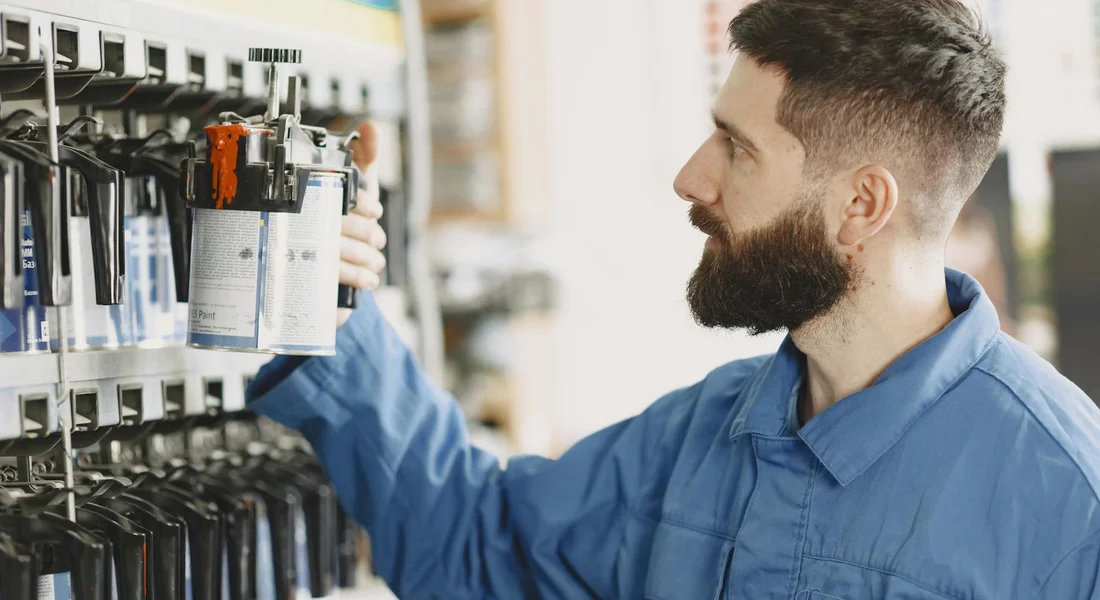
First, find your paint code. Open your driver’s door and look at the sticker on the door jamb or pillar. You’ll see a combination of letters and numbers labeled “Color” or “Paint.” It might say something like “A96” or “D4.” These codes, like automotive paint type d or automotive paint type a, are your car’s fingerprint. That fingerprint is your car’s paint color code. You’ll use it in the next steps to find the exact color match.
Your paint code is the absolute starting point for any touch-up or color matching, and it tells the factory story of your finish.
Next, figure out if it’s single-stage or clearcoat. The “bag test” is my go-to. Take a clean, white foam polishing pad or a piece of white microfiber. Apply a little bit of fine polish or compound to it. Rub it firmly on a small, inconspicuous spot, like inside the door jamb or under the trunk lid. If the pad turns the color of your car, you have single-stage paint. If the pad stays white, you’re working on a clearcoat.
I did this on my ’95 Miata. The pad came back bright red. That’s how I knew I could bring that faded pink hood back to life by polishing the actual color layer.
For decoding your specific code, don’t just guess. Use a reputable online database. A search for your car’s make, model, year, and “paint code” will point you to good sites. For example, Autodetailpedia’s paint code finder is an excellent resource. If you’re digging for deep technical specs, searching for “automotive paint types pdf” from known paint manufacturers or industry bodies will give you the most reliable information.
Single-Stage Paint: The Old-School Workhorse
This is where classic cars live. Single-stage means the color and the protective resin are all in one layer. You mainly find it on vehicles from the mid-80s and older. It encompasses two big names: Lacquer and Acrylic Enamel.
Lacquer dries by solvent evaporation. It’s famously thin and builds in many coats. Acrylic Enamel is harder, often cured with a catalyst. To the touch, both types often feel thicker and softer than modern clears. They can have a deep, warm glow that’s hard to replicate.
Restoring single-stage paint is one of the most satisfying jobs, because you’re literally revealing fresh color, not just fixing the clear layer.
That Miata of mine was a chalky, pinkish shadow of itself. I used a mild compound on a polishing pad, and with every pass, the true, vibrant red emerged from the oxidation. The paint didn’t just get shiny, it came back to life.
People often ask, “can you paint a car with enamel paint?” You absolutely can, and many older cars were. For a modern factory finish, it’s obsolete. You might find it on a cheap repaint or a classic restoration. It’s durable, but the technology has moved on to acrylic enamel.
A key warning: some very old lacquer systems were applied directly to metal. If you hear about automotive paint types bad for metal, this is it. Without a proper primer or sealer, moisture can get underneath and cause corrosion. A modern paint system is a sandwich of protection for a reason.
Basecoat/Clearcoat: The Modern Standard
This is the system on your car if it’s newer than the early 1990s. It’s a two-part sandwich. First, a thin layer of pigmented basecoat is applied. This gives the color, metallic flake, or pearl effect. Then, multiple thick, clear layers of a hardened resin (the clear coat) are laid on top.
When you are washing, polishing, or applying wax to a modern car, you are almost exclusively interacting with the clear coat. That’s why the wax you choose for the clear coat matters. A quality wax protects the finish and helps preserve the car’s shine over time.
The color layer underneath is fragile. The clear coat’s entire job is to take the UV rays, the scratches, and the environmental abuse. My black BMW is the perfect example. Its jet black paint looks incredible for one hour after a perfect detail. Then a soft breeze seems to put fine swirls in it. Those scratches aren’t in the black paint. They’re holograms and defects marring the clear coat layer above it. Correcting them means carefully leveling that clear coat until it’s smooth and transparent again.
If someone asks “What is the most common type of car paint?” on a car built in the last 30 years, basecoat/clearcoat is the answer. It allows for incredible visual effects and provides a durable, shiny surface we can maintain. When you’re choosing among car paint types, factors like durability, finish, and maintenance matter. Understanding how basecoat/clearcoat compares to other options can help you decide which type fits your vehicle and budget.
Water-Based Paints: The Eco-Friendly Evolution
This is where things get misunderstood. Starting in the 1990s and now standard, many manufacturers switched to water-based paints. Here’s the critical detail everyone misses: the water-based part is only the *basecoat*. The final clear coat layer is still a solvent-based, chemical-cured urethane.
The water-based revolution was for environmental and regulatory compliance in the factory, not necessarily to change how you detail the finished car.
The impact on us is often seen in the clear coat. To meet overall emission standards, some manufacturers use softer clear coats. They cure differently. My Tesla’s clear coat is a good example. It’s softer than the BMW’s. I use gentler polishing pads and less aggressive products on it. You can’t lean on the polisher the same way. A one-step polish often does the trick where another car might need a compound.
So, are water-based paints good for cars? From an environmental and manufacturing standpoint, yes. From a durability standpoint, the finish is perfectly fine. The protection and longevity come from that robust solvent-based clear coat on top. Your job is to learn its specific character-often softer-and adjust your technique to care for it without causing new damage.
Electrostatic Application: The Factory’s Secret for Uniformity
Have you ever looked at a brand new car and wondered how the paint got so perfectly, impossibly even? That glassy finish on my red Porsche doesn’t happen by chance. It’s the result of a brilliant industrial trick that uses the same force that makes your socks cling to a sweater.
So, how is static electricity used to paint cars? It’s simple science. The car’s bare metal body is given a positive electrical charge. The paint, atomized into a fine mist, is given a negative charge as it sprays from the gun. Opposite charges attract. This magnetic-like pull actively draws the paint particles onto every square inch of the metal surface, even into tight crevices and edges that a regular spray would miss.
The result is a phenomenally uniform coat with almost no waste, which is why this is strictly a factory and professional refinishing process. The equipment is massive, the safety protocols are intense, and the environment is a sealed, climate-controlled “clean room.” This method, known as electrocoating or e-coat, is a huge reason your car’s original paint looks so deep and consistent. It’s the foundation that makes later paint correction on my black BMW possible.
You won’t be using an electrostatic sprayer in your garage. The process is for building a perfect base. But the principle matters to us as detailers. Knowing that the factory paint was applied with this wrap-around efficiency explains its durability and why we must be so gentle when cleaning and correcting it.
You might see electrostatic tech in a specialized shop when refinishing alloy wheels or a vehicle’s frame. Before a wheel is powder-coated or painted, it’s often cleaned and then electrostatically primed to ensure total coverage behind the spokes and in every lug hole. This industrial touch is part of why cleaning the heavy brake dust off my Porsche’s wheels requires specific, non-acidic cleaners to preserve that flawless factory-applied finish. If you’re having wheels refinished, ask if they use an e-coat primer. It’s a sign of a quality shop.
The main question this answers is: how does static electricity apply to car paint application? It’s all about transfer efficiency and wrap-around coverage. Nearly every particle of paint ends up on the car, not drifting into the air or overspray barriers. The attraction also forces the paint to wrap onto surfaces, creating a more uniform film thickness. This means better corrosion protection and a smoother starting point for the color and clear coats that follow. It’s engineering for perfection, something we appreciate every time we wax a panel and see a perfect, unbroken reflection.
Paint Correction Guide: Adjusting Your Technique for Each Type
Knowing what you’re working on changes everything. Your approach to fixing scratches, swirls, and oxidation must match the paint system. In a scratch repair paint correction workflow, the strategy is tailored to the paint system. Using the wrong technique can ruin a finish. This guide shows you how to adjust. Follow the next steps to see the workflow in action.
Working on Single-Stage Paints (Lacquer & Enamel)
My 1995 Miata taught me respect for single-stage. The color is in the paint itself, with no clear coat on top. When you polish, your pad turns red. It’s soft and can be worked beautifully, but it’s also easy to burn through.
For single-stage lacquer or enamel, always start with the gentlest method possible and inspect your pad frequently for pigment transfer.
- Polisher: A dual-action polisher is safest. Use a rotary buffer only if you have deep experience with single-stage.
- Pad: Begin with a soft, clean foam finishing pad. Only step up to a light cutting pad if the defects are severe.
- Product: Use a fine, non-aggressive polish or a pure finishing glaze. Avoid heavy compounds unless absolutely necessary.
- Technique: Use slow arm speed, low to moderate speed settings, and keep the polisher moving. Stop often to wipe the area and check your progress. The goal is to rejuvenate the paint, not remove a lot of it.
The risk here is not creating holograms, it’s going straight through to primer. Work in small sections and let the paint’s response guide you.
Working on Modern Basecoat/Clearcoat Systems
My black BMW is the poster child for this. You are correcting the clear coat, a hard, transparent layer protecting the color beneath. You cannot burn through by polishing, but you can inflict new damage if you’re careless.
Modern clear coats are tough but scratch easily, so your goal is to remove defects without leaving new micromarring from dirty pads or aggressive tools.
- Polisher: Both dual-action and rotary buffers are common. DA is safer for beginners and often all you need.
- Pad: You have more freedom. Match the pad aggressiveness (finishing, polishing, cutting) to the severity of the swirls. A medium-cut foam pad is a common starting point.
- Product: Use a dedicated compound for heavy defects, then follow with a finer polish to refine the finish. Two-step corrections are standard here.
- Technique: Clean your pads often with a spur or compressed air. Use firm, even pressure and make overlapping passes. The hard clear coat requires more passes or more aggressive products to see results compared to single-stage.
Remember, you are removing a microscopic layer of clear coat. While the risk of burn-through is low on factory paint, it becomes high on repainted panels or edges where the clear is thin.
Blending and Correcting Repaired Areas (Spray Paint & Repaints)
The question of how to make spray paint look good on a car comes down to patience and blending. A repainted fender or a touch-up spot will behave differently than the surrounding factory paint.
New paint, especially from a rattle can or a small shop repair, needs weeks to fully cure and harden. The solvents are still escaping. Correcting it too soon will cause gumming, tearing, and a ruined finish.
Wait at least 60 days before attempting any machine polishing on a fresh repaint, and always do a test spot in an inconspicuous area first.
- The Blend Zone: The goal is not to level the entire new panel. Focus on blending the very edge where the new paint meets the old. Use the least aggressive polish and a finishing pad to gently feather this boundary, making the transition invisible.
- Touch-Up Spots: For small chip repairs, let them cure completely. Then, use a very small, soft pad (like a microfiber applicator) and a gentle polish by hand to lightly level the raised edges of the touch-up paint. Do not try to remove the touch-up itself.
- Know the Risks: Repainted panels often have less clear coat thickness than factory paint. They are the most likely place you will burn through during correction. Use a paint thickness gauge if possible. If you don’t have one, extreme caution is your only tool.
Matching the gloss of a new repair to the old car is the final challenge. Often, a light one-step polish on the entire panel, or even the whole car, is needed to unify the gloss after a local repair.
Caring for and Protecting Each Paint Type
Knowing what’s on your car changes everything. It guides your entire detailing plan. The wrong product on the wrong finish can ruin months of protection or, worse, damage the paint itself. Let’s get specific about care.
Single-Stage Paint: Feed the Pigment
My 1995 Miata taught me about single-stage. When I bought it, the red was a chalky pink. The color wasn’t gone. It was just starving and oxidized. Single-stage paint protection is about nourishment as much as it is about shielding. You are caring for the pigment layer directly.
Traditional carnauba-based paste waxes are fantastic here. They often contain natural oils that can slightly enrich and darken the color. Look for non-abrasive “cleaner waxes” that have very mild polishing agents. They can gently remove surface oxidation while leaving behind protection. Synthetic “paint sealants” also work well, offering longer durability. The goal is a product that bonds to the paint and provides a sacrificial layer.
Application is key. Work on a cool, shaded panel. Apply a thin coat with an applicator pad, let it haze, and buff off with a clean, soft microfiber. On a well-maintained single-stage car, the difference is instant and deep.
Modern Clear Coat: Seal the Shell
Your clear coat is a hard, transparent plastic shell. My black BMW is the perfect example. It doesn’t need “feeding.” It needs a durable, slick barrier on top to prevent scratches and environmental damage. For clear coat, longevity and surface hardness are your primary goals.
This is where ceramic coatings and SiO2-infused spray sealants excel. They form a semi-permanent, rock-hard bond to the clear coat. Water beads up and rolls off, taking dirt with it. They offer far better chemical resistance against bug splatter, bird droppings, and road tar than traditional waxes.
Paint correction comes first. Applying a ceramic coating over swirls, like the ones on my 3-Series, just locks in the defects. You must polish the clear coat to perfect smoothness before applying these long-term protectants. For most DIY owners, a high-quality SiO2 spray sealant applied every few months is the perfect balance of performance and ease.
The Universal Rule: pH-Neutral Wash Soap
This is non-negotiable, regardless of your paint type. Harsh, alkaline soaps strip wax and sealants. Acidic soaps can etch and dull the surface. Using a pH-balanced car wash shampoo preserves your protection and is critical for water-based paints.
Water-based color coats, now the global standard, are more sensitive to chemical attack. A strong alkaline soap can slowly degrade this layer over thousands of washes. A gentle, pH-neutral shampoo lifts dirt without attacking the paint’s chemistry or the expensive coating you just applied.
It also makes washing safer. A good lubricating soap allows dirt to slide off the surface without grinding into the clear coat, preventing the swirls I constantly fight on my black car. Always use the two-bucket method with grit guards. This one habit does more to protect your paint than any fancy product applied incorrectly.
Choosing Your Products: A Category Guide
Forget brand names for a moment. Think about the job you need the product to do. Here is a simple guide based on paint type:
- For Single-Stage Paint Restoration & Care:
- Non-Abrasive Cleaner Wax or Pre-Wax Cleaner
- Natural Carnauba Paste Wax (for depth and warmth)
- Synthetic Paint Sealant (for extended durability)
- Light polishing compound for oxidation removal
- For Modern Clear Coat Maintenance & Enhancement:
- pH-Neutral Wash Shampoo
- Iron Remover and Tar Remover (for decontamination)
- Clay Bar or Synthetic Clay Mitt
- Machine Polishes and Compounds (for correction)
- Ceramic Coating or SiO2 Sealant (for primary protection)
- Spray Ceramic Topper or Detail Spray (for maintenance washes)
- For All Paint Types (The Essentials):
- High-Pile, Plush Microfiber Wash Mitts
- Soft, Edgeless Microfiber Drying Towels
- Separate, dedicated microfiber towels for wheels, glass, and paint
- Isopropyl Alcohol or Panel Prep Solution (for final cleaning before sealing)
Start with the right category for your paint. Your results will be better, and your paint will last for decades. My Miata is red again, my BMW’s swirls are under control, and my F-150’s clear coat shrugs off salt. Match the care to the canvas.
Detailer’s Product Tier List for Paint Care
I keep three sets of products in my shop. They match how I care for my own cars. You do not need the pro kit for a daily driver. Match the tools to the job and your goals.
Budget/Weekly Driver Tier
This kit is for maintenance. It keeps a frequently used car clean and protected with minimal time and cost. I use this on my Ford F-150 and Honda Odyssey most weeks.
Gentle wash soap is your foundation here. A pH-neutral formula will not strip existing wax. Choose a car wash soap that’s gentle on wax to keep your strip wax intact. It helps protect the finish while lifting grime. On the Odyssey, after hauling kids and groceries, I foam the entire van, let it dwell, and rinse. The soap lifts grime without needing a heavy scrub.
- Product Note: Look for soaps labeled “wash and wax” for added lubrication.
- Use-Case: The F-150’s flat panels collect mud. A gentle soap and a microfiber mitt get it clean without scratching the dark blue paint.
A quality spray wax is your secret weapon for fast protection. After drying the car, I mist it on and wipe it off. It adds gloss and makes the next wash easier.
- Practical Step: On a cool panel in the shade, spray one section at a time. Buff immediately with a clean towel.
- Safety Reminder: Wear gloves if you have sensitive skin. Some sprays can be slick on garage floors.
Enthusiast/Correction Ready Tier
This is for when you need to fix the paint. It is for removing swirls, water spots, or prepping for a stronger sealant. My BMW 3 Series and Tesla Model 3 demand this level.
A dual-action polisher paired with a medium-cut polish is your correction workhorse. The random orbit is safe for beginners. On the BMW’s jet black paint, I use this combo to erase holograms from poor washes.
- Actionable Step: Tape off trim. Use a backing plate and a foam polishing pad. Apply three pea-sized dots of polish, spread at low speed, then work at medium speed in overlapping passes.
- Use-Case: For the Tesla’s soft clear coat, I use the same polisher with a finer polish to clean etched-in bug splatter from the front bumper.
Follow correction with a ceramic spray sealant. This bonds to the clean paint for months of protection. It gives a slick, high-gloss finish.
Always do a test spot on an inconspicuous area to confirm your polish and pad combination works. This prevents over-thinning the clear coat, which can lead to clear coat damage.
Show Car/Pro-Level Tier
This is for ultimate results or long-term preservation. It involves multiple steps and significant time. I reserve this for my Porsche 911 and the Mazda Miata restoration.
A multi-step compound and polish system is necessary for severe defects. Compound removes deep scratches and heavy oxidation. Polish refines the finish to a high gloss.
- Practical Step: On the Miata’s single-stage paint, I compounded the oxidized hood until the red color returned to the towel. Then, I polished it to a deep, warm shine.
- Use-Case: For the Porsche’s paint protection film (PPF), I use a very fine finishing polish to remove any minor scuffs without damaging the film.
A long-lasting ceramic or graphene coating is the final step. This is a permanent liquid layer that protects for years. Application is critical.
- Actionable Step: Decontaminate and polish the paint perfectly. In a dust-free garage, apply the coating in small sections. Level it before it flashes. Proper ventilation and gloves are non-negotiable for your health.
- Use-Case: On the Porsche, the coating makes brake dust rinse off the alloy wheels with just water.
Common Paint Fails and How a Detailer Spots Them
Knowing your paint’s personality isn’t just about pride. It’s your first line of defense. A trained eye can spot a paint’s history, its weaknesses, and its cries for help long before a casual glance sees “dirty.” Here’s what I look for on every car that rolls in.
Orange Peel: The Factory Texture
Run your hand across a brand-new car’s door. Feel that slight bumpy texture, like the skin of an orange? That’s “orange peel.” It’s not a defect, but a natural result of how modern clear coat is sprayed and cured at the factory. I see it on every modern car, from my kid-hauling Odyssey to the Garage Queen 911. The goal in detailing isn’t to eliminate it, but to work with it. A perfectly polished surface will still have a subtle, uniform texture. If the orange peel is wavy or uneven, that often points to a lower-quality repaint where technique was off.
Solvent Pop: The Repaint’s Tiny Bubbles
This one is a classic sign of a rushed repaint. Look closely in bright, raking light. You’ll see a constellation of tiny, pinhead-sized bubbles or craters trapped under the clear coat. They happen when paint is applied too thickly, or the wrong thinner is used, and solvents get trapped as the top layer dries too fast. They can’t be polished out. On my F-150’s repainted tailgate from a minor scrape, I found a few. It tells me the clear coat on that panel is more fragile and requires gentler care than the factory panels around it.
Burn-Through: The Detailer’s Nightmare
This is the mistake I fear most when correcting paint. It happens when you use a polisher with an aggressive pad or compound for too long in one spot, cutting completely through the clear coat and into the base color layer. On a white car, it looks like a sudden, dull gray patch. On my black BMW, it would be a ghastly, chalky smudge that no amount of glaze can hide. Once you burn through, the only fix is a respray of that panel. This is why I always, always start with the least aggressive method and constantly check my work.
Oxidation: Single-Stage Paint Fading Away
Modern cars have a separate, sacrificial clear coat. Older single-stage paints, like on my ’95 Miata, don’t. The colored pigment is exposed. When UV protection fails, the paint surface literally chalks and fades. It loses its gloss and turns hazy or pale. That classic red turns pink. You can often rub a white towel on it and see color transfer. The good news? This can often be restored with careful polishing, which removes the dead, oxidized layer to reveal fresh color underneath. It’s one of the most satisfying transformations in detailing.
How Long Does Car Paint Last, Really?
People ask me this all the time. A factory paint job, if left completely untouched and exposed to the elements, might look tired in 5-7 years. Clear coat fails, oxidation sets in. But that’s like asking how long an engine lasts without oil changes. With a consistent detailing regimen-regular washing to remove acidic contaminants, periodic decontamination (clay bar), and applying protective sealants or waxes-you can easily double that lifespan. I’ve seen 15-year-old cars with factory paint that still looks deep and wet. The paint doesn’t just “last;” its appearance and protective function are maintained by the care you put into it.
Final Thoughts on Automotive Paint Care
The single most important piece of advice I can give you is to always identify your vehicle’s paint system before any detailing work begins. Knowing if you have a soft water-based clear coat like on my Tesla, or a single-stage enamel like on my Miata, dictates every product and technique you should use, preserving that showroom shine without causing harm.
Skip this step, and you risk instilling permanent swirls, hazing the finish, or burning through the color layer on older paints.
Sources and Additional Information
- The Differences Between Acrylic Enamel and Urethane Auto Paints – The Garage™
- The Pros and Cons of Acrylic Car Paint – CarsDirect
- Enamel Paint vs Lacquer Paint | DoItYourself.com
- Automotive paint – Wikipedia
- Acrylic Enamel vs. Lacquer: Key Differences Explained
- Painting do’s and don’ts. mixing laquer and enamel | Rocketry Forum – Model Rocketry Forums
Max Gunther
Max is an automotive enthusiast having worked as a car mechanical and in interior detailing service for over 25 years. He is very experienced in giving your old car, a new fresh vibe. He has detailed many cars and removed very tough smells and stains from all kinds of cars and models, always ensuring that his work and advice helps his customers. He brings his first hand experience to his blog AutoDetailPedia, to help readers breath new life into their car interiors.