How Much Does a Custom Paint Job Really Cost? Matte Black, Vantablack, and Chrome Explained
Staring at a custom paint estimate can leave you guessing which number is fair. I know the feeling, whether pricing a refresh for my workhorse F-150 or a show-quality coat for my garage-kept Porsche.
This guide will walk you through the key factors that set the price, honest cost ranges for matte, standard black, Vantablack, and chrome finishes, and how paint protection film or ceramic coating safeguards your investment.
Without this knowledge, you risk overpaying for a finish that chips or oxidizes within a year.
Key Takeaways: The Cost of a Dream Finish
Let’s get straight to the numbers. This table gives you a realistic snapshot of what to expect for these four iconic finishes.
| Finish | Typical Price Range | Difficulty/Skill Level | Prep Intensity | Long-Term Maintenance Note |
| Matte Black | $5,000 – $10,000+ | High | Extreme | Requires specific matte-safe products. Cannot be polished like gloss. |
| Gloss Black | $4,000 – $8,000+ | Medium-High | Extreme | Shows every swirl and scratch. Demands meticulous washing and protection. |
| Vantablack (VBx2) | $15,000 – $25,000+ | Extreme | Maximum | Incredibly fragile coating. Hand-wash only, avoid all contact. More art than finish. |
| Chrome | $10,000 – $20,000+ | Extreme | Maximum | Prone to pitting and oxidation. Cleaning requires non-abrasive, dedicated chrome cleaners. |
The biggest takeaway isn’t in the paint code, it’s on the shop’s timesheet: labor is almost always your largest cost, not the material. A premium paint might cost a few hundred dollars more per gallon, but the hundreds of hours of skilled labor to apply it flawlessly is what you’re really paying for.
What Really Drives the Price of a Custom Paint Job?
Think of a paint job like building a house. The final color is the siding and trim you see, but the cost and longevity are determined by the unseen foundation and framing. A cheap paint job fails because the prep was rushed.
Prep Work: The Unseen Foundation
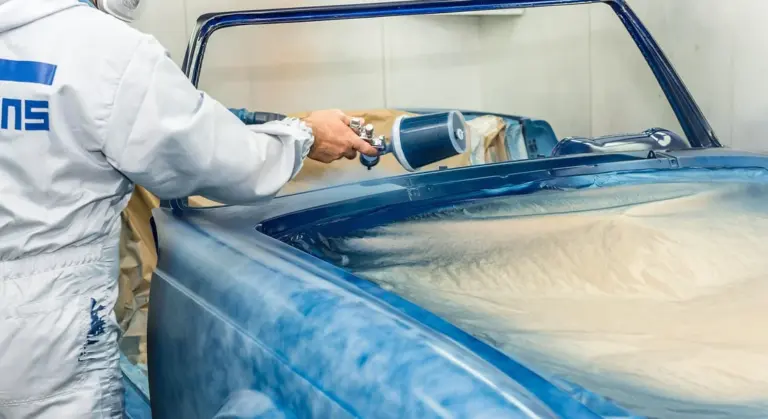
This is where a true custom job begins. A shop can’t just spray over your old paint. Every panel needs to be stripped to bare metal or sanded to a perfectly feathered, smooth primer. Any dent, even a small one, must be pulled and filled. Any rust must be cut out and replaced with new metal, especially when_done during repair and repainting of metal panels.
Masking is an art. A “jam job” means they paint the door jambs, trunk lid interior, and under the hood. This is the standard for a full color change. A “blow-over” is cheaper-they just mask everything off and spray the exterior panels, leaving the original color visible when you open a door.
I learned this the hard way on my black BMW: skipping proper prep guarantees failure, as old contaminants or poor repairs will bubble through the new finish in months.
Labor & Shop Rates: The Clock is Ticking
Shop rates vary wildly, from $50/hour in a rural area to over $150/hour at a elite metropolitan shop. The reputation of the shop directly impacts their rate. A maestro who paints show-winning hot rods commands more than a general collision center.
This is the answer to “custom paint cost near me.” An urban shop with high overhead and demand will cost more than a skilled artisan working in a smaller town, but you must vet their portfolio regardless of location.
Materials: More Than Just Color
You’re paying for a system. High-build primer, sealer, the color coats, and the clear coat. The choice between single-stage paint (color and gloss in one) and a basecoat/clearcoat system changes the process and cost. Almost all custom jobs use base/clear for depth and durability.
Special effect pigments explode the cost. Metallic flakes, chromaflair pigments that shift color, and especially the nanomaterials in something like Vantablack VBx2 are astronomically expensive. True chrome plating involves toxic chemicals and meticulous electroplating labor, which is why it rivals a cheap car’s value.
A single gallon of a high-end paint might be $500, but the real material cost is in the volume needed for multiple coats and the specialized clear coats designed for matte or extreme-gloss finishes.
A Detailer’s Guide to Different Black Finishes
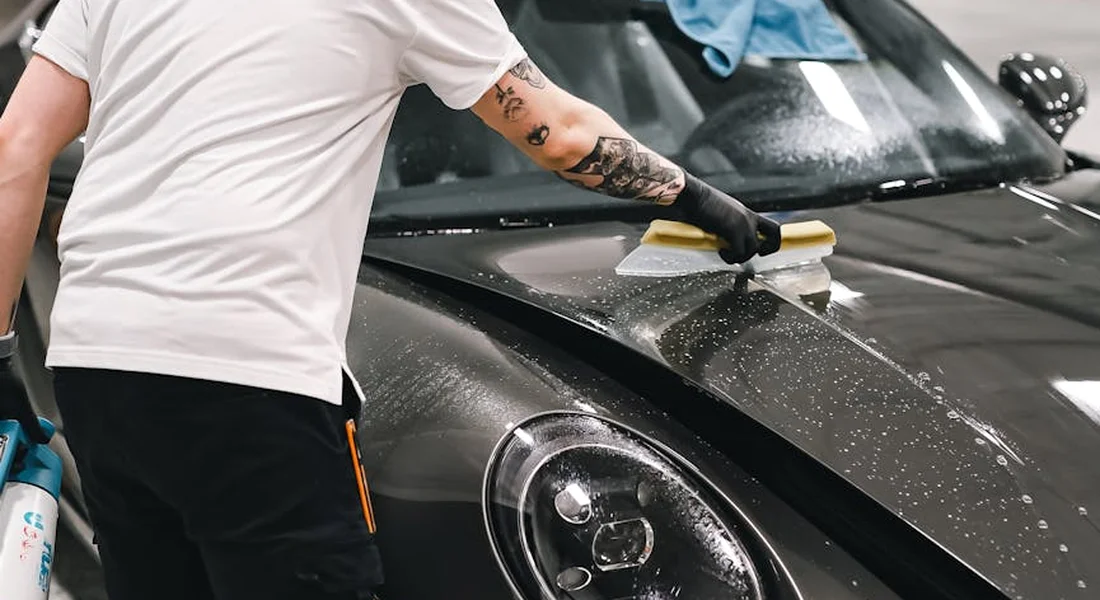
Think of choosing a black finish like picking a tool from your detailing cart. A rotary polisher and a foam cannon are both for cleaning, but you use them for very different jobs. Each type of black has its own personality, cost, and a specific set of rules for keeping it looking right. Get the maintenance wrong, and you can ruin the finish.
Gloss Black: The Classic Mirror
I live with this every day with my 2016 BMW 3 Series, the one I call the “Swirl Magnet.” A perfect gloss black finish is a liquid mirror. It has more depth than any other color. The problem is it shows every single flaw. A light swirl from a bad wash looks like a deep scratch. A faint hologram from a buffer stands out like a neon sign.
This unforgiving nature is why a top-tier gloss black paint job is often the most expensive standard finish you can get. The cost isn’t just in the paint. It’s in the hundreds of hours of flawless preparation. Every panel must be sanded to a perfectly smooth, scratch-free surface before a single drop of color is applied. Any imperfection under the paint will telegraph through and be magnified by that mirror-like surface.
After the base black is laid down, multiple layers of high-gloss clear coat are applied. These layers are then meticulously sanded and polished to an optically perfect finish. This benchmark of labor and skill is what we use to price other finishes.
Matte/Satin Black: The Modern Velvet
This isn’t just regular paint without a clear coat. A true matte or satin finish uses a specialized clear coat formulated to diffuse light, not reflect it. The result is a surface that looks and feels like soft velvet or suede. It’s a stunning, modern effect.
Here is the critical detail every shop knows and every owner must understand. Because the finish doesn’t reflect light, it cannot be sanded or polished after application without destroying the matte effect. Every sanding scratch, every piece of dust trapped in the clear, every slight texture variation will be visible forever. The prep work has to be absolutely perfect the first time, which often makes the labor for a quality matte job even more intensive than gloss.
The maintenance is completely different. You can never use wax, sealants, or ceramic coatings made for gloss paint. They will create shiny, permanent spots. You clean it with pH-neutral shampoo and use only detailers specifically labeled for matte finishes. My Tesla’s satin wrap gets cleaned with a matte-specific spray and dried with a super-soft towel to prevent any gloss-inducing friction.
So, how much does it cost to paint a car matte black? For a full, professional respray with proper matte clear coat, expect to pay a premium. You are often looking at 20% to 50% more than that benchmark gloss black job. A high-quality matte wrap is a more practical and reversible alternative, typically costing between $3,000 and $7,000 for a full car.
The Truth About Vantablack on Cars
Let’s answer the big question directly. Can you paint a car Vantablack? Technically, no. Not in any way a body shop can do.
Vantablack is not a paint. It is a coating of vertically-aligned carbon nanotubes grown in a laboratory vapor deposition chamber. Applying it requires a vacuum chamber, which means disassembling the entire car and treating each piece individually. The cost is astronomical, likely well into the hundreds of thousands for a single vehicle.
Beyond cost, there are serious practical and legal issues. Vantablack absorbs over 99.96% of visible light. It turns a 3D object into a 2D black hole. On a road, this is a major safety hazard. Other drivers cannot judge the car’s shape, distance, or speed. It would likely be deemed illegal for street use in most places.
What you are actually seeing in photos are “spiritual successors.” These are ultra-flat, super-black wraps or specialized paints like Musou Black or Black 3.0. They absorb a tremendous amount of light (often 98-99%), creating a similar, mind-bending effect. You can get your car wrapped in a super-black vinyl for a few thousand dollars. It is still high-maintenance and shows every speck of dust, but it is the only realistic way to get that “void in space” look without a science lab.
The Chrome Finish: Liquid Metal
Let’s get one thing straight. What you see advertised as a “chrome paint job” is almost never real chrome plating. It’s a trick of the light. These are hyper-reflective metallic silver basecoats topped with an incredibly clear, high-gloss layer. They look wet and mirror-like, but they’re still paint. True chrome plating is a different beast entirely. It’s a thin layer of actual chromium electroplated onto metal. The difference is in the depth and the reflection. Real chrome has a cold, liquid-metal quality you can feel.
The process to get real chrome on a car body is a marathon, not a sprint. It’s why a full-body chrome plate is a five-figure endeavor, easily starting at $15,000 and soaring past $50,000 for a show-quality finish. First, every single piece of trim, emblem, and fixture must be removed. The body is stripped to bare metal. Then comes the plating bath. It’s not one dip. It’s three. A layer of copper is plated first to fill imperfections and create a smooth foundation. Then a layer of nickel goes on for brightness and corrosion resistance. Finally, a microscopic layer of chromium provides the signature bluish-silver shine and hardness. Each stage requires precise chemical baths, electrical currents, and expert polishing. The labor, the chemicals, and the environmental controls make it astronomically expensive.
From a detailer’s perspective, chrome is a maintenance nightmare. It is unforgiving. Water spots etch into the surface almost instantly if not dried properly. Road film and brake dust cling to it. You can’t correct scratches or swirls with a polisher; you’d wear right through the thin chrome layer. Keeping my old BMW’s chrome window trim spot-free was a constant battle. A simple routine to clean and maintain chrome trim goes a long way toward keeping it bright. This high-maintenance reality is a big reason you rarely see new chrome-bodied cars; most “chrome” accents today are just shiny plastic or easily maintained wraps.
So, what’s a realistic alternative? Chrome vinyl wrap. For a fraction of the cost and commitment, a skilled installer can wrap your entire car in a chrome-finish vinyl. My local wrap shop has a roll of “Brilliant Chrome” vinyl that looks stunning from ten feet away. It’s not the same as plating, but it gets 90% of the visual impact. The best part? It’s reversible and protects your factory paint underneath. You can have the liquid metal look for a few years, then peel it off when you’re tired of keeping it flawless. For most of us, that’s the smart play.
Product Tier List: Protecting Your Investment
You just spent good money on a custom paint job. Now, the real work begins. This is not about the paint itself, but about keeping it looking new. I categorize aftercare products into three simple tiers. Think of it like buying tools. You match the tool to the job. A daily driver needs different care than a garage-kept show car.
Choosing the right protection tier saves you time and money, preventing premature fading and damage.
Budget/Weekly Driver Tier: Reliable and Simple
This is for cars that see rain, sun, and miles. Your goal is efficient protection without a weekend-long ritual. I use this approach on my 2018 Ford F-150, the dark blue workhorse. It gets muddy and sees road salt.
Focus on two products: a pH-neutral shampoo and a spray sealant. A pH-neutral shampoo is gentle. It cleans without stripping away the wax or sealant you just applied. A spray sealant is your best friend. It applies in minutes after a wash and adds a solid layer of defense.
- Wash with a pH-neutral shampoo. Feel the slickness as it suds up. It should glide over the paint.
- Dry the car thoroughly with a clean microfiber towel. Water spots are the enemy of any finish.
- Mist the spray sealant onto one panel at a time. Wipe it on, then buff it off with a second dry towel. The surface will feel smooth and slick.
For a weekly driver, a quality spray sealant applied every month is the most effective shield against environmental grime. It beads water beautifully and makes your next wash easier. Do not use all-purpose cleaners or dish soap. They are too harsh and will leave your new paint vulnerable.
Enthusiast/Show Car Tier: Maximum Gloss and Longevity
This tier is for cars where appearance is everything. We are talking about synthetic ceramic sealants or high-end polymer coatings. These products bond to the paint. They can last six months to a year or more. The gloss is deeper, and the protection is stronger.
My 2016 BMW 3 Series, the jet black swirl magnet, taught me the value of this tier. After a paint correction, I use a liquid polymer sealant to lock in that perfect finish.
Application requires more care. The paint must be perfectly clean and free of any old wax. This often means a decontamination wash with iron remover and clay bar.
- Start with a full decontamination wash. This removes bonded contaminants you cannot see.
- Ensure the paint is completely dry and in a dust-free environment.
- Apply the liquid sealant in thin, even coats using a soft foam applicator. Work on small sections.
- Allow it to haze fully. This usually takes a few minutes. Then, buff it off with a premium microfiber towel.
The result is a hard, glossy shell that resists water, UV rays, and minor scratches far better than any spray wax. The paint on my Porsche 911, the red garage queen, gets this treatment. It makes brake dust rinse off the alloy wheels with just water. Remember, these products demand perfect prep. Skipping the clay bar step is a common mistake that ruins the bond.
Specialty Tier: For Unique Finishes
Custom paints like matte, Vantablack, or chrome have special rules. Using standard gloss products on them can cause permanent, shiny damage. You need dedicated kits.
Matte finishes are the most common specialty. My Tesla Model 3 has a matte wrap. You cannot use wax or standard sealants. They will create glossy, uneven spots.
- Only use cleaners and detailers labeled specifically for matte or satin finishes.
- Wash gently with a matte formula shampoo. The goal is no gloss enhancement.
- Dry with a soft, plush towel using light, straight-line wipes. Do not circle or scrub.
For matte paint, the wrong product does not just fail to protect it actively creates irreversible damage. For high-gloss custom jobs, a professional-grade ceramic coating falls here. This is a permanent or semi-permanent layer applied by a detailer. It offers the ultimate protection for finishes like chrome or deep black. It is an investment on top of your paint investment. For a restoration project like my 1995 Mazda Miata, a ceramic coating can protect that single-stage red paint from oxidizing again. That’s precisely the idea behind ceramic coating for car paint protection. It bonds to the clearcoat to form a durable shield and keeps your finish looking new.
Always test any new product in a small, inconspicuous area first. This is non-negotiable for specialty finishes. Your paint job’s life depends on this simple habit.
Should You Paint, Wrap, or Coat? The Realistic Alternatives
A full custom paint job is a permanent, invasive procedure. A color-change wrap is a temporary, adhesive skin. This is the core difference. Think of it like a tattoo versus a high-quality, body-fitting sticker.
For most people considering a color change, a professional vinyl wrap is the smarter first move. The cost of a full wrap is typically one-third to one-half the price of a comparable quality paint job. Understanding the professional car wrap cost can help you compare options and plan your budget. If you quoted $15,000 for a show-quality paint job, a full wrap might run you $5,000 to $8,000. The prep is less intense, as the car’s original paint just needs to be clean and smooth, not stripped to metal. It’s also reversible. In three to five years, you can peel it off and return to your factory color, which is a huge plus for resale value or just a change of heart.
But wraps have trade-offs. Durability is the big one. A great paint job with a ceramic coating can last a decade or more. A wrap’s vinyl film will degrade from sun exposure, harsh chemicals, and physical abrasion. You will see seams, usually tucked into body panel gaps. Run your hand over a wrapped car. You will feel the texture of the film and the edges around doors and handles. This is normal, but it’s not the flawless, liquid feel of sprayed paint. Understanding the vinyl car wrap lifespan helps set expectations for how long the look will hold up. With proper care, you can maximize its longevity, though it won’t be as long-lasting as sprayed paint.
Special finishes like matte or satin are far easier and cheaper to achieve with a wrap. Trying to spray a perfect matte paint job is a nightmare for dust control and consistency. A matte vinyl wrap is straightforward. For wild colors like chrome or chameleon shifts, a wrap is often the only practical way.
Using Film to Protect, Not Just Change Color
Paint Protection Film, or PPF, is a clear, thermoplastic urethane film applied like a wrap. Its job isn’t to change color, but to preserve it. If you are investing in a new custom paint job, budgeting for full PPF coverage immediately after is the single best thing you can do to protect that investment. I learned this with my ’22 Porsche 911. The front bumper, hood, and fenders are covered. It eats rock chips for breakfast. The film is self-healing for light scratches from washes. When it gets dull in a few years, you replace the film, not the $10,000 paint job beneath it. It’s insurance you can see.
The Role of Ceramic Coatings
A ceramic coating is not a color change or a physical barrier like PPF. It’s a liquid polymer that chemically bonds to your paint, wrap, or PPF to create an ultra-slick, hydrophobic surface. Think of it as a permanent, super-powered wax. Ceramic coatings are for protection and ease of maintenance, adding intense gloss and making dirt and water slide right off. You apply it to a pristine finish-whether it’s your new black paint, your matte wrap, or your PPF-to lock that condition in and make your future washes much easier. It will not hide seams or texture.
FAQ: What is the cost of wrapping a car compared to painting it?
As a firm rule, a professional full-car wrap will always cost significantly less than a professional full-car repaint of similar apparent quality. A budget paint job ($3,000-$5,000) might compete with a wrap on price, but the work will be rushed, with less prep, cheaper materials, and likely orange peel texture. A proper wrap in that same price range will look fantastic initially. Remember, you are paying for the material and the installer’s skill in stretching and seaming the vinyl, not for sanding, priming, spraying, and clearing. For a color change, wrap. For a permanent restoration or custom artwork, paint. And then protect it with film and a coating. See more details on the cost of car paint vs. wrap.
Getting a Quote: How to Talk to a Shop
This is the most important step. How you talk to a shop determines the quality of the quote you get. Walk in prepared. I learned this the hard way years ago.
Start by being specific about your goal. Don’t just say “a new paint job.” Tell them exactly what you want. Use the language we’ve covered. Say, “I want a full repaint in a single-stage urethane,” or, “I’m looking for a base/clear job with a matte finish clear coat.” This shows you’ve done your homework and sets clear expectations.
What You Must Ask
Bring a notepad or your phone. Ask these questions at every shop you visit.
- “Can I see photos of a recent complete repaint you’ve done?” Ask for before, during, and after shots. This reveals their process.
- “For a [matte black / chrome / custom color] finish, do you have a vehicle I can see in person?” Seeing the exact finish you want under real light is non-negotiable for specialty paints.
- “What is your paint preparation process?” Listen for words like “strip to bare metal,” “feather sanding,” “etch primer,” or “full epoxy primer.” A vague answer is a red flag.
- “What brand of paint and clear coat do you use?” Reputable shops use known brands like PPG, BASF, Sikkens, or SPI. They should know this instantly.
- “How long will the car be at your shop?” A quality repaint is a 2-4 week process, minimum. If they say “one week,” be very skeptical.
Breaking Down the Quote
A professional quote is not one number on a napkin. It is an itemized breakdown. If a shop won’t provide this, leave.
A proper quote should clearly separate:
- Labor Hours: Listed separately for Disassembly, Body/Prep Work, Paint/Masking, and Reassembly. This shows where the time goes.
- Material Costs: This is for primer, paint, clear coat, sandpaper, masking tape, and thinner. High-end or exotic paints will make this number jump.
- Clear Coat Specification: This is critical. The quote must state the type of clear coat. A standard glossy clear, a matte finish clear, or a ceramic-infused clear are all different products with different costs and purposes.
Think of it like building a house. You need to see the cost for the foundation, the framing, and the roof separately. You wouldn’t accept one lump sum without knowing what’s included.
The Low-Price Trap
Let’s talk about the $3,000 “showroom” paint job. I see the ads. I hear the stories.
That price is almost always for a “color change overspray.” They mask your windows, trim, and lights-they do not remove them. They scuff the old paint and spray over everything. Paint will creep under tape lines onto your trim. It will build up on door jambs and under the hood, creating a tacky, unfinished look.
A price that seems too good to be true means they are cutting the most expensive part: the preparation labor. The actual paint materials might only be $800-$1500. The rest is the painstaking work of taking the car apart and making the surface perfect. That $3,000 job will fail. It will chip easily. The overspray will haunt you. My BMW, the ‘Swirl Magnet,’ had a cheap respray on one panel when I bought it. The texture didn’t match, and it failed within two years—far above the professional car paint cost.
Using Forums and Getting Local Estimates
You might search “custom paint cost reddit” to get a ballpark. That’s a fine starting point. Forums are great for learning terms and seeing photos.
But they are a terrible place to get your final price.
A shop in rural Texas has different overhead than one in Los Angeles. Labor rates vary wildly. The condition of your car is unique. The guy on Reddit who got a matte black wrap for $3,000 might have a Honda Civic. Your Ford F-150 has 80% more surface area.
Use online research to educate yourself, then get three detailed, in-person quotes from local shops with proven portfolios. Hold their quotes side-by-side. Compare the line items, not just the bottom line. The shop that takes the time to explain each step and show you their work is often the one earning your business, even if their number is a bit higher.
Putting a Price on Paint Protection
Ultimately, the cost of a custom paint job is an upfront investment in your car’s long-term protection and your personal satisfaction. Spending $5,000 on a high-quality respray today can save you thousands more down the road by shielding the metal from rust and preserving the vehicle’s value.
Neglect the proper aftercare for any finish, and you will watch your investment fade, oxidize, or corrode long before its time.
Deep Dive: Further Reading
- r/Autobody on Reddit: Custom paint job cost?
- How Much Does It Cost to Paint a Car? – Kelley Blue Book
- Costs and Considerations for a Show-Quality Paintjob
Max Gunther
Max is an automotive enthusiast having worked as a car mechanical and in interior detailing service for over 25 years. He is very experienced in giving your old car, a new fresh vibe. He has detailed many cars and removed very tough smells and stains from all kinds of cars and models, always ensuring that his work and advice helps his customers. He brings his first hand experience to his blog AutoDetailPedia, to help readers breath new life into their car interiors.