How Much Does a Professional Car Paint Job Cost? A Detailer’s Real-World Guide to Full Vehicle, Spray, & Budget Estimates
Staring at a quote for a full respray and wondering if the price is right or completely out of line? I’ve been in your shoes, weighing options for everything from my daily-driven F-150 to my classic Miata.
We will cover what truly drives the final price, what a professional full-vehicle spray entails versus spot repairs, how spray technique and paint quality change the cost, and clear budget estimates for economy, quality, and show-car finishes.
Without a clear breakdown, you risk paying for a budget job that chips and fades faster than a cheap wax in the sun.
Key Takeaways: The Quick Price Reality Check
Let’s get straight to the numbers. A budget ‘spray-over’ job typically costs between $500 and $1,200. For a quality repaint that looks good and lasts, plan on $2,000 to $5,000. Show car level work starts at $8,000 and easily surpasses $15,000.
The paint in the can is cheap; it’s the labor and prep work that make up 70 to 80 percent of your total bill. A shop spends days sanding, masking, and cleaning before a single drop of paint is sprayed, which is why DIY car painting can be quite challenging.
Your location changes everything. Labor rates in a city like Los Angeles are higher than in a smaller town. A quote for car paint cost in California will be steeper than one for car paint cost in Broomfield, Colorado, for the same job.
For a lot of cars, spending on a full repaint does not make sense. My jet black BMW 3 Series, the ‘Swirl Magnet,’ just needed a paint correction to look new again. A professional detail with paint correction or a full vinyl wrap can often achieve your goals for much less money than a new paint job.
The Paint Job Tier List: Budget, Enthusiast, and Show Car
Choosing a paint job is like choosing a wax. You match the product to the car’s purpose. There is a tier for every goal and wallet.
Budget/Drive-Through Tier
This is the fastest, cheapest option. The shop will lightly sand the old paint, mask over trim and windows, and spray a single stage paint. This paint has the color and gloss mixed together.
It works for hiding surface rust on a beater or giving a uniform color for a quick resale. I considered it for an old truck I used to have, just to make it presentable.
The finish often feels rough like orange peel, lacks long term durability, and you will see sharp tape lines around trim. It is a cover up, not a cure. Without proper prep, moisture can get underneath and cause the paint to fail quickly.
Enthusiast/Quality Repaint Tier
This is the smart choice for a daily driver. The process involves thorough sanding, careful masking or removal of some trim, and application in a clean booth. They use a modern basecoat for color and a separate clear coat for protection.
It is perfect for vehicles like my grey Honda Odyssey or dark blue Ford F-150. You get a deep, glossy finish that withstands sun, rain, and car washes for years.
In value, this tier is similar to a professional paint correction and ceramic coating service; both require meticulous prep to protect your investment for the long haul. If your car’s clear coat is intact, correction might restore that showroom shine for a fraction of the repaint cost.
Show Car/Concours Tier
This is about absolute perfection. Every piece of trim, every light, and often the door handles are removed. Paint is custom mixed, applied in multiple dust free coats, then wet sanded and polished by hand until the surface is like glass.
It is for vehicles like my red Porsche 911 garage queen or a restoration project like the classic red Mazda Miata. The goal is a flawless finish you can see your reflection in.
The cost is high because the labor is immense, often requiring hundreds of hours for disassembly, prep, painting, and reassembly. Every step is done with precision that you simply cannot rush. For most cars on the road, this level is not necessary, but for a special vehicle, it is the only way.
What’s in the Quote? Breaking Down the Cost Line by Line
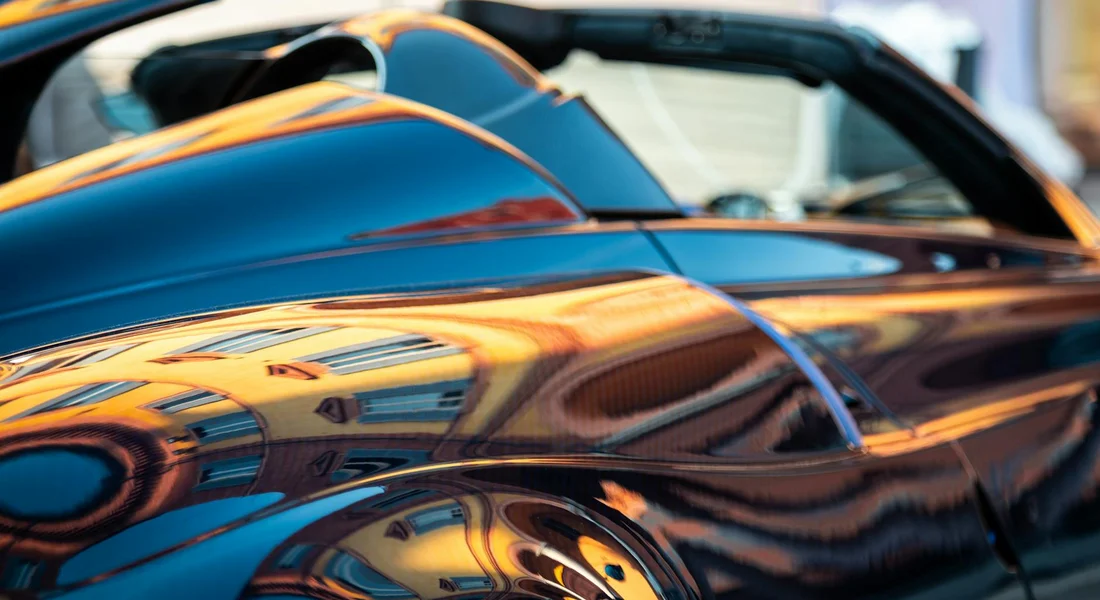
Every paint estimate you get is built from three core parts: Labor, Materials, and Shop Supplies. Understanding what goes into each one is the best way to see why quotes vary so much and to spot a deal that’s too good to be true.
1. Labor: The Hours Add Up Fast
This is the biggest piece of the pie. Labor splits into distinct, billable stages. For my 1995 Miata restoration, each stage was a mountain of work.
- Disassembly & Prep (10-30+ hours): This is where a quality job starts. Removing door handles, mirrors, trim, lights, and sometimes bumpers or moldings. Every piece removed means cleaner paint lines and less risk of overspray. Skipping this saves a shop money but gives you an inferior result.
- Sanding & Bodywork (20-60+ hours): The most labor-intensive step. It involves stripping the old finish down to a perfect, smooth base. This includes fixing dings, dents, and rust. For my black BMW, correcting just the hood took hours. Imagine doing a whole car.
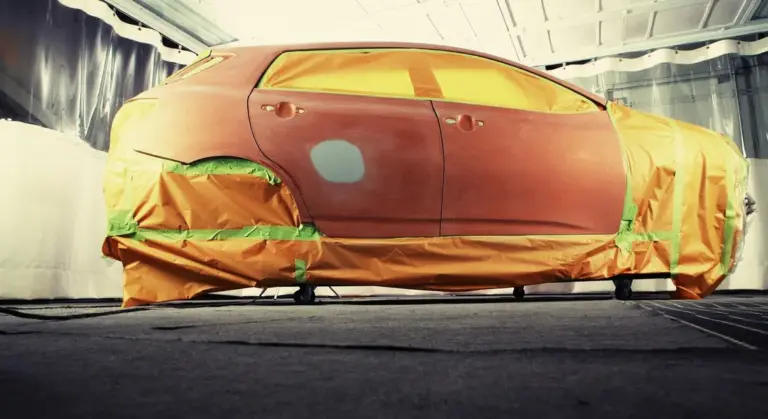
- Masking (5-15 hours): Carefully taping off every area that won’t be painted: windows, rubber seals, interior areas, the engine bay. It’s tedious, precise work that protects everything.
- Spraying & Coating (8-20 hours): This is the actual painting time, including applying primer, basecoat, and clear coat. It requires a controlled, clean environment (a paint booth) and skill to apply each layer evenly without drips or dust nibs.
- Reassembly & Final Buff (5-15 hours): Putting everything back on correctly and then machine polishing the fresh clear coat to a flawless, high-gloss finish.
Multiply all those hours by the shop’s labor rate, which can range from $50 to $100+ per hour, and you see where the cost comes from.
2. Materials: Not All Paint Is Created Equal
Paint is a chemical system. The type and quality directly affect the look, durability, and final cost. Think of it like choosing between a quick spray wax and a ceramic coating for your Tesla.
- Single-Stage Paint: Older technology, common on classics like my Miata. Color and protection are in one layer. It’s often less expensive per gallon ($100-$300), but applying it perfectly is a skill. Modern versions are very durable.
- Basecoat/Clearcoat System: The modern standard. The basecoat provides the color, and a separate, transparent clear coat goes on top for depth and protection. Quality varies wildly.
- Standard Basecoat: $200-$400 per gallon.
- Premium Clear Coat: $300-$600 per gallon. This is where you invest. A high-quality, UV-resistant clear is what gives you that deep, wet look and fights off fading and swirling for years.
Cheaping out on materials, especially the clear coat, is the fastest way to a paint job that turns dull and chalky in a few years.
3. Shop Supplies: The Hidden Consumables
This line item catches many first-timers off guard. These are the disposable items used up during your job. They are not free.
- Sanding Discs & Paper (dozens of each grit)
- Masking Tape & Plastic Sheeting
- Tack Cloths & Wipes
- Primer, Body Filler, and Glaze
- Reducers & Solvents (for cleaning guns and surfaces)
- Polishing Pads & Compound
A shop might charge a flat fee (e.g., $200-$500) or a percentage of labor. It’s fair to ask what this fee covers.
Your Mental Car Paint Cost Calculator
Use this as your framework when getting estimates. A complete quote should address each area. When you get a number, mentally run it through this calculator:
(Labor Hours x Hourly Rate) + (Paint & Primer Gallons x Cost) + (Shop Supplies Fee) = Estimate.
If a quote seems suspiciously low, one of these core components is being cut: likely the labor hours for prep, or the quality of the clear coat. Always ask for a detailed breakdown. A reputable shop will explain their numbers. This knowledge turns you from a confused customer into an informed one, ready to invest in a finish that will last.
Full Vehicle Respray: How Much for the Whole Car?
Getting a whole car repainted is a big decision. The price isn’t one number. It swings wildly based on your vehicle’s size and the shop’s quality tier. Think of it like detailing. A quick wash costs a few bucks. A full correction and ceramic coating runs into the thousands. Paint work is the same.
Here are the realistic price brackets you will see. Remember, these are estimates. Your local shop rates change things.
- Compact/Sedan (Honda Civic, Tesla Model 3): $1,500 to $3,500 for a budget respray. $3,500 to $7,000 for a quality, detail-oriented repaint.
- Mid-Size SUV (Honda Odyssey): $2,000 to $4,500 for budget. $4,500 to $9,000 for quality.
- Full-Size Truck/SUV (Ford F-150): $2,500 to $6,000 for budget. $6,000 to $12,000+ for a top-shelf job.
The lower end assumes minimal prep and standard materials. The high end means every panel is stripped, blocked, and treated like a show car.
Example 1: A Compact Car – The Tesla Model 3
My white Model 3 has a flat, simple bumper. Painting it seems easy. For a budget respray, a shop might mask the trim, scuff the old clear coat, and spray directly over it. You could pay around $2,000. The color might match, but orange peel texture is common. Dirt nibs in the paint happen. It is a covering, not a restoration.
A quality repaint for that same car is a different story. The shop removes handles and lights. They sand the factory paint perfectly flat. They use a sealer, a base coat, and a high-end clear coat. They wet-sand and polish the finish to a deep gloss. This starts around $4,500. You are paying for the hidden labor of disassembly, perfect preparation, and the specialized techniques that ensure a flawless finish, not just the paint in the gun.
Example 2: A Full-Size Truck – The Ford F-150
Now, take my blue F-150. It is a workhorse. It has a massive hood, big doors, and a tall bed. Surface area is everything in paint costs. More square feet means more materials and more hours of labor. A cheap respray might hit $3,500. They often skip the bed interior and undersides of panels.
A proper job accounts for all that metal. A quality shop will paint the door jambs and the inside of the tailgate. They will address the roof and the top of the bed rails. This thoroughness pushes the price toward $7,000 or more. A truck costs more because there is simply more of it to paint, sand, and polish.
Same Color vs. Color Change: A Major Price Divide
You often see ads for a “car paint cost same color” special. This is the least expensive path. The painter only needs to cover the exterior panels you see. Door jambs, the engine bay, and the trunk gutter can stay the original color. It saves dozens of labor hours.
A complete color change is a much more expensive project. Every single piece of the car’s skeleton needs to be painted. I mean door jambs, under the hood, inside the trunk. The dashboard frame might need work. A color change can add 30 to 50 percent to the total cost because it is essentially painting the car twice, inside and out.
Let’s talk about white paint. A frequent question is about “car paint cost white.” Simple white is often the cheapest color. Why? Many white paints are single-stage, meaning no separate clear coat is needed. Even basecoat/clearcoat white systems use less expensive pigments. Metallic, pearl, or tri-coat paints cost more. They have extra steps and pricier materials. Painting a car a metallic red will always cost more than painting it plain white.
Partial Paint, Blending, and Touch-Up Costs
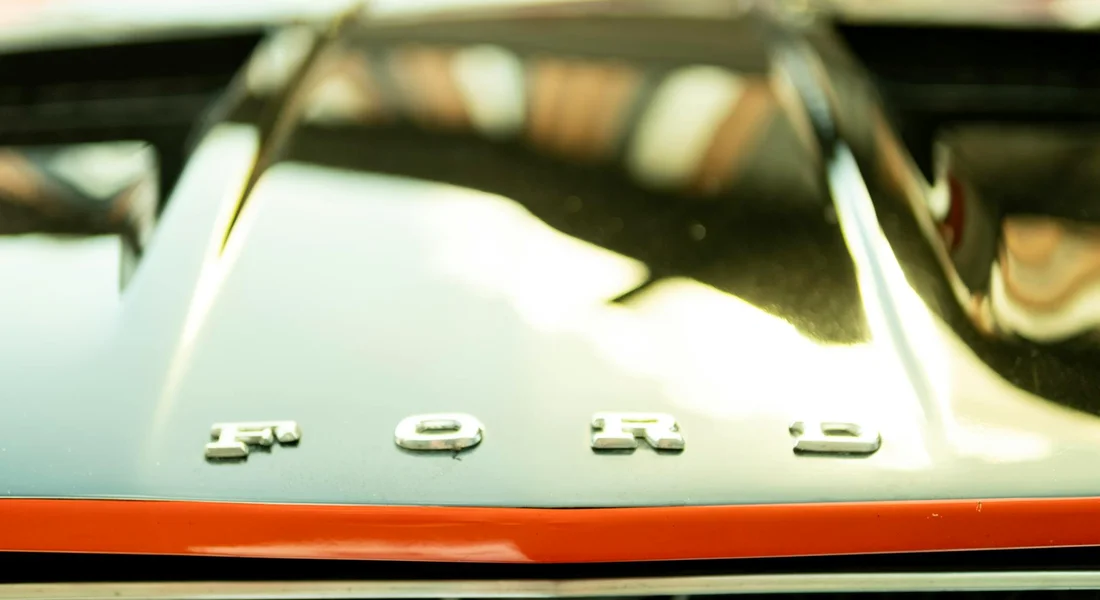
You don’t always need to paint the whole car. A full repaint for a single bad panel is like replacing your entire kitchen floor because one tile cracked. It’s expensive overkill. I see this most often with a scratched door from a parking lot incident, a hood with clear coat failure from sun damage, or a fender that’s been repaired after a minor collision.
The rule is simple: if the damage is isolated to one or two panels and the rest of the car’s paint is in good, color-stable condition, a partial repair is the smart, budget-friendly choice. My own white Tesla had a bumper scuff from a shopping cart. The rest of the paint was flawless, so a full respray would have been a massive waste of money and removed the factory finish from perfectly good panels.
What Common Partial Paint Jobs Cost
Prices swing wildly based on your car, the shop’s skill, and your location. A plastic bumper cover on a common sedan is a different job than an aluminum hood on a luxury car. Labor for removal and reinstallation adds up. These are my real-world estimates for a professional, quality job at a reputable shop.
- Painting a Bumper Cover: $300 to $800. The low end is for a simple, common color on an economy car bumper that stays on the vehicle. The high end is for a complex tri-coat pearl or matte finish on a luxury SUV bumper that requires removal, intricate sensors, and perfect texture matching.
- Painting a Hood or Door: $400 to $1,000+. Larger panels mean more material and labor. A standard steel hood is one thing. My F-150’s massive aluminum hood, which is lighter but requires specific techniques, would be at the top of that range.
- Blending into Adjacent Panels: Add $150 to $300 per panel. Blending is the art of fading the new paint into the old on the next panel over (like the fender or quarter panel) to make the color change invisible. It’s often necessary, especially with metallics. You can’t just paint a door and stop at the edge. The color needs to transition smoothly.
The True Challenge: Color Matching
This is where many cheap jobs fail. Matching paint is not like mixing house paint. Factory paint fades and changes over time. Sun, heat, and environment alter its shade.
Modern metallic, pearl, and tri-coat paints are the hardest to match because the color shifts depending on the viewing angle and how the microscopic flakes lay. A paint code gets you in the ballpark, but even when you have the right code, matching it perfectly can be tricky. A master painter will custom-tint the color to match your specific car’s faded state. They’ll spray test cards, let them dry, and check the match under sun and shade. My Jet Black BMW is a single-stage, non-metallic color, which is simpler. But my F-150’s dark blue metallic? Matching that perfectly on a replacement bed panel would require a true artist.
For older cars, finding the exact original formula can be impossible. A good shop will tell you this upfront. Sometimes, blending into multiple surrounding panels is the only way to hide the match.
Professional Touch-Up vs. The DIY Bottle
Let’s talk about the smallest end of the spectrum: rock chips and minor scratches.
The $15 touch-up paint bottle from the dealership or auto parts store has its place. I keep one for every car I own. A DIY bottle is perfect for filling in a tiny, sub-millimeter rock chip on the hood to prevent rust, especially on an older daily driver. The goal isn’t invisibility, it’s protection. On my ’95 Miata, I use it to keep the classic red single-stage paint sealed against the elements.
But for a scratch you can feel with your fingernail on the door of your newer car, the bottle will look like a messy, globbed-on blob. It dries dull and sits above the surface.
A professional touch-up or “paint chip repair” service is different. A detailer or paint specialist will clean the chip, layer the color paint precisely, let it cure, and then level it with the surrounding clear coat. They often use specialized pens, airbrushes, and polishing compounds. The result is about 90-95% improvement, making the damage nearly disappear from a few feet away. This costs $50 to $150 per chip or area, depending on size.
Choose the bottle for quick, protective fixes on chips you don’t stare at daily. Choose a pro for larger scratches or chips on prominent panels where appearance matters. Trying to DIY a long scratch often makes it more noticeable and more expensive for a pro to fix later.
Why Prices Vary: The 7 Biggest Cost Factors
Getting a quote for a paint job can be confusing. One shop says $3,000, another says $8,000 for the same car. The difference almost always comes down to these seven factors. Shops use these variables to calculate the hours of labor and materials required, which is where your money goes.
Vehicle Size and Complexity
This is the most obvious factor. More square footage means more materials and time. Painting my 2018 Ford F-150, the Workhorse, costs significantly more than painting my wife’s old Mini Cooper ever would. But it’s not just size.
Complex curves and body lines are where the real time adds up. A flat panel is easy to sand and spray. The sculpted fenders on a modern sports car or the intricate folds on a vintage vehicle force a painter to work slower, repositioning the spray gun constantly to avoid runs. Every crease, vent, and hard edge requires meticulous attention, and that meticulous attention is what you pay for.
Condition of the Existing Paint
The state of your current finish dictates the entire first phase of the job: prep. This is where many budget estimates fall apart. Think of it like painting a house. A sound, clean wall just needs a light scuff. A wall with peeling paint needs every flake scraped off first.
My 2016 BMW, the Swirl Magnet, has thin, hard black paint. If its clear coat was failing (a common issue on older black cars), a proper shop would need to sand or chemically strip every panel down to the base coat. That’s dozens of extra hours. A car with intact, smooth paint needs far less abrasive preparation, which directly translates to a lower cost. Always get a detailed inspection before a firm quote.
Paint Quality and Color Type
Not all paint is created equal. You’re paying for the pigment and the process.
- Solid Colors: Classic white, black, or red. These are typically one-stage color (plus clear coat). They are the most economical in material costs.
- Metallics, Pearls, Tri-Coats: These are multi-layer systems. A base color is applied, then a layer with metallic flakes or pearl pigment, then a clear coat. Each layer must be applied perfectly. They use more material and are far less forgiving for the painter.
- Matte/Satin Finishes: These are notoriously difficult to apply evenly and repair. They often command a premium price.
- Brand Name: Professional-grade paint from companies like PPG, Sikkens, or Glasurit costs more than generic brands. The quality in color match, durability, and UV protection is usually worth it.
Extent of Bodywork Needed
Paint is the last step. Everything underneath must be perfect. This factor is the great separator between a simple respray and a full restoration.
- Dent Repair: Each ding needs to be pulled, filled, and sanded smooth. A car with a dozen small dents can add a full day of labor.
- Rust Treatment: This is critical. Painting over rust is throwing money away. Proper repair means cutting out the cancer, welding in new metal, treating the surrounding area, and applying sealants. It’s slow, precise work.
- Deep Scratch Filling: Scratches that catch your fingernail can’t just be painted over. They must be sanded out or filled with glaze, then re-sanded. Extensive bodywork is the single largest labor cost in many paint job estimates.
Shop Location and Overhead
This answers the “car paint cost near me” search. A shop’s rent, utilities, and local labor rates drastically affect the price.
A shop in a small midwestern town has lower overhead than a state-of-the-art facility in Los Angeles or Singapore, where real estate and skilled labor are at a premium. This isn’t about one being better than the other. It’s about the cost of doing business in that area. You will almost always pay more for the same quality of work in a major metropolitan area or a country with high operational costs. It’s the reality of their expenses being factored into your bill.
Included Areas
This is the detail that causes the most arguments after the fact. You must ask: “What exactly are you painting?”
A standard “full exterior” job typically means the outer panels you see when the doors and hood are shut. A “show-quality” or “jambs-in” job includes:
- Door jambs (the inside edges of the doors)
- The inside of the trunk lid and its gutter
- The engine bay (firewall, inner fenders)
To paint these areas properly, doors, trunks, and sometimes bumpers must be removed. The labor time can double. Always get in writing which areas of the vehicle are included in the quoted price to avoid surprise add-ons later.
Shop Reputation and Warranty
You are not just buying paint. You are buying skill, consistency, and peace of mind.
A shop with a renowned painter who has 30 years of experience will charge more per hour than a new apprentice. A shop that offers a lifetime warranty against peeling and fading has so much confidence in their prep work and materials that they back it up forever. That warranty is an insurance policy they fund with their higher prices.
A lower quote often comes with a shorter warranty, like 1 year, which reflects a lower confidence in the long-term result. You must decide what you value more: the lowest price today, or the security that the job will look good for a decade.
Economy Paint Chains Explained: The Maaco Question
Yes, Maaco paints cars. It’s what they do, every day, in volume. The question everyone really wants answered is how they do it for such a low advertised price.
The secret is in the business model. It’s built on high throughput and standardized steps. Think of it like a fast, efficient assembly line for paint. They minimize the time spent on each vehicle, which is the most expensive part of any paint job. They use single-stage paints often, which spray color and protection in one coat instead of separate base and clear coats. This saves time and material.
So, does Maaco sand your car? Yes, but the level of prep is where the major compromises happen for their lowest-cost options. A full, show-quality repaint requires removing trim, handles, and lights. It involves sanding the entire vehicle down to bare metal to ensure perfect adhesion and eliminate all old flaws. That’s dozens of hours of labor.
At a budget chain, for their standard package, “prep” often means a light scuff-sand over most of the car’s existing paint. They’ll sand obvious rust spots to bare metal. They’ll tape around trim, badges, and windows instead of removing them. This leaves “paint lines” under trim and can trap old, failing paint underneath the new coat. It’s a mask, not a cure.
Is this a bad deal? Not always. You have to match the service to your goal.
I consider my 2018 Ford F-150, the “Workhorse.” Its Dark Blue paint has scratches and oxidation from actual use. If I just wanted it one uniform, glossy color again without spending a fortune, a Maaco-level job could be a solid value. The body panels are straight. I’m not looking for perfection, I’m looking for a fresh, protective coat.
A budget chain job is a good value for a car with straight body panels where you just want a uniform color refresh. It is not the solution for correcting dents, deep scratches, or rust holes. It is not the path to a flawless, deep, mirror-like finish. That requires the labor-intensive prep they skip.
If you decide this is your route, you can dramatically improve the outcome. The best thing you can do is your own prep work.
- Remove what you can: door handles, side mirrors, trim strips, and badging. This lets paint get behind edges.
- Sand body flaws yourself. For my 1995 Mazda Miata’s oxidation, I’d wet-sand the entire car with 600-grit to give the new paint perfect grip. For rust spots, sand down to clean, bare metal and apply a primer.
- Fix small dents and dings as best you can. The new paint will make every flaw underneath more visible, not less.
Wear a proper respirator when sanding. Work in a shaded, clean area. Bring the car to them as a clean, prepped shell. You’ve done the time-consuming labor. They apply the paint. This hybrid approach can yield a result that far exceeds the typical budget job.
Smart Moves Before You Spend: Saving Money and Exploring Alternatives
Detailer’s Pro-Tip: The One Question to Ask
You can look at a shop’s portfolio of fresh paint jobs all day. The real test is time. Any shop can make a car look amazing under perfect lights right after the final coat dries. The question you must ask is this: “Can I see a car you painted six months to a year ago?”
This simple request cuts through the sales talk. It shows you how their work holds up. You are looking for fading, premature peeling, or clear coat failure. A quality shop will be proud to show you a customer’s car that still looks sharp. A shop that hesitates or makes excuses has told you everything you need to know.
How to Get and Compare Quotes
Never settle for a verbal estimate or a number scribbled on a napkin. Get three written, detailed quotes from different shops. This is not just about the bottom line. You need to see how they plan to do the work.
A good quote breaks down the labor and materials, so you know exactly what you are paying for.
Look for these key line items:
- Prep Hours: This is the most critical part of a lasting paint job. Sanding, masking, and bodywork are listed here. A low number might mean they plan to cut corners, like not sanding the old clear coat properly or masking over trim instead of removing it.
- Paint & Material Cost: This should specify the brand and quality of paint (single-stage vs. base/clear, economy line vs. premium).
- Color Sand & Buff: A quality job includes wet-sanding and machine polishing after the paint cures to remove orange peel and achieve a mirror finish. If it’s not listed, it’s not included.
For honest recommendations, go beyond a simple Google search. Check local car enthusiast forums or subreddits like r/Autobody or r/Detailing. Ask specifically about paint shops in your area. These discussions can point you to a reputable auto body paint shop nearby. They often share specifics about color matching, finish quality, and long-term durability. People in these communities have no reason to lie and often share detailed experiences.
When a Paint Job Isn’t Needed
I see it all the time. An owner looks at their dull, scratched paint and assumes it needs to be completely resprayed. Often, that is a very expensive solution to a simpler problem.
Take my 2016 BMW, the black “swirl magnet.” When I bought it, the paint looked hazy and lifeless under the sun. A full respray would have cost thousands. Instead, I performed a multi-step paint correction. I used a machine polisher with different compounds and pads to carefully remove the scratches and defects layer by layer. What was left was the original, perfect paint hiding underneath. I then protected it with a ceramic coating. The total cost was a fraction of a paint job, and I preserved the factory finish, which always holds more value.
If your goal is a new color or radical change, a high-quality vinyl wrap is a fantastic alternative that protects your original paint. It also allows you to explore trendy colors and finishes that can be easily updated.
A professional wrap lasts five to seven years, comes in any color or finish you can imagine (gloss, matte, chrome), and can be removed later. It is a significant investment, often $2,500 to $5,000, but it is reversible and does not involve sanding off your car’s factory coat. Understanding the vinyl car wrap lifespan helps set expectations for how long the look will last. We’ll cover the factors that influence this lifespan in the next steps.
You might think about DIY spray options like aerosol cans or inexpensive sprayers. I will be straight with you. The skill floor is incredibly high. Achieving a smooth, even, drip-free coat is far harder than any YouTube video makes it seem. Without a dust-free booth, proper ventilation, and serious practice, the result often looks worse than the problem you started with. For a small trim piece or a classic car project you are learning on, maybe. For your daily driver’s entire exterior, it is a very risky gamble.
Final Thoughts on Your Paint Investment
The clearest lesson is that a paint job’s price directly reflects its quality and longevity. You are not just buying color in a can; you are paying for skilled labor, proper materials, and a controlled environment that together guarantee a finish that lasts.
Choose a budget option without asking the right questions, and you will likely see that thin paint fade, peel, or rust far sooner than you hoped.
Sources and Additional Information
- r/askcarsales on Reddit: How much does it usually cost for a paint job?
- Maaco’s Free Auto Body & Painting Repair Cost Estimator
- How Much Does It Cost to Paint a Car? – Kelley Blue Book
- How Much Should It Cost to Paint Your Car?
- What is the cost of a full paint job for a car with no damage?
- How Much Does It Cost To Paint a Car? | AAA Automotive
- How Much Should It Cost To Paint Your Vehicle?
Max Gunther
Max is an automotive enthusiast having worked as a car mechanical and in interior detailing service for over 25 years. He is very experienced in giving your old car, a new fresh vibe. He has detailed many cars and removed very tough smells and stains from all kinds of cars and models, always ensuring that his work and advice helps his customers. He brings his first hand experience to his blog AutoDetailPedia, to help readers breath new life into their car interiors.