How Do You Remove Stubborn Odors from Cloth Car Seats and Carpets?
That sour milk or wet dog smell clings to your car’s interior no matter what you try. I get it, I’ve pulled enough forgotten sippy cups from under my Odyssey’s seats to know that panic.
We will cover locating the exact source, choosing the correct enzymatic or oxidizing cleaner, the detailed extraction and treatment process, and how to protect your cloth interior from future odors.
Get this wrong, and you will simply mask the smell temporarily, allowing it to seep back out every time the interior gets warm and humid.
Key Takeaways: Your Quick Path to a Fresh Car
Forget air fresheners. They only cover the problem with a stronger scent. Your goal is to physically remove the organic source of the smell, not just mask it with perfume. A spilled milk smell is bacteria feasting. A pet odor is dried urine crystals. You must eliminate the feast.
Every successful odor removal follows three phases. You cannot skip one.
- Source Removal: Get the solid or liquid contaminant out of the fabric fibers.
- Cleaning: Use chemistry to break down what you cannot see or physically grab.
- Neutralization: Deploy a specialist product to destroy odor molecules at their source.
Speed matters. If a spill is wet, you have a clock ticking. The longer an organic spill sits, the deeper it soaks and the more it breaks down, creating a stronger, more embedded odor. Act fast. A smell that has been baked into the car for months will take more work, but the process is the same.
For a full interior on a car like my Honda Odyssey, the “Kid Hauler,” plan for 2 to 4 hours of focused DIY work if you have the right tools. A professional with a truck-mounted extractor and an ozone generator might need 1 to 2 hours of hands-on labor, plus another 30 to 60 minutes of ozone treatment time.
The Detailer’s Order of Operations: Odor Elimination Protocol
This is your battle plan. These steps are sequential for a reason. Jumping ahead guarantees the smell will come back.
1. Remove all trash and loose debris. This is non-negotiable. Empty every cupholder, door pocket, and the trunk. You cannot clean around old coffee cups and food wrappers. Get it all out into a garbage bag. This also gives you a clear view of the battlefield.
2. Identify and treat all odor sources. Use your eyes and your nose. Get down and look at the carpet under the seats. Sniff the seatbacks. A UV flashlight in a dark garage can reveal old, invisible urine or spill spots that glow. Mark every spot you find with a piece of painter’s tape. Every marked spot will need direct, concentrated treatment during the cleaning phase.
3. Deep clean ALL cloth surfaces. This means seats, carpets, floor mats, and even the headliner if needed. Vacuum first, thoroughly. Then, use a dedicated fabric cleaner and a drill brush to agitate the solution into the fibers. For ground-in smells, an extractor is your best friend. It sprays cleaning solution and suctions the dirty water back out. If you do not have one, a wet/dry vac and a sprayer can work in a pinch. Work in small sections. On my black BMW, I use a two-bucket method for the interior too one for clean rinsing water for my extractor tool, one for the dirty water to prevent cross contamination.
4. Clean all non-cloth surfaces. Odors cling to plastics, vinyl, and leather. Wipe down every hard surface with an interior cleaner. Pay special attention to the steering wheel, gear shifter, and dashboard vents, where oils from your hands can hold smells. For the “Vegan Leather” in my Tesla, I use a mild, non degreasing cleaner to avoid drying out the synthetic material.
5. Apply a chemical neutralizer. Now that the surfaces are clean, you attack the odor molecules. For organic smells like vomit, urine, or food, an enzyme cleaner is fantastic. Think of it like a probiotic for your car it eats the odor causing bacteria. Spray it on, let it dwell, and let it air dry. For pervasive, hard to pin down smells like smoke, an ozone generator is the professional tool. You must vacate the car and never breathe ozone gas, but it is the most effective way to oxidize and destroy odor molecules in the air and on every surface.
6. Ensure complete, forced air drying. Do not let the interior air dry slowly. Trapped moisture under the seats is an invitation for mold, which creates a new, worse smell. Use fans, air movers, or a dehumidifier. Open the doors if the weather permits. Crank the A/C with the heat on to dehumidify the cabin air. A completely dry interior is a fresh interior — essential for removing odors from your car’s interior.
7. Apply a protective barrier. This is your insurance. Once everything is clean, dry, and odor free, spray a fabric protector on the seats and carpets. It creates an invisible shield that causes liquids to bead up on the surface, giving you time to blot them up before they soak in and become the next big problem. On my Odyssey’s cloth seats, this step is what keeps the next juice box spill from becoming a permanent resident.
What’s That Smell? Diagnosing Common Car Odor Offenders
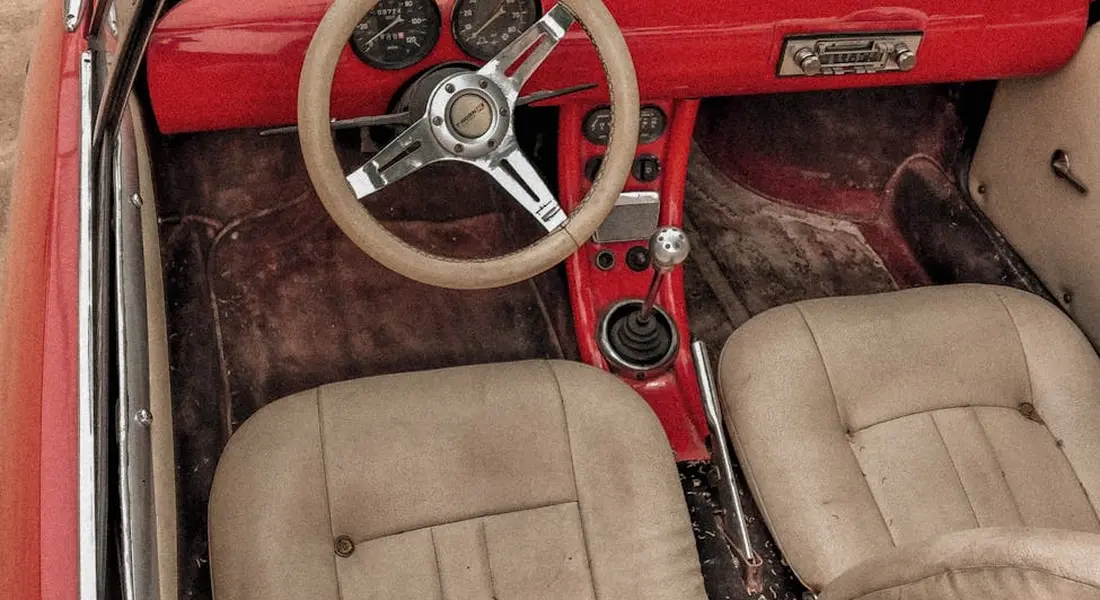
Treating a smell before you know its source is like washing a car in the dark. You will miss spots. Your first job is to play detective. Get in the car, take a deep breath, and try to identify the character of the smell. Each odor tells a story about where it lives and how to fight it.
The Sour, Biological Funk: Milk, Food, and Kid Messes
You know this smell. It starts sweet, then turns sour, then settles into a thick, rotten funk that seems to pulse with warmth. This is the signature scent of forgotten chicken nuggets, spilled juice boxes, and the worst offender, milk.
When milk spills on a cloth seat, it does not just sit on the surface. It wicks down through the fabric and into the foam cushion below. That foam acts like a sponge. It holds the moisture and protein, creating a perfect, warm little ecosystem for bacteria to grow. Cleaning only the visible fabric is a guaranteed failure; the smell factory is in the foam beneath.
My grey Honda Odyssey, the “Kid Hauler,” taught me this lesson. A sippy cup of whole milk leaked under a car seat for a weekend trip. We cleaned the seat fabric, but the odor came back worse two days later, baked by the sun. The solution was pulling the seat out, soaking the foam with an enzyme cleaner, and extracting it multiple times. Biological odors are tenacious. They demand a full assault.
The Sharp, Ammonia Punch: Pet Accidents
This odor is sharp. It stings your nose. It has an almost chemical ammonia quality. Pet urine is particularly tricky to remove because it is designed by nature to be persistent.
The liquid soaks deep. As it dries, the urea crystallizes into salty deposits within the carpet fibers and backing. You might clean the top layer and think you are done. Then, on a hot, humid day, the moisture in the air rehydrates those crystals. The odor reactivates instantly, as strong as the first day. For pet smells, any cleaner that is not enzymatic is just a temporary mask. You are not cleaning a stain. You are breaking down a biological compound.
Surface sprays and air fresheners will lose this fight every time. You need a cleaner with specific enzymes that digest the urine proteins, rendering them inert and odorless.
The Damp, Moldy Blanket: Water Intrusion and Wet Carpet Smell
This smell is heavy. It feels like a damp wool blanket laid over your face. It is earthy, musty, and cold. You often feel it more in your lungs than smell it with your nose.
This odor means one thing: water where it should not be. The usual suspects are clogged sunroof or AC drain tubes, a failing windshield seal, or a door vapor barrier that has come unglued. Sometimes it is just a gallon of sports drink that tipped over and was never fully dried. The problem is not the water you see. It is the water you cannot see, trapped under the carpet, against the sound deadening.
Mold growth is the real risk here, posing a genuine health concern for occupants. Speed is everything. The carpet must be pulled up, the padding inspected or replaced, and everything beneath aggressively dried. A wet-dry vacuum is your first tool. Fans and a dehumidifier are your next. Ignoring this smell is not an option.
The Sticky, Acrid Cloud: Cigarette and Cigar Smoke
Smoke odor is not one smell. It is a sticky, acrid film that coats every single surface. It is on the headliner, the seat belts, the plastic trim, and deep inside the ventilation ducts. It clings to glass. It embeds itself in cloth.
You cannot simply wipe away a film that has been baked into materials for years. The tar and nicotine residues are oily and tenacious. Every time the interior warms up, those residues off-gas a little, releasing the smell all over again. Cleaning the hard surfaces is a monumental task. Cleaning the air vents and the HVAC system core is another level entirely.
For heavy, ingrained smoke odor, a professional-grade ozone generator is often the only effective tool for a permanent result. While you can clean every surface meticulously, the ozone treatment is what finally breaks apart the odor molecules at a chemical level in the air and in places you cannot reach. Cigarette and vape odors cling to fabrics, carpets, and HVAC systems. When they linger, a professional ozone treatment is often the most reliable option. For most DIYers, this one is worth calling a pro.
Gear Up: The Detailer’s Toolkit for Smell Removal
Think of a stubborn odor like a campfire smoke smell on your clothes. Washing removes the soot, but you need fresh air to kill the smell. Your car interior is the same. Some car odors are unusual—musty, chemical, or sour—that linger after cleaning. They often point to hidden sources and require extra steps. You must attack odors in two distinct phases: first, clean out the physical source, then neutralize the chemical remnants you cannot see.
Cleaning Tools: For Physical Removal
You cannot chemically neutralize what you have not physically removed. This step is about getting the gunk out. My grey Honda Odyssey, the “Kid Hauler,” taught me this after a milk spill seeped deep into the second-row carpet. Here is what you need to do the job right.
- Quality Carpet/Extractor Machine: This is your most powerful tool. It injects hot, clean water and cleaning solution deep into the fabric, then sucks the dirty water back out. For cloth seats and carpets, it is the difference between surface cleaning and a true deep clean.
- Steamer: A handheld steamer uses heat to loosen and liquefy old, hardened stains and odors. It is fantastic for refreshing fabric without oversaturating it. I use mine on door panels and headliners where an extractor might be too wet.
- Stiff-Bristle Brushes: Use these for agitating heavy, ground-in dirt in carpet fibers. Be gentle on seat fabric to avoid fuzzing or damage.
- Soft-Bristle Brushes: These are for applying cleaner to more delicate cloth seat surfaces. They help work the solution in without being too abrasive.
- Microfiber Towels: Have a stack of clean, plush towels for blotting and drying. The cheap, scratchy ones from the gas station will not absorb enough and can leave lint behind.
- Wet/Dry Vacuum: Before you extract, use this to remove all loose dry debris. Sand, crumbs, and dirt powder trap odor molecules.
Now, about that extractor. Renting a commercial-grade machine from a hardware store is a smart move for a one-time, severe odor job. Buying a quality portable extractor is worth it if you plan to maintain your cars or tackle family vehicles regularly, as I do. The rental fee for one big clean on my Odyssey was nearly the cost of the mid-range model I now own and use on all our cars.
Neutralizing Agents: For Chemical Destruction
After extraction, the seat might look clean but still smell. That is because odor-causing bacteria or compounds are chemically bonded to the fibers. This is where your neutralizing agents come in. Choosing the right one depends on what caused the smell in the first place.
First, know your enemy. A UV flashlight, while not a cleaner, is a great detective tool. It can reveal old, invisible biological stains from spills you thought were gone, giving you a target.
- Enzymatic Cleaners (For Biological Odors): These are for smells from vomit, urine, milk, or food. The enzymes are live bacteria that literally eat the organic waste. You must let them dwell on the stain for the time listed on the bottle. Rushing this step is the most common mistake. I keep a bottle ready for the inevitable spills in the Kid Hauler.
- Oxygen-Based Cleaners: Think of products with hydrogen peroxide. They release oxygen bubbles that lift and break down stain and odor molecules. They are excellent for general funk, coffee, or soda. They are less specific than enzymes but very effective for a wide range of issues. Always test on a hidden area first, as they can have a slight bleaching effect on some fabrics.
- Ozone Generators: This is your last resort for pervasive, gaseous odors like smoke or mildew. Ozone (O3) is a powerful oxidant that breaks down odor molecules in the air and on surfaces. You must follow strict safety rules: never be in the car while it runs, and air the interior out thoroughly afterwards, as ozone can irritate lungs. I used one successfully after a musty smell lingered in my project Miata’s cabin from a long storage period.
The Step-by-Step Deep Clean: How to Clean Smelly Car Carpet and Seats
This is where you win the fight. You are not just cleaning the surface. You are pulling the source of the smell out from the fibers and the foam below. My grey Honda Odyssey, the “Kid Hauler,” has taught me every lesson here. From spilled milk to forgotten gym shoes, this process works.
Step 1: The Pre-Vacuum and Pre-Treatment
Do not skip the vacuum. I see people rush to spray cleaners, and it is a mistake. All that sand, dirt, and cookie crumbs act like sandpaper. Every time someone sits down, that grit grinds deeper, pushing odors into the fabric. A powerful, thorough dry vacuum removes the abrasive layer that traps smells down below.
Use a crevice tool for seams and a stiff upholstery brush attachment. Go over every square inch. Twice.
Now, for the pre-treatment. For biological smells (milk, sweat, pet accidents), an enzyme cleaner is your best first shot. It breaks down the organic matter bacteria feed on. For general funk or food smells, a dedicated carpet and upholstery cleaner works. Do not use laundry detergent or dish soap. They leave sticky residues that attract more dirt.
Mist the cleaner lightly over the area. Do not soak it. You want it to dampen the top layer and start working down. Let it dwell for 10-15 minutes. This gives the chemicals time to break bonds and lift stains to the surface.
Step 2: Agitation is Everything
This step separates a clean seat from a truly deep cleaned seat. Your cleaner has loosened the grime. Now you need to bring it up. A stiff-bristled brush, like a drill brush or a good handheld upholstery brush, is your tool.
Use firm, circular motions. You will see the cleaner foam up and change color. That is the dirt and odor coming to the top. Think of it like lathering shampoo into your hair; the agitation creates a foam that suspends the dirt so it can be rinsed away.
Work in small sections, about two feet by two feet. Pay extra attention to seams and high-wear areas like the driver’s seat bolster. The elbow grease you put in here means your extractor does not have to work as hard. It saves you time and water later.
Step 3: The Extraction Rinse
This is the most important step. You must remove the dirty water you just created. If you leave it in the fabric, the smell will stay, and you might get mildew. You can use a dedicated hot water extractor or a quality wet/dry vacuum with a detailing tool.
Flush the area you just agitated with clean, hot water. The hot water helps dissolve any remaining residues. Then, immediately suck it all back out. Go slow. Make multiple passes until you see clear water being pulled back into your machine.
The dirty water in your recovery tank is the smell leaving your car. It is that simple. On the Odyssey, after extracting a spilled juice box stain, the water was a faint brown. Once it ran clear, the sugary smell was gone.
Step 4: The Final Dry (No Skipping!)
Your seats and carpet will be damp. This is normal. Your job is to make them completely dry, and fast. Residual dampness in a dark car cabin is an invitation for mildew, and that old smell will come right back with a musty friend.
Open all the doors. If it is a dry, sunny day with low humidity, this and a few hours can work. For a guarantee, use airflow.
- Place a powerful floor fan blowing into the footwell.
- If you have a dehumidifier, run it in the car with the windows up.
- In a pinch, a hair dryer on a cool setting can help spot-dry a thick seam.
Do not close up the car until you can press your hand firmly into the fabric and feel no coolness or dampness. This can take a few hours. Plan for it. A completely dry interior is a fresh interior.
Technique Tweak: The Detailer’s Pro-Tip for Trapped Odors
Surface cleaning often fails. You can shampoo the top of the cloth all day, but if the smell is coming from deep within the seat cushion or under the carpet edge, you will not reach it. The problem is not the fabric you see. It is the soaked foam and pad underneath it.
Think of it like cleaning a fingernail. Wiping the top of the nail does nothing for the grime packed underneath. You need to get under there. The “Lift and Clean” method does exactly that for your upholstery.
This technique is about physically creating a temporary gap between the cloth and its padding. You are not removing the seat cover. You are gently lifting the fabric at its seams and edges to open a path for your cleaners.
My grey Honda Odyssey, the “Kid Hauler,” taught me this. A spilled milk carton seeped into the seam of the second-row seat. The surface smelled fine after a wipe, but a sour odor bloomed days later. The milk was festering in the foam, out of sight.
How to Perform the “Lift and Clean” Method
You need a clean, soft-bristled brush, your preferred interior cleaner or enzyme odor treatment, and a steam cleaner or extractor is ideal. A plastic trim tool helps.
- Locate the Seam: Find the stitched seam or the edge where the cloth meets the plastic trim or carpet. This is your entry point.
- Gently Lift: Use your fingers or a plastic trim tool wrapped in a microfiber cloth. Carefully pull the fabric away from the foam. Do not yank or stretch it. You only need a quarter-inch gap.
- Inspect and Pre-Treat: Shine a light into the gap. You will often see discolored foam. Agitate the area with your soft brush to loosen debris.
- Apply Cleaner Deeply: Spray your enzymatic cleaner or diluted APC directly into the gap, targeting the foam. Let it dwell and break down the organic source of the odor.
- Flush and Extract: This is the critical step. Use the narrow attachment of your steam cleaner or extractor. Slide the nozzle into the gap you created. Apply steam to sanitize and loosen, then immediately suction out the hot, dirty water. Repeat until the extracted water runs clear.
The goal is to flood the contaminated core with cleaning solution and then completely remove it, something surface-level wiping can never achieve.
Where to Focus This Effort
- The main seams running down the center of a seat back or bottom cushion.
- Where the seat fabric meets the plastic side bolsters.
- Along the edges of carpeting, especially near door sills where spilled drinks run and hide.
- The perimeter of floor mats where they sit in the carpet well.
Work slowly and gently. The cloth is strong, but the stitching can be stressed if you are too forceful. If you meet strong resistance, stop. The method is about access, not demolition.
For old, set-in odors, you may need to repeat this process and follow it with an ozone generator treatment. The “Lift and Clean” method removes the physical source. Ozone then neutralizes the remaining odor molecules in the air and deep within the ventilation. One tackles the root, the other the residue.
It is more work than a simple spray-and-wipe. But for odors that keep coming back, it is the only way to win.
When DIY Isn’t Enough: Understanding Professional Car Odor Removal Services
You scrubbed the seats. You used every spray from the store. The smell is still there. I get it. My Honda Odyssey, the “Kid Hauler,” taught me this lesson after a milk spill went unnoticed for a week. Sometimes, you need to call someone. When you search “car odor removal service near me” or “cost,” you want a straight answer. Here it is. A pro service makes sense when the odor has a source you can’t fully extract, like deep pet urine, lingering smoke, or the ghost of forgotten fast food. The cost reflects the power and safety measures they use that you likely don’t have at home.
Calling a professional is not an admission of defeat, it’s the smart move when household products and effort have hit their limit.
What Does a Pro Have That You Don’t?
It boils down to industrial tools designed for one job, eliminating odors completely and safely. In my shop, we rely on three key pieces of equipment you won’t find at a hardware store.
- Commercial-Grade Ozone Generators: These are not the small, online bargain units. They produce a high concentration of ozone (O3) gas efficiently.
- Thermal Foggers: They heat a deodorizing solution into a dense fog that fills every crack and cavity, coating surfaces where smells hide.
- Industrial Air Movers: Powerful fans that circulate ozone or fog and then purge all treatment gases from the vehicle afterward.
Let’s talk about ozone, since everyone asks. An ozone machine works by creating ozone, a molecule with three oxygen atoms. This extra oxygen atom is unstable. It actively seeks out and breaks apart odor molecules, like those from smoke or bacteria, through oxidation. It is incredibly effective.
This power comes with real danger, which is why I never recommend DIY ozone kits for car interiors. Ozone is harmful to lungs and can damage rubber seals and plastics if overused. A pro knows how to calculate the right dosage and time, seals the vehicle, runs the machine, and then uses air movers to ventilate it completely before you ever sit inside. I learned this protocol the hard way early on, and now it’s the only way I’ll treat a car like my Odyssey.
What Should a Service Include?
A reputable service does not just plug in a machine and leave. The process is a one two punch, cleaning first, then treating the air. If you get a quote that skips the first step, look elsewhere.
The expected process should be clear.
- A Full Interior Detail: Every surface must be cleaned. Carpets and seats are extracted, plastics are wiped, headliners are gently cleaned. You cannot ozone away a smell sitting on top of dirt. The source must be removed.
- The Ozone Treatment: With the interior clean and dry, the technician will seal the vehicle, run the ozone generator for a set period, and then air it out thoroughly.
- Possible Thermal Fogging: For severe, pervasive odors like heavy smoke, a pro may follow ozone with thermal fogging. The fog penetrates deeper than any spray, ensuring the deodorizer reaches every corner.
For cost, think in terms of severity. A general, persistent odor might run you $150 to $250. For a severe case, like cigarette smoke or pet accidents, expect $300 to $400 or more. The price covers their expertise, the time for the multi step process, and their insurance for using powerful chemicals and equipment.
A proper service always starts with a deep clean, because treating a dirty car with ozone is a waste of your money and their time.
Is Vinegar or an Ozone Machine Better?
This is a common question, comparing the humble “car odor removal vinegar” search to the “car odor removal machine” idea. For many drivers, the “car smells vinegar remove” approach offers a quick, budget-friendly DIY option. They are different tools for different problems.
White vinegar is acidic. It works by breaking down alkaline organic odors, like urine or vomit. It is a great pre treatment. For a fresh spill or a mild, general smell, a diluted vinegar solution in a spray bottle can neutralize odors on the surface. I have used it on cloth seats many times. But the smell of vinegar itself needs to air out, and it does not destroy odor molecules deep in the foam.
An ozone machine does not cover up smells. It destroys them at a molecular level by oxidation. It penetrates every fiber, every piece of foam, and the entire air space inside your car. It is a final solution for embedded, severe smells that cleaning and vinegar cannot touch. However, exercise caution when using ozone as it can sometimes leave its own odors.
Think of vinegar as a targeted first aid kit for a small wound, and an ozone treatment as surgery performed in a sterilized operating room. For the sour milk smell in my Odyssey, I used a vinegar solution on the stain first. After extraction, we used ozone to eliminate the last traces lingering in the air vents and seat foam. One prepares the battlefield, the other wins the war.
Keeping It Fresh: How to Prevent Odors From Coming Back
You got the smell out. Now, let’s make sure it stays out. This is not about correction anymore. It is about maintenance. Think of it like washing your car. A perfect wash is great, but without regular rinses, the dirt just comes back. Your car’s interior needs the same daily defense.
Immediate Action Plan for Spills
Spills will happen. I learned this the hard way with my 2019 Honda Odyssey, the Kid Hauler. A spilled milk box left in a cup holder for a day taught me more about odors than any manual. Speed is your best friend here.
Your first line of defense is a car-specific emergency kit, kept in the trunk or glove box. Mine is simple. It holds a stack of clean, plush microfiber towels, a spray bottle with a diluted all-purpose cleaner (mixed 10:1 with water), and a small, sealed tub of baking soda.
- Blot, never rub. Rubbing grinds the spill deep into the cloth fibers. Blotting presses down and lifts the liquid out.
- Extract moisture immediately. Use dry towels to press down hard on the wet spot. Pull up as much liquid as you can. For bigger spills, a portable wet/dry vacuum is a game changer.
After blotting, I lightly mist the area with my diluted cleaner and blot again. If I am worried about a smell, I sprinkle a little baking soda on the damp spot, let it sit for an hour, and vacuum it up. This simple kit has saved my Odyssey’s interior more times than I can count.
Long-Term Defense Strategies
Quick fixes are good, but a strong strategy keeps your car fresh for months. This is where you build a barrier against future problems.
Apply a quality fabric protectant to your clean, dry seats and carpets. Products like Scotchgard are not magic, but they work. They create an invisible, spill-resistant barrier. Liquids bead up on the surface instead of soaking in. This gives you precious extra minutes to grab your emergency kit. I treat the Odyssey’s cloth seats every six months.
For silent, ongoing protection, use passive odor absorbers. I tuck two or three charcoal bags under the seats. They do not mask smells with perfume. They actively pull odor particles from the air. I replace them every few months. They work in the background, keeping the air clean and helping to eliminate bad odors in the car interior.
Do not skip vacuuming, even when your carpets look spotless. Invisible crumbs, skin cells, and dirt particles settle deep down. They break down over time and become food for odor causing bacteria. I vacuum my cars once a week, even if they have not been used much. The sound of clean suction is the sound of prevention. It is the easiest habit with the biggest payoff for long term freshness.
Winning the Fight Against Car Odors
The most critical step is to physically remove every bit of contamination from the fabric with a thorough extraction or steam clean. From my time rescuing the interior of our Honda Odyssey, I learned that enzymatic cleaners and ozone only work permanently after the source is gone.
Skip this foundational cleaning, and you will find the smell waiting for you the next time your car sits in the sun.
Expert Resources and Citations
- r/CleaningTips on Reddit: Car seat got absolutely drenched with no way to dry, a week later, it STINKS of sour milk
- How to Get Smell Out of Car Seats (4 Methods) – Car Cologne
- How to Get Stains & Odors Out of Car Seat Fabric | ARM & HAMMER™
- Remove Smell Car Seat
- r/NewParents on Reddit: Baby threw up all over car seat and it still smells after cleaning
Max Gunther
Max is an automotive enthusiast having worked as a car mechanical and in interior detailing service for over 25 years. He is very experienced in giving your old car, a new fresh vibe. He has detailed many cars and removed very tough smells and stains from all kinds of cars and models, always ensuring that his work and advice helps his customers. He brings his first hand experience to his blog AutoDetailPedia, to help readers breath new life into their car interiors.