How to Wash Your Car Without Scratching Paint, Remove Water Spots from Black, and Clean Matte Surfaces?
You want a clean car, but you’re afraid of creating swirls in the paint, leaving white rings on your black hood, or fogging up a matte wrap. I get it, I’ve been there with my own vehicles.
In this article, I’ll share the methods I use on my cars, covering the two-bucket wash technique to avoid scratches, how to safely dissolve and remove mineral water spots from dark paints, and the unique approach required for cleaning and maintaining matte or satin paint finishes.
Skip these steps, and you risk inflicting permanent swirl marks, etching water spots into the clear coat, or leaving glossy streaks on a matte surface that ruin its look.
The Golden Rule: Wash Your Car Without Swirling the Paint
Every swirl and scratch on your paint starts in the wash bay. I learned this the hard way on my black BMW. The clear coat on your car is not much harder than a smartphone screen. When you rub dirt across it, you grind tiny grooves into the surface. Light bounces off those grooves, creating the spiderweb scratches we call swirl marks.
The single cause of swirls is dirt acting like sandpaper, trapped between your wash mitt and the paint. A traditional one-bucket wash is a swirl factory. You dip a dirty mitt into your soapy water, stirring up all the grit you just washed off, and then spread it back over the paint.
Tools You Can’t Skip for a Safe Wash
You do not need a garage full of gear. You need the right gear. This is your foundation.
- Two Buckets: One for clean soapy water, one for dirty rinse water.
- Two Grit Guards: These sit at the bottom of each bucket. They trap dirt so your mitt doesn’t pick it back up.
- A Quality Wash Mitt: This is your primary contact point. Not a sponge. Never a sponge.
- Plush Microfiber Drying Towels: You need at least two large, clean towels specifically for drying. Waffle weaves or twist-loop piles are best.
- pH-Neutral Car Shampoo: Dish soap strips wax and can dry out trim. Use soap made for cars.
The Two-Bucket Method in Action
This method has one job, keep dirt away from your paint. Here is how it works.
- Rinse the car thoroughly with a hose to loosen surface dirt.
- Fill your first bucket with clean water and shampoo. This is your wash bucket.
- Fill your second bucket with clean water only. This is your rinse bucket.
- Soak your wash mitt in the wash bucket. Wash one panel of the car, top to bottom. Start with the roof and windows, work down to the dirtiest lower panels last.
- Before re-dipping in the soap, rinse the mitt in the rinse bucket. Scrub it against the grit guard to release the dirt.
- Once the mitt is clean, dunk it back into the wash bucket for more soap. Move to the next panel.
- Dry the car with your clean microfiber towels immediately after your final rinse to prevent water spots.
This simple routine breaks the cycle of grinding dirt into your clear coat, which is the definitive answer for how you wash a car without scratching paint.
Your choice of wash mitt matters. I use a microfiber mitt on my Tesla and BMW. The fibers are incredibly soft and grab dirt deep within the weave, holding it away from the paint. Chenille mitts are also great, they feel fluffy and release dirt easily in the rinse bucket. Both are safe. The key is using the two-bucket system with them.
Beyond wash technique, lubrication is your best friend. A strong pre-rinse with a hose nozzle is step one. For even more protection, a foam cannon is a game changer. It lays a thick blanket of suds on the paint. This layer lifts dirt away and provides a slippery cushion for your wash mitt to glide over. Think of it as an extra layer of safety between your mitt and any remaining grit.
Why Black Paint Shows Every Water Spot and Scratch
My black BMW is the clearest example I own. Black paint, especially a deep jet black, is a near-perfect mirror. Any flaw in that mirror distorts the reflection. A swirl scratch on white paint might catch the light at just the right angle. On black paint, every single scratch catches the light, all the time.
So, are black cars harder to keep clean? Yes, absolutely. They are harder to keep looking flawless. They show dust, pollen, and water spots faster than any other color. The flip side is that when they are clean and polished, nothing looks better.
Compare that to white. My wife’s grey Odyssey and a white car share a similar trait. Are white cars easier to keep clean? They are easier to keep looking acceptable from five feet away. Swirls, light dust, and minor water spots are camouflaged by the bright, reflective color. But they still get just as dirty, and severe defects will still show up.
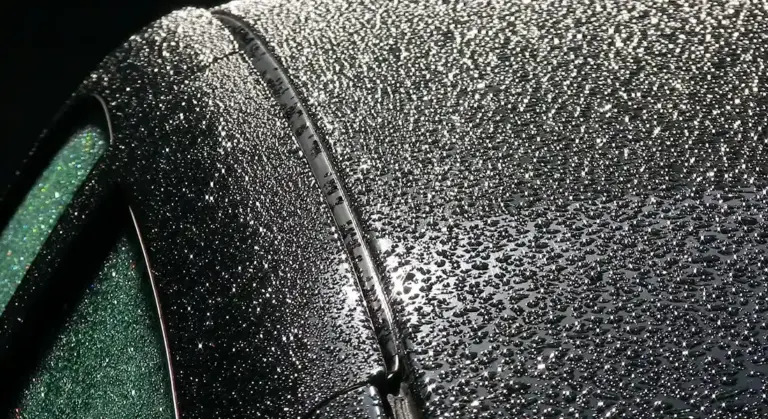
Water spots are a special enemy of dark paint. When a water droplet dries, it leaves behind whatever minerals were in the water. On hot paint under the sun, that mineral deposit can actually etch into the clear coat. On black, you see the etching as a permanent, dull spot. On white, you might only see it when the light hits it perfectly. This is why drying your black car quickly after a wash is not a suggestion, it is a requirement. Use a clean drying aid or a quick detailer spray for extra lubrication while you dry. To prevent water spots etching, consider a quick prevention routine after washing. If spots do form, use a dedicated water-spot remover to minimize etching and make removal easier.
Removing Water Spots from Black Paint: A Gentle Approach
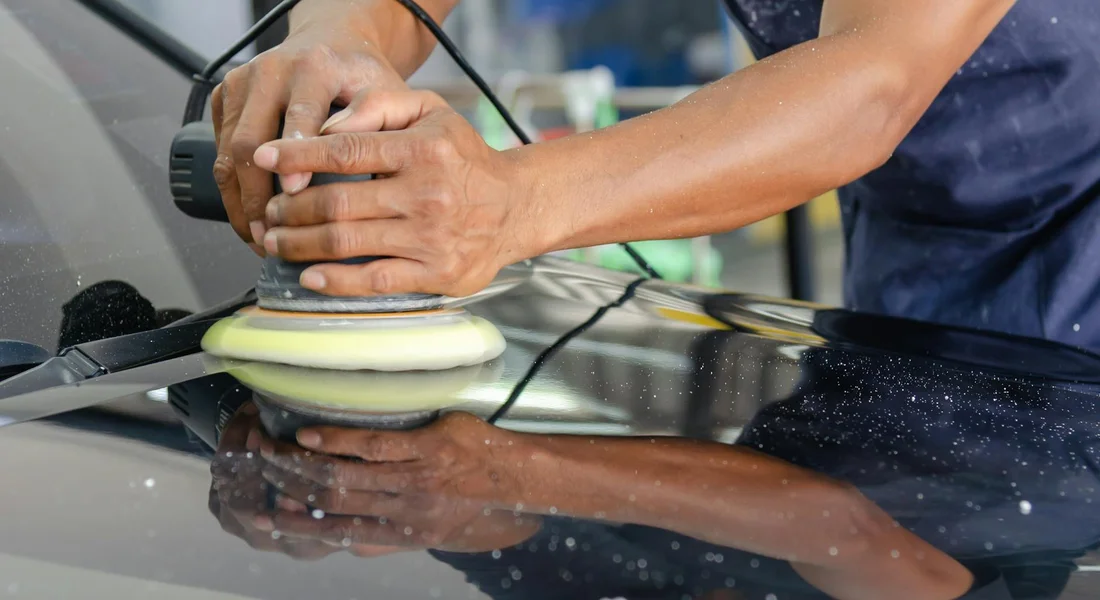
Black paint shows everything. Water spots look like a galaxy of tiny, white specks etched across the surface. My BMW 3 Series, the one I call the ‘Swirl Magnet,’ is a masterclass in this. The first step is not to panic, but to figure out what you are dealing with.
There are two types of water spots. Fresh water spots are just mineral deposits left behind after water evaporates. They feel rough, like tiny grains of sand, but they sit on top of the clear coat. Etched water spots are permanent damage. The minerals, often from sprinklers or industrial rain, have actually eaten into the clear coat. You cannot feel these with your fingernail. They are part of the paint now. These spots can be even more troublesome if you don’t have ceramic coating on your car.
The goal is to remove the fresh deposits before they have time to become permanent etches.
Here is a safe, step by step removal process that works on my black BMW. Always, always work in the shade on a cool surface. Heat bakes products in and makes the paint more sensitive.
- Test First. Pick a small, inconspicuous area like the edge of a door jamb. Apply your chosen product and method there. This tells you how the paint will react.
- Use a Dedicated Water Spot Remover. These are acidic solutions designed to dissolve mineral deposits. Spray it on a microfiber towel first, not directly on the paint, to control the flow. Gently wipe the spotted area. The spots should disappear quickly. Rinse the area thoroughly with clean water immediately after.
- Clay Bar the Area. Even after the remover, some bonded contamination might remain. Use a fine grade clay bar with plenty of lubricant. This will glide over the surface and pick up anything leftover, restoring a smooth, glassy feel.
- Light Polish if Needed. If the etching remains after steps 1 and 2, the clear coat is damaged. A very fine finishing polish, applied by hand or with a dual action polisher on a low setting, can level the clear coat to remove the etch. This is an aggressive step. On soft black paint, you must proceed with extreme caution to avoid creating new swirls.
Prevention is your best weapon. The moment you finish washing is the most critical.
Proper drying is your first line of defense against new water spots. Do not let the car air dry. Use a large, clean, plush drying towel. I mist the wet panel with a quick detailer or spray sealant first. This adds lubrication for the towel and leaves a protective layer behind, sheeting water away and making the next dry even easier.
People ask me about this all the time.
FAQ: Can I use vinegar to remove water spots from black paint?
You can, but I do not recommend it for painted surfaces. Household vinegar is unpredictable in strength. It can strip any wax or sealant and may dull the clear coat over time. A dedicated product formulated for automotive paint is safer and more effective.
For Fresh Water Spots: The Quick Fix
You just washed the car and as the sun hits it, you see the spots forming. Act fast. Those mineral deposits can etch the paint if left to dry, so removing water spots from car paint promptly helps. Grab a bottle of your favorite water based detail spray or a rinseless wash solution. These are lubricated and safe for paint.
Spray it generously onto a fresh, clean microfiber towel. Gently wipe the spotted area. The lubricity in the spray will lift the minerals away without scratching. Follow immediately with a dry side of the towel to buff it clear. This method saves you a full wash and stops the spots from setting in.
For Etched Water Spots: Careful Correction
When the spots are etched in, you are not cleaning. You are correcting paint. This requires a fine abrasive. Use a non aggressive, finishing polish. By hand, apply a small amount to a soft foam applicator pad. Work it in a tight, circular motion over a single spot or a small 12″ x 12″ section with moderate pressure. Wipe away the residue with a microfiber.
If using a dual action polisher, choose the slowest speed setting and a soft, finishing foam pad. Black paint, especially on German cars, is often very soft and will hologram if you use too much pressure or too aggressive a product. The goal is to remove the absolute minimum amount of clear coat. After polishing, you must apply a protective sealant or wax to the bare, corrected paint immediately.
Matte Paint Care: Why It’s Not Your Regular Shine
Matte paint is a completely different animal. It’s not a glossy clear coat that’s been sanded down. It’s a specially formulated, porous finish designed to absorb light instead of reflecting it. This fundamental difference means you cannot use traditional polishing or compounding to fix a scratch or defect. Any abrasive will permanently alter the texture, creating a shiny spot that can never be blended back in. Trying to repair scratches on matte paint or matte wraps can be tricky and requires special care.
A lot of people ask, are matte cars hard to clean? The answer is nuanced. They aren’t necessarily harder, but they are less forgiving. You need the right technique and the right products from the start. With a glossy car, you might get away with a quick wipe using the wrong spray. On matte, that same mistake leaves a permanent, shiny streak. The process requires more mindfulness, not more muscle.
Your product shelf needs a separate section for matte. Here is your list of forbidden items:
- Carnauba Wax or Any Spray Wax: These fill the microscopic pores of the matte finish, creating uneven, glossy patches.
- Standard Ceramic Coatings for Gloss Paint: Most are designed to create high reflectivity. You must use a coating specifically engineered for matte or satin finishes.
- Any Abrasive Compound, Polish, or Rubbing Compound: These will instantly destroy the uniform matte texture.
- Vinegar or Heavy-Duty Water Spot Removers: The acids can etch the porous surface. Always use a pH-neutral, matte-safe product.
For maintenance, you build a two-product system. Use a matte-specific shampoo for every wash. I keep a bottle of Chemical Guys Meticulous Matte Auto Wash for my Porsche’s matte wrap. For drying and light cleaning between washes, a matte detail spray is essential. It lubricates the surface without adding shine. These dedicated products are non-negotiable for preserving the factory-fresh, flat appearance.
What Makes Matte Paint So Different?
Run your hand over a clean matte panel. It feels soft, almost like suede or fine paper. Now feel a glossy black panel, like on my BMW. It’s smooth and slick. That tactile difference is the key. The glossy clear coat is a hard, non-porous, sealed shell. Contaminants like dirt and brake dust mostly sit on top of it. The matte finish is inherently porous and textured at a microscopic level.
Think of it like a dry sponge versus a piece of glass. If you spill coffee on glass, it pools on the surface. You can wipe it off easily. Spill that same coffee on a dry sponge, and it gets sucked in, staining the material. Dirt and grime don’t just sit on matte paint; they embed themselves into its tiny pores. This is why a gentle, lubricated wash technique is so critical-you need to lift that debris out without grinding it in and scratching those delicate pores.
How to Wash Matte Paint Without Ruining the Finish
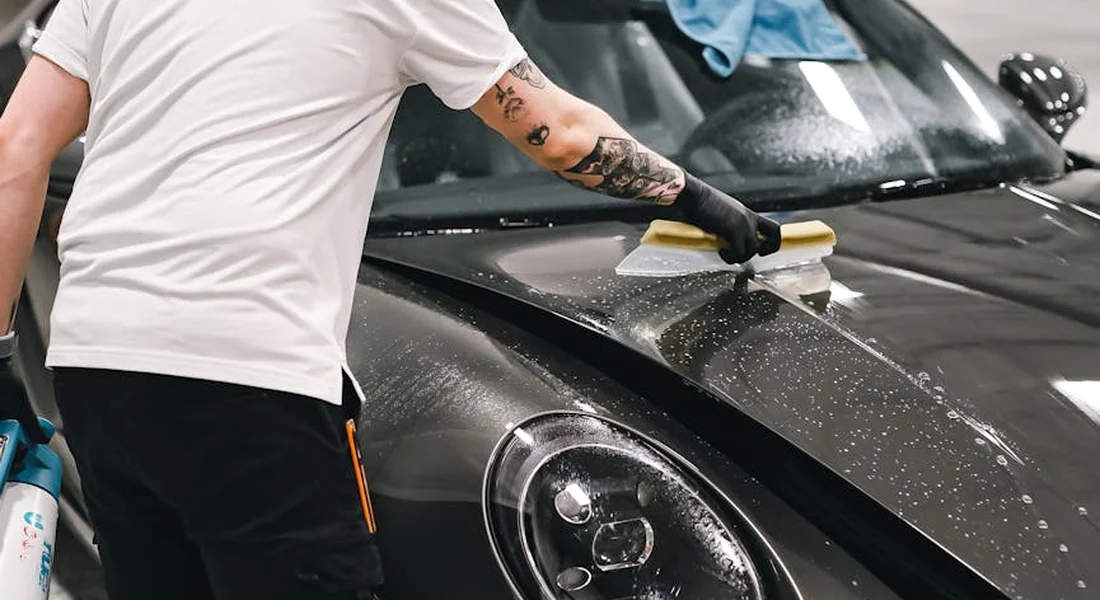
Matte paint feels different. It looks expensive. It is also unforgiving. You cannot treat it like the clear coat on my black BMW. That glossy finish hides a lot. Matte shows every fingerprint, every smudge, and every mistake you make. The single biggest rule for matte paint is this: you can never polish or compound a mistake out. A glossed spot from a bad towel is there for good.
This finish requires a different mindset. You are cleaning a delicate, porous surface, not a shiny sealed one. Forget pressure washers on a turbo nozzle. Forget drive-through brushes. Forget every spray wax or sealant in your garage. Your process must be gentle, chemical-safe, and focused on preventing permanent “glossing.”
Think of it like cleaning suede shoes. You would not blast them with a hose or scrub them with a stiff brush. You use a soft cloth and specific cleaner. The same principle applies here.
- Hand Wash Only: This is non-negotiable. A pressure washer is okay for a gentle pre-rinse on a wide-angle tip, but the cleaning is 100% by hand.
- The Right Tools: You need ultra-plush, clean microfiber towels. I use towels reserved only for my Porsche’s interior or paint. The goal is zero friction drag. For drying, a dedicated, fluffy drying towel is essential.
- The Permanent Risk of Glossing: Glossing is when friction or a chemical “heals” the microscopic texture of the matte finish, creating a shiny spot. Using a regular car wax, rubbing too hard with a towel, or even a dirty mitt can cause it. Once it’s glossy, it stays glossy unless you repaint the panel.
A common question I get is, “Can I just use a quick detail spray on matte paint?” The answer is yes, but only with a product made for matte or satin finishes. A standard quick detailer often contains gloss-enhancing polymers or silicones that will create uneven shine. Always check the label.
Step-by-Step Matte Wash Technique
This is the method I use on vehicles with matte wraps or factory matte paint. It is slow. It is deliberate. The reward is a perfect, flat finish without a single shiny blemish.
- Park in the Shade & Pre-Rinse: Never work on hot paint. Park in a cool, shaded spot. Use a pressure washer on its widest, lowest-pressure fan setting or a gentle hose flow to rinse off loose dirt. The goal is to float away surface grit, not blast it into the finish.
- Two-Bucket Wash with Matte Shampoo: Use two buckets with grit guards. Fill both with cool water. In the wash bucket, add a pH-neutral, matte-formulated car shampoo. Do not use a wash & wax product. Soak a super-soft microfiber wash mitt in the soapy water. Gently glide the mitt over one panel at a time. Let the soap and the soft fibers do the work, not your arm pressure. Rinse the mitt in the rinse bucket after every pass to trap any dirt.
- Rinse Thoroughly: Gently flood the panel with water from your hose (no pressure washer nozzle now) to sheet off the soap. Ensure all soap residue is gone. Soap left to dry can leave a film.
- Pat Dry, Do Not Drag: This is the most critical step. Take a large, clean, plush microfiber drying towel. Lay it flat on the wet paint. Gently pat and lift the towel to absorb the water. Do not slide or drag it across the surface. Move the towel to a dry section and repeat until the panel is dry. You may need two towels for a whole car.
- Final Touch-Up (If Needed): For any remaining water beads or spots, use a dedicated matte paint detail spray. Mist it lightly onto a fresh, soft microfiber towel-never directly onto the paint. Gently wipe the area. This helps eliminate streaks and ensures an even flat appearance.
- Air Dry in a Clean Garage: If possible, let the car sit in a clean, dust-free garage for an hour to ensure all moisture in seams and badges has evaporated. This prevents any random water spots from forming later.
Remember, the enemy is friction and wrong chemicals. With this method, you keep the sophisticated, velvety look of the matte finish intact for years. It is a commitment, but for a finish this good, it is worth the extra care.
Common Paint Washing Mistakes You’re Probably Making
I get it. You want a clean car. But the way you wash it might be doing more harm than good. I learned this the hard way with my jet black BMW. Every scratch, every water spot, it all shows up like a bad tattoo. Let’s go over the errors that cost you time and money.
- Washing in direct sunlight bakes water and soap onto hot paint, leaving mineral deposits that etch into the clear coat as permanent spots. The fix is simple: move to the shade.
- Using dish soap strips every bit of wax and sealant off your paint, leaving it bare, dull, and screaming for help from UV rays and contaminants. Swap it for a proper car wash soap.
- Dropping a clay bar on the ground turns it into a piece of sandpaper that will grind dirt into your paint, creating deep, straight-line scratches. If it hits the deck, toss it in the trash.
- Using dirty or coarse towels, like an old tee-shirt, is the fastest way to inflict a web of fine scratches called swirl marks. Only use clean, soft microfiber.
Mistake 1: Washing in Direct Sunlight
The paint on your hood feels hot. You see the water sizzle and vanish before you can even grab your towel. Heat forces soap and water to dry at different rates, leaving behind everything dissolved in the water as a hard, chalky spot on your paint. On my black BMW, these spots look like a plague of tiny white rings. They bond to the clear coat and can become permanent stains.
Here is how to correct it.
- Wash in a fully shaded area, like a garage, or during the cooler parts of the day-early morning works best.
- If you have no shade, wash and dry the car one panel at a time. Keep the rest of the car wet with a light mist from your hose.
- Use a drying aid. As a final rinse, I mix a capful of rinseless wash with water in a spray bottle. I mist a panel and then dry it. This lubricates the surface and sheets water away, which cuts down on spotting.
Mistake 2: Using Household Cleaners Like Dish Soap
Dish soap is made to dissolve grease on your dinner plates. On your car, it dissolves the protective wax or sealant you worked so hard to apply. This leaves the paint completely naked, accelerating oxidation and making it feel rough and dry to the touch. It’s essential to use a proper car detailer instead of dish soap that strips wax. I once used it on my dark blue F-150 before a wax job, and the paint looked hazy and thirsty within a week.
Make this switch today.
- Use a pH-neutral car wash soap. These are formulated with lubricants to help the wash mitt glide and to clean without stripping protection. I use a cherry-scented one that smells great and creates thick suds.
- If you need to intentionally strip old wax to apply a new coating, use a dedicated “strip wash” or a diluted all-purpose cleaner designed for vehicles. Do this only once or twice a year.
- For maintenance, a good car wash soap is all you need. It preserves your paint’s defense against the road salt, bug splatter, and tree sap I deal with on my daily drivers.
Always wear nitrile gloves when handling any cleaning product, even car soap. Rinse your wash mitt and buckets thoroughly after each use to prevent chemical buildup.
The Detailer’s Wash Protocol: Your Order of Operations
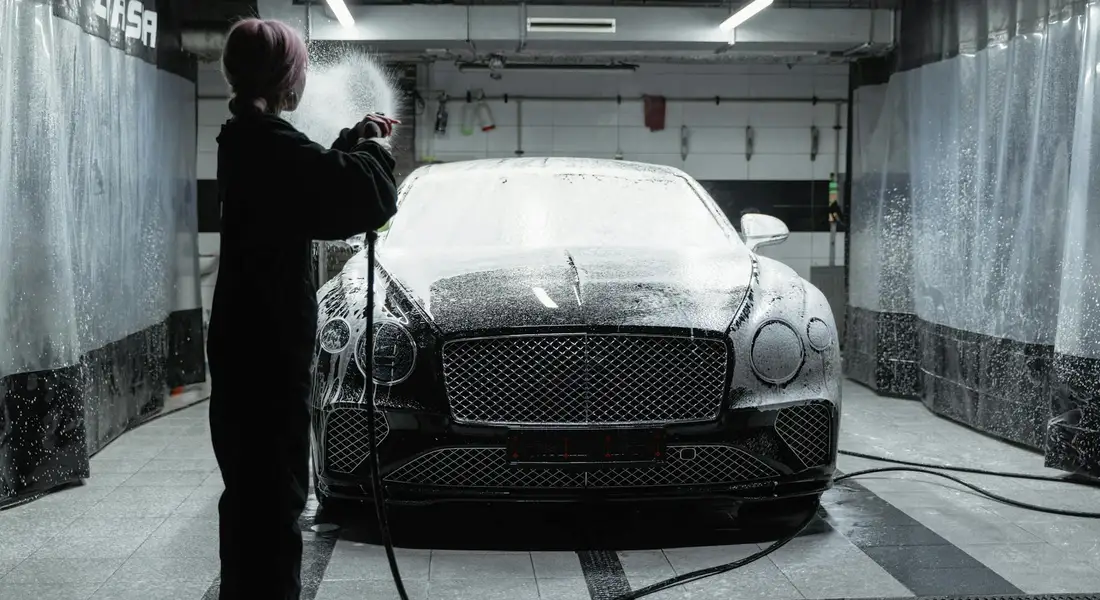
I want you to think of washing your car like a surgeon scrubbing in. There is a strict, non-negotiable order. Miss a step or do them out of sequence, and you risk introducing contaminants that will scratch your paint. This is the exact process I use on every vehicle, from my kid’s Odyssey to the 911.
- Wheels & Tires
- Pre-Rinse
- Foam Application
- Two-Bucket Wash
- Rinse
- Dry
- Decontamination (if needed)
- Protect
This sequence exists for one reason: to keep the dirtiest work away from your cleanest surfaces. You clean the wheels first because they are coated in gritty brake dust and road tar. If you saved them for last, you’d spray that filth onto your freshly washed and dried paint. The pre-rinse and foam stages loosen surface grime so your wash mitt doesn’t grind it in. The two-bucket method keeps your wash water clean. Only after the paint is perfectly clean and dry do you feel for contaminants like tar or bonded rail dust. Finally, you lock in that clean state with a protectant. People often ask for the basic car paint care steps, and this list is the absolute foundation. Everything else builds on this.
The Pre-Wash: Starting with Wheels and Pre-Rinse
Always start with the wheels and tires. I learned this the hard way on my black BMW. I once washed the body first, then did the wheels. The spray from the wheels misted a fine layer of brake dust onto the wet, clean paint. When I went to dry it, I dragged that abrasive dust across the hood, creating a fresh set of fine scratches. It was a stupid, preventable mistake.
Spray your wheels with a dedicated, pH-neutral wheel cleaner. For my Porsche’s heavy brake dust, I use a more aggressive iron-removing formula. Let it dwell and turn purple as it reacts with the metallic particles, but never let it dry. Agitate with a set of soft wheel brushes-one for the spokes, a different one for the barrels. Rinse thoroughly. Your goal is to remove the brake dust here, at the start, so it never touches your paint.
Next, pre-rinse the entire car with a gentle fan of water. You are not blasting dirt off. You are rinsing away loose sand, pollen, and bird droppings. Use a hose without a nozzle or a pressure washer with a wide-angle tip. Start at the roof and work down. This step hydrates the dirt, making the next stage far more effective.
The Main Wash: Foam and Two Buckets
Now, apply your foam. This is not just for show. A thick, shaving-cream-like layer of foam acts as a lubricating cushion between your wash mitt and the paint. It helps to float dirt away. I use a foam cannon on my pressure washer, but a garden sprayer with a foam attachment works fine. Cover the entire vehicle from top to bottom.
Let the foam dwell and slide down the panels, pulling dirt with it. This is when you get your two buckets ready. Fill one bucket with clean wash shampoo solution. Fill the other with plain rinse water. Each bucket gets a grit guard at the bottom-a plastic grate that traps dirt so you don’t pick it back up.
Here is the ritual. Dunk your clean microfiber wash mitt into the soap bucket. Start washing the vehicle from the top down-roof, windows, hood, then upper body panels, finishing with the lower rockers and bumpers. After you wipe one panel, rinse the mitt thoroughly in the rinse bucket. Scrape it against the grit guard to release the dirt. Then, reload with fresh soap from the wash bucket.
The rinse bucket is your dirty mitt graveyard, keeping that grime out of your clean soap and off your car. I keep two mitts in rotation for my F-150 because it’s so big. One for the upper, cleaner areas, and one for the filthy lower sections. On my black BMW, this two-bucket method is the only thing standing between me and a swirl-mark disaster. It is the single most important habit you can build for scratch-free paint.
Technique Tweak: How Pressure and Motion Prevent Scratches
Most scratches happen when you wash the car, not when you drive it. You are in complete control of that. Your goal is to glide lubrication over the paint, not to scrub dirt off it. Think of it like polishing a pair of expensive sunglasses. You wouldn’t grab a paper towel and grind away. You’d be gentle. Understanding the causes of car scratches helps you prevent them. With that knowledge, you can adjust your washing routine to avoid common pitfalls.
Let’s break down the two biggest mistakes I see.
Arm speed is your first defense against swirls. Fast, frantic circles create friction and trap grit. You want slow, methodical, straight-line motions. Picture wiping down a dusty glass table. You go in one smooth, steady direction to push the dust off, not in little circles that grind it in.
Pressure is the other culprit. You should never press a mitt or towel into the paint. The weight of your hand, the mitt, and the soapy water is all the force you need. I rest my open hand on the panel and let it glide. If you’re leaning into it, you’re creating microscopic trenches in the clear coat. On my black BMW, any extra pressure shows up as a new swirl under the right light.
Inspecting your work is how you learn. After you wash and dry a section, grab a bright LED work light. Hold it close to the paint at a very low angle, almost parallel to the surface. On black or dark paint, any swirls or holograms will pop out like spider webs. This isn’t to discourage you. It’s to show you what your technique is doing, so you can adjust.
My personal rule for towels is the fold. A towel is not a rag you wad up in your fist. A standard 16″ x 16″ microfiber drying towel gets folded in half, then in half again. This gives you eight clean, fresh sides to work with. Once you’ve made a pass with one side, you flip to a new, clean side. This ensures you are always laying down a clean, soft surface on the paint, not rubbing the dirt you just picked up back into it.
Arm Speed and Overlap: The Rhythm of a Safe Wash
Finding the right pace feels strange at first. You’re used to scrubbing things clean. Detailing is different. Your wash motion should be like applying lotion or sunscreen. Gentle, even, with each pass overlapping the last by about 50%.
Start at the top of a panel, say the hood. Make a slow, straight pass from the front to the back. Your next pass should start halfway into the path of your first one, so you’re always covering a previously lubricated area. This overlap does two things. It ensures you don’t miss a spot, and it constantly re-lubricates the surface to keep everything slick and safe. A rushed, zig-zag pattern leaves dry, high-friction spots where scratches can start.
Using Light to See Invisible Scratches
Your garage lights or the midday sun won’t show you the truth. You need a raking light. This is light that strikes the paint at a severe, shallow angle.
The sun low in the sky in the early morning or late afternoon is a perfect, free inspection tool. Park your car so the sun glances across the hood or door. Every imperfection will cast a shadow you can see.
In the garage, a handheld LED work light is your best friend. Turn off the overhead lights. Hold the LED about a foot from the paint and slowly move it so the beam rakes across the surface. On my BMW’s Jet Black paint, this light shows every fingerprint, every water spot, and every single swirl I’ve ever put there. It’s humbling, but it’s the only way to truly know the condition of your finish and improve your technique.
This practice of inspection turns a routine wash into a learning session, teaching you directly how your touch affects the paint.
Choosing Products for Paint Care: What Really Works
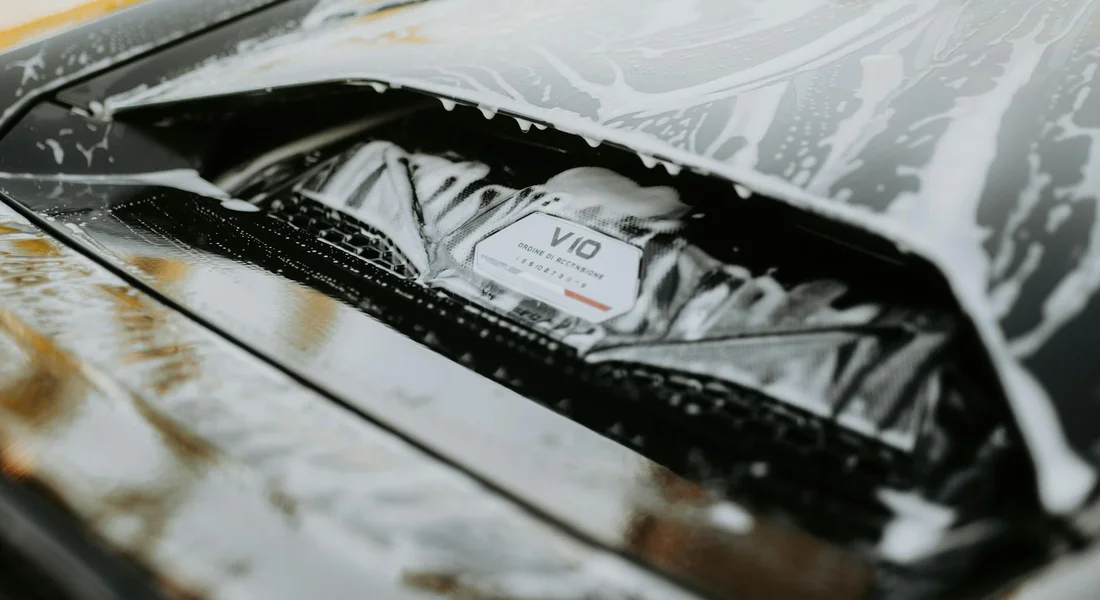
Your wash technique gets the dirt off. Your product choices keep the paint safe and looking right. Walking down the auto care aisle is overwhelming. Shiny bottles promise everything. I ignore the marketing. I look at the job it needs to do.
You want products that clean without stripping, protect without complicating, and enhance without harming. For daily drivers and garage queens alike, the right product makes maintenance easy and mistakes hard to make. Think about cost over time. A cheap gallon of shampoo that lasts a year is smarter than a fancy small bottle you use up in a month.
Durability matters. A sealant that lasts six months means you touch your paint less often, which is the best way to prevent scratches. Ease of use is real. After a long week, a quick spray wax is the difference between a protected car and one that goes naked.
For my Jet Black BMW, gloss is everything. I use products that add depth, not just shine. For matte paint, like on a modern Tesla or a wrapped hood, you need products that clean without adding any gloss at all. Using the wrong thing can create shiny, permanent patches.
You do not need a special warehouse. Good products are at your local auto parts store, specialty detailing suppliers, or online. Skip the generic big-box store cleaners. Look for brands that professional detailers use. Their reputation depends on it.
Shampoos: pH-Neutral vs. Ceramic-Enhanced
Car shampoo is not dish soap. Dish soap strips everything away, including your wax. You start from zero every time. Car shampoo is designed to lift dirt while being gentle on your paint’s protection.
A pH-neutral shampoo is your safe, daily driver choice. It works on every paint type, glossy or matte, waxed or bare. It cleans effectively without disrupting the chemistry of your existing wax or sealant. I use it on my Miata’s old single-stage paint and my Odyssey’s clear coat. It is the universal solvent for car washing.
Ceramic-enhanced shampoos are different. They contain silica, the same stuff in ceramic coatings. These are for vehicles that already have a ceramic coating or a spray sealant. They help maintain the coating’s slickness and water behavior. On my coated Tesla, I use a ceramic shampoo. It makes the water sheet off even better after a wash. On a regular waxed car, it is a waste of money. The shampoo cannot bond to the wax underneath.
| pH-Neutral Shampoo | Ceramic-Enhanced Shampoo |
|---|---|
| Works on all paint and protection types | Best for ceramic-coated or sealed paint |
| Gentle, will not strip wax | Can help boost water repellency |
| The default, safe choice | A specialized maintenance tool |
Sealants and Waxes: Balancing Protection and Gloss
This is where you choose your armor. A sealant is synthetic, like a durable raincoat. A wax is often natural, like a nourishing hand cream for paint.
Synthetic sealants are tough. They resist heat, chemicals, and UV rays for months. They create a hard, clear barrier. I use a spray sealant on my F-150. It gets abused. The sealant shrugs off road grime and makes the next wash easy. Application is simple, usually spray on and wipe off. For maximum durability with minimal effort, a synthetic sealant is the practical choice.
Natural carnauba paste waxes are different. They do not last as long, maybe a month or two. What they add is warmth and depth, especially on dark colors. On my black BMW, after a full polish, I apply a carnauba wax. The paint looks wet, deep, and rich. It is a labor of love. Here is how I do it:
- Apply a dime-sized amount to a soft foam applicator.
- Spread a thin, even layer on one panel at a time.
- Let it haze to a dull finish. This takes a few minutes.
- Buff it off with a clean, plush microfiber towel, flipping to a fresh side often.
Spray waxes are hybrids. They are usually synthetic for durability but are made for speed. After a rinse-less wash on a moderately clean car, a spray wax is perfect for adding protection in five minutes. They are the detailer’s secret for keeping a car looking fresh between major treatments.
For matte paint, forget all of these. You must use products labeled specifically for matte or satin finishes. They clean and protect without any glossy oils or polymers. Using a standard wax or sealant will create a shiny spot that often requires professional correction. It is a very expensive mistake.
Final Thoughts on Paint Care
The most vital step is mastering a gentle, lubricated wash with clean tools to keep scratches off your paint. Get this right, and you’ll stop swirls on black paint, prevent water spot etching, and safely maintain matte finishes without fear.
Neglect this, and you will see permanent swirl marks, stained clear coat, or a damaged matte surface that needs expensive professional help.
Sources and Additional Information
- How to Remove Water Spots from Matte Paint
- How To Remove Water Spots On A Car: The Complete Guide
- 5 Ways to Prevent Water Spots on Your Car | Behind the Detail
- Water Spots on Matte Black Pieces | Dodge Challenger Forum
- The Best Way to Remove Water Spots | Dr. Beasley’s
Max Gunther
Max is an automotive enthusiast having worked as a car mechanical and in interior detailing service for over 25 years. He is very experienced in giving your old car, a new fresh vibe. He has detailed many cars and removed very tough smells and stains from all kinds of cars and models, always ensuring that his work and advice helps his customers. He brings his first hand experience to his blog AutoDetailPedia, to help readers breath new life into their car interiors.