Do Pressure Washers, Touchless, and Automatic Car Washes Damage Paint or Cause Scratches?
You see the swirls on your neighbor’s car and wonder if your wash routine is next to cause them. I check my black BMW, a swirl magnet, after every wash with the same worry.
This article will teach you how pressure washer settings affect clear coat, what harsh chemicals in touchless washes can strip away, why automatic brush systems grind in scratches, and the right way to wash any car safely.
Wash without this knowledge, and you will trade your car’s deep shine for a fog of fine scratches.
Key Takeaways: The TL;DR on Wash Safety
You want the quick truth. Here it is.
- Touchless Washes: They trade scratches for chemical risk. They will strip your wax and can etch dirty paint, but they introduce zero physical abrasion. My grey Odyssey, the kid hauler, gets these in a brutal Michigan winter just to knock the salt off. My red 911, the garage queen, never goes near one.
- Automatic (Brush/Tunnel) Washes: These are the enemy of a perfect finish. The spinning cloths and brushes are filled with grit from every car before yours. They are a primary cause of swirl marks. If you care about your paint, avoid them.
- Pressure Washers: The tool itself is not the problem. Used correctly, it’s the best way to start a safe wash. Used incorrectly, you can chip trim and force dirt into the paint. The danger is in the technique, not the pressure.
The safest method for paint preservation is, and always will be, a proper two-bucket hand wash. Every other method is a compromise you choose based on your car’s condition and your situation. Some automated or less careful approaches can even damage the paint.
The Real Enemy: What Actually Scratches Your Paint
Scratches do not magically appear. They are carved. The recipe is simple: friction plus a contaminant.
Imagine rubbing a piece of sandpaper on your hood. That is exactly what happens when you rub a dirty wash mitt, a gritty towel, or a recycled car wash brush over your paint. The dirt particles get trapped between the soft material and your clear coat. As you move it, those hard particles grind microscopic grooves into the surface.
This damage is called paint marring. In the sun, it shows up as swirls, those spider-web circles. Under LED shop lights, you might see holograms, those oily-looking streaks. Deeper cuts are straight-line scratches. My Jet Black BMW, the swirl magnet, is a gallery of these defects. They show up on black paint with brutal clarity. Every improper wash added to the collection.
The primary culprits are always the same: embedded dirt on the car’s surface, a dirty mitt or towel, a contaminated brush, or simply using the right tool the wrong way.
Touchless Car Wash: Chemical Clean or Chemical Burn?
A touchless wash uses no brushes. Instead, it relies on very high-pressure water and a cocktail of strong chemicals. The idea is that the chemicals loosen the dirt and the pressure blasts it away.
So, do touchless car washes damage paint? They can, but not in the way you might think.
The trade-off is clear. You avoid all physical contact, so you get no new swirls from brushes. But you subject your paint to harsh alkaline or acidic soaps. These chemicals need to “dwell” on the paint to break down grime. On a well-protected car with a fresh sealant, this is less of an issue. The protection takes the hit—especially if it’s used to break down road grime.
On a neglected car, or one with baked-on pollution, that chemical can etch into the clear coat if not rinsed completely. The other major risk is water spots. The dryers on these systems are often weak. If you drive away with water beads on the paint, they bake in the sun and leave permanent mineral spots. Unusual substances—bird droppings, tree sap, tar, or fallout from industrial sources—can also damage the finish if not removed promptly. These contaminants deserve the same quick rinse to prevent etching.
My verdict: A touchless wash is a useful winter tool for salt removal, like I do with my F-150, but a poor choice for regular cleaning of a well-kept car. It is a last resort, not a maintenance plan.
Automatic (Brush/Tunnel) Car Wash: The Swirl Mark Factory
You drive in, the machine takes over. Big spinning brushes or long, flapping cloth strips slap and drag across every panel. This is the highest risk wash for your paint.
Are automatic car washes bad for your paint? Yes. Unequivocally, yes, if your goal is a scratch-free finish.
Think about the physics. Those brushes or cloths clean hundreds of cars a week. They cannot be properly rinsed between each vehicle. They hold onto every speck of sand, every piece of road grit, every metal fragment from brake dust. That contamination gets embedded in the material and can even scratch car paint.
Now, that gritty brush spins against your paint. It is no longer a brush. It is a large, spinning sheet of sandpaper. It will instill swirl marks across your entire car. It does not matter if the sign says “soft touch” or “brush-free” cloth. The problem is the dirt, not the material itself.
Beyond paint, these tunnels are hazardous for Paint Protection Film (PPF), vinyl wraps, and plastic trim. The aggressive contact can peel edges of film and wrap. The guides can scrape against your wheels. The cloth can snag and rip off a radio antenna. My 911 and its full PPF suit stay far away from these places.
Using a Pressure Washer: Tool or Weapon?
Many people fear the pressure washer will scratch or strip paint. This is a misunderstanding. The water pressure from a standard home unit (around 2000 PSI) is not strong enough to cut into healthy factory clear coat.
So, how do pressure washer scratches happen? They happen when you use it incorrectly. The most common mistake is using the wrong nozzle. The red 0-degree tip is a pinpoint jet. If you hold it too close to the paint, you can force standing water and dirt particles into the surface, essentially pressure-washing the grit into your clear coat. You can also chip delicate trim, badges, and windshield seals.
The safe, detailer-approved method uses a wide-angle tip, like the 40-degree white nozzle. You keep it a few feet away. You are not blasting dirt off. You are gently flooding the surface to rinse away loose contamination. This is the perfect first step for a hand wash, and it is essential for using a foam cannon to apply a thick, lubricating shaving cream of soap.
Will a pressure washer take off paint? On a factory finish, no. But on a compromised surface, the story changes. If you have a poor-quality repaint, touch-up paint, or peeling clear coat, the pressure can lift it. It can also damage vinyl decals, old trim, and loose body moldings. Always test an inconspicuous area first if you are unsure of the surface’s integrity.
Paint Damage Prevention: Your At-Home Wash Checklist
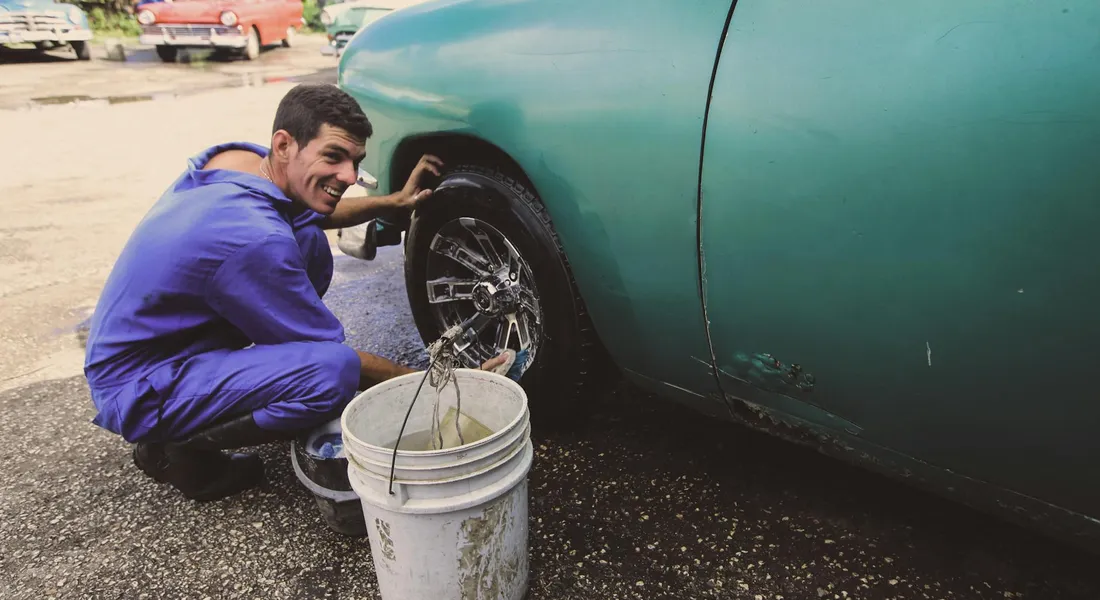
Forget the water source debate for a minute. A hose or a pressure washer is just a tool to get water on the car. The real protection happens in your process. This is the sequence I use on every car, from my black BMW to the family Odyssey. Follow these steps, and your paint stays safe.
Wash in the shade on a cool surface. Washing a hot car in direct sun makes soap and water dry almost instantly, leaving impossible-to-remove water spots etched into the clear coat.
Give the car a thorough pre-rinse. I blast my F-150’s wheel wells and lower panels first to loosen caked-on mud. Then, I rinse the entire vehicle from top to bottom. The goal is to remove as much loose grit as possible before your wash mitt ever touches the paint. You’re rinsing dirt off, not rubbing it in.
Use the two-bucket method with grit guards. This is non-negotiable. One bucket holds your soapy wash water. The other is filled with clean rinse water. After you wash a panel, you dunk your mitt in the rinse bucket first. The grit guard at the bottom traps the dirt you just washed off. You scrub the mitt against the guard, then wring it out. Only then do you go back to the soap bucket for fresh suds. This keeps your wash solution clean.
Invest in a high-quality microfiber wash mitt. A good mitt, like a Chenille style, has deep fibers that trap dirt away from the paint surface. It feels plush in your hand. The cheap, flat mitts from the big box store just slide dirt around. I use one mitt for the upper body panels and a separate, dedicated one for the lower rockers and wheels-where the worst grit lives.
Dry using a “pat and pull” method with drying towels. Never wipe a dry towel across a semi-dry panel. I use a large, soft microfiber drying towel. I lay it flat on the paint and gently pull it across the surface to absorb water, flipping to a dry section often. For complex curves on the Porsche or the Tesla’s flat bumper, I’ll gently pat the towel to soak up water. Forced air from a blower is fantastic for getting water out of mirrors and trim first.
Common Mistakes That Cause Scratches (Even by Hand)
I’ve made some of these myself. Everyone has. Knowing what to avoid is half the battle.
- Using one bucket. You’re just marinating your wash mitt in a soup of dirt. Every time you go back to the bucket, you load the mitt with abrasive particles and then smear them across your paint. This is the fastest way to put fine swirls in black paint.
- Dropping your wash mitt on the ground. If you drop it, it’s done for that wash. Toss it in the laundry and grab a fresh one. That one second on asphalt or concrete embeds tiny, hard particles you can’t rinse out.
- Washing in circles. Your instincts are wrong. Wash in straight, back-and-forth motions following the direction of airflow over the car (front to back). Circular motions are how you create visible, circular swirl marks. Linear motions make any light marring much harder to see.
- Using dish soap or household cleaners. Dish soap is a degreaser. It strips every bit of protective wax or sealant from your paint, leaving it completely bare. That “squeaky clean” feel is high friction, which makes it easier to scratch. It also dries out rubber trim and can be harsh on some plastics.
- Drying with a bath towel, chamois, or in direct sun. Bath towels are far too coarse. An old chamois can trap grit. Drying in the sun guarantees water spots as the moisture evaporates and leaves behind minerals. You must dry the car deliberately, in the shade, with the right tool.
Product Tier List: Building Your Safe Wash Kit
Your technique is everything, but the right tools make that technique possible. This isn’t about spending the most money. It’s about spending smart money on the right tools for your needs. A good kit prevents the swirls you’re trying to avoid.
Budget/Drive-Through Tier
This is for the person who uses the touchless wash most of the time but wants to safely handle bird droppings, bug splatter, or light dust at home. The goal is simple, effective, and cheap. You can store this entire kit in a single bucket.
- Basic Garden Hose with Nozzle: Any hose will do. Get a nozzle with a gentle “shower” setting. The fan pattern is kinder to dirty paint than a hard, pinpoint jet.
- Single Bucket & Grit Guard: Even with one bucket, a grit guard is a game-changer. It traps dirt at the bottom, keeping your wash water cleaner longer. This one upgrade prevents countless scratches.
- All-in-One Wash & Wax Shampoo: Look for a “wash and wax” formula. It cleans and leaves behind a light layer of protection in one step. It’s perfect for maintaining the sealant your touchless wash applies. Use more than you think; suds are your lubricant.
- Quality Microfiber Wash Mitt & Drying Towels: This is where you should not cheap out. A plush, chenille-style mitt holds more soapy water and lifts dirt away better than a cheap sponge. Follow it with a large, soft drying towel to prevent water spots.
This kit lets you safely spot-clean and perform a full, gentle wash without the complexity of a pressure washer. I keep a version of this at my parents’ house for when I visit with my Honda Odyssey. It takes ten minutes to give the “Kid Hauler” a refresh without risking the paint.
Enthusiast Tier
This is the sweet spot for the dedicated home detailer. You wash your own cars regularly and want professional-level results. The investment here pays off in saved time and superior paint health, especially compared to professional but affordable car paint services.
- Electric Pressure Washer (1.2-1.8 GPM): You don’t need a monster gas unit. A modern electric model is quiet, powerful enough, and perfect for cars. The goal is to loosen debris, not strip paint. Use a 40-degree white tip for maximum safety.
- Foam Cannon & Adjustable Nozzle: A foam cannon attaches to your pressure washer. It clads your car in a thick shaving cream-like foam. This layer loosens dirt and provides crucial lubricity before your mitt touches the paint. It’s the best pre-wash you can do.
- Two-Bucket Kit with Grit Guards: The industry standard for a reason. One bucket holds your clean, soapy shampoo. The other is your rinse bucket with clear water and a grit guard. You rinse your mitt in the clear water after every pass, keeping your shampoo bucket pristine.
- pH-Neutral Car Shampoo: Move beyond all-in-ones. A dedicated, pH-neutral shampoo offers superior cleaning and lubricity without stripping your existing wax or ceramic coating. It’s made specifically for paint safety.
- Dedicated Wheel Woolies & Tire Brush: Your wheels are the dirtiest part. Use separate, dedicated brushes for them. Never let your wash mitt touch your wheels first.
This setup is what I use on my daily drivers-the Ford F-150 and the Tesla Model 3. The foam cannon makes washing the truck’s large, muddy flanks less work. The two-bucket method is the only way I touch the jet-black paint on my BMW, my personal “swirl magnet.”
Show Car Tier
For garage queens, cars with fresh paint correction, or delicate surfaces like Paint Protection Film (PPF) and matte wraps. This approach prioritizes absolute minimum risk and maximum lubrication. Every step is about preserving a flawless finish.
- Deionized Water Filter & Spotless Rinse: This is the ultimate upgrade. A DI filter removes minerals from your final rinse water. The water dries completely spot-free, with no need for a drying towel. This eliminates the last chance for towel-induced marring.
- Multiple Plush Wash Mitts: Use one mitt for the upper, cleaner panels (roof, hood, windows) and a fresh mitt for the lower, dirtier panels (rockers, bumpers). Some use a separate mitt just for the rear bumper where exhaust soot collects.
- Lubricity-Focused “Clay Lube” Shampoos: These shampoos have extra polymers and lubricants. They feel slicker between your fingers. This extra slickness provides a safer cushion for your wash media when dealing with ultra-soft clear coats or sensitive PPF.
- Pre-Soak & Iron Remover Chemicals: Before you foam, you chemically decontaminate. A dedicated iron remover spray dissolves metallic brake dust embedded in the paint. It turns purple as it works. This step pulls out contaminants your mitt would otherwise grind in.
- Air Dryer/Blower: Instead of a towel, use a filtered air blower (like one for leaf blowing) to push water out of cracks, badges, and off the surface. When combined with deionized water, it’s a touchless dry.
This is the protocol for my Porsche 911 and any car fresh out of my paint correction bay. The DI filter is a revelation on dark colors. The multiple-mitt system and lubricious shampoo are non-negotiable for maintaining the perfect finish on that car’s full front PPF. It’s a different level of care for a different level of finish.
Your Car, Your Choice: Making the Smart Compromise
I have been there. It is February, the roads are white with salt, and my dark blue F-150 looks gray. My hands are cold just thinking about a two-bucket wash outside. Sometimes, you need the grime gone now, and you need a machine to do it.
That is real life. Maybe you live in an apartment. Maybe time is short. Choosing a wash method is about compromise, not perfection.
A Simple Guide: Match the Wash to the Car
Your car’s paint and your goals dictate the safest choice. Here is how I decide for my own vehicles.
- Daily Driver with a Spray Sealant (My Ford F-150): A touchless automatic wash is acceptable. The sealant adds a slick layer of protection. I avoid the brush tunnel completely. The high-pressure rinse gets the salt off without dragging grit across the paint.
- Modern Car with Soft Clear Coat (My Tesla Model 3): Hand wash is the rule. If I am desperate, I will use a touchless wash, but I dry it immediately after to prevent water spots on that flat bumper. The soft paint shows every mark.
- Black Paint or Garage Queen (My BMW 3 Series or Porsche 911): Hand wash only, no exceptions. For the black BMW, even a touchless wash can leave minor marring over time. The Porsche’s paint protection film stays pristine with a gentle rinseless wash in my garage.
- Family Hauler or Project Car (My Honda Odyssey or Mazda Miata): Priority is stopping corrosion. A touchless wash in winter blasts away salt. For the Miata’s old single-stage paint, I hand wash to carefully bring back the red, never trusting a brush.
Your decision hinges on paint hardness, the quality of your protection, and how many swirls you are willing to accept.
The Game Changer: Paint Sealants and Ceramic Coatings
A quality paint sealant or ceramic coating is your best insurance policy. I use a hybrid spray sealant on my F-150 every three months. It makes the paint feel like glass.
This slick surface changes everything. Dirt and road film cannot grip as tightly. During a wash, whether touchless or hand, contaminants release with less force and less friction. That high-pressure soap at the automatic bay does not need to work as hard, so it is less likely to stain or etch the paint.
A strong layer of protection fundamentally reduces the risk of scratches and chemical damage, no matter which wash method you are forced to use.
You Are in Control
Do not be afraid to wash your car. Be informed. Now you know that brush washes gamble with your clear coat, touchless washes rely on strong chemicals, and hand washing gives you total control. Consider how automatic washes compare to hand washing in protecting your finish. Your best choice will depend on your car and how you care for it.
With that knowledge, you can choose. A sealed daily driver can handle a monthly touchless wash in the salt season. Your show car gets the soft microfiber and foam cannon treatment every time.
What protects your paint is not fear of washing, but understanding the trade-offs and arming your surface with a good sealant first.
Making Every Wash a Safe One
The most important advice I can give you is that the tool doesn’t damage your paint; improper use of it does. Your focus should always be on eliminating abrasive contact by using plenty of lubricant and immaculately clean materials.
Neglect that, and you will introduce fine scratches and swirls, turning a glossy finish into a cloudy, marred surface that only a correction can fix.
Industry References
- r/AutoDetailing on Reddit: Are all drive through car washes harmful to the paint of a car?
- Will an automatic car wash hurt my car?
- Do automatic car washes damage your vehicle?
- Are all automatic car washes bad for your car? | BobIsTheOilGuy
- Are Car Washes Bad for Your Car? – AutoZone
Max Gunther
Max is an automotive enthusiast having worked as a car mechanical and in interior detailing service for over 25 years. He is very experienced in giving your old car, a new fresh vibe. He has detailed many cars and removed very tough smells and stains from all kinds of cars and models, always ensuring that his work and advice helps his customers. He brings his first hand experience to his blog AutoDetailPedia, to help readers breath new life into their car interiors.