Ceramic Wax vs. Traditional Paste: Which Protects Your Paint Better?
You’re staring at the shelf, trying to choose between a familiar can of carnauba paste and a sleek bottle of ceramic-infused spray, wondering which one will actually keep your car looking sharp and protected.
I will break down the real-world differences you care about, based on applying both to my own fleet of test vehicles. We will cover actual durability, the type of shine they produce, how water behaves on the surface, and resistance to chemicals like bug splatter and bird droppings.
Choose the wrong product for your needs, and you’ll be washing and reapplying protection far more often than you should.
Key Takeaways & Quick Comparison Table
Is ceramic car wax any good? Yes. It’s a major upgrade in durability and water repellency over traditional wax for a daily driver. Is it worth it? For most people who want longer protection with less work, absolutely. Think of traditional wax like hand lotion for your car’s paint. It nourishes and looks great but needs frequent reapplication. Ceramic wax is more like a slick rain jacket. It forms a tougher, longer-lasting barrier.
| Protection Type | Base Chemistry | Expected Durability | Hydrophobic “Beading” | Gloss Type | Difficulty of Application |
|---|---|---|---|---|---|
| Traditional Wax | Natural Oils & Waxes (Carnauba) | 1-3 Months | Medium | Warm, Deep “Wet Look” | Easy |
| Ceramic Wax (Spray/Quick Detailer) | SiO2 (Silicon Dioxide) Polymers | 6-12 Months | High | Sharp, Reflective | Moderate (Needs a clean surface) |
| Professional Ceramic Coating | Dense SiO2 Matrix | 2+ Years | Extreme (“Sheeting”) | Glass-Like, High-Clarity | Difficult (Requires paint correction) |
Traditional Car Wax Explained: Bees, Carnuba, and the Classic “Wet Look”
Traditional car wax is a blend of oils and natural waxes, with carnauba from the leaves of a Brazilian palm tree being the gold standard. This stuff sits on top of your clear coat. It doesn’t bond to it chemically. Instead, it fills the microscopic pores and valleys in the paint, creating a thin, sacrificial layer. Different types of car wax have varying compositions, which can affect their durability and shine.
Traditional wax is about enhancing what’s already there, not creating a new, harder shell. You apply it by hand or machine, let it haze, and buff it off. The result is a glow that comes from within the paint, not just on top of it.
The Pros: Why We Still Love It
- The gloss is unmatched for depth. On a dark, swirl-free paint like my Jet Black BMW, a pure carnauba paste wax gives a liquid, three-dimensional warmth that synthetics struggle to replicate. It makes reds richer and blacks look bottomless.
- Application is forgiving. You can apply it in direct sun (though I don’t recommend it), take your time, and buff it off without much worry about high spots or streaks. It’s the perfect entry point for a beginner.
- You can find it anywhere. From the local gas station to a high-end detail shop, traditional wax is ubiquitous and often less expensive per use.
The Cons: The Reality of Upkeep
- It simply doesn’t last. One to three months is the realistic window, especially if the car sits outside. Road film, bird droppings, and even high heat will degrade it quickly. My dark blue F-150 needs a fresh coat almost monthly in the summer.
- It offers little chemical resistance. Tree sap, harsh soaps, and acidic contaminants can cut right through it. It’s a sacrificial layer, which means it’s designed to be worn away to protect the paint beneath.
- It requires a frequent reapplication ritual. If you dislike waxing your car, this isn’t your product. It’s for the enthusiast who finds peace in the process.
So where does it shine? On my Porsche 911 garage queen, I’ll still use a traditional wax for a car show. That deep, candy-like gloss is the goal. It’s also perfect for anyone who enjoys the hands-on connection with their car. Understanding wax properties guides your application—slickness, protection, and longevity all matter. The right choice makes the gloss last. Just remember, wax is a top coat, not a fix. Always start with a perfectly clean and polished surface. Applying wax over dirt or scratches just locks them in.
Ceramic Wax Explained: The “Si02” Spray and the Modern Hybrid
Think of ceramic wax as the smart upgrade. It is a spray-on product containing Silica Dioxide (SiO2) that bonds to your paint, creating a slick, semi-permanent shell. You apply it to a clean surface, and it chemically links together as it cures.
How it works is the key difference. A traditional wax sits on the paint like a sweater. It looks great but absorbs things. A ceramic wax forms a cross-linked, hydrophobic layer that acts more like a slick rain jacket. Water, dirt, and contaminants struggle to stick to it. The surface becomes incredibly slick to the touch. For scratch protection, a ceramic coating typically provides a harder, more durable barrier than wax. This is central to the ceramic coating vs wax scratch protection discussion.
So, does ceramic car wax work? Absolutely. How good is it? On my dark blue Ford F-150, a single application in early fall shrugged off mud and road film for months. On my white Tesla Model 3, bug splatter from highway drives hosed off with almost no scrubbing. The self-cleaning effect is real. It’s a superior alternative to traditional wax or sealant coatings.
The Compelling Pros of Ceramic Wax
- Much longer protection. Expect 3 to 12 months of solid defense, not 4 to 8 weeks.
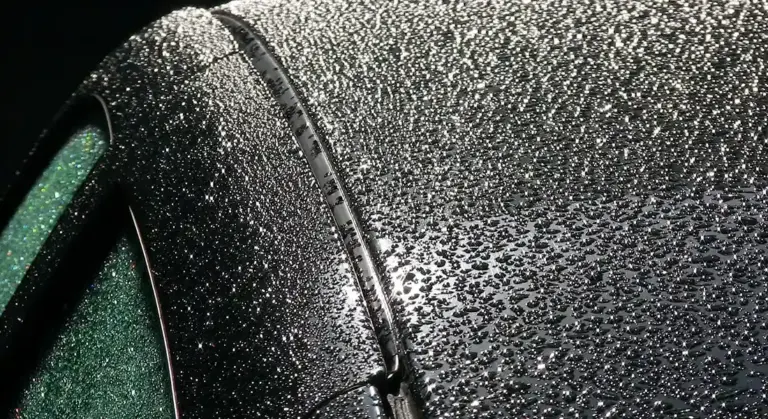
- Insane water behavior. Water beads up into tiny, tight spheres and sheets off the panel instantly, taking dirt with it.
- Superior chemical resistance. It offers better protection against harsh bird droppings, acidic bug guts, and UV oxidation than any traditional wax I have used.
The Practical Cons of Ceramic Wax
- Less forgiving application. If you do not buff it off evenly, it can dry into visible high spots that require a little extra work to remove.
- Demands a perfectly clean surface. Any dirt or old wax left on the paint will prevent proper bonding. You must start with a clean, decontaminated canvas.
- Higher upfront cost. The bottle often costs more than a tin of traditional wax, though it lasts many applications.
Clarify what it is not: ceramic wax is not a professional ceramic coating. A pro coating is a harder, permanent layer applied by a detailer after intense paint correction. It lasts years. Ceramic wax is a consumer-grade product you spray on and wipe off. It is fantastic, but it is a different league of durability and preparation compared to DIY ceramic coatings.
The Real-World Showdown: Protection, Shine, and Value on Your Paint
Durability and Daily Protection: Which One Actually Lasts?
Let us talk real life. For a vehicle like my F-150 that sees winter road salt, a ceramic wax will keep protecting through multiple storms and touchless washes. Traditional wax would be gone after the first salty slush bath. In brutal summer sun, a ceramic wax resists UV breakdown far longer. Acid rain beads and rolls off instead of etching.
For specific contaminants, the difference is stark. Tree sap on a traditional waxed surface can bond and stain quickly. On a ceramic waxed surface, you often have a fighting chance to peel it off. Bug splatter on my Tesla’s front bumper wipes away with a damp towel instead of needing a dedicated bug remover. On my Porsche’s wheels, ceramic wax makes brake dust rinse off with a pressure washer.
The Shine Factor: Warm Depth vs. Cold, Mirror Clarity
The visual result is different. A premium carnauba wax gives a deep, warm, liquid glow. It looks organic and rich. On my jet black BMW, carnauba makes the paint look like a pool of dark oil. It has a warmth you can feel.
Ceramic wax offers a sharp, high-clarity, mirror-like reflectivity. It is a cooler, crisper shine. On my white Tesla, the ceramic wax makes the paint look brilliantly bright and clinically clean. It enhances the metallic flake and makes the surface look like glass. One is not better, it is a preference. Do you want classic warmth or modern brilliance?
Answering Your Specific Questions
Can you use ceramic wax on a ceramic coated car?
Yes, and you should. It is a perfect maintenance topper. I use a ceramic spray wax every few washes on my coated cars. It refreshes the hydrophobic properties and adds another layer of slickness without harming the underlying coating. Think of it as a booster shot for your existing protection.
Is ceramic wax bad for your car’s paint?
No, when used correctly it is perfectly safe. The critical step is paint decontamination first. You must wash, clay bar, or use an iron remover to get the surface truly bare. If you apply ceramic wax over dirt or old sealants, you are just locking those contaminants under a shiny shell. Always start clean.
Ceramic vs wax for motorcycles, trim, glass, and wheels?
Ceramic wax wins for versatility on non-porous surfaces. Its chemical resistance is a huge advantage. I use it on my motorcycle’s fairings, all exterior trim, and windshield. On wheels, it makes cleaning brake dust trivial. One caution: avoid using it on matte vinyl wraps or matte paint. The high-gloss, slick finish it creates can alter the flat appearance of matte surfaces, making them look shiny or streaked. For those, use a product designed specifically for matte finishes, as not all waxes are created equal.
How to Apply Them Correctly and What Products to Choose
Knowing what each product does is one thing. Applying it right is everything. A bad application wastes product and gives poor results. Let’s break down the simple, right way to do it.
Step-by-Step: Applying Traditional Paste or Liquid Wax
This is the old-school ritual. It is slow, it is physical, and it is deeply satisfying. I still do this on my black BMW when I have a quiet Saturday to spare. The goal is to leave an invisible, protective film, not a thick layer you have to fight to remove.
Thin is in. A heavy coat does not protect better, it just makes a mess that is hard to buff off.
- Start with paint that is perfectly clean and completely dry. Any dirt or water spots get sealed under the wax.
- Using a soft foam applicator, put a small amount of wax onto the pad. My favorite for pastes is a round, contoured foam pad I can grip easily. It spreads product thinly and evenly.
- Apply to one panel at a time-a door, a fender, half the hood. Use overlapping circular motions or straight lines. You should barely see the product on the paint. If you see a thick, white smear, you used too much.
- Let it dry to a haze. This can take 5 to 15 minutes depending on the weather. It will look dull and chalky. Do not let it sit for hours.
- Buff it off with a clean, dry, premium microfiber towel. Flip the towel often. Use a light touch and watch the deep, warm gloss appear from underneath the haze.
Step-by-Step: Applying Spray-On Ceramic Wax
Speed and durability are the game here, but prep is non-negotiable. These products bond to the paint itself. If you spray them over old wax or contaminants, they will not bond well and will fail quickly.
You must start with a perfectly clean and decontaminated surface for a ceramic wax to work as promised. I always give the paint a quick clay bar treatment first to remove bonded grit before I apply the ceramic wax.
- After washing and claying, ensure the paint is dry. The surface should be bare and slick to the touch.
- Spray a light mist directly onto a panel or onto your applicator pad. Two or three spritzes for a door is enough.
- Spread the product evenly and thinly across the panel with an applicator. You want full, even coverage.
- Let it sit for 60 to 90 seconds. It will begin to haze slightly. In hot, direct sun, this cure time shrinks dramatically. High spots that dry too fast are a pain to remove, so work in the shade.
- Buff to a high gloss using a very soft, plush microfiber towel. I use specific 500+ GSM Korean edgeless towels for this-they are fluffy and gentle, leaving no streaks behind. You will feel the slickness immediately.
A Product Tier List: From Daily Driver to Show Car
Not every car needs the same level of product. Match the protection to the vehicle’s life. Here is how I think about it in my own garage.
Budget/Drive-Through Tier
This is for cars that see daily use, kids, and weather. The goal is good protection without fuss or high cost. A classic liquid carnauba wax or a basic silica spray coating is perfect here. They are easy to find, easy to use, and you will not cry if you have to apply them every other month. This is what lives in my cabinet for the Honda Odyssey. It gets the job done well.
Enthusiast Tier
For those who want a noticeable step up in slickness, water behavior, and durability without professional-level commitment. This is the sweet spot. Premium “hybrid” ceramic waxes live here. They blend SiO2 with polymers or carnauba for incredible shine and 4-6 months of solid protection with easy application. This is my go-to tier for the Ford F-150 and the Tesla Model 3, giving them serious defense against road grime and bug acids with a fantastic shine.
Show Car/Perfectionist Tier
This is for the garage queens and the concours contenders. On the traditional side, high-end carnauba paste waxes offer a deep, wet, liquid glow on dark paint that is simply unmatched by anything else. It is art. On the ceramic side, specialized “topper” sprays are designed to enhance and maintain a full ceramic coating, adding extra slickness and hydrophobic effect. I break out these products only for the Porsche 911 or for the BMW 3-Series on a special summer morning. The results are stunning, but the cost and effort reflect that.
Final Thoughts on Wax and Protection
Your best choice comes down to this: commit to the prep for a ceramic product if you crave long-lasting defense, or grab a traditional wax for a rewarding, immediate shine that’s hard to beat. On my daily-driven F-150, a hybrid ceramic spray saves me time, but for that deep, warm glow on the Porsche’s curves, nothing feels like rubbing in a quality paste wax by hand.
Choose wrong, and you’ll be left with a finish that waterspots easily, lacks depth, and needs constant redoing to fight off the elements.
Industry References
- Ceramic Coating vs. Wax: Which is Better?
- r/AutoDetailing on Reddit: Do I really need ceramic coating or is wax sufficient?
- Ceramic Paste Wax – Recommendations??? | Dodge Challenger Forum
- Ceramic Spray then Wax or vice versa? : r/AutoDetailing
- Spray Wax vs Paste Wax – Which Should You Choose? – Jimbo’s Detailing
Max Gunther
Max is an automotive enthusiast having worked as a car mechanical and in interior detailing service for over 25 years. He is very experienced in giving your old car, a new fresh vibe. He has detailed many cars and removed very tough smells and stains from all kinds of cars and models, always ensuring that his work and advice helps his customers. He brings his first hand experience to his blog AutoDetailPedia, to help readers breath new life into their car interiors.