Are Car Covers Safe for Your Paint? The Right Way to Protect Your Finish from Scratches
You buy a cover to guard your car’s paint, but the wrong one or a sloppy fit can scratch it worse than a branch. I have pulled covers off my black BMW to find fresh swirls, and it stings every time.
Let me walk you through how I use covers safely on all my vehicles. We will cover the best fabric types for indoor versus outdoor use, why a perfectly clean car is non-negotiable, the step-by-step method for putting on a cover without dragging it, and how to wash a cover so it stays soft and safe.
Skip this advice, and your cover will simply trap dirt and grind it into your clear coat, leaving a haze of fine scratches.
Key Takeaways: The Short Answer on Car Covers and Paint
Are car covers safe for your paint? The short answer is yes, if used wrong. No, if used right. I know that sounds like a cop-out, but it’s the plain truth. When you consider safe materials for car paint care, you’ll reduce the risk of damage and keep your finish looking new. Using non-abrasive cleaners and breathable protective products helps maintain gloss without harming the surface.
Think of a car cover as a tool, not a magic blanket. Like any tool, it can cause damage if you use it incorrectly.
- The cover itself must be impeccably clean, every single time you put it on.
- The car’s paint must be perfectly clean and dry before the cover goes on.
- The cover’s inner lining must be a soft, paint-friendly material like flannel or brushed cotton.
- Wind is the enemy. A loose cover flapping in the breeze will sand your finish.
For a car you drive regularly, investing in a quality ceramic coating or sealant is often a better, safer line of defense. But for a vehicle sitting for weeks or months, whether in a garage or outside, a proper cover is the key to preservation.
Can a Car Cover Damage Your Paint? Understanding the Risk
So, are car covers bad for paint? Do car covers damage paint? Absolutely they can. The risk is real, and I’ve seen the holograms and swirls to prove it.
Here’s a simple analogy. A car cover is like a thick wool sweater. If you put that sweater on over a clean, smooth t-shirt, it’s fine. If you put it on over a shirt covered in sand and grit, the sweater will grind that dirt into you, causing pilling and scratches. Your car’s paint is that t-shirt.
The risks change based on where you use the cover. Outdoors, you face abrasion from wind, plus contaminants like pollen and dust getting trapped underneath. Indoors, in a garage, the main risk is abrasive dust and the act of putting on or taking off the cover improperly.
One thing most people never check is the material itself. Before you buy a cover, look for information on its inner liner material, almost like checking a car paint safety data sheet for harsh chemicals. You want to avoid cheap, non-breathable plastics or rough synthetics that can off-gas or react with your clear coat over time.
The Science of a Scratch: Paint, Clear Coat, and Friction
Modern car paint is not just color. It’s a system. The color layer is soft. The hard, clear layer on top, the clear coat, is what gives you that shine and protects the color. This clear coat is only about as thick as a piece of printer paper.
Micro-scratches, what we call swirl marks, happen when something abrasive moves across that clear coat. It doesn’t take a rock. It takes a tiny, hard piece of grit. When you drag a car cover over a dirty panel, you are essentially doing a large-scale version of wiping your paint with a dirty microfiber towel.
Every single piece of dust trapped between the cover and your paint becomes a tiny cutting tool, creating a web of fine scratches in the sunlight.
This is why my Jet Black BMW is the perfect case study. Black paint shows every single flaw. A few times putting a slightly dusty cover on that car, and it would look like a spider web. The soft, glossy finish is a mirror that reveals every act of friction.
When a Car Cover is the Right Tool for the Job
A car cover is not an all-purpose solution. It is a specialist tool for specific jobs. Here is when it makes sense.
Use a car cover for:
- Long-term storage of a classic car, summer convertible, or project car for a season or more.
- Protecting a parked car from tree sap, bird droppings, and heavy pollen in a driveway.
- Shielding a garage-kept car from fine dust, insulation particles, or accidental bumps from stored items.
A car cover is the wrong choice for:
- A daily driver you cover every night. The constant on-and-off over a never-perfectly-clean car guarantees scratches.
- Any windy day. The flapping will cause abrasion, no matter how clean everything is.
- A car covered in road salt or winter grime. Putting a cover over that is a recipe for a permanently etched finish.
For my 1995 Mazda Miata restoration project, the cover goes on only after a full wash and dry, and it stays on for the whole winter. For my daily driver Ford F-150 that sees mud and salt? I rely on a strong ceramic sealant and frequent rinses. I would never cover it unless it was spotless and sitting for weeks.
The Three Ways Car Covers Can Scratch or Damage Your Finish
Your goal is protection. But a cover on a dirty or unsuitable car becomes a tool for destruction. I learned this the hard way years ago on my old black BMW. Here is exactly how the wrong approach goes wrong. Car wraps can damage paint if the surface isn’t prepped or kept clean. This is the risk I saw firsthand.
1. The Sandpaper Effect: Dirt and Grit Trapped Underneath
This is the single biggest mistake and the number one cause of cover-induced scratches. Think of a single grain of sand or road salt. It is hard, and it has sharp edges. When you drape a cover over it, you press that grain against your clear coat. Now add the slightest breeze.
That breeze makes the cover move. Just a tiny shift. That grain of dirt now gets dragged across your paint. It acts like the world’s smallest piece of sandpaper. Over a night of wind, that one grain can etch a fine line. Multiply that by the hundreds of particles on a car that looks “clean enough.” The result is a web of fine scratches, or micro-marring, that dulls the shine.
This effect means the only safe time to use a cover is on a perfectly, wash-and-dry cleaned car, with no loose dust or grit on the surface. If you would not dare to wipe the paint with a microfiber towel at that moment, you should not dare to put a cover on it.
2. The Wrong Fabric: Harsh, Non-Breathable Materials
Not all fabrics are created equal. A cheap cover feels plasticky and stiff. Run it between your fingers and it feels scratchy, like a rough canvas bag. That material itself can mar soft clear coats, even on a clean car. It lacks any softness or give.
Compare that to a quality cover. The inner lining should feel soft, almost like a flannel shirt or a plush microfiber towel. This gentle touch is what protects the paint from the cover itself. The other crime of cheap materials is a lack of breathability. A plastic-like cover traps moisture underneath it. That moisture has nowhere to go. It sits against the paint and under trim, which can promote mildew and even etch water spots into the finish if the sun bakes it on.
A good cover must be soft to the touch and breathable, allowing air to pass through while blocking contaminants.
3. Wind Whiplash: Flapping and Abrasion
Picture a loose-fitting cover on a windy day. You can hear it from inside the house. A sharp snap as a section whips up and slaps back down onto the hood. Now imagine the thin layer of pollen and dust that settled on the car since you covered it. That flapping action grinds that dust into the paint with force.
Every seam, every strap, every loose edge becomes a damaging point of contact. A strap with a cheap plastic buckle can tap incessantly against the fender, wearing through wax and into the clear coat over time. Wind turns a loose cover into a paint-sanding machine.
A cover must be secure and fitted to minimize movement, or the wind will use it to slowly scour your finish.
How to Choose a Car Cover That Won’t Hurt Your Paint
Choosing the right cover is not about finding the cheapest barrier. It is about selecting a protective layer that understands its job. Let us break down what to look for.
Material Matters: From Cotton to Multi-Layer Tech
The first and most critical choice is the material, and it splits directly into two worlds: indoor and outdoor. The keywords you must look for are soft and breathable. If a product description does not use those words, move on.
Indoor Cover Champions: Dust and Scratch Prevention
For garage use, your enemy is mostly dust and occasional contact. You do not need heavy water resistance. You need supreme softness and static control. Soft cotton or cotton-polyester blends are classic and excellent. They feel gentle, breathe well, and often have anti-static treatments to prevent dust from clinging as much.
This is what I use for my Porsche when it is tucked away for a while or prepped for a local show. A simple, light, soft cotton cover keeps the dust off without any risk of scratching the delicate red paint or the edges of its paint protection film.
Outdoor Cover Warriors: Sun, Rain, and Debris Defense
Outdoors, the cover must fight the elements. A good outdoor cover is a piece of technical fabric. It is usually a multi-layer construction. The outer layer sheds water and has UV inhibitors to block the sun’s fading rays. The critical layer is the inner one, which is always a soft, brushed material that faces your paint. This inner liner wicks away minor moisture and provides a safe cushion.
Avoid anything that looks or feels like a blue vinyl tarp or a plastic sheet. These will trap moisture, scratch the paint, and degrade quickly in the sun, offering less protection for car paint.
Fit is Everything: Why a Snug Cover is a Safe Cover
A cover that is too loose will flap in the wind. A cover that is too tight will stress its own seams, put pressure on antenna mounts and mirrors, and be a struggle to put on and remove. You want a tailored fit.
For maximum safety, a custom-fit cover designed for your specific model is the best choice. It will have precise cutouts for mirrors and antennas, minimizing loose material. If using a universal fit, follow the manufacturer’s sizing guide precisely. Measure your car’s length, width, and height. When on, the cover should be snug without needing extreme force to stretch it over mirrors.
The Accessory Checklist: Straps, Mirrors, and Antennas
Look at how the cover handles details. For side mirrors, does it have built-in pockets or a soft, elasticized area to encompass them gently? For a radio antenna, a simple reinforced hole or a soft patch is best. Avoid covers where a stiff seam runs directly over a mirror.
Many outdoor covers have an undercarriage strap system. These should be soft, wide, and adjustable. You thread them underneath the car to secure the cover against wind. Make sure the buckle or clip is plastic and not metal, and that when secured, the strap is not rubbing against a painted area like the rocker panel.
A common question is about using tape to secure a loose edge. You can use a low-tack, automotive paint-safe tape for a very short-term fix, like securing a strap wrap. I keep a roll for temporary jobs. Do not leave any tape on your paint or trim for more than a few hours, especially in sun or heat, as the adhesive can bond and leave a residue that is difficult to remove.
Step-by-Step: How to Safely Install and Remove a Car Cover
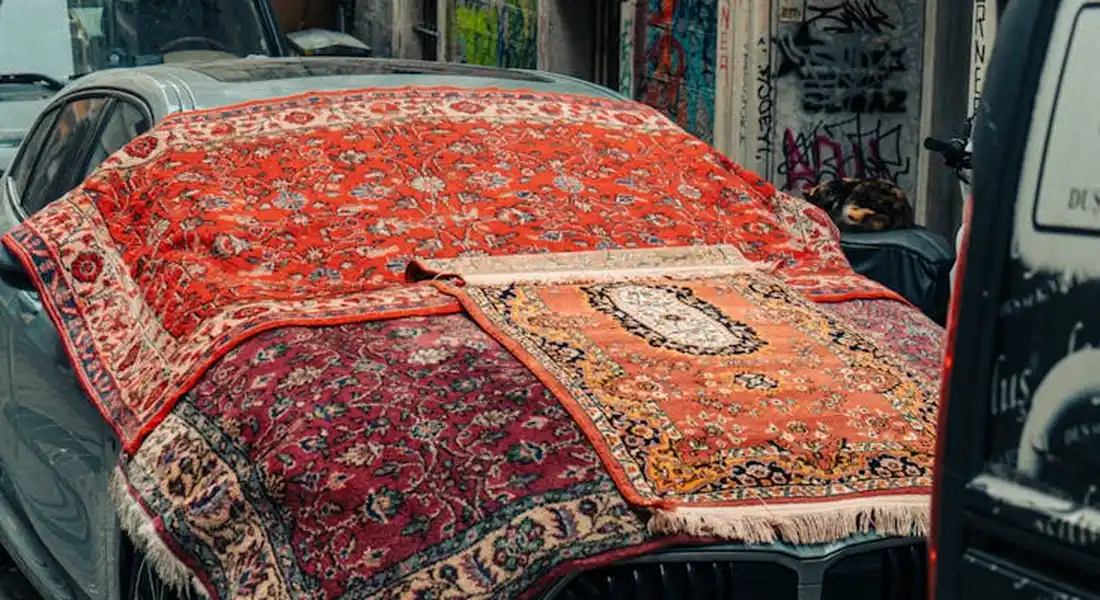
How do you cover a car without scratching it? You treat it like a ritual. It’s not about tossing a tarp over your vehicle. It’s a careful process, like the two-bucket wash method, designed to protect. Get this wrong and you’ll etch swirls into the paint of your BMW just as fast as a dirty sponge. Get it right, and your car sleeps safe.
The Golden Rule: Start with a Perfectly Clean Car
Should you wash your car before putting on a cover? The answer is an absolute, non-negotiable yes. A cover pressed against a dirty surface is fine-grit sandpaper. I learned this the hard way on my black BMW. I left a light film of pollen on it once. After a week under the cover, the wind’s gentle movement turned that pollen into a network of fine scratches.
Your car must be clean. Not just rinsed. Properly cleaned.
- Give it a thorough rinse to blast off loose dirt.
- Apply a foaming pre-wash to loosen grime.
- Wash with the two-bucket method using clean, plush mitts.
- Dry it completely with clean microfiber towels. Every droplet must be gone.
Putting a cover over anything less than a perfectly clean, dry car is a guarantee of damage.
The Installation Dance: No Dragging, No Scrubbing
You don’t throw the cover. You place it. Think of laying a soft blanket over a sleeping child. That’s the energy you need.
- Unfold the cover on the ground, away from the car. Shake it out.
- Start at the front bumper. Drape it over the hood, aligning it center.
- Walk to the other side. Gently pull the cover up and over the roof. Let it float down. Don’t drag it.
- Smooth the cover down the sides with open palms, not fingertips, as you go.
For convertibles like my old Miata, here’s a pro tip: secure the front and sides of the cover first. Then, if your top is down, you can gently lower it into the cover’s pocket. This prevents straining the fabric over the windshield frame.
Securing the Cover: Locking Out the Wind
A loose cover is a paint polisher. Wind will whip it back and forth. Use the built-in soft elastic hem, straps, or grommets. For long-term outdoor storage, a cable lock system through the grommets is wise. The goal is a snug fit without harsh tension.
Never let the bottom edge of the cover rest on the ground where it can wick up moisture and dirt. It should kiss the tires or hover just above the pavement.
The Gentle Removal: Peeling, Not Pulling
Removal is just as critical. You want to capture the dirt on the outside, not roll it across your paint. Start at the rear. Peel the cover back, folding it inward onto itself. Bring the dirty outer surface to the inside of the fold, like folding a flag.
Work your way to the front, gathering and folding. By the end, the only thing that touched your clean paint was the clean inner liner of the cover. Shake the folded bundle away from the car before storing it.
Paint Damage Prevention: Common Mistakes and How to Avoid Them
Knowing how to use a cover is half the battle. The other half is knowing what not to do. These are the errors I see most often in my shop.
Mistake 1: Covering a Wet or Damp Car
Trapping moisture is asking for trouble. It creates a humid microclimate perfect for mold on interiors and etching on paint. Water spots get baked in. I never cover my Tesla after a wash until I’ve done a full dry, even in the door jambs and around the trunk seal. If you get caught in rain, dry the car off before covering it, or let the sun dry it first.
Mistake 2: Using a Dirty or Gritty Cover
The cover itself can become the contaminant. Clean it regularly. Most modern covers can go in a home washing machine on a gentle, cold cycle. Use a mild detergent and absolutely no fabric softener-it clogs the fabric’s breathability. Always air dry; never use a dryer. Before each use, give it a good shake away from your car to dislodge any settled dust.
Mistake 3: Ignoring the Paint’s Existing Protection
A car cover is physical armor. It is not a substitute for chemical protection. A bare, clean paint surface is still vulnerable to micro-abrasion. The best practice is to have a solid base of wax or sealant, then add the cover on top. For my F-150, I often give it a quick spritz of a spray wax after drying. This adds a slick layer that makes any minor cover movement even less likely to mar the surface.
Mistake 4: Forgetting About Other Paint Hazards
A cover protects from the elements, but you must think about what touches the paint underneath it. Straps and grommets should have soft backing. This is similar to asking, “do bike racks scratch your car?” The answer is yes, if they aren’t padded. Any contact point needs a soft barrier.
And remember, this is about exterior finishes. When people search for “car paint safe to use on engine block,” they’re looking for high-temperature enamel. That’s a different world. For your car’s outer skin, the rules are about gentleness, cleanliness, and preventing movement — unlike household products used for paint.
Product Tier List: Car Covers and Paint-Safe Accessories
Not all covers are created equal. Think of them like waxes and sealants. A basic spray wax works in a pinch, but a ceramic coating offers superior protection. Your choice depends on your car, your budget, and where it sleeps. Here’s a breakdown of what to look for.
Budget/Drive-Through Tier: Basic Protection
This is for the car that lives in a garage but needs protection from dust, pollen, and accidental bumps from lawn equipment. The goal here is simple dust control, not battling the elements.
- Simple, Soft Indoor Dust Covers: Look for covers made from soft, non-woven fabrics like flannel or brushed cotton. They should feel smooth to the touch, like a high-quality t-shirt. These are designed for a clean car in a clean garage.
- Universal-Fit Covers with Caution: A universal cover is better than nothing for short-term indoor use. The fit will be baggy, and any loose material can rub against the paint if disturbed, acting like fine-grit sandpaper over time. If you go this route, make sure the car is impeccably clean first and try to keep the cover as still as possible.
- The Old Bed Sheet Last Resort: For a weekend project indoors, a clean, 100% cotton bed sheet is a classic detailer’s trick. It’s breathable and soft. I’ve used them on my Miata project car between polishing sessions. Never use it outdoors, as wind will turn it into a paint-sanding machine.
Enthusiast Tier: Balanced Performance and Value
This is the sweet spot for most car owners. You need a cover for a carport, driveway, or seasonal outdoor storage. My grey Honda Odyssey, the kid hauler, sits under one of these on the driveway during pollen season.
- Semi-Custom, Breathable Outdoor Covers: These are sized to your vehicle’s general model (e.g., “Mid-Size SUV”). The critical feature is a multi-layer construction. The outer shell should be water-resistant and UV-treated. The inner liner must be a soft, scratch-free fabric like fleece. Breathability is non-negotiable to let trapped moisture escape.
- The Moisture Fighter: For long-term outdoor storage, moisture is your enemy. Place a reusable silica gel desiccant canister inside the car, on the dashboard. It actively pulls moisture from the cabin air, helping prevent that musty smell and interior mold. Check and recharge it monthly.
Show Car/Investment Tier: Maximum Safety
This is for vehicles where the finish is part of the investment. This is the protocol I use for the red Porsche 911 when it’s tucked away for the winter. It’s about eliminating all risk.
- Custom-Made, Multi-Layer Outdoor Covers: You provide the exact make, model, and year for a perfect, tailored fit. A premium cover will have four or more layers: a soft inner layer, a cushioned middle layer for impact resistance, a breathable membrane, and a tough, weatherproof outer shell with UV inhibitors. It fits like a glove, with zero loose fabric to flap in the wind.
- Premium Indoor Cotton Covers: For a climate-controlled garage, a thick, natural cotton cover is the ultimate in paint safety. It’s heavyweight, supremely soft, and highly breathable. It’s like putting your car in a cotton hoodie.
- Essential Accessories: Look for built-in grommets for a security cable and integrated soft elastic loops for a gentle undercarriage tie-down. Some high-end covers include soft fabric storage bags to keep the cover itself clean when it’s not on the car. Air vents sewn into strategic panels reduce wind lift and ballooning, which is the main cause of cover-induced marring.
The Detailer’s Secret: Paint-Safe Tape for Temporary Jobs
Sometimes you need to secure something to your paint or trim for a short period. Maybe you have a broken window seal from a storm and need to keep rain out for a day. The wrong tape can peel clear coat or leave a gummy nightmare.
For any short-term job on your car’s exterior, use only low-tack, automotive-grade painter’s tape, often called “fine line” or “detailer’s” tape. It’s specifically made to be safe for car paint and has a gentle adhesive formulated to release cleanly. Duct tape, masking tape, or packing tape should never touch your paint. They will leave residue and can even pull paint off older vehicles.
Here is the correct way to use it:
- Clean the area thoroughly. Tape won’t stick to dirt, and dirt trapped under it will scratch.
- Test the tape first. Apply a small strip to a hidden area like the edge of a door jamb or under the trunk lid. Leave it for an hour, then peel it back slowly. If it leaves residue or looks like it’s damaging the surface, don’t use it on the exterior.
- Apply the tape smoothly, without stretching it. For a broken window, create an overlap seal but don’t let the tape contact the paint any more than necessary.
- Remove it as soon as the job is done. Pull it back on itself at a 45-degree angle slowly and steadily.
Final Thoughts on Car Cover Safety
The safest car cover is a clean car cover on a perfectly clean car. I treat my Jet Black BMW the same way, knowing that any grit trapped between the paint and fabric will leave a trail of fine scratches that only show up in the sun. These scratches can be prevented by ensuring the car and cover are clean before use.
Neglect that simple rule of cleanliness, and you will be grinding contaminants across your clear coat every time the wind blows.
References & External Links
- How Effective Are Car Covers for Protecting Paint? | DaSilva’s Auto Body
- 10 Ways to Protect Car Paint | CARFAX
- Car Paint Protection: The Essential Shield | Chemical Guys