Where Can You Buy Car Wax and Get Professional Waxing Service Done Near You?
You’re staring at your car’s dull paint, wondering where to even start for a showroom shine, and the search for products or a pro feels overwhelming. I get it, I’ve worn those same shoes in my own driveway.
This article will walk you through the main types of car wax, where to purchase them from local retailers to online shops, how to find and evaluate a professional detailer near you, and what a quality wax service should include.
Go in blind, and you might waste money on the wrong wax or hire someone who leaves holograms in your clear coat.
Your Handy Roadmap to Finding Car Wax and Services
You have two roads ahead of you. You can buy the product and do the work yourself, or you can pay a professional to do it for you. Both are good paths, but they lead to different places.
Doing it yourself means you control the process and the products. You learn your car’s paint. You get that quiet satisfaction. It also takes time. A proper wash, clay bar, and wax application on my black BMW is a four-hour Saturday, easy. You need the tools: buckets, wash mitts, microfiber towels, and maybe a dual-action polisher if you’re correcting the paint first. The cost for a quality wax and supplies starts around fifty bucks and goes up from there. The result is a deep personal connection to your car’s finish.
Hiring a pro saves your weekend. A good detailer has professional-grade tools and materials you likely don’t. They can achieve a level of correction and perfection that takes years to learn. This convenience and expertise costs more, often starting at a few hundred dollars for a full exterior detail with wax. You are paying for their time, skill, and overhead.
So which path is yours?
- If you have a free afternoon, don’t mind a little sweat, and find polishing a hood to be a kind of therapy, do it yourself.
- If your time is precious, you want a guaranteed showroom result, or the thought of touching a polisher makes you nervous, hire a professional.
The right choice is the one that fits your life and gets your car the protection it needs.
Product Tier List: From Quick Spray to Show-Stopping Wax
Not all waxes are the same. Think of them in tiers, from daily drivers to garage queens.
Budget/Drive-Through Tier
These are the workhorses. You find spray waxes and basic paste waxes from brands like Meguiar’s or Turtle Wax at any big-box store. I keep a bottle of spray wax in my garage for my Ford F-150. After a rinse, a quick spray and wipe down adds gloss and a month of light protection in ten minutes. It’s perfect for maintenance between bigger jobs.
These products are about convenience and frequent refreshment, not long-term durability.
Enthusiast Tier
This is where detailing gets interesting. Here you find synthetic sealants, hybrid waxes (mixing synthetics and natural wax), and boutique brands like Pinnacle or Adams. A synthetic sealant on my Tesla Model 3 gives me six months of solid protection against bug acids and road grime with a sharp, reflective shine. You typically buy these online or at a specialty detail shop. They require more careful application but reward you with longer life and a more noticeable glow.
Show Car/Top Tier
This is for passion projects. Premium carnauba paste waxes, sometimes blended with exotic oils, are the final step for concours-ready paint. Carnauba’s hard, glassy finish and water-beading properties guide how you apply and buff it for maximum depth. The warmth and liquid depth they add to a dark color is unreal. I use one on my black BMW maybe once a year for a special event. It doesn’t last as long as a synthetic, but the look is unmatched. You buy these from high-end detail suppliers or directly from the artisan makers.
This tier is less about protection and more about achieving the ultimate visual richness for a cherished paint job.
Where to Buy Car Wax: A Store-by-Store Guide
You need wax. Let’s talk about where to find it, from the corner store to the whole wide web.
Local Auto Parts Stores (Your First Stop)
Stores like AutoZone, O’Reilly Auto Parts, and Advance Auto Parts are your most reliable local source. Walk into any of them and you’ll find an aisle dedicated to car care. The selection covers the Budget and dips into the Enthusiast tier. You’ll see shelves of paste, liquid, and spray waxes from Meguiar’s, Mother’s, and Chemical Guys. It’s a great place to start. You can ask questions, read labels, and walk out with everything you need for a basic wash and wax.
For a quick weekend project, your local auto parts store has you covered.
Big-Box Retailers and Department Stores
Yes, Home Depot sells car wax. So do Walmart, Target, and similar stores. You’ll usually find it in the automotive aisle near the motor oil and air fresheners. The selection here is firmly in the Budget tier. It’s perfect if you just need a basic paste wax or a spray for a touch-up. If your goal is to give the family Honda Odyssey a simple protective coat before winter, this is a convenient and affordable option. Manage your expectations-you won’t find professional-grade ceramics here, but you will find what most people need.
Specialty Detail Supply Shops (The Hidden Gems)
These are the secret weapons for pros and serious hobbyists. They are local businesses that stock the professional lines: gallons of concentrate soaps, bulk microfiber towels, heavy-duty compounds, and the Enthusiast and Show Car tier waxes. This is where you might find that specific Pinnacle Souverän paste or the bottle of coating prep spray you saw in a detailing video. To find one, search “auto detail supply near me” or “car detailing equipment store.” Walking into one feels like a toy store for car people, especially when compared to purchasing from a typical online car detailing tool store.
The staff here often have hands-on experience and can offer real advice you won’t get at a big-box chain.
Online Retailers: The World at Your Fingertips
Online is where selection explodes. You have three main options. Large marketplaces like Amazon offer convenience and fast shipping, but be cautious of counterfeit products or old stock. Dedicated auto detailing websites are the best resource. They have vast selections, real user reviews from detailers, and how-to content. Finally, buying directly from a brand’s website ensures you get a fresh, authentic product.
When you buy car wax online, do a little homework. Read the reviews, specifically looking for feedback from people who detail cars, not just casual users. Check the site’s return policy in case you get a product that doesn’t work for you. For pastes in particular, look for recent manufacture dates, as some ingredients can separate over time.
Buying online gives you access to every product on the market, but requires you to be your own informed shopper.
How to Choose the Right Wax Off the Shelf
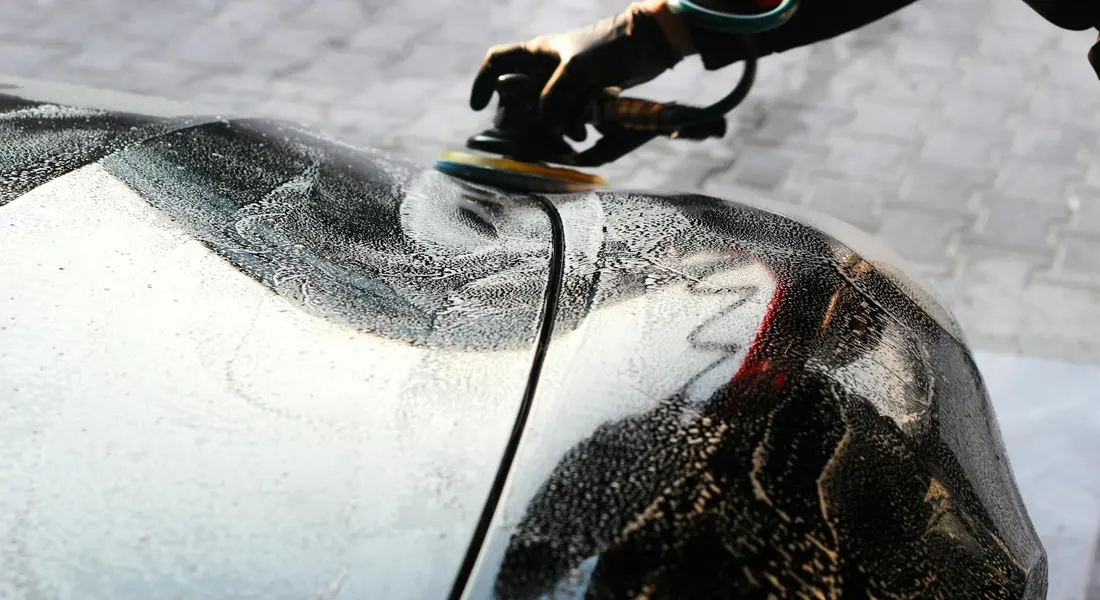
Standing in the aisle at the auto parts store can feel overwhelming. You see a wall of shiny cans and bottles. I have been there too. Let us move past where to buy and focus on what to buy for your specific car and your Saturday plans.
The first split on the label is usually Carnauba versus Synthetic. Carnauba wax comes from a Brazilian palm tree leaf. It gives a rich, warm glow that I love on my red Miata’s single-stage paint. It feels like a classic hand polish. Many enthusiasts compare synthetic wax versus carnauba, weighing glow against durability for different climates. The right choice often depends on whether you prioritize that warm depth or longer-lasting protection. Synthetic wax, often called a sealant, is made in a lab and typically lasts much longer, shielding your paint from UV rays and contaminants for months. My blue Ford F-150 workhorse gets a synthetic sealant because it faces mud, salt, and sun all year.
Then you have the form: paste, liquid, or spray. Paste waxes, like a traditional carnuba, are thick. They require more elbow grease to apply and buff off, but many detailers swear by the depth they add. Liquid versions are easier to spread. Spray waxes are the fastest. I keep a bottle in my detailing cart for a quick boost after washing my Tesla Model 3.
Match the product to your goal. Be honest with your time. For a 30 minute job after a wash, get a quality spray wax. For a Saturday project aiming for six months of tough protection, a synthetic sealant is your best bet. If you want that classic deep shine for a show car weekend, a carnuba paste is the way to go.
Technique Tweak: The Perfect Wax Test Spot
Before you smear wax over your entire hood, always do a test spot. I learned this the hard way on my black BMW. A test panel saves you from a nightmare of streaky, difficult-to-remove product.
Choose an inconspicuous area, like a lower section of a door. Clean it thoroughly. Apply your wax to a small square, about two feet by two feet, using a soft foam applicator. Follow the product’s instructions for how long to let it haze. This is key. If it does not haze up properly, it might not be ready to remove.
Use a clean, premium microfiber towel to buff it off. It should wipe away easily, leaving a clear, shiny finish. If it fights you, the wax might be too old, the panel might not be clean, or you might need to work in smaller sections. Always work on the car panel by panel, never wax the whole car at once and then try to remove it all.
After your test spot, check your work. Take the car into bright, direct sunlight or use a swirl-finder LED light. Look for any leftover residue or hazy streaks. This quick check tells you if your technique and product are working before you commit.
Where to Get Professional Car Waxing Services
Maybe you do not have the time, or you want a finish only a pro can deliver. When you search “car wax near me price” or “car wax near Miami FL,” you are really asking for a trustworthy person to care for your paint. Let us break down your options.
Traditional Car Wash and Detail Shops
This category has a huge range. On one end, you have express tunnel washes. They often offer a “wax spray” add-on. This is usually a polymer sealant that sprays on during the rinse cycle. It gives a light, maybe one-week layer of slickness. It is not a durable, hand-applied wax.
On the other end are full-service detail shops. These are where real craftsmanship happens. They should wash, decontaminate, and often polish your paint before applying a liquid or paste wax by hand. Typically, waxing comes after polishing to seal a corrected surface. If a shop suggests waxing before polishing, ask how that order affects gloss and durability. The most important question to ask is, “Is this a spray-on rinse-off product, or a hand-applied wax buffed off by a technician?” The price and result will be very different.
Mobile Detailing Services (The Convenience Choice)
This is my personal favorite for convenience. A professional comes to your home or office with a van full of equipment. A good mobile detailer does not cut corners. They bring professional-grade polishers, deionized water systems, and high-end waxes.
For my Honda Odyssey kid hauler, having a mobile pro come to my driveway means I do not lose a day shuttling the car around. They can do a full interior extraction and a proper wax while I am working inside. To vet a mobile service, look at their detailed service menu online, read customer reviews with photos, and ask them to describe their waxing process step-by-step.
Dealerships and High-End Specialist Shops
Many used car dealerships have a detailing bay to prep cars for sale. Quality varies wildly here. Sometimes it is a quick wipe-down with a spray wax. Always ask what specific wax product they use. If they cannot name it, that is a red flag. Ask what detailing products and services they offer and how they tailor them to different vehicles. This helps you choose car detailing products and services that fit your car.
For special vehicles, seek a specialist. The soft clear coat on my Porsche 911 can be easily marred by the wrong technique. A shop familiar with high-end paints, Paint Protection Film (PPF), and materials like Alcantara will know how to wax without damaging clear coat or underlying films and delicate surfaces. When it comes to waxing a car with a delicate clear coat, using the right product and technique is essential. A professional can steer you toward waxes that boost gloss without harming the clear coat. They are worth the search.
How to Find and Vet a “Car Wax Near Me”
Do not just search “car wax.” That will lead you to retail stores. Search for “car detailing” or “paint correction” in Google Maps or Yelp. These businesses offer waxing as a core service. Look at their galleries. Do the cars look genuinely glossy, or just wet? It’s important to distinguish between a proper wax job and a simple spray wax application.
When you call or email, ask specific questions. Your goal is to hear their process. Here is what I ask:
- Do you do a full decontamination wash with iron remover and clay bar before waxing?
- What is the exact name of the wax or sealant you use?
- Based on my car’s condition, is paint correction needed before wax to get the best shine?
- Can you show me before and after photos of a similar car you waxed?
The answers separate a quick wash operator from a true detailing professional who cares about your paint’s long-term health. A good shop will welcome these questions. They prove you are serious about your car.
What a Professional Can Do That You Can’t (And What It Costs)
When you ask “where can I get my car buffed and waxed,” you are usually hoping for a deep, glossy shine. But that phrase bundles two very different things. Buffing typically means machine polishing or paint correction. This is the skilled removal of swirl marks, light scratches, and oxidation. Waxing is just the final protective layer. A professional brings industrial-grade dual-action polishers, high-cut compounds, and the trained hand to remove defects without harming your clear coat. I learned this on my 2016 BMW 3 Series, the Swirl Magnet. My early DIY attempts left holograms, those faint circular marks you only see in direct sun. A pro had to fix them.
True paint correction is a separate, more involved service than a wax. A simple wax job might cost $50 to $150. A full one-step correction on a midsize sedan can easily start at $500. For a multi-step correction on a large or badly swirled vehicle, you are looking at $1,000 or more. The cost mirrors the hours of labor and risk. Correcting the oxidized, single-stage paint on my 1995 Mazda Miata was a two-day job for a specialist. A quick wax on my already clean Tesla Model 3 takes an hour.
Understanding Service Levels and Price Tiers
Not all wax services are the same. Here is a breakdown of what you will typically find and what you are actually paying for.
- Basic Wash & Spray Wax ($): This is often a drive-through or express lane service. They run your car through a tunnel, dry it, and apply a spray wax that sheds water for a few weeks. It is fine for maintenance on a relatively clean car. Think of it like a fast-food burger. It is quick, it serves a purpose, but do not expect a deep shine. My 2018 Ford F-150 gets this sometimes after a week of hauling mulch, just to get the heavy dirt off.
- Hand Wash & Paste Wax ($$): A detailer washes your car by hand with the two-bucket method, then applies a traditional paste or liquid wax by hand. This offers better, more uniform protection and a richer gloss for several months. Prices range from $100 to $300 for a sedan. This is like a good sit-down restaurant meal where more care goes into preparation and ingredients. The paint feels smoother, and the beads of water are tighter and rounder.
- Paint Correction & Ceramic Sealant ($$$): This is the top tier. The paint is machine polished to a flawless finish, then sealed with a ceramic coating or high-end synthetic sealant that can last years. Costs start around $500 and climb based on vehicle size and paint defects. For my 2022 Porsche 911, this investment makes sense to preserve the perfect red paint. It is the multi-course chef’s tasting menu of detailing, meticulous and transformative.
Prices swing based on a few key factors. A truck or SUV simply has more paint, so it costs more. Heavily swirled or oxidized paint takes far longer to correct. The quality of products used, like professional-grade ceramic coatings versus off-the-shelf wax, changes the price. Shop overhead, from insurance to facility costs, gets factored in. A mobile detailer might have lower prices but brings the service to your driveway, which is a huge convenience for something like deep-cleaning the spilled juice boxes in my Honda Odyssey.
Your Action Plan: DIY, Hire a Pro, or Something In Between
So, what should you do? Your best path depends on your car’s current state, your wallet, and your willingness to get your hands dirty. Here is a straightforward way to decide.
Follow this simple checklist to point you in the right direction.
- If your car is new or largely swirl-free, you can absolutely DIY a great wax. A quality paste wax, some clean microfiber towels, and a few hours on a cool day are all you need. My Tesla Model 3, when its soft clear coat is pristine, is perfect for a DIY sealant application.
- If your paint is swirled, scratched, or dull, budget for professional correction first. Applying wax over defects is like putting a clear bandage on a dirty wound, it just seals the problem in. My black BMW taught me that no amount of wax will make swirled paint look good. The gloss comes from the correction, not the wax.
- If you value your time over everything else, find a reputable mobile detailer. They can deliver professional results at your home or office. For the interior of my 2019 Honda Odyssey, the Kid Hauler, I hire a mobile pro with an extractor to tackle the ground-in goldfish crackers and milk stains. I do not have that gear.
Whatever you choose, remember the one rule that never changes. The wax is only as good as the surface preparation underneath it. A professional’s real value is not in applying the wax, but in making the paint perfect first. Whether you do it yourself or hire it out, start with a clean, corrected canvas. Your car’s shine will thank you. From here, waxing techniques—how to apply the wax for even coverage—take the spotlight. In the next steps, we’ll outline the best methods for your chosen wax.
Final Thoughts on Waxing Your Car
Whether you’re picking up a spray wax for a quick refresh or booking a professional for a full paint correction and ceramic coating, the right choice depends entirely on your car’s condition and your own goals. Take a moment to honestly assess what your vehicle’s paint needs, match that to a quality product or a reputable pro, and you’ll get results that last.
Choosing the wrong product or an unskilled installer can lead to a frustrating waste of your time and money, leaving your paint looking worse than when you started.
Sources and Additional Information
- Best Car Waxing Near Me – September 2025: Find Nearby Car Waxing Reviews – Yelp
- Best Spray Wax for Cars, Trucks & SUVs – Liquid Car Wax Near Me
- Utah County Mobile Detailing Services | Onsite Detail
- THE BEST 10 Auto Detailing in SANPETE COUNTY, UT – Nitro Detailing, CR Mobile Auto Detailing, Taylor Made Detail – Quality & Affordability – Updated 2026 – Yelp
- THE BEST 10 AUTO DETAILING near SARATOGA SPRINGS, NY 12866 – Updated 2025 – Hours – Yelp
- Adam’s Polishes | Premium Car Care & Detailing Products
- Full Car Detailing in Price, UT | Dave’s Auto Detailing and Window Tinting
Max Gunther
Max is an automotive enthusiast having worked as a car mechanical and in interior detailing service for over 25 years. He is very experienced in giving your old car, a new fresh vibe. He has detailed many cars and removed very tough smells and stains from all kinds of cars and models, always ensuring that his work and advice helps his customers. He brings his first hand experience to his blog AutoDetailPedia, to help readers breath new life into their car interiors.