How Do You Fix Peeling Car Paint? A Realistic Guide for Owners
You saw that patch of flaking clear coat or color and felt that familiar sinking feeling. I get it, I’ve been there with my own cars, staring down a problem that seems to only get worse.
This guide walks you through the methods a detailer would use, from a quick cosmetic fix to a more involved restoration. We will cover assessing the true damage, the critical cleaning and masking steps, applying touch-up paint and clear coat correctly, and the careful buffing required to blend your repair.
Ignore it, and exposed primer or bare metal will quickly lead to rust, turning a surface problem into a structural one.
What Is Peeling Paint and What Causes It?
Peeling paint is not a scratch or a chip. It is a failure of the paint system itself. It happens when the clear coat or the colored base coat loses its grip and separates from the primer or the bare metal underneath. You do not just see it, you feel it.
Run your finger over a spot. A scratch is a groove in the surface. A chip is a small, sharp crater. Peeling feels different. You can catch your fingernail on a rough, lifted edge. The paint might feel like a brittle sticker starting to curl. The area often looks cloudy or milky around the edges, a sign the clear coat is dead and letting moisture underneath.
So what causes this grip to fail? A few common culprits.
- UV Degradation (The Sun): This is the most common killer. Sunlight breaks down the chemical bonds in your clear coat over years. It becomes brittle, stops flexing with the panel, and just lets go. The roof, hood, and trunk lid are usually the first to go.
- Poor Factory Adhesion: Sometimes, the problem starts at the factory. If the surface wasn’t perfectly clean before painting, or if the primer wasn’t applied right, the bond is weak from day one. It might hold for a few years before it fails.
- Moisture Intrusion: A deep scratch that reaches bare metal, or a seam that wasn’t sealed properly, can let water in. That water gets under the paint, starts to rust or just lifts the layers from below.
- Corrosive Chemicals: Using the wrong products can accelerate the end. Harsh acid-based wheel cleaners sprayed on paint, or strong solvent cleaners left to dwell, can attack and weaken the clear coat.
I watched this start on the hood of my dark blue F-150. It’s parked outside year-round. After about five years, I noticed a hazy, chalky patch near the front edge. It didn’t wash off. It felt slightly rough. That was the clear coat giving up. The sun had simply baked the life out of it, turning a protective layer into a brittle shell.
Assessing the Damage: Is This a DIY Job?
Before you touch anything, you need to figure out what you’re dealing with. The size, location, and depth of the damage will tell you if this is a weekend project or a job for a professional painter. If the damage is limited to a few small spots, small-area touch ups can often do the job. They’re quick and can help you decide whether a full repaint is needed.
Start by asking three questions.
- How big is it? A spot the size of a quarter is a very different problem than a patch the size of a dinner plate. Larger areas are exponentially harder to blend and make invisible.
- Where is it? Is it on a flat, highly visible panel like the hood or door? Or is it on a roof rail, inside a door jamb, or on the lower rocker panel? Less visible spots are more forgiving for a DIY repair.
- How deep does it go? Gently (and I mean gently) lift the edge with a plastic trim tool. Is it just the clear coat peeling, revealing intact color underneath? Or is the color coat coming up too, showing gray primer or even bare, silvery metal? The deeper it goes, the more complex the fix.
Here is the hard truth about peeling paint. Once it starts, it wants to spread. The compromised edge is a weak point. Wind, washing, and temperature changes will slowly lift more of the coating. Your primary goal is to stop that spread and protect the exposed area from rust. This is where car paint peeling prevention comes into play. We’ll outline practical steps to keep your finish intact in the next section.
This leads to a common question: can you fix peeling paint on a car hood yourself? You can attempt it, but you must be realistic. The hood is large, flat, and right in your sightline. Any imperfection in your repair-a texture difference, a slight color mismatch, a visible edge-will stick out like a sore thumb. For a small spot, a careful DIY touch-up and blend can be a great save. For peeling across half the hood, a professional respray is often the only path to a seamless finish. Be honest with your skill level and your expectations for the final look.
The DIY Arsenal: Tools & Chemicals You’ll Need
You cannot fight this battle with a spray bottle and a paper towel. Doing it right means having the right tools laid out before you start. This list is what I have on my shelf for jobs like my Miata’s fading single-stage paint or clear coat chips on my F-150.
For Cleaning & Prep
Every repair starts with a perfectly clean slate. Any wax, dirt, or silicone left behind will ruin your work.
- pH-Neutral Car Shampoo: Use this for the initial wash. It cleans without stripping any remaining protective coatings you aren’t targeting.
- Isopropyl Alcohol (70% or higher): This is your final prep. After washing and drying, wipe the repair area with an IPA dilution (1:10 with water) on a microfiber towel. It removes all invisible oils and ensures paint will stick. Wear nitrile gloves and work in a ventilated area when using this.
For Sanding & Feathering
This step is about smoothing the ragged edge where the paint peeled. It is the most intimidating part, but going slow wins.
- Assorted Grit Wet/Dry Sandpaper: I keep 1500, 2000, and 3000 grit. You use 1500 only on the toughest, most lifted edges. Start with 2000 or 3000 for light feathering. Always go finer.
- Sanding Block (Flexible): Never sand with just your fingers. A block spreads pressure evenly and prevents you from gouging a low spot into the surrounding good paint.
- Spray Bottle with Water: You must sand “wet.” Keep the area and paper soaked with a steady mist. This lubricates the surface, keeps paper from clogging, and prevents generating too much heat.
For Touch-Up & Paint
This is where color comes back. Patience is your primary tool here.
- OEM or High-Quality Touch-Up Paint & Clear Coat: Your dealer’s parts department is the best source for a perfect color match. For my classic red Miata, I had to go to a specialty supplier. Cheap paint fades differently.
- Fine-Tip Brushes & a Touch-Up Pen: Use the pen’s nib for tiny chips. Use a separate, artist-grade brush for slightly larger areas. Never use the brush that comes in the paint cap.
- Blending Solvent: This is a pro secret. A drop on a clean brush, lightly dragged around the very edge of your new paint, can help melt it into the old layer and reduce a hard ridge. Practice on something else first.
For Polishing & Refining
After touch-up, you will have a bumpy, dull spot. Polishing brings back the gloss and blends everything.
- Dual-Action (DA) Polisher: A 15mm or 21mm throw model is ideal. This tool oscillates and rotates, making it very safe for beginners. It is almost impossible to burn through paint with a DA if you are careful. Do not use a rotary unless you are experienced.
- Compounding Polish & Finishing Polish: You need two polishes. The compound (more abrasive) cuts down the high spots and sanding marks. The finishing polish (less abrasive) removes the haze from the compound and brings up the deep gloss.
- 3″ to 5″ Backing Plate and Pads: A smaller backing plate and matching foam pads (a cutting pad for compound, a polishing pad for finish) give you control on small repair areas. The big 6″ pad from a store kit is useless for this.
For Protection
The new paint is raw and vulnerable. You must shield it immediately.
- Paint Sealant or Ceramic Spray Coating: After polishing, apply a durable protectant. A modern ceramic spray coating, like what I use on my Tesla, offers great chemical resistance and longevity with easy application.
Other Non-Negotiable Essentials
- Microfiber Towels (350+ GSM, Plush): You need many. Use separate, clean towels for IPA wiping, compound removal, polish removal, and final coating. Cheap towels scratch.
- Soft-Bristle Detailing Brushes: For cleaning dust out of the repair area before you apply paint.
- Painter’s Tape: To mask off trim, moldings, and create a safe boundary around your work zone.
- Nitrile Gloves: Keep the oils from your hands off the prepped surface. They also protect you from chemicals.
The Truth About Car Paint Peeling Repair Kits
You might see an all-in-one kit at the auto parts store. I have tried them. They often contain a small vial of color, a tiny bit of clear, a sanding stick, and a buffing pad you use by hand. Here is what they give you and, more importantly, what they lack.
A typical kit provides a starting point. It gets you the basic color and a simple abrasive. For a single, pin-head sized chip on an old car you do not care much about, it is better than a dab of nail polish.
What these kits almost always lack is the ability to create a truly flat, glossy, professional finish. The included sanding tools are crude. The applicators are too big. There is no blending solvent. Most critically, they never include a machine polisher and the correct pads and compounds. You are left to “buff” by hand, which cannot generate enough heat or consistent motion to level the touch-up paint and remove sanding marks. The result is often a dull, bumpy blob that is only slightly less noticeable than the original chip.
For a lasting, nearly invisible repair, assembling your own arsenal with the quality items listed above is the only real path. It is an investment, but these tools will serve you for years on countless other detailing projects.
Method 1: The Quick Cosmetic Touch-Up (For Small, Isolated Spots)
This is for that first little bubble of peeling clear coat on your hood, or a dime-sized spot on your roof. You see it every time you walk up to the car. It drives you nuts. This method answers “how do you fix clear coat peeling on a car” when the damage is still tiny. It’s a repair you can do in an afternoon with supplies from the auto parts store. I’ve used this on my Ford F-150’s roof to stop a spot from growing.
This quick fix is a defensive move, not a magic trick. It seals the exposed base coat to block moisture and UV rays, which slows the peeling from spreading. It will still be visible up close, but from a few feet away, it will look much better than raw, blistering, peeling paint.
What You’ll Need
- Rubbing Alcohol (Isopropyl Alcohol, 70% or higher) and lint-free wipes
- A fine-grit sanding sponge or pad (3000-grit is ideal)
- Touch-Up Clear Coat (in a brush-cap bottle or aerosol)
- A quality automotive polish and a soft applicator pad
- Microfiber towels
- Nitrile gloves
The Step-by-Step Process
1. Clean the Area Thoroughly
Wash and dry the entire panel. Then, focus on the peeling spot. Soak a lint-free wipe with rubbing alcohol. Gently wipe the spot and the good paint around it. This removes any wax, silicone, or invisible grime. Let it air dry completely. Any contamination here will ruin the repair.
2. Sand the Feathered Edge *Only*
Look at the peeling spot. You’ll see the raised, curled edge where the clear coat has lifted. Your goal is to sand only that sharp, lifted edge so it transitions smoothly into the good paint. Do not sand the base coat underneath. Do not sand the good clear coat far from the edge.
Use the 3000-grit sponge. Wet it with a spray of water. Use one finger to apply the lightest pressure. Gently stroke over the feathered edge, maybe two or three times. Rinse the area and check your work. The goal is to make the transition from good clear to the exposed base coat feel smooth to your fingertip, not jagged. If it still feels like a cliff, you need a more advanced repair.
3. Clean Again & Isolate
Clean the entire sanded area again with rubbing alcohol. Make sure all sanding residue is gone. The surface must be perfectly clean and dry.
4. Apply the Clear Coat
Shake the touch-up clear coat bottle for a full minute. If using an aerosol, shake it well. Apply the first coat. Use the brush to dab a thin layer, just enough to cover the exposed base coat and slightly over the feathered edge you sanded. Do not glob it on. Let this first coat dry to the touch, usually 15-20 minutes.
Apply a second thin coat the same way. Two or three thin coats are always better than one thick, runny coat. Let the final coat cure. Follow the can’s instructions, but give it at least a few hours, ideally overnight, before the next step.
5. Level and Polish
The new clear coat will sit higher than the surrounding paint. Once it’s fully cured, use your polish and applicator pad. Apply a small amount of polish and, using light pressure, work it over the repaired spot and the surrounding clear coat. This will gently cut down the high spot of new clear and blend it. Wipe clean with a microfiber towel. You may need a second pass. Remember, this step is crucial when you repair clear coat damage to ensure a smooth and uniform finish.
Detailer’s Pro-Tip / Technique Tweak
Seeing that feathered edge is everything. I use a bright, portable LED work light and hold it at a low angle to the paint. The shadow makes the edge pop. For spots smaller than a pencil eraser, skip the brush. Use the tip of a toothpick to apply the clear coat. It gives you surgeon-like control and prevents flooding the area.
Set your expectations clearly: this is a band-aid to prevent rust and slow the spread, not an invisible repair. On my dark blue F-150, I can still see the spot if I know where to look. But it’s been stable for two years now, and the base coat underneath is still perfectly blue. For a small spot, that’s a win.
Method 2: Sand, Feather, and Blend (For Larger, Growing Patches)
When you see a patch of clear coat peeling away, edges curling like a sunburn, the first thought is often panic. I know the feeling. On my ’95 Miata, the classic single-stage red had started to fail on the rear deck lid. Small flakes became a growing patch. This method is the core answer for that problem area. It stops the peeling in its tracks and makes the damage manageable.
This repair removes the failing material and creates a smooth, protected surface that blends into the surrounding good paint. It will not look like new factory paint from two feet away. It will, however, look infinitely better from ten feet and, most importantly, it will be stable. You are containing the damage. This is a standard technique for addressing car paint defects and surface damage. It helps ensure the repaired area blends with the rest of the finish and resists future wear.
The Tools and Safety Setup
Gather your materials first. You will need:
- Painters tape (the green or blue kind, not duct tape)
- A sanding block
- Wet/dry sandpaper (I start with 1500 grit and finish with 3000 grit for this job)
- A spray bottle with clean water and a drop of car wash soap
- A dual-action polisher
- Heavy-cut compound and a polishing compound
- Microfiber towels
- A quality paint sealant or ceramic spray coating
- Safety glasses, a dust mask, and nitrile gloves
Step-by-Step: The Sand, Feather, and Blend Process
Step 1: Tape and Isolate. Use the painters tape to create a border around the peeling area. Give yourself a few inches of buffer zone onto the good paint. This protects the healthy clear coat from accidental scratches during sanding and defines your work area.
Step 2: The Wet Sand. This is the most critical part. Fill your spray bottle. Tear off a small piece of your 1500-grit sandpaper, wrap it around your block, and keep it soaked with your soapy water. The soap acts as a lubricant.
Start sanding the very center of the peeling patch, where the clear coat is already lifted. Your goal is to remove every last bit of loose, flaking material. You will hear and feel it. Work outward in slow, overlapping, circular motions. Keep the block flat on the surface. Do not press down on the edges.
As you reach the edge of the failure, where good clear coat meets bad, you begin feathering. This means applying almost no pressure, letting the sandpaper just kiss the surface, and widening your circles to gently taper the hard edge of the remaining clear coat. You are creating a smooth ramp from bare base coat up to the full thickness of the good clear coat.
Detailer’s Pro-Tip / Technique Tweak: When sanding, keep the block flat. Use your free hand to feel for high spots. Run your fingertips across the transition zone constantly. The goal is a transition you can’t feel, not one you can’t see. The polishing step later is what makes it disappear visually. If you can feel a ridge or a lip with your eyes closed, you need more feathering with a finer grit.
Step 3: Refine the Grit. Once the area is smooth to the touch and all loose material is gone, switch to your 3000-grit sandpaper. Repeat the wet sanding process over the entire feathered area. This removes the deeper scratches from the 1500 grit and creates a uniform, hazy finish that is ready for polishing. Wipe the area clean with a damp microfiber.
Step 4: Compound to Restore Gloss. Now you address the haze. Attach a heavy-cut foam pad to your polisher. Apply a few dots of compound. Work the entire sanded area, plus a bit of the surrounding good clear coat, at a slow to medium speed. You will see the haze turn to a dull gloss. This step removes the sanding marks and brings back reflection.
Step 5: Polish to Refine. Switch to a polishing pad and a fine polish. This step removes any micromarring left by the compound and brings the clarity and depth back as close as possible. The feathered edge should now start to become visually camouflaged.
Step 6: Protect the Repair. You have just created a “flat” spot with no clear coat. The base coat is now exposed and sealed only by your polish. This is vulnerable. You must apply a robust protective coating immediately. Wipe the area perfectly clean with a surface prep spray or diluted isopropyl alcohol. Then apply a generous layer of a synthetic sealant or a ceramic spray coating. This layer will be your new, sacrificial clear coat. Consider applying a dedicated clear coat protective coating for lasting gloss and protection. The next steps will guide you through the proper application technique.
This process leaves a functional, protected repair. The spot will be smooth and glossy, but if you catch the light just right, you might see a slight difference in texture or depth. That’s okay. You stopped the cancer from spreading and saved the panel. On my Miata, this exact repair on the deck lid has held up for three years now. It looks presentable and, more importantly, it hasn’t gotten any worse.
When to Call a Professional: Resprays, Blending, and Wraps
There is a hard line where your polish and touch-up bottle stop working. I learned this with my black BMW, the Swirl Magnet. A small chip I could fix. But when the clear coat on the roof started letting go in sheets, that was a different story. Knowing when to step back saves you money, time, and prevents a small problem from becoming a ruined panel.
The DIY road ends when the damage is widespread, deep, or you need a perfect, invisible repair.
Call a professional auto body or high-end detailing shop if you see any of this:
- Peeling or flaking larger than a credit card, especially if it’s spreading.
- Bare, exposed metal or primer is visible under the peeled paint. This invites instant rust.
- The damage is on a complex body line or curve, making blending impossible for a novice.
- You require a factory-smooth, color-perfect finish with no evidence of repair. This is for garage queens and daily drivers alike.
What a Professional Repair Actually Involves
It’s more than squirting new paint. A proper repair is a system. For my F-150’s hood, which took a rock shower, the shop followed steps no rattle can can replicate.
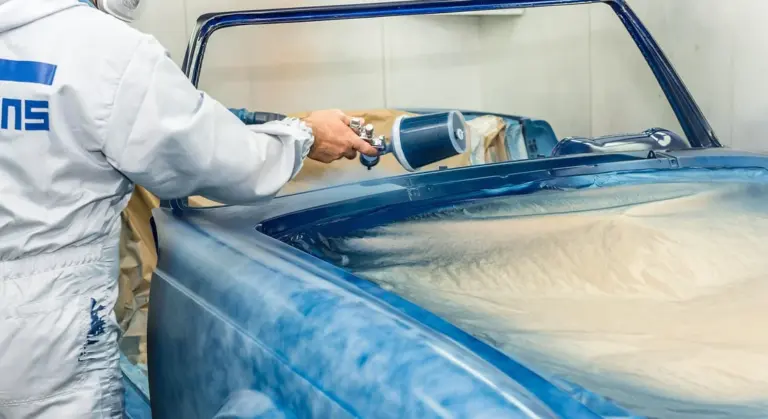
First, they sand. They sand the entire affected panel down past the damage, featheredging the peeling edges into a smooth, gradual slope. They remove all loose material. The surface must be utterly clean, stable, and dull.
Next comes primer. They apply a professional primer, often in multiple layers, sanding between each to build a perfectly level, gritty foundation for the color to stick to.
Then, the base coat. This is your car’s color. A pro mixes it to your factory code, but often adds a “tinter” to match sun-faded adjacent panels. They spray in controlled, overlapping passes.
The clear coat is the final, vital shield. They apply it thickly and evenly over the entire panel. This is what gives you depth and gloss.
The magic is in the blending. To hide the repair, they lightly spray the new color and clear onto the surrounding panels-the fenders or doors next to it. This creates a gradual transition your eye cannot detect, so the new paint doesn’t look like a patch.
Paint Protection Film: The Modern Armor
Once a panel is repaired, or if it’s just vulnerable like a hood or front bumper, think about armor. Paint Protection Film is a clear, thermoplastic urethane shield. I have it on the full front of my red Porsche.
You can apply PPF over a professionally resprayed area once the paint has fully cured (usually 30-90 days). It protects the new paint from rock chips, bug acids, and minor abrasions. For a hood already starting to peel at the edges, a quality wrap can also seal those edges down and prevent further lifting, buying you time. It is a functional solution, not just a cosmetic one.
Your Practical Questions, Answered
Finding “car paint peeling repair near me”: Do not just pick the first shop. Look for one specializing in cosmetic repair or high-end detailing. Ask to see examples of their blending work, preferably on a car in natural light. Read reviews specifically about paint matching. A good shop will welcome your questions, especially when it comes to spot repair techniques for car paint.
Understanding “car paint peeling repair cost”: Costs swing wildly. A single panel like a hood or fender often ranges from $500 to $1500 USD for a proper respray and blend. Larger panels or multiple panels increase the price. A full roof respray is more complex. Metal flakes and tri-coat pearls (like many white, red, or dark blues) cost more to match. Get multiple written estimates.
On “car paint peeling repair cost philippines” or any region: Labor is the biggest variable. Costs in Southeast Asia, Europe, or Australia differ from North America based on local wage rates, material import taxes, and shop overhead. The process, however, is the same worldwide. Use the same vetting process-examine a shop’s finished work in person. A lower price can sometimes mean less blending or cheaper materials that may not last.
Handing a job to a pro isn’t a defeat. It’s the right tool for the job. For my Miata’s single-stage paint restoration, I did the compounding. But when it needed a new fender sprayed, I wrote the check. The result was worth it.
Protecting Your Repair and Preventing More Peeling
You fixed the peeling spot. Good. But your job is only half done. The most common mistake is thinking a repair is finished once it looks good. The truth is, the real work starts now. This is where you protect your investment and stop the problem from spreading.
The Critical First Weeks: Let It Cure
Fresh paint, especially from a rattle can or touch-up bottle, is soft. It needs time to fully harden, or cure. Rushing this step ruins everything.
On my Ford F-150’s hood repair, I gave it a full month of gentle care. For a small touch-up, two weeks is a safe minimum. During this time, do not wax, seal, or put any dressing on the repair. Do not let bird droppings, tree sap, or bug splatter sit on it. Wash the area gently with cool water and a pH-neutral car shampoo only. The rule is simple: nothing touches the new paint but water and soap for at least two weeks.
Become a Sun and Chemical Strategist
Sunlight is what caused your paint to fail in the first place. Your repaired spot is now the most vulnerable area on the car. You must become its shield, especially when sun damage fades car paint.
- Park in the shade. This is the single most effective thing you can do. If you have a garage, use it.
- Use a quality car cover. If you must park outside for long periods, a soft, clean indoor/outdoor cover is a wise investment. It blocks UV rays and keeps contaminants off.
- Apply a UV-blocking barrier. After the cure time, immediately protect the repair. I use a spray ceramic sealant on my daily drivers. It’s easy. For my Porsche’s PPF or a major repaint, a professional ceramic coating offers the strongest, longest-lasting UV defense.
You must also guard against chemical attack. Harsh solvents, acidic wheel cleaners, or cheap detail sprays can creep under the feathered edges of your repair and lift more paint. Always spray chemicals onto your applicator or towel first, never directly onto a repaired panel, especially near the edges.
What to Avoid for the Life of the Repair
Some habits guarantee your repair will fail. Change your routine to protect your work.
- Automatic brush washes are forbidden. Those spinning bristles are like sandpaper on your clear coat. They will absolutely catch the edge of your repair and peel it right off. I only use touchless drives in a pinch, and even then, I worry about their harsh chemicals.
- Stiff brushes or abrasive pads. When cleaning, use soft microfiber mitts and towels. The BMW in my garage, the “Swirl Magnet,” taught me that harsh tools leave permanent marks. On a repair, they cause catastrophic damage.
- Ignoring contaminants. Bird droppings are acidic. Tree sap is adhesive. Both will etch into new paint and old clear coat alike. Remove them gently but quickly.
How Long Does a Paint Peeling Repair Last?
This is the real question. The answer is not simple. A professional respray, cared for properly, can last the life of the vehicle. A DIY spot repair is different.
The longevity depends completely on two things: the quality of your prep work and the consistency of your aftercare.
A well-sanded, feathered, and sealed touch-up on a daily driver like my Honda Odyssey might look good for 2-3 years before it starts to visibly age. A rattle-can repair on a roof, if you didn’t blend it perfectly, might only last a year before the edges become noticeable. The repair on my F-150’s hood is going strong because I never let a brush wash near it and I keep a coat of sealant on it.
Think of it like a bandage on your skin. If you keep it clean and dry, it protects the wound until it heals. If you rip it off early or soak it in dirty water, it fails. Your paint repair is the same. Your ongoing care is the bandage keeping the environment out. Do that job well, and your fix will last for years.
Your Paint, Fixed for Good
From my time bringing cars like my faded Miata back to life, I can tell you that flawless adhesion is the only goal that matters. Every successful repair starts with removing every speck of loose paint and contamination to create a perfectly clean, stable foundation for new material.
Ignore this, and the fresh paint will blister and peel away faster than the original finish did.
Industry References
- r/askcarguys on Reddit: Cheap diy fix for paint peeling on my new (old) car?
- Amazon.com: Car Paint Peeling Repair
- 5 Ways to Fix Paint Peeling on a Car | Phillips Buick GMC in FL
Max Gunther
Max is an automotive enthusiast having worked as a car mechanical and in interior detailing service for over 25 years. He is very experienced in giving your old car, a new fresh vibe. He has detailed many cars and removed very tough smells and stains from all kinds of cars and models, always ensuring that his work and advice helps his customers. He brings his first hand experience to his blog AutoDetailPedia, to help readers breath new life into their car interiors.