Is Dish Soap Safe for Car Paint? Your Complete Guide to Washing with Dishwashing Liquid
You see the grime on your car and reach for the dish soap under the sink. I get that instinct, but your paint is not a dirty plate.
I have washed hundreds of cars, from my kid’s messy minivan to my own black BMW, and I will give you the real details. We will cover what dish soap does to wax and sealants, the one detailing job where it helps, how it can dry out and dull paint over time, and the right soaps that clean without harm.
Wash with dish soap blindly, and you are slowly robbing your car’s finish of its protection.
Key Takeaways Before You Grab the Dawn
If you are in a hurry, here is what you need to know. Dish soap and car paint have a complicated relationship.
- Dish soap is a degreaser designed to strip oils; it will remove your car’s wax, sealant, or spray coating in a single wash.
- It provides very poor lubrication between your wash mitt and the paint, making it much easier to drag grit and create scratches.
- The chemicals can dry out and degrade sensitive surfaces like vinyl wraps, PPF, and interior materials over time.
- Its one legitimate use is for intentional stripping, like prepping for a new wax application, or cleaning grimy non-paint parts like wheel wells.
Paint Damage Prevention: The Dish Soap Dilemma
I see the same mistakes repeated every season. Someone reaches for the blue bottle with the best intentions, not knowing the subtle damage it starts. Here are the specific errors to avoid.
Washing a protected car with dish soap is the most common error. That layer of wax on your hood is made of oils and polymers. Dish soap’s job is to dissolve oils. I learned this the hard way on my Tesla Model 3. After a wash with a harsh soap, the water stopped beading on the flat front bumper. The protection was gone, and the clear coat was exposed. You are essentially resetting your paint’s defense to zero.
People often use it as a “stronger” cleaner for stuck-on grime like bugs or tar. This is a trap. Because it lacks lubricants, you end up scrubbing the contaminant across the paint, which can leave behind fine scratches called micro-marring. On my black BMW, this type of washing is what filled the finish with swirls that looked like a spiderweb in the sun. A dedicated bug and tar remover is safer. It dissolves the mess without needing abrasive force.
Do not let the suds fool you. Lots of bubbles do not mean it is safe or lubricating. Car wash soap is engineered to suspend dirt away from the surface in a slick solution. Dish soap is engineered to cut grease. The feeling is different. Car wash soap feels slick between your fingers. Dish soap feels, well, clean. That squeaky-clean feeling on paint means there is no lubrication left.
Never, ever let dish soap dry on your paint, trim, or glass. The surfactants can concentrate as the water evaporates, leaving behind a filmy residue that is difficult to rinse off and can etch into the surface. This is a sure way to create water spots that require a polish to remove. Always wash in the shade and rinse thoroughly.
The mistake extends inside the car. Using dish soap on leather, especially real leather, is a terrible idea. It strips the natural oils. I once used a diluted mix on a greasy steering wheel in my old Honda Odyssey. It cleaned it, but a week later the leather was stiff and chalky. For vinyl and “vegan leather,” it can accelerate cracking and fading. For interior plastics, it leaves a dull, sticky film that actually attracts more dust. It’s better to clean and repair leather car steering wheels using proper products designed for that purpose.
Product Spec Sheet: Dish Soap vs. The Real Deal
| Feature | Typical Dish Soap (e.g., Dawn) | pH-Neutral Car Shampoo | Strip Wash/Prep Soap |
|---|---|---|---|
| Primary Job | Cut grease on plates | Lift dirt safely, preserve protection | Remove old wax, iron fallout, heavy grime |
| pH Level | High (Alkaline) | Neutral (~7.0) | Varied (can be acidic or alkaline) |
| Lubrication | Poor | High (creates a slick cushion) | Moderate to High |
| Wax/Sealant Safe? | No (strips it) | Yes | No (by design) |
| Good for Ceramic Coatings? | No | Yes | Only for pre-coating prep |
| Best Used On | Engine bays, wheel wells, tools | Every routine wash | 1-2 times a year for paint correction prep |
The Soap Science: Dish Detergent vs. Car Shampoo
People ask me all the time, “What is the difference between car wash soap and dish soap?” They look similar in the bucket. They both make suds. The difference is in the chemistry and the job they are built to do.
Think about pH first. The pH scale runs from acidic (like lemon juice) to alkaline (like bleach). Your car’s paint and clear coat are happiest right in the middle, at neutral. Dish soap is formulated to be high-alkaline. This is great for dissolving baked-on lasagna grease. On your paint, that high alkalinity acts like a slow, constant drying agent. It strips the natural oils and can, over many washes, make the clear coat brittle and dull.
Car shampoo is engineered to be pH-neutral, matching the paint’s environment to clean without causing chemical stress.
Then there are surfactants. These are the molecules that grab dirt and grease. Dish soap uses aggressive degreasers. They are fantastic at their job. On a car, they don’t just grab road film, they also grab the protective wax or sealant you worked so hard to apply.
Car shampoo uses gentler surfactants paired with lubricating polymers. When you glide your wash mitt over the paint, you are floating it on a slick, cushiony layer of soap. The dirt gets trapped in the mitt’s fibers, suspended in that lubricant, instead of getting dragged across your clear coat. Dish soap offers almost no lubrication. You are essentially scrubbing dirt off with bare water, which is a fast way to add fine scratches.
Here is the simplest analogy. Washing your car with dish soap is like using a heavy-duty industrial degreaser to wash your face. It will work, but it will leave your skin raw, dry, and stripped of all its natural protection. Washing with a proper car shampoo is like using a gentle, pH-balanced facial cleanser. It gets you clean while maintaining your skin’s health and balance.
What Does “Stripping Wax” Actually Mean?
You hear that phrase a lot. “Dish soap will strip your wax.” But what does that look and feel like? It is not magic. The alkaline surfactants in dish detergent actively break down the chemical bond of the wax or synthetic sealant to your paint. They dissolve the protection layer.
The result is immediate. You dry the car and the paint feels rough to your hand, like fine sandpaper. The deep, wet gloss is gone. Most telling, when it next rains, the water will not bead up and roll off. It will lay flat and sheet across the panels, drying into ugly spots. This usually happens if you wet-sanded car paint improperly.
I learned this lesson on my black BMW, the swirl magnet. Years ago, I used a dish soap wash before applying a new sealant. The paint looked clean, but it had no slickness. After the wash, before I even dried it, the water just sat there. I had removed every last bit of its existing protection. The paint was naked and vulnerable.
Can dish soap strip wax or sealant from a car? Absolutely, and it will do it in one single wash. That is its primary chemical function on paint. For removing paint sealant from the car bodywork, this is just a starting point.
Will dish soap ruin ceramic coating? A true, professionally applied ceramic coating is a semi-permanent layer of hardened SiO2 (silicon dioxide). It is far more chemically resistant than wax. A few washes with dish soap likely will not “ruin” it, but they will degrade it faster. The alkaline soap will slowly break down the coating’s top layer, diminishing its hydrophobic beading and self-cleaning properties. You are cutting its lifespan short. For the cost of a ceramic coating, using a dedicated coating-safe shampoo is non-negotiable.
Remember, even trim and rubber seals can suffer. The drying effect of dish soap can cause rubber to fade and crack over time. Save the dish soap for its real job. I keep a bottle in my garage for cleaning greasy tools, wheel wells, and engine bay grime. It belongs there, not in my wash bucket.
The Real Damage Dish Soap Can Do
People say dish soap strips wax. That is true. But that is only the first and most obvious problem. The real risk is the slow, cumulative harm it does over many washes. Using dish soap regularly removes your paint’s protective shield, leaving it vulnerable to environmental attacks that permanently degrade its appearance and integrity. That risk also applies to car washes, where abrasive brushes or harsh detergents can damage paint over time. Understanding how wash methods affect your finish helps you avoid long-term paint damage. Does dish soap damage car paint? Not in one single wash, but repeated use absolutely will.
Scratches and Swirls You Can’t See (Until You Can)
Car wash soap is engineered with lubricants. These polymers make your wash mitt glide. They suspend dirt so it rinses away instead of grinding into the clear coat. Dish soap has none of this. It cuts grease and that is all.
What you get is a dry, squeaky wash mitt. It drags across the surface. Every speck of dirt trapped in the fibers becomes a tiny piece of sandpaper. You are effectively polishing your car with contaminants.
I learned this the hard way on my Jet Black BMW, the “Swirl Magnet.” One summer, I used a dish soap wash in a pinch. In the sun, the paint looked hazy. Under the garage lights, it was a spiderweb of fine scratches I had just inflicted. Does washing a car with dish soap scratch it? Yes, because it lacks the lubrication to safely lift dirt away from the surface. It creates micro-marring that builds up into visible swirls, especially on dark colors. That experience pushed me to learn how to remove swirl marks from car paint and restore the gloss. With the right techniques, you can safely remove swirl marks without damaging the clear coat.
Dulling the Shine and Drying Out Surfaces
Think of your wax, sealant, or ceramic coating as sunscreen for your paint. Dish soap washes that sunscreen right off. Now your paint is naked.
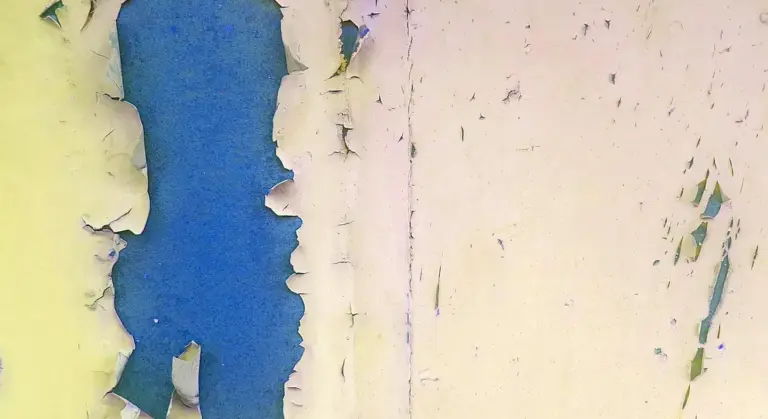
Ultraviolet rays from the sun can then directly oxidize the clear coat. It turns dull, chalky, and faded. Look at the hood of my blue F-150, the “Workhorse.” The center of the hood lost its protection first. It became a flat, hazy blue while the protected sides stayed deep and glossy. That is UV damage in action.
This drying effect is not limited to paint. Dish soap will suck the oils out of plastic trim and rubber seals, causing them to turn gray, crack, and shrink. On a vinyl wrap, it can accelerate fading and make the material brittle. Your car’s exterior needs conditioners, not degreasers.
A Note on Interiors: Just Don’t
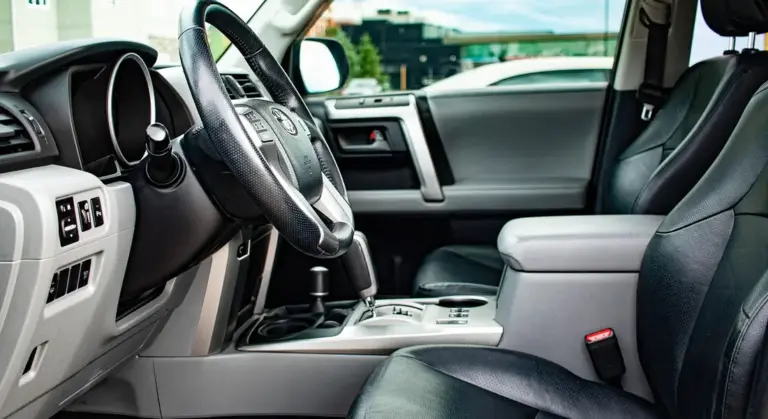
Take this lesson inside your car. The materials there are even more sensitive. My Honda Odyssey’s interior has seen spilled juice and ground-in crackers. Dish soap is not the answer.
On real leather, it strips natural oils, leading to stiff, cracked seats. On modern “vegan leather” or synthetic upholstery, it often removes the factory protective coating, leaving the material sticky and prone to staining. On cloth fabrics, it leaves a soapy residue that attracts more dirt. To keep up, learn how to clean and maintain leather car seats. Regular care helps preserve texture and color. For interiors, a pH-balanced interior cleaner is mandatory for safe, effective results.
The only place for dish soap inside is on removable, rugged items. You can use it on all-weather rubber floor mats or to clean a greasy socket set in your garage. For every other interior surface, from the Odyssey’s dash to a Tesla’s synthetic seats, reach for the proper cleaner.
When Dish Soap Might Be Acceptable (The Short List)
Its power to strip everything away is a weakness for maintenance, but a strength for specific jobs. Dish soap is acceptable only when its stripping action is the entire point of the exercise. When might it be okay to use dish soap on a car? Here are the rare, deliberate exceptions.
The Deliberate “Strip Wash”
This is a strategic reset. You use dish soap when you need a completely bare, contaminant-free surface to start fresh. Think of it as a clean slate.
- Before a full paint correction to remove all old wax so your polisher can work evenly.
- Before applying a ceramic coating or graphene sealant, ensuring maximum bonding.
- Before installing Paint Protection Film (PPF), as the film adhesive needs pure paint.
I did this to my red Porsche 911 before its PPF install. The goal was zero wax, zero sealant, zero oils. One thorough wash with dish soap achieved that. A strip wash is a 1-2 times per year procedure, and you must follow it immediately with your correction or protection steps. Leaving the paint bare for any length of time invites the damage we just discussed.
Non-Paint, Heavy-Duty Cleaning
For areas where protection and gloss are not concerns, dish soap’s degreasing power is useful. Safety is key here, especially under the hood.
- Engine Bays & Wheel Wells: Only on a cool engine. Rinse thoroughly. The goal is to cut grime and road oil, not to preserve shine.
- Undercarriages & Truck Beds: Perfect for blasting away mud, salt, and caked-on dirt.
- Detailing Tools: It’s excellent for cleaning your microfiber towels, wash mitts, and polishing pads to remove stubborn wax and compound residues.
- Greasy Parts: Cleaning a grimy alternator bracket or an old valve cover off the car? Dish soap and a brush work fine.
In these cases, you are cleaning functional components, not preserving a delicate finish. That is the critical difference.
How to Wash with Dish Soap (If You Must)
I get it. Sometimes you just need to start over. Maybe you’re about to apply a ceramic coating and need a perfectly bare surface. Perhaps an old wax has failed and is smearing. If you must use dish soap for that one specific “strip wash,” here is the only way I would ever do it on my own cars. This method answers the question, “What is the proper way to wash a car if you must use dish soap?” by providing a strict, damage-limiting protocol.
This is not a regular wash. Think of it as a controlled medical procedure, not a relaxing shower. Your paint’s protection is the patient, and you are removing it. You must be precise.
Step-by-Step: The Controlled Strip
Follow these steps exactly. There is no room for shortcuts here.
- Work in the shade, on cool paint. Sunlight will make the soap dry almost instantly, causing nasty water spots and increasing the chance of dragging grit across the surface.
- Pre-rinse thoroughly to remove loose grit. Use a strong stream of water from your hose to blast away sand, dust, and road salt. Start from the top and work down. This step is non-negotiable.
- Use the two-bucket method with grit guards religiously. You need one bucket for your soapy water and a second, clear-water bucket for rinsing your mitt. The grit guards trap dirt at the bottom. Dish soap offers terrible lubrication, so your wash technique is your only defense against scratches.
- Use a high-quality microfiber wash mitt, not a sponge or dish rag. A plush microfiber mitt will safely encapsulate dirt. A kitchen sponge or rag will grind it into your clear coat. I use a soft, deep-pile mitt on my black BMW for this.
- Wash panel by panel, rinsing immediately. Do the roof, rinse your mitt, then rinse the roof clean. Move to a hood, repeat. Never let the soapy water dry on the paint.
- Dry completely with clean, plush microfiber towels. Use a dedicated drying towel. I prefer a large, waffle-weave towel for its absorption. Gently blot and glide. Do not scrub.
- Understand that the job is not done. Your paint is now completely naked, stripped of all wax, sealant, and oils. It is vulnerable to water spots, UV rays, and contaminants. The very next step must be applying your chosen protection, whether it’s a spray wax, a paste sealant, or a full ceramic coating. Do not delay.
What to Use Instead of Dish Soap
Modern car care has moved far beyond kitchen chemicals. We have specialized tools for every job. To answer “What should you use instead of dish soap to wash your car?”, here are the products I actually keep on my shelf.
For Your Every Wash: pH-Neutral Shampoo
This is your daily driver, your go-to. A good car shampoo is engineered to clean without harm. It creates rich suds that lift dirt away and provides slick lubrication to prevent swirls. Most importantly, it is pH-neutral, meaning it cleans effectively without stripping away your existing wax or sealant. It preserves your hard work.
They come in different types for different needs. A high-foaming shampoo is fantastic for a foam cannon pre-soak. An ultra-lubricating shampoo is what I use on my Jet Black BMW, as it adds extra slip for that soft, scratch-prone paint. There are also shampoos with added wax for a slight boost in gloss and protection with every wash.
For a Safe “Clean Slate”: Dedicated Prep Wash
When you truly need to decontaminate and strip old protection for paint correction or a new coating, use the professional’s tool. Purpose-made strip wash or “iron removing” shampoos are formulated to dissolve waxes and break down embedded metallic particles from brake dust. They do this job more effectively and safely than dish soap, which can leave a filmy residue. This is what I use on the Porsche or the Miata before any polish is applied.
For the Tough Stuff: Targeted Cleaners
Dish soap is a blunt instrument. We have precise tools. Match the cleaner to the problem.
- Bug and Tar Removers: For the plastered front bumper of my white Tesla after a highway drive. These are citrus or solvent-based sprays that melt bug guts and road tar without harming paint or plastic trim.
- All-Purpose Cleaners (diluted): For the filthy wheel wells of my F-150, the engine bay, or door jambs. Dilute as directed, spray, agitate, and rinse. They cut through grease and grime that shampoo cannot.
- Iron Fallout Removers: For the stubborn, embedded red-brown brake dust on the alloy wheels of my Porsche. This purple liquid reacts with iron particles, dissolving them away safely. It’s a chemical reaction, not harsh scrubbing.
The core message is to use the right tool for the job. Your car’s finish deserves better than a kitchen degreaser. With the proper products, you clean better, protect your investment, and make the whole process easier on yourself.
Your Paint’s Long-Term Health
Save the dish soap for your plates. Protect your car’s finish by using a proper, pH-balanced car shampoo every single time you wash.
Choose the degreasing power of dish soap over a gentle car shampoo, and you will systematically remove the wax or sealant that shields your paint from sun, salt, and stains.
Sources and Additional Information
- Is Dish Soap Safe On Car Paint? – Jalopnik
- Can You Use Dish Soap to Wash a Car? – Kelley Blue Book
- Is Dish Soap Safe to Use on Cars? The Surprising Truth – Therapy Clean
Max Gunther
Max is an automotive enthusiast having worked as a car mechanical and in interior detailing service for over 25 years. He is very experienced in giving your old car, a new fresh vibe. He has detailed many cars and removed very tough smells and stains from all kinds of cars and models, always ensuring that his work and advice helps his customers. He brings his first hand experience to his blog AutoDetailPedia, to help readers breath new life into their car interiors.