Is Chrome Car Wrap Legal? The Real Rules Every Car Owner Must Know
You love the mirror-like shine, but a voice in your head asks if that chrome wrap will get you pulled over. You’re right to worry about tickets, fines, and the hassle of being forced to peel it all off.
We will cover where chrome and reflective wraps are explicitly banned, how to check your specific state and local laws, and the safe, legal alternatives that still give you that brilliant shine.
Ignore this, and you risk expensive citations or a removal order that turns your investment into a pile of ruined vinyl.
Key Takeaways: The Quick Guide to Chrome Wrap Laws
Let’s get this straight. Asking if chrome wrap is legal is like asking if a car is fast. It depends. The answer isn’t a simple yes or no, especially when considering the cost involved in chrome car wraps.
The legality of a chrome wrap hinges entirely on where you drive and how much your car shines like a mirror.
I learned this the hard way when a client with a wrapped pickup got a ticket. The law isn’t about style. It’s about safety.
-
Location and Reflectivity Are Everything. Your state or country has specific rules about how reflective a vehicle surface can be. A mirror-like finish in Arizona might be okay, but that same wrap could be illegal in California. You must check your local vehicle code.
-
Safety is the Real Issue, Not the Color. Police care about blinding glare. A chrome hood can reflect sunlight directly into another driver’s eyes. It’s a real hazard, like high-beam headlights on a sunny day. I think of my black BMW, the ‘Swirl Magnet.’ At dawn, its glossy hood can catch the sun. A chrome hood would be ten times worse.
-
You Must Update Your Registration. This catches many people off guard. A wrap is a color change. If your registration says “blue” and your car is now mirror chrome, you’ve broken the law. Visit your DMV. Fill out the form. It’s the same process as if you had repainted the car.
-
Penalties Are Not a Joke. You can get fined. You can get a fix-it ticket. You can be ordered to remove the wrap on the spot. I’ve seen it. It ruins your day and wastes your money.
-
A Professional Installer is Your Best Defense. A good shop knows the local laws. They might steer you toward a legal brushed chrome finish instead of full mirror. They handle the film with care, just like I’d handle a polish on my Porsche’s paint. Do not try to navigate this alone.
What is a Chrome Car Wrap, Really?
Forget the myths about vinyl wraps. A chrome car wrap is a vinyl film. It has a highly reflective, metallic layer that makes it look like mirror-polished metal. However, it doesn’t offer any additional protection or durability compared to regular vinyl car wraps.
You apply it over your factory paint. It is not paint. It is a temporary skin.
Run your hand over a freshly wrapped panel. It feels smooth and cool, like glass. But it shows every single fingerprint and water spot. In direct sun, it looks like liquid mercury. It has a deep, moving shine that standard paint cannot match.
Think of it as a giant, very expensive, and very precise sticker for your entire car.
I compare it to paint on my fleet. The paint on my Ford F-150 is permanent. I can compound it, polish it, touch it up. A wrap is different. It is a removable layer. It can be just as shiny, but the application is critical. Any dust, any stretch, any bubble during installation will be visible forever. It demands a perfect, clean surface. Unlike painted surfaces, you can’t paint over a vinyl wrap to fix imperfections.
Not all chrome is the same. You have options.
- Full Mirror Chrome: This is the show-stopper. It’s a perfect mirror finish. On a car like a red Porsche 911, it looks incredible. It is also the most likely to cause legal issues and is a nightmare to keep clean.
- Brushed Chrome or Satin Chrome: This has a textured, directional grain. It reflects light diffusely. It looks modern on a Tesla Model 3. It creates less glare. This finish is often a safer choice and hides light scratches better.
Remember the feel. In my kid’s Honda Odyssey, a wrapped trim piece would feel slick. But it would show every juice box smear. It’s a commitment to careful cleaning, just like maintaining my Miata’s soft top.
The Straight Truth on Chrome Wrap Legality
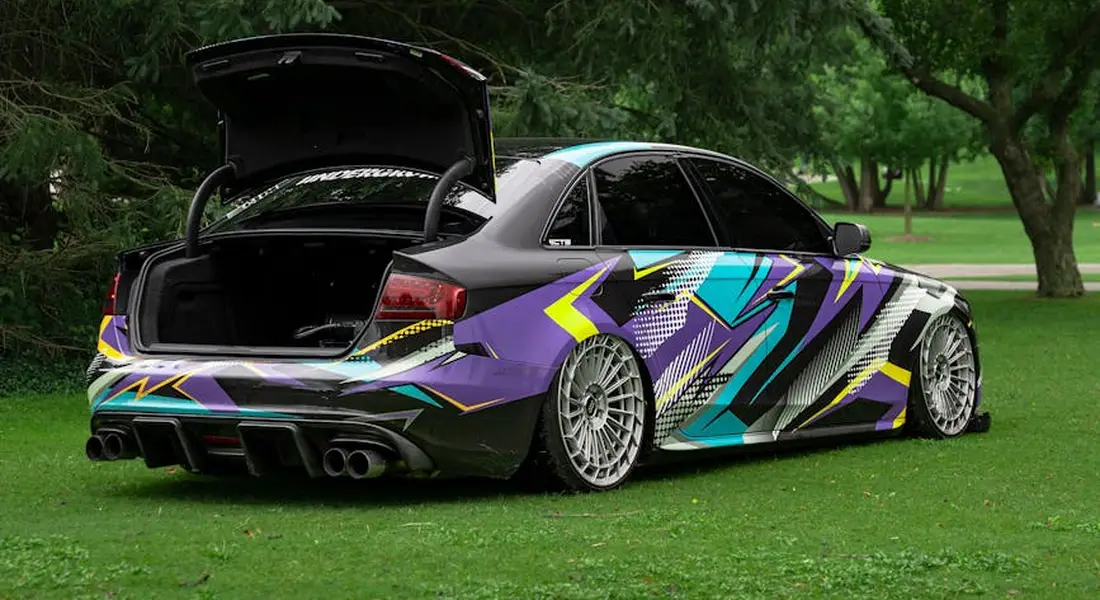
Let me give it to you straight. Chrome wraps are not outright illegal in most places, but they exist in a legal gray area. I have seen these mirror-like finishes at car shows, and they look incredible. On public roads, it is a different story. The law usually does not care about your style. It cares about safety, especially when wrapping commercial vehicles.
Most vehicle wrapping regulations focus on preventing hazards, not on banning specific colors or finishes. When owners ask me, “What are the vehicle wrapping regulations and laws?” I tell them the themes are similar across states. Rules often target excessive brightness, require color updates on paperwork, and stop wraps that copy police cars. The goal is to keep roads safe for everyone. Beyond compliance, color change wrap possibilities let you achieve the look you want within legal bounds. In the next steps, I’ll outline feasible color options and how they align with current regulations.
Do Chrome Wraps Affect Visibility and Safety?
Imagine driving toward a moving mirror. That is what a highly reflective chrome wrap can be. I have been flashed by the sun bouncing off a polished hood, and it hurts your eyes. During sunrise or sunset, that glare can blind another driver for a critical second. At night, your headlights hit it and bounce back like a misaimed high-beam.
The core safety issue is that extreme reflectivity acts as a visual hazard, distracting or temporarily blinding other motorists. It is not just an annoyance. It is a real risk, and that is why laws exist.
Are There Specific Restrictions on Chrome Wraps?
Yes, specific restrictions do exist. Some states have laws that limit how reflective a vehicle’s surface can be. These rules directly target finishes like chrome. For instance, many people search “are car wraps legal in california.” California’s vehicle code has sections that restrict reflective materials. It sets limits on gloss and brightness that many chrome wraps exceed.
Other states have similar codes. They might not mention “chrome wrap” by name, but the language about “reflective surfaces” or “glare” applies directly. You need to look at the details.
Are Reflective Wraps Banned in Some States?
Outright bans on all reflective wraps are rare. I have not seen a state law that says “no chrome whatsoever.” But several states have regulations so strict that they effectively prohibit the mirror-like chrome you see in photos. The rules make it legally impossible to drive with that finish on public streets.
You must check your own state’s vehicle code, often found under sections titled “reflective materials” or “glare,” to know exactly where you stand. Do not guess. A few minutes of reading can prevent a costly mistake.
Can a Manufacturer Like Ferrari Sue You for Wrapping Your Car?
This is a special case. A simple chrome wrap on your own car is usually your business. But if you search “can ferrari sue you for wrapping your car,” you will find real examples. Wrapping your car to exactly copy a trademarked racing livery, like a specific Ferrari stripe pattern, or using a patented color can lead to legal action.
Intellectual property law protects designs and colors that a manufacturer owns, so replicating them too closely on your wrap could result in a lawsuit. Stick to original designs or generic finishes to stay clear of this niche trouble.
What Are the Penalties for Illegal Car Wraps?
The penalties start simple and get worse. You could receive a traffic citation with a fine. Your vehicle might fail its annual safety inspection, blocking your registration renewal. Often, you will be ordered to remove the non-compliant wrap immediately.
Repeat offenses or if your wrap contributes to an accident due to glare, the penalties escalate to larger fines, possible points on your license, or even having your vehicle impounded. It is a headache you do not want.
How to Wrap Your Car Without Getting a Ticket
Here is a clear plan. It answers common questions like “How do I ensure my car wrap is legal?” and “Do I need to notify the DMV after a wrap?” Follow these steps to stay on the right side of the law.
Step 1: Research Your Local and State Laws
Start with your computer or phone. Search online for phrases like “[Your State] vehicle reflectivity laws” or “[Your State] DMV wrap regulations.” Go directly to your state’s official DMV website for the most accurate information. This research answers the basic questions: “are car wraps illegal,” “are car wraps legal,” and whether you need a permit.
Understanding the specific rules in your area is the foundation of a legal wrap project, so invest time here before you spend any money. Some localities have extra rules, so check city or county codes too.
Step 2: Handle the DMV Paperwork
If your wrap changes your car’s color in a permanent way, you typically must update your vehicle registration. This addresses all the related questions: “do i need to declare car wrap,” “do you have to declare a wrapped car,” “do you have to register a car wrap,” and “do you have to report car wrap to dmv.” The answer is usually yes.
The process is generally simple: complete a form, pay a small fee, and get your registration document updated with the new color. It keeps your legal records straight and avoids confusion during traffic stops or vehicle sales.
Step 3: Choose Your Installer and Material Wisely
Select a wrap shop that knows the law. A good installer will understand local restrictions on reflectivity. If a full chrome wrap is problematic in your state, they can recommend compliant alternatives like satin, matte, or colored metallic finishes that are less blinding.
Ask your installer for a written statement confirming that the wrap material meets the legal reflectivity and safety standards for your jurisdiction. This gives you peace of mind and proof if you ever need it. A professional shop will be happy to provide this.
Smart Wrapping: Avoiding Pitfalls and Choosing Products
Let’s talk about the real work of wrapping. The goal is a stunning finish that also acts as a protective shield for your paint, all while keeping you on the right side of the law. A smart install is about preparation and product choice. If you’re tackling it yourself, a DIY car wrap installation mindset helps with clean surfaces, steady hands, and patience. The next steps will walk you through the basics with simple, actionable tips.
Common Mistakes That Can Damage Your Paint and Your Wallet
I have seen wraps go wrong. The cost is more than just money, it can be your car’s factory finish. Avoid these errors to protect your investment, especially when you maintain or repair a car wrap.
- Never skip the patch test. The adhesive on vinyl can react poorly with older, failing clear coats or certain repaints. Always apply a small test square in an inconspicuous area, leave it for a day, and remove it gently. If the paint lifts or feels gummy, wrapping is a bad idea.
- Installing in a dirty environment is a permanent mistake. Any dust, pollen, or grit trapped under the vinyl becomes a permanent lump you will feel every time you wash the car. It grinds against your paint forever. Your garage floor needs to be wet-mopped, and the car needs a full decontamination wash and an isopropyl alcohol wipe-down.
- Using harsh chemicals degrades the wrap. Strong all-purpose cleaners, waxes, or solvents will haze and crack the vinyl film over time. They can also weaken the adhesive at the edges, causing peeling.
Paint damage from a wrap usually happens during bad removal, not the install. Yanking off old, sun-baked vinyl like a bandage can absolutely pull the clear coat with it, especially on soft paint. My Jet Black BMW 3 Series has paint so soft I can mark it with a dusty microfiber. I would not let cheap vinyl near it. Low-quality material leaves a gummy, crusted adhesive residue that requires aggressive solvents and hours of labor to remove, which itself can damage the paint. That’s a core issue in the car wraps damage paint discussion. It’s why many advise using high-quality materials and professional removal to protect the finish.
The final, expensive mistake is assuming legality. You spend thousands on a full mirror chrome wrap, only to be told by police to remove it or face fines. That is a financial gut-punch. Always verify before you buy the material.
Wrap Product Tier List: From Stealth to Show Stopper
Not all vinyl is created equal. Think about your goal and your local laws. Here is a breakdown from basic to brilliant, focused on staying street-legal.
Budget / Drive-Through Tier
- These are basic color change films, usually in gloss, matte, or satin finishes.
- They are non-reflective and widely legal everywhere. The focus is on a new color, not special effects.
- Perfect for a first-time DIY project or a fleet vehicle needing a uniform look. They offer good protection but may not stretch and conform to complex curves as easily.
Enthusiast Tier
- This is high-quality cast vinyl. It is what most professional shops use for standard jobs.
- You get richer metallics, deeper gloss, and more durable satin finishes. The film is thinner and more malleable, allowing it to be stretched gently over door handles and tight body lines without tearing or lifting.
- Reflectivity remains low, like factory paint, so you stay well within legal limits. This tier is the sweet spot for a gorgeous, long-lasting wrap that looks professional.
Show Car Tier (The Chrome Alternatives)
- This is where you get the “wow” without the police lights in your rearview. Premium manufacturers make incredible films that mimic metal without being a mirror.
- Look for finishes labeled “brushed titanium,” “liquid metal,” “graphite steel,” or “satin metallic.” They have a deep, dimensional shine with a directional grain or a liquid-smooth effect.
- The reflectivity is controlled and diffuse, not mirror-like. From one angle it looks dark grey, from another it catches the light in a stunning wave. These legal alternatives deliver a high-end, custom appearance that typically passes inspection because they do not blind other drivers.
Caring for Your Legal Wrap
A wrap is a working surface, not a set-it-and-forget-it item. How you clean it directly impacts its lifespan and appearance.
Always use a pH-neutral car wash shampoo. Harsh soaps or dish detergent will strip any protective top coat on the vinyl and can cause premature fading or cracking. Wash with a soft microfiber mitt using plenty of lubrication, just like you would with sensitive paint. Washing wrapped cars helps protect the vinyl when using these practices, and the routine keeps the wrap looking vibrant for longer.
Dry with clean, plush microfiber towels. Avoid letting water spots bake on the film. Over time, mineral deposits and contaminants can create a slight haze on the surface. This dull film can actually increase light scatter and reflectivity in an unflattering way. Proper, gentle cleaning keeps the wrap’s intended finish true and vibrant for years.
Your Chrome Wrap Roadmap
The single most important rule is to treat your local vehicle code as the final authority. Contacting your DMV or law enforcement for specifics is the only way to be sure your brilliant chrome wrap won’t attract the wrong kind of attention.
Ignore this step, and you risk fines, a failed safety inspection, or being pulled over and told to remove it on the spot.
Related Guides and Information
- r/AskLE on Reddit: Can I legally drive a chrome-plated car, or a glow-in-the-dark car?
- Legality of Chrome Wrap – Paintless Dent Repair & Vehicle Wraps – TintDude Window Tinting Forum
- What Types Of Car Wraps Are Illegal? – National Car Wraps
- These Paint Jobs Could See You Serving Time
- Is Chrome Car Wrap Illegal? Article – ArticleTed – News and Articles
Max Gunther
Max is an automotive enthusiast having worked as a car mechanical and in interior detailing service for over 25 years. He is very experienced in giving your old car, a new fresh vibe. He has detailed many cars and removed very tough smells and stains from all kinds of cars and models, always ensuring that his work and advice helps his customers. He brings his first hand experience to his blog AutoDetailPedia, to help readers breath new life into their car interiors.