How Do You Find a True Professional Undercarriage Wash for Rust Prevention?
That crusty, white salt coating under your car after a winter drive is not just dirt. It is the start of a rust problem that can eat into your frame and suspension.
This guide will explain how to identify a service that properly cleans the undercarriage, what to look for during the wash, and how to maintain that protection between visits.
Skip this care, and surface rust will quickly become deep, structural corrosion.
Why Your Car’s Underside Can’t Be Ignored
Think about the last time you drove after a snowstorm. That salty, gray slush sprays up from the tires. It coats everything. Now imagine that same slush, mixed with fine brake dust and regular road grit, sticking to the hot underbelly of your car. It bakes on. It dries. It sits there.
What builds up isn’t just dirt. It’s a corrosive cocktail. Road salt is the main offender, designed to melt ice but fiercely eager to oxidize bare metal. Brake dust is metallic and abrasive. Mud and grime act like a sponge, trapping moisture against the frame for days. Your car’s underside lives in a slow, gritty bath in acid.
This cocktail doesn’t just dirty the paint. It attacks the parts that matter. It finds bare metal on your frame, control arms, and exhaust. It settles into the crevices of welds and seams. It coats brake lines and fuel lines. It cakes onto suspension components. Left alone, it starts the rust process you can’t see until it’s too late-a bubbling spot on a fender is just the end of a story that began underneath.
Getting a professional undercarriage cleaning is the single most effective thing you can do for long-term rust prevention and protecting your vehicle’s value. I see it with my own Ford F-150, the dark blue workhorse. After a winter of plowing and hauling, the underside is a mess of dried salt and mud. A proper clean isn’t just about looks, it’s about making sure that truck’s frame is solid for the next decade. For any car, especially in salt states, this service is non-negotiable maintenance. It’s far more effective than even a regular paint or surface clean when it comes to preventing rust.
How to Hunt Down a Real Undercarriage Cleaning Service (Beyond a Quick Search)
Typing “undercarriage cleaning near me” into a search engine will get you results, but mostly for drive-through car washes with an add-on spray. You need to dig deeper to find a service that actually does the job right.
Start with more specific search terms. Try “auto detailing underbody wash,” “rust prevention undercarriage cleaning,” or “commercial truck undercarriage wash.” These terms are more likely to surface businesses that specialize in this work, not just offer it as a side option. For broader coverage, consider professional car detailing services that include undercarriage cleaning and protection as part of their package. These providers often offer maintenance plans to keep the undercarriage in top condition between visits.
This leads to the big question: do car washes clean the undercarriage? The short answer is, not really. Most offer an “undercarriage spray” as a $3 add-on. You drive over a set of nozzles that give a brief, weak rinse as you move. It’s better than nothing on a random Tuesday, but it’s a shower, not a deep clean. It won’t remove caked-on mud or dislodge salt from crevices. It’s a pass, not a procedure.
For a true clean, you need a service that puts the vehicle on a lift. This allows for manual agitation, focused spraying, and a thorough inspection. Your best bets are often:
- Off-Road or 4×4 Specialty Shops: These guys live for cleaning mud and grime from suspension and frames. They get it.
- Classic Car or Restoration Garages: They are fanatical about rust prevention and have the equipment to treat a vehicle properly.
- High-End Detailing Studios: Many top-tier detailers offer undercarriage decontamination as part of paint correction or ceramic coating prep. They have the lifts and the mindset for meticulous work.
When you find a potential shop, don’t just call. Look at their Google Business Profile photos. Scroll through. Do you see images of vehicles on lifts? Are there “after” shots of a sparkling clean frame or differential? If their photo gallery is only of shiny hoods and interiors, they might not be your source. You want visual proof they work underneath.
Prices vary wildly based on location and service depth. A quick rinse at a wash is cheap. A full, hands-on clean on a lift takes time and labor. In a heavy salt-use area like Ottawa or throughout the U.S. Rust Belt, expect to pay a premium for a quality service because the demand and expertise are higher. In Sacramento or other non-salt regions, it may be a more specialized and less common-but still available-service.
What a True Professional Service Looks Like (Your Vetting Checklist)
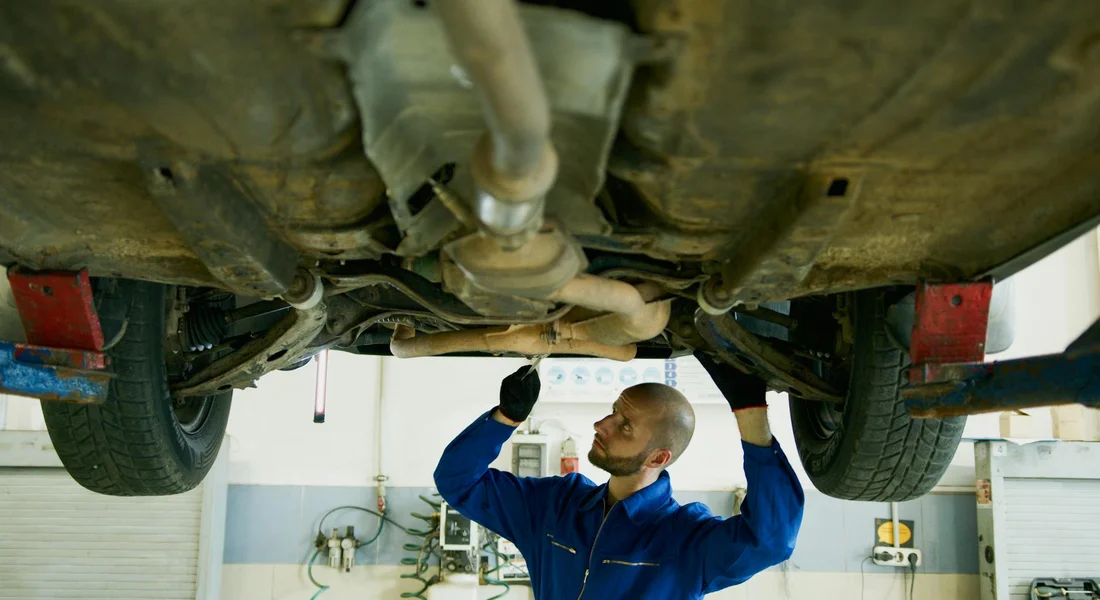
I remember bringing my blue F-150 to a quick wash after a muddy job. The guy just waved a hose underneath. It looked wet, but the packed grime in the frame rails was still there. A real pro does it differently. Here is exactly what to look for.
Start with the tools. A vehicle lift or safe, rated jack stands is non-negotiable for proper access. Without elevation, no one can see or reach the critical spots like suspension mounts or fuel lines. The best shops I use have a lift. They also use a pressure washer with a dedicated undercarriage wand. This wand has a wide fan tip, not a pinpoint jet, to safely cover area without cutting into seals.
The process is methodical, not a random spray. It begins with a thorough rinse to loosen salt and dirt. Then, they apply a dedicated undercarriage cleaner. I ask for this specifically. You want a pH-neutral cleaner designed for metal and rubber, not a harsh engine degreaser that can dry out bushings. After it soaks, they agitate nooks with long-handled brushes. A final rinse washes everything away, leaving no residue.
Your questions tell you who knows their stuff. Ask, “What specific cleaner do you use?” Listen for brand names or descriptions like “lanolin-based” or “rust-inhibiting.” Ask, “Do you dry or blow out trapped water?” Trapped moisture defeats the purpose. A good service uses an air blower to evacuate water from bolt holes and seams. Finally, ask, “Can you point out any concerning areas after?” A trustworthy technician will show you what they see, like a thin spot on an exhaust hanger.
Safety matters for you and your car. A professional operation will have insurance. Now, can undercarriage wash damage car? Yes, if done wrong. Too much pressure directed at wheel speed sensors, wiring harnesses, or CV boot seals can force water and cause expensive failures—especially when using pressure washers for touchless car washes. A pro knows to avoid these areas or use gentle pressure.
How to Use the Service for Maximum Protection (Before, During, and After)
Getting the service is half the battle. What you do before and after defines your long-term protection. I treat it like prepping for paint correction on my black BMW.
Before you go, give your vehicle a quick look. Note any known fluid leaks or loose underbody panels. If you have heavy, caked mud like on my F-150, a light pre-rinse with a garden hose can help. But stop there. Let the professionals do the deep clean. Your job is to communicate, not to do their work for them.
During the service, try to be present. If the shop allows, watch from a safe distance. When the vehicle is lifted and clean, it is a perfect time to inspect the frame, exhaust, and suspension components yourself. With my Miata project, seeing the clean, bare metal showed me exactly where to focus my rust prevention efforts. It is a free education on the health of your car.
After the service is the most critical step. A clean, dry undercarriage is the perfect canvas for a protectant. Once home and completely dry, consider an application. For DIY, I use fluid film or lanolin-based sprays on my daily drivers. They creep into seams and displace moisture. For a more permanent shield, professional rust-inhibitor coatings like wax-based or rubberized compounds are an option. This aftercare is the real rust prevention, turning a cleaning service into a protective treatment. It is the same logic as restoring my Miata: stop the problem before it starts.
Making Undercarriage Care a Routine (Not a Panic Move)
Treating your undercarriage right isn’t about a frantic spray-down when you see brown stains. It’s about simple, predictable habits. Your vehicle’s frame doesn’t care about your calendar, it cares about exposure.
I keep a mental checklist tied to events, not dates. For my Ford F-150, the “Workhorse,” a professional undercarriage clean happens after the last major snow melt in spring. That’s when the salt slurry is at its worst. It also happens after any serious off-road or beach trip where mud or sand has been packed up inside the frame rails. For the Porsche 911, the “Garage Queen,” it gets a meticulous clean before it goes into winter storage, so it doesn’t sit for months with contaminants eating away at it.
The trick is to pair this service with other necessary work to save time and money.
When my Honda Odyssey, the “Kid Hauler,” comes in for its spring interior extraction and sanitization, adding an undercarriage wash is a no-brainer. The van is already on the lift or over the pit. For my Jet Black BMW 3 Series, the “Swirl Magnet,” a decontamination wash to remove iron particles and tar from the paint is the perfect partner for an undercarriage flush. You address the visible paint and the hidden frame in one visit. After a paint job, a quick post-paint wash helps clear residue and start the curing process. It primes the surface for sealing and protects the fresh finish.
Between professional services, there’s a DIY gap you can manage. With a garden hose and a spray nozzle, you can knock off fresh, loose mud and road grime from visible suspension components and the inside of the wheels. This is great after a weekly wash in the salty months.
What you can’t do at home is what matters most: applying high-pressure, heated water and specific cleaners to penetrate the boxed sections of the frame, the tight seams, and the backside of control arms where road salt loves to hide and accelerate.
A pro service flushes out what your hose can’t even see. Think of your home hose as a quick rinse and the professional service as a deep surgical clean for the parts of your car you walk on every day.
What You’ll Pay and Why It’s Worth Every Penny
Costs vary, but you should have a clear expectation. In the Salt Belt states, a dedicated undercarriage cleaning service from a detailing shop typically ranges from $50 to $100 for a sedan or crossover. For a full-size truck or SUV like my F-150, plan for $75 to $150. In Sun Belt regions, where the service is more for off-road mud or general maintenance, prices might be on the lower end of that scale.
This is where you need to think like an investor, not just a car owner.
That $100 service, done twice a year in a harsh climate, is an insurance policy. Compare it to the cost of a frame repair or reinforcement, which can easily exceed $3,000. Weigh it against the significant hit to your resale value when a buyer sees scaly rust on the suspension or frame. I apply a premium ceramic coating to the Porsche’s paint to protect its value. An undercarriage service is the same principle for the foundation of your daily driver. It preserves the asset.
You might see a drive-thru car wash offer a $5 “undercarriage blast.” It’s not the same thing. That spinning bar gives a few seconds of spray to a limited area as you roll over it. It’s better than nothing for loose salt, but it’s a blanket statement, not a focused cleaning, and certainly not adequate compared to more thorough car cleaning methods.
A detailer charges more because they invest time. They often use a handheld lance to manually spray every cavity, seam, and component for 20 to 45 minutes. They may use a biodegradable cleaner to dissolve salt and grease. Crucially, they often follow up by blowing out pooled water from frame holes and crevices with an air gun, which your drive-thru will never do. This attention to drying is a key part of rust prevention that most owners never consider.
You are paying for focused pressure, thorough coverage, and proper drying. For the health of your vehicle’s bones, it is a wise trade.
The Truth About Automatic Car Washes and Undercarriage Sprays
Do automatic car washes clean under the car? Yes, they do. But you need to understand what that clean really means. When you drive over those spray rails, you get a powerful blast of water aimed upward. It’s a superficial, high-pressure rinse. For my dark blue Ford F-150, the “Workhorse,” this is a weekly ritual in winter. It knocks the fresh, loose road salt and slush off the differential and control arms before it has a chance to really set up. It’s better than doing nothing—though it’s not a substitute for a thorough wash intended to clean your car’s exterior.
That spray has serious limits, though. It cannot dissolve the caked-on grime that builds up over a season. It cannot reach deep into the boxed sections of your frame rails where moisture and salt like to hide and pool. You also get zero chance to inspect anything. You’re driving blind, hoping the spray did its job.
An automatic wash undercarriage spray is a good maintenance rinse between thorough cleanings, but it is not a replacement for a professional hand-service. Think of it like using a quick detailer on your paint versus doing a full clay bar treatment. The quick detailer removes light dust and freshens the surface. The clay bar physically pulls out the embedded contaminants you can’t see or feel. My black BMW, the “Swirl Magnet,” has taught me that treating only the surface layer is a path to long-term damage. The same logic applies underneath.
Here is what that automatic spray misses every single time:
- Caked Mud and Salt: In the hard-pack crevices of suspension components and behind brake shields.
- Internal Frame Health: The inside of frame rails and rocker panels remain completely untouched.
- Inspection Points: You cannot see developing surface rust, a loose bolt, or a small fluid leak.
I use the drive-thru for my Tesla Model 3 in the spring to rinse off road treatment dust. But for the F-150 after a muddy job or any car after a heavy salt season, that automated spray is just the first, easiest step. The real cleaning happens later.
Keeping Your Undercarriage Clean and Protected
The most critical step is making professional undercarriage cleaning a regular part of your maintenance, especially after road salt or mud exposure. I treat my Ford F-150 to a spray after every major storm, because preventing rust is always easier than fixing it.
Ignore this routine, and you will find rust silently weakening your vehicle’s frame, a repair that often costs more than the car itself.
Further Reading & Sources
- Undercarriage washes and rust prevention – Professional Carwashing & Detailing
- r/cars on Reddit: Washing undercarriage to prevent rust
- Under Body Wash: The Key To Caring For Your Undercarriage | Turtle Wax® Pro
- Why An Undercarriage Car Wash is Important | Rocket Car Wash
- Washing The Undercarriage Of A Car: Why It’s Important
Max Gunther
Max is an automotive enthusiast having worked as a car mechanical and in interior detailing service for over 25 years. He is very experienced in giving your old car, a new fresh vibe. He has detailed many cars and removed very tough smells and stains from all kinds of cars and models, always ensuring that his work and advice helps his customers. He brings his first hand experience to his blog AutoDetailPedia, to help readers breath new life into their car interiors.