When Should You Wax a New Car or Freshly Painted Vehicle?
You just drove your new car off the lot or got a fresh paint job, and now you’re worried about damaging that perfect finish by waxing it too soon.
This article will teach you the essential paint curing times, how to safely test if your paint is ready, the best type of protectant to use, and the correct preparation steps.
Wax applied before the paint fully cures can trap solvents, leading to a soft, hazy finish that never properly hardens.
Key Takeaways: The Quick Answer for Busy Car Owners
There is a single, core rule for when to wax. Factory paint is typically cured and safe to protect right away. Fresh body shop paint needs 30 to 90 days to fully cure before you apply a traditional wax or sealant.
Many people ask, “Are new cars waxed at the factory?” The answer is almost always no. The thin layer you sometimes see is just a temporary shipping film or glaze. Dealer prep is often poor, using harsh chemicals and dirty rags that scratch the finish rather than protect it.
Waxing too soon is a real danger. Applying a wax or ceramic coating over uncured paint traps solvents underneath. This can lead to hazing, cloudiness, and a finish that never achieves its maximum hardness or gloss. Wax over ceramic coating can also undermine the coating’s durability and smooth finish. To get the best results, follow cure times and product guidelines before applying any topcoats.
For a safe, early step, use a gentle spray sealant. These are often water-based and breathable, providing immediate protection without risking the paint’s cure. I keep a bottle in my garage for this exact purpose.
Protection is not optional for your investment, but timing is everything. A wrong move now can ruin the shine you are trying to preserve.
Understanding Paint Cure Times: Factory Finish vs. Body Shop Job
Modern assembly line paint is oven-baked at extreme temperatures. This process, called thermal curing, drives off solvents and hardens the paint layers quickly. When your new car rolls off the line, that paint is rock hard and ready for wax. You should still verify with the dealer, but it is almost always safe.
A fresh repaint from a body shop is a different story. They use refinish paints that cure through chemical crosslinking and solvent evaporation at ambient temperature. Sealing the surface with wax too soon traps those evaporating solvents. This can cause bubbling, softening, and adhesion failure for years.
So, how long should you wait to wax a freshly painted vehicle? The universal guideline is 30 to 90 days. Always, always confirm with your painter for their specific product recommendation. Their word is final.
You will know the paint is cured by a few signs. There is no tacky feel to the surface. The strong solvent smell is completely gone. The paint feels hard and smooth to the touch, like glass.
I see this contrast in my own garage. The white paint on my Tesla Model 3 was ready for protection the day I picked it up. The fresh single-stage paint on my restored ’95 Miata required a full 60 days of patient waiting in a ventilated garage before I even thought about applying a sealant.
The Factory Finish: Is Your New Car Already Protected?
Can you wax a brand new car? Yes, you absolutely can and should. But your first step is not the wax bottle. It is a thorough assessment and cleaning. With a brand-new car, protecting that fresh finish with the right wax is the next step. The right wax helps maintain that showroom shine.
Transport from the factory leaves contaminants like rail dust, a gritty metallic debris that embeds in the paint. Your first job is a proper wash followed by a decontamination process, often with a clay bar or synthetic clay towel, to remove those particles.
Inspect the paint under good, direct light before any wax application. Dealerships often install fine scratches and swirls during their quick wash. I have seen it countless times. Finding these defects now means you can address them with a gentle polish before locking them in under a layer of wax.
The Fresh Paint Test: Is It Ready Yet?
Do not guess. Test. The “baggy test” is my go-to method. Put your hand inside a thin, clear plastic produce bag. Gently glide your fingertips over the paint surface. The bag amplifies the texture. If you feel any grittiness or a sticky, grabbing sensation, the paint is not ready. It should feel perfectly slick.
Use the “nose test.” Open the garage door or car door and take a deep breath near the panel. A strong chemical or sweet smell means the paint is still off-gassing and curing. No smell is a good sign.
Humidity and temperature drastically affect cure time. Cool, damp weather can double the wait. A warm, dry garage is the ideal environment for fresh paint to harden properly.
Paint Damage Prevention: The Worst Mistakes with New Paint
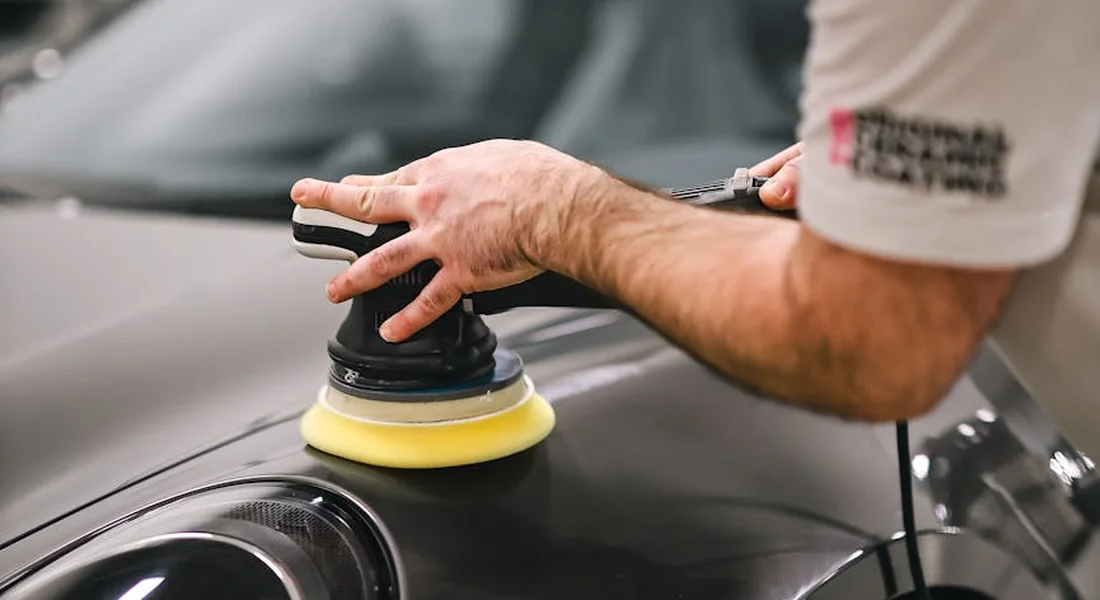
That first layer of gloss is tempting. I get it. You want to lock it in forever. I felt the same way when my red 2022 Porsche 911 arrived. The urge to grab my favorite sealant was strong. Resist it. New paint is at its most vulnerable. Making the wrong move here can create problems that last for years.
Let’s talk about the worst things you can do. These are the errors I see most often, and they hurt to watch.
- Waxing or sealing over uncured paint. This is mistake number one. It’s the focus of our big question.
- Using abrasive cleaner-waxes or heavy compounds. These products are designed to cut and remove defects, which fresh paint does not need. You’ll just thin out your precious clear coat.
- Washing the car in direct, hot sunlight. Fresh paint is softer. Water and soap will dry too fast, leaving mineral deposits etched into the surface that are a nightmare to remove.
- Using dirty towels or wash mitts. Any grit trapped in your microfiber will scratch that soft surface like sandpaper. It’s how my 2016 BMW 3 Series became a swirl magnet, and I don’t want that for you.
FAQ: Can Waxing Too Early Damage a New Paint Job?
Yes, absolutely. It’s one of the quickest ways to ruin a perfect finish. Here’s what happens inside the paint.
Factory baked enamel or fresh body shop paint releases solvents for weeks or even months as it fully cures and hardens. This process is called off-gassing. When you apply a wax or synthetic sealant too soon, you create a non-porous barrier on top. You trap those solvents beneath the seal.
They can’t escape. This leads to hazing, cloudiness, and a loss of clarity in the clear coat. It might not show up immediately. You might see it weeks later as a dull patch that won’t polish out. Applying wax too soon is like slamming a door on wet concrete; the surface looks set, but you’ve ruined its strength and finish from the inside.
Products and Chemicals to Avoid Completely
Your goal is to be gentle. Treat the paint like a newborn. Avoid anything harsh or aggressive.
- Heavy cutting compounds and rubbing compounds. Save these for correcting the deep scratches on my 2018 Ford F-150. They have no place near new paint.
- Waxes labeled “cleaner-wax” or “all-in-one.” These contain mild abrasives or chemical cleaners to remove old wax and light oxidation. Your paint has neither. You are using an abrasive for no benefit.
- Ammonia-based glass cleaners. This is a sneaky one. Overspray from cleaning your windows can drift onto fresh paint. Ammonia is a harsh chemical that can stain and damage the soft clear coat. Use an ammonia-free formula for the first 90 days.
- Any towel that isn’t freshly washed and high-quality. Cheap, terry cloth towels or ones used on wheels are paint assassins.
A Quick Note on Safety
Even with gentle products, protect yourself. Wear nitrile gloves when applying any spray or liquid. Work in a shaded, well-ventilated area, like an open garage. Your lungs and your skin will thank you later. This isn’t just about the car. It’s about you.
The Protocol: The Non-Negotiable Pre-Wax Checklist
Think of applying wax like putting on a bandage. You would never slap a bandage on a dirty, greasy cut. You clean it first. Wax works the same way. It locks in whatever is on the surface, good or bad. The goal is to trap a perfectly clean finish underneath that layer of protection. Follow this order of operations every single time, and you will never grind contaminants into your paint during a wax application.
| 1. Decontamination Wash | Removes loose dirt and grime. |
| 2. Chemical Decontamination | Dissolves bonded iron particles (rail dust). |
| 3. Mechanical Decontamination | Physically removes stubborn gunk, only if needed. |
| 4. Protect (Wax/Sealant) | Locks in the flawless surface. |
This brings us to a common question I get: what steps should be taken before applying wax? The table above is your answer. Another frequent one is whether it’s necessary to clay bar a new car before waxing. The truth is, not always. But you must check. A new car’s paint often feels rough from microscopic iron particles embedded during train transport. A chemical iron remover handles this better than clay. You only reach for the clay bar if the surface still feels gritty after the chemical treatment. From here, we’ll cover how to apply wax using proper waxing techniques. The next steps outline the best methods, tools, and panel-by-panel application for a flawless finish.
Step 1: The Contamination-Free Wash
This is where most mistakes happen. A quick hose-down is not enough. You need a surgical approach to lift dirt away without scratching. For my black BMW 3 Series, the “Swirl Magnet,” I treat every wash like I’m handling a photographic lens. Its soft clear coat shows every mishap.
Start with a pH-neutral car shampoo. It cleans without stripping. Use two buckets, each with a grit guard at the bottom. One bucket has your soapy shampoo. The other is just clean water for rinsing your wash mitt. This two-bucket method traps dirt at the bottom of the rinse bucket, keeping your shampoo water clean.
Use a soft, high-pile microfiber wash mitt. Work in straight lines, not circles, and rinse the mitt in the clean water bucket after every panel. Start at the roof and work down. When you’re done, dry the car immediately. Use a large, clean plush drying towel. Gently glide it over the surface. Letting water air-dry is a guarantee you’ll be waxing over fresh water spots.
Step 2: The Decontamination Decision
After the wash, run your hand inside a clean plastic sandwich bag over the paint. This heightens your sense of touch. Does it feel smooth as glass? Or does it have a subtle, sandy roughness? That roughness is often rail dust, especially on a new car.
Spray an iron fallout remover over the cool, wet paint. It will turn purple as it reacts with the embedded iron particles. Let it dwell for a few minutes, then rinse thoroughly. This chemical step dissolves the contaminants clay would have to scrape off. For most new vehicles, this is all you need.
Now, do the bag test again. If it’s smooth, you are ready for wax. If stubborn grit remains, you need a gentle clay bar or synthetic clay mitt. Use plenty of a slick lubricant, like a diluted detail spray, and use very light pressure. Aggressive claying on a soft, new clear coat can create fine marring that you’ll then seal under your wax. If you must clay, use the finest grade clay available and inspect your work under good light.
Wax vs. Sealant: Picking Your Paint’s First Shield
Your new car’s paint needs protection, not guesswork. The first product you choose sets the tone. Think of it as picking an outer layer for your jacket. One is a classic, beautiful wool coat. The other is a modern, high-tech rain shell. Both work, but for different reasons.
Natural carnauba wax, the classic choice, gives paint a warm, deep, liquid-looking shine that many detailers love for its traditional beauty. It comes from the leaves of a Brazilian palm tree. It feels organic because it is. On my 1995 Mazda Miata’s single-stage red paint, a good paste wax brings back a richness that modern clears sometimes lack. That glow comes at a cost. Heat, rain, and washes break it down faster. You might get 4 to 8 weeks of solid protection before it needs a refresh.
Synthetic sealants, or “coatings lite,” are engineered polymers that bond to your paint, creating a slick, glassy barrier that typically outlasts wax by months. They don’t have the same deep warmth, but they offer incredible slickness, making dirt and water slide right off. For my Porsche 911, a pure synthetic sealant is the perfect match. It provides long-lasting defense against brake dust and road grime with less frequent application. A good sealant can easily protect for 3 to 6 months.
What Type of Wax is Best for a New Car?
For a brand-new factory finish or a fresh paint job, my strongest recommendation is to start with a pure synthetic sealant or a high-quality spray wax. These products are generally the safest and easiest to apply on new paint, offering strong protection without the risk of difficult removal or residue that some thicker pastes can leave. They allow the paint to continue its outgassing process without issue. A simple spray wax, like the one I use on my Tesla for quick touch-ups, is a foolproof first step. It protects immediately and teaches you the habit of maintenance.
The Balanced Approach: Hybrid Products
You don’t always have to choose one camp. Hybrid products blend carnauba’s gloss with synthetic durability. These hybrids are fantastic for daily drivers where you want a balance of shine and longevity without committing to a full ceramic coating. My Ford F-150 often gets a hybrid. It stands up to the mud and salt better than a pure wax, but still gives that dark blue paint a pleasing pop after a wash. It’s the practical choice for a vehicle that works hard.
Matching the Product to the Car
Your car’s personality can guide you. The Porsche 911 gets a sophisticated, pure sealant. It’s about high-tech performance and clear coat clarity. The classic Miata gets a rich, scented paste wax. It’s a ritual that matches the car’s character, enhancing the depth of its older paint. The modern EV or daily sedan often benefits most from the straightforward, durable protection of a sealant or hybrid.
Can You Wax a Car Too Much?
I hear this worry a lot. With proper technique-applying thin, even layers to a clean surface-you cannot harm your paint by waxing or sealing too often. The real cost of over-applying is wasted product and time, not damage. Layering wax on top of wax doesn’t add more protection; it just wastes the good stuff on the bottom. One perfect, thin coat is all you need. If you enjoy the process, consider a spray wax as a drying aid after your monthly wash. It boosts the existing protection and adds gloss without the hassle. That’s what I do on my black BMW to keep the swirls at bay between major details.
Step-by-Step: Applying Protection Without Fear
Now for the good part. The application is where many get nervous. Let’s take the fear out of it. I treat this like a slow dance with the car. You are not in a race.
Your Workspace is Your First Tool
Find shade. The sun is your enemy here. A cool, clean garage is perfect. If you must work outside, wait for an overcast day or work very early in the morning. A hot panel will cause the product to flash-dry, making it a nightmare to buff off and ruining your results. I learned this the hard way on my black BMW’s roof one summer afternoon. Touch the paint. If it’s warm to the touch, it’s too hot. Let it cool.
The Panel-by-Panel Method
Do not try to wax the entire car at once. Work on one manageable section. A door, a fender, half the hood. This keeps your work controlled and helps you avoid common car waxing mistakes.
- Apply your chosen sealant or wax to your applicator. Use very little. For a paste wax, a dime-sized amount for a door panel is plenty.
- Using light, even pressure, spread the product in straight lines or small circles. You are not scrubbing. You are gliding.
- Your goal is to see a faint, translucent film. If you see a thick, white, caked-on layer, you have used ten times too much. Wipe most of it off immediately and start that panel over.
The Thin Layer & The Swipe Test
This is the most common mistake. More product does not mean more protection. It creates a gummy, streaky mess that traps dust and is painfully difficult to remove. This directly answers the frequent question: can you put too much wax on a car? Absolutely yes, and excess wax or sealant is the primary cause of hazing, streaks, and poor durability. Understanding wax properties and application helps you avoid these issues. Applying the right product with proper technique optimizes protection and finish.
After applying your ultra-thin layer, let it sit. Most modern synthetics and ceramics need to “flash” or haze. But do not let it dry to a complete, bone-white powder. Here’s my trick: the swipe test. After a few minutes, lightly swipe your clean finger across the panel.
- If your finger smears the product, it needs more time.
- If your finger leaves a clear, clean streak through the haze, it is ready.
- If it feels like dust or chalk, you waited too long. Spritz a tiny bit of detail spray on your towel to help lubricate the removal.
Take your clean, soft microfiber towel and gently buff the residue away. Flip the towel often. You should feel almost no drag. The paint will feel slick and look deep.
Tackling Tricky Areas
Every car has its challenge spots. Here’s how I handle mine.
Flat Panels (Tesla Model 3 Bumper): Large, flat areas show every high spot and streak. Work in smaller subsections. Apply and remove product on just the lower grille area before moving to the upper bumper. This prevents the product from setting up unevenly across that big, blank canvas.
Tight Edges & Body Lines (Ford F-150): Where the bed meets the cab, around the wheel arches, along the trim. Do not glob product into these crevices. Run your applicator lightly along the edge, then use the folded edge of your microfiber towel to flick product out of the seam before buffing. Leaving wax in edges creates ugly white lines that are hard to clean later.
Complex Shapes (Porsche 911): For vents, intakes, and sharp curves, use a smaller applicator pad for control. A foam block meant for applying tire dressing works perfectly for getting into tight spots without slopping product everywhere.
Maintenance: Keeping That New Car Shine Alive
Think of your wax or sealant like sunscreen. You would not apply it once and expect it to last a whole summer. Your car needs the same kind of attention. A realistic schedule is your best defense against the slow fade of that perfect finish.
Your maintenance routine depends entirely on what you used for protection. Here is what I follow for my own vehicles.
- Synthetic Sealants and Ceramic Coatings: These are the long haul champions. A good sealant should be reapplied every 4 to 6 months. My F-150’s hood sees brutal sun, so I lean towards the 4-month mark to keep that dark blue from fading.
- Natural Carnauba Wax: This is the classic beauty treatment, but it does not last as long. Plan to reapply a paste or liquid carnauba every 2 to 3 months. I use this on my black BMW for its warm depth, but I know I am committing to more frequent work.
- Spray Waxes and Sealants: Products like a spray ceramic or a hybrid wax are fantastic for maintenance. They are perfect for a quick refresh every month or after every other wash to keep the primary layer strong.
How often should a new car be waxed for maximum protection?
For maximum protection, do not just follow a calendar. Watch your car’s paint. The answer is in the water. After you wash your car, spray a section of the hood with clean water.
Fresh, strong protection will cause the water to form tight, round beads that skate across the surface. When that protection weakens, the beads get flat and wide. Finally, the water will just lay there in sheets without beading at all.
When you see the water stop beading and sheeting properly, it is time for a fresh application. This test never lies. I do it on my Tesla’s flat front bumper every two weeks because bug splatter is relentless.
You can make your main layer of protection last longer with a simple habit. After your routine wash, use a detail spray or a quick wax as a drying aid.
As you dry the car with a clean microfiber towel, mist this product onto the wet paint. Then dry as normal. It adds a tiny boost of polymers or wax that fills in microscopic gaps and extends your shine. It takes two extra minutes and makes a real difference. If you want to dry the paint fast, pair this with a quick-dry spray that speeds evaporation. That combo can cut the drying time and still protect the shine.
Your environment dictates everything. A car parked in a Florida sun garage needs more frequent UV protection. A daily driver like my F-150 battling road salt and acid rain needs a barrier against chemical attack.
If your car lives a hard life under the sun or near the ocean, cut those timeframes in half. Check the water behavior more often. It is not being obsessive, it is being smart.
Spotting and Fixing Over-Waxing
More is not better. Applying too much product, or failing to buff it off completely, leaves a hazy, streaked film on your paint. It looks smeared, like a dirty window. You might see cloudy white residue in crevices, along body lines, or on black plastic trim.
This happens to everyone. I have done it on my Porsche’s complex bumper curves. The fix is simple. You need to gently remove the excess.
Mix a solution of isopropyl alcohol and distilled water. A safe ratio is one part alcohol to ten parts water. Dampen a soft, clean microfiber cloth with this solution. Wipe down the hazy area with light pressure. This will strip the waxy residue and reset the surface. Dry immediately with a separate dry towel.
Always test your alcohol solution on a small, hidden area first, like the door jamb, to ensure it does not affect the paint. Work in a well ventilated space. Once the surface is clean, you can reapply a thin, even coat of your protectant the right way.
Final Thoughts on Waxing New Paint
Always wait for the paint to fully cure before applying wax; this is the single most important rule for long-term protection. That patience ensures a proper bond and avoids sealing in harmful solvents. Later, you can explore how to apply or remove car wax.
Apply wax too early, and you risk creating a cloudy, compromised finish that locks in damage.
References & External Links
- When Can You Wax a Car After It’s Painted? | CARSTAR – CARSTAR
- How soon can I wash and wax my car after a new paint job?
- r/cars on Reddit: Just had my car repainted, the body shop told me to not wax it for 3 months afterwards.
- How to Protect Your Newly Painted Vehicle – Newell’s Auto Body, Decatur, IL
- Waxing new paint? | Auto Geek Online Auto Detailing Forum
- How soon after my car is painted can I wash or wax it? – Andys Auto
Max Gunther
Max is an automotive enthusiast having worked as a car mechanical and in interior detailing service for over 25 years. He is very experienced in giving your old car, a new fresh vibe. He has detailed many cars and removed very tough smells and stains from all kinds of cars and models, always ensuring that his work and advice helps his customers. He brings his first hand experience to his blog AutoDetailPedia, to help readers breath new life into their car interiors.