Are You Ruining Your Paint? The Truth About Dish Soap, Glass Cleaner, & Household Sprays on Cars
You’ve probably stood in your driveway, cleaner in hand, wondering if that bottle of blue dish soap is really going to hurt your car’s paint. That quick fix is tempting, but you know it might be a mistake.
This article explains exactly what happens when household chemicals meet your clear coat. We will cover how paint and cleaners actually work, why degreasers strip your protection, and what you should use instead.
Using the wrong cleaner doesn’t just make a mess; it can strip waxes, etch the clear coat, and leave your paint dull and defenseless, just like the swirls I constantly fight on my own black BMW.
Key Takeaways: The Quick Truth Before We Dive In
- Household cleaners will strip away your car’s wax or sealant, leaving the paint bare and defenseless.
- Their harsh pH can slowly dull and degrade the clear coat over time, making it look faded.
- These products often lack lubrication, making it easy to drag grit across the paint and create swirl marks.
The simple rule is this: household cleaners are engineered for countertops and dishes, not for the delicate, UV-sensitive clear coat on your car. Using them once in a pinch might not ruin your paint today, but making it a habit is a sure way to long-term damage. Later, we’ll look at the safe, effective products made for the job.
Why Your Kitchen Cleaner and Your Car Paint Are Enemies
Modern car paint is a sophisticated sandwich. The colorful base coat is covered by a transparent clear coat. This clear coat is your paint’s skin. It provides gloss and depth, and it takes the abuse from sun, rain, and road debris. To keep that protection intact, use safe chemicals formulated for car finishes. Gentle cleaners can help prevent chemical etching and wear on the clear coat. That clear coat is also surprisingly soft and can be easily scratched or chemically damaged.
Household cleaners are formulated with specific pH levels to tackle problems on hard surfaces. Glass cleaner is often acidic to dissolve hard water stains. All-purpose sprays and dish soaps are alkaline to cut through grease and grime. Car wash soap, in contrast, is pH-neutral. It’s designed to lift dirt without attacking the paint’s chemistry.
Think of it like using laundry detergent to wash your hair. It will get the grease out, for sure. But it also strips all the natural, protective oils, leaving your hair dry and brittle. Your car’s clear coat and its protective wax layer are those “oils.”
When you use a household cleaner, you’re not just cleaning dirt, you’re actively degrading any wax, sealant, or ceramic coating you’ve applied. This leaves the paint exposed. Without that protective layer, water doesn’t bead up, contaminants stick easier, and the sun’s UV rays attack the clear coat directly, leading to oxidation and a chalky, dull finish.
Is It Safe to Use Dish Soap on Car Paint?
No. It is not safe for washing your car. Dish soap’s entire purpose is to be a degreaser. It works by breaking down oils so they can be rinsed away. On your car, those oils include the protective polymer chains in your sealant and the natural carnauba in your wax.
You might notice the paint feels “squeaky clean” afterward. That sound is friction. The paint is squeaky because you’ve stripped it down to a bare, vulnerable surface that grabs onto everything, including your drying towel. This invites immediate water spotting and makes the surface a magnet for dust and pollen.
I learned this the hard way on my black BMW, the ‘Swirl Magnet.’ Early on, I used a bit of dish soap just once. The car looked great wet. But after drying, within an hour in the garage, a fine layer of dust had already stuck to the panels like static cling. The paint had lost its slick, protected feel. It was hungry for contaminants because I had removed its meal-the wax.
The One Time Dish Soap Might Be Okay (The “Strip Wash”)
There is one professional detailing scenario where a diluted dish soap solution has a place: the strip wash. This is done only when you need to completely remove old, failing layers of wax or sealant to start fresh before applying a new coat of protection.
This is a deliberate decontamination step, not a cleaning method for dirt. If you choose to do this, you must be cautious.
- Use a tiny amount. A single small drop in a full five-gallon wash bucket is more than enough.
- Wash gently. Use a clean microfiber mitt and the two-bucket method. The goal is to chemically strip, not scrub.
- Rinse thoroughly and dry immediately. Do not let the solution dry on the paint.
- Follow with your new protection immediately. You have just left your paint completely bare. Apply your chosen wax, sealant, or coating right after to shield it.
Even for a strip wash, I now prefer a dedicated product like a citrus-based pre-wash or a dedicated panel wipe. They are formulated to be more controlled and less harsh on the paint than even diluted dish detergent.
Glass Cleaner on Paint: A Recipe for Streaks and Stains
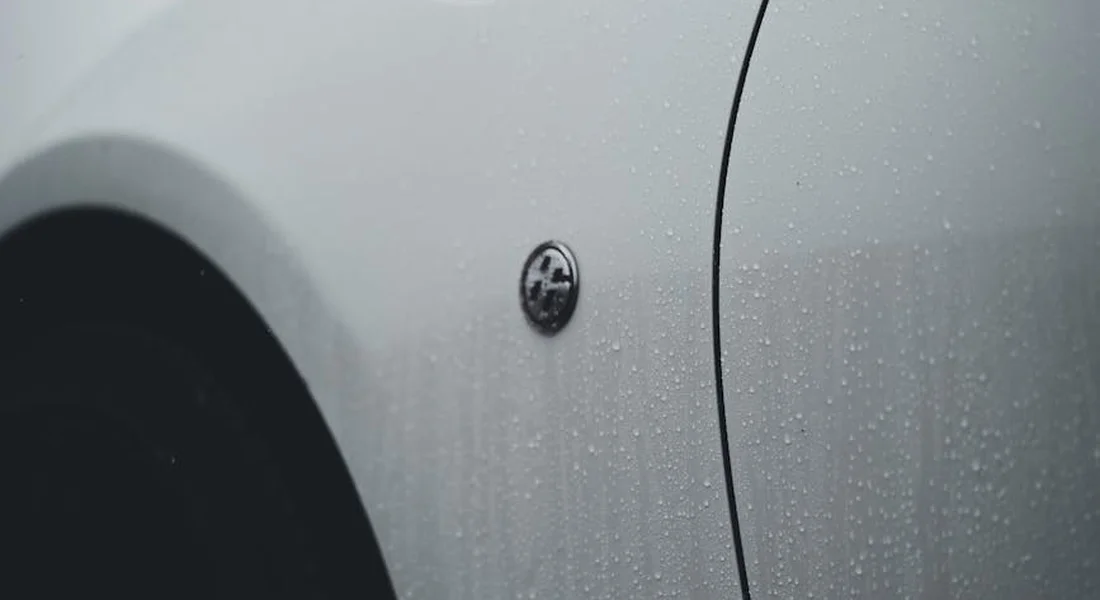
You grab the blue bottle from under the sink. The windows are smudged, and you figure it will work on the paint too. Is it safe to use glass cleaner on car paint?
No, it is not safe, and I have seen the damage firsthand on customer cars. Household glass cleaners are formulated for a hard, non-porous surface. Your car’s clear coat is a soft, complex polymer. The ammonia or alcohol in these cleaners acts as a solvent. It does not clean the paint. It dries it out. Over time, it can etch microscopic grooves into the clear coat, potentially damaging the paint on your car.
The result is always visual. The finish loses its jewel-like reflection. Instead of deep, wet black on my BMW or vibrant red on the Miata, you get a hazy, streaky film. It looks like you wiped it with a dirty towel, even on a clean car. The paint has no clarity.
Glass cleaner has one perfect job: cleaning glass. It is excellent for your windshield and side windows. The rule is simple. Spray it only on the glass. Keep it off the painted pillars, the rubber seals, the plastic trim, and any window tint. For auto glass, I use a dedicated spray and a clean microfiber towel. I spray the towel, not the window, to control the overspray.
The Danger to Plastics and Trim
This is where glass cleaner does its worst work. Plastics are even more vulnerable than paint. The chemicals can penetrate and permanently cloud the surface. I am talking about headlight lenses, your dashboard, and the black plastic trim around your windows.
Once plastic is clouded by the wrong cleaner, you cannot simply wash it clear. You must polish it. My 1995 Mazda Miata, the “Restoration Project,” taught me this lesson. Its headlights were a foggy yellow mess when I got it. Years of ammonia-based cleaners had baked in the damage. Restoring them required sanding, polishing, and sealing. It was hours of work for a problem a proper cleaner would have prevented.
For plastics, use a product made for them. A gentle interior detailer for your dash. A plastic-specific protectant for exterior trim. Your headlights will thank you.
All-Purpose Spray: The “Convenient” Way to Dull Your Paint
It says “all-purpose” right on the bottle. It cleans your kitchen counters. It must be fine for the car, right? Is it safe to use all-purpose spray on car paint? It’s best to be cautious when choosing cleaning products for your vehicle.
Using household all-purpose spray on your paint is a fast track to a dull, lifeless finish. These sprays are built to cut grease on stovetops and disinfect floors. Their ingredient list reads like a warning label for car paint: strong degreasers, alkaline surfactants, and harsh solvents.
Think of your clear coat as a thin, protective skin. A.P.C. ingredients are abrasive to that skin. They do not lift dirt gently. They scour. They strip away any wax or sealant you have applied. They can even begin to degrade the clear coat itself, making it more prone to scratches.
Then, they leave a hidden problem. These cleaners often leave a filmy residue that water alone cannot rinse away. This residue is sticky. It acts like a magnet for pollen, dust, and road grime. Your car will look dirty again in half the time. On my grey Honda Odyssey “Kid Hauler,” using the wrong cleaner made the paint feel gritty to the touch, even after a rinse.
Remember the name. “All-purpose” means for household purposes. Countertops, floors, sinks. It does not mean for automotive finishes. For cleaning wheel wells, tires, or very soiled interior plastics, a diluted automotive-specific all-purpose cleaner is the tool. You use it with care, you rinse it thoroughly, and you never let it dry on your paint.
The Mr. Clean Minefield: Magic Erasers and Multi-Surface Sprays
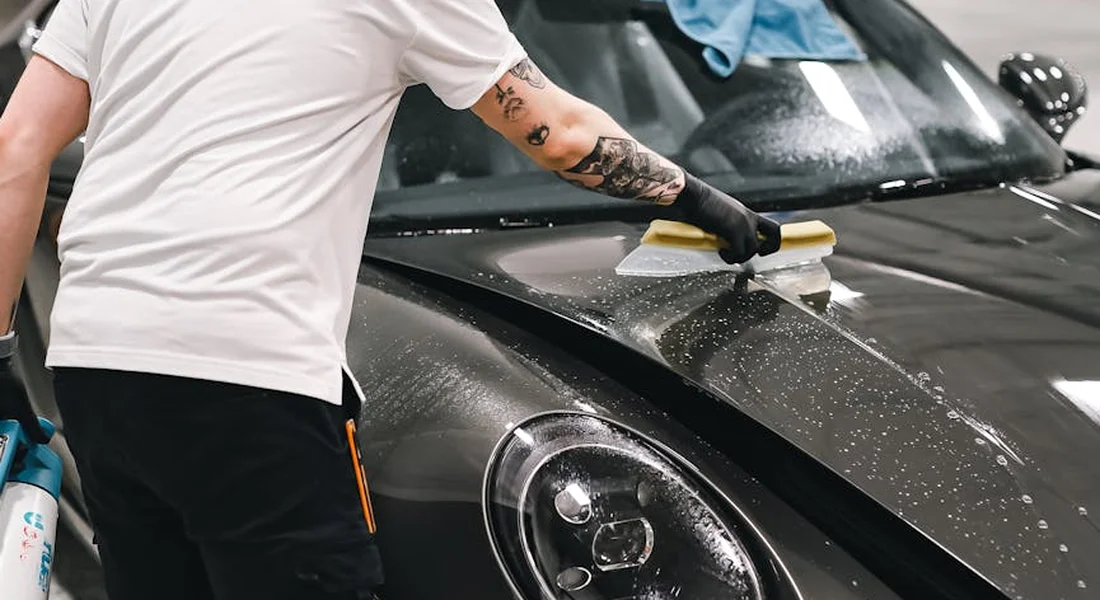
You see that stubborn bug splatter on your bumper. That greasy mark on the door. The thought crosses your mind. That Magic Eraser in the kitchen cleans everything. It would make quick work of this.
Stop right there.
That little white sponge is not a cleaner. It is a fine grade sanding block. The material is melamine foam. When you add water and scrub, it works through abrasion, literally grinding away the top layer of whatever you’re cleaning.
Using a Magic Eraser on your car’s clear coat will instantly create a cloud of fine scratches, a defect we call micro-marring from Magic Eraser. The damage is immediate and often requires a full paint correction to fix. I learned this the hard way years ago on a plastic trim piece. It went from glossy to permanently hazy in three swipes.
Never use a Magic Eraser on car paint, polished alloy wheels, or interior touch screens. Just don’t.
The multi surface sprays from the same brand pose a different, more familiar threat. They are essentially all purpose cleaners with strong degreasers. Their exact chemical makeup is a mystery for automotive finishes. They can strip waxes and sealants on contact. On some modern soft clear coats, like the one on my white Tesla, they could even cause dulling or etching if not rinsed perfectly.
The only safe place for these household power cleaners is on household items. Keep them away from your vehicle.
Where Household Cleaners Can Safely Be Used on a Car
I am not saying you need to throw out your bottle of all purpose cleaner. In the right places, with extreme caution, it has a role. Think of it as a heavy duty solution for non delicate, heavily soiled areas you plan to rinse thoroughly.
- Rubber Floor Mats: For caked on mud and salt like what my Honda Odyssey sees, a diluted all purpose spray and a stiff brush works. Hose it off completely.
- Tire Sidewalls: To remove old brown dressing buildup, an APC can cut through it. Apply it only to the black rubber, scrub, and rinse before it dries.
- Engine Bay Plastics: For degreasing non painted, non electrical components under the hood, a diluted spray and careful rinsing is acceptable.
The golden rule never changes: keep these products off painted surfaces, clear plastic headlights or taillights, and sensitive interiors like leather, Alcantara, or vinyl. For those, you need pH balanced, automotive specific formulas.
Paint Damage Prevention: Common Mistakes That Ruin Finishes
Most paint damage happens slowly, one small mistake at a time. You often do not see it until the sun hits the hood just right and you see a spiderweb of scratches. Avoiding these common errors is the single best thing you can do for your car’s finish.
Washing in Direct Sun or on a Hot Surface. This causes soap and water to dry almost instantly, leaving behind mineral deposits that etch into the clear coat. My Tesla’s flat front bumper showed faint water spots after just one wash in the late afternoon sun. They required a mild polish to remove.
Using Dirty, Gritty, or Abrasive Towels. Your kitchen towel, that old t shirt, a gas station rag. They trap hard particles that act like sandpaper. This is the primary cause of swirl marks. The holograms on my black BMW came from a single “complimentary” wipe at a gas station. It took me six hours of machine polishing to erase them.
Drying with a Bath Towel or Chamois. These materials are not designed for automotive clear coat. They drag dirt across the paint and lack the soft, plush fibers needed to lift water safely. A dedicated drying microfiber towel is an essential investment, especially when compared to synthetic chamois or other alternatives.
Using Household Cleaners as a “Quick Detailer”. We have covered this, but it bears repeating. Glass cleaner, all purpose spray, dish soap. They strip protection and can damage the paint’s chemistry. They create a surface that looks clean but is actually more vulnerable.
Letting Contaminants Bake On. Bird droppings, tree sap, bug splatter. These are acidic. The longer they sit on hot paint, the deeper they burn, leaving a permanent etch or stain. I keep a spray bottle of quick detailer and a clean microfiber in my trunk for immediate removal.
Prevention is always easier and cheaper than correction. A proper two bucket wash technique with automotive soap, clean microfiber mitts, and gentle drying will keep your paint flawless for years. Fixing the mistakes, as I know from my black BMW, is a long and expensive lesson.
Product Tier List: Safe Car Wash Soaps for Every Need and Budget

Once you decide to use a real car soap, the choices can seem endless. Do not worry. I have tried most of them. Every product on this list is safe for your paint and designed for the job. Even the most basic, budget-friendly car shampoo is a far better tool for washing your car than any bottle under your kitchen sink, as those can even strip wax from your paint. Here is how to choose.
| Tier | Best For | What to Look For & Examples |
| Budget / Drive-Through Safe | Weekly washes, removing light dirt and road film. Gentle enough for automatic touchless car washes if you dilute it yourself. | Look for simple, pH-neutral formulas. Meguiar’s Gold Class or Chemical Guys Mr. Pink. They clean without stripping wax. I keep a gallon of a budget soap for my F-150’s muddy flanks and the Odyssey’s gritty lower doors. |
| Enthusiast Grade | People who want more than just clean paint. These add slickness for easier drying, extra shine, or a light layer of protection. | These have polymers or gloss enhancers. Adam’s Car Shampoo or Griot’s Garage Brilliant Finish. They make the paint feel smoother. I use this type on my black BMW and the Tesla to boost the look between full wax jobs. |
| Show Car / Coating Safe | Cars with ceramic coatings, graphene coatings, or permanent sealants. Maintenance washes that clean deeply without affecting the coating. | Formulated to be totally coating-friendly. Gyeon Bathe+ or CarPro Reset. They clean off embedded dirt without diminishing the coating’s hydrophobic properties. This is all I use on the Porsche’s paint protection film and ceramic-coated wheels. |
The Right Way to Wash: A Step-by-Step Guide to Safe Cleaning
Good soap is only part of the story. Your technique is what keeps the paint scratch free. This is the method I use on every car, from the muddy truck to the pristine 911. It works. Using any dish soap on car paint can be risky, so proper technique is vital.
Step 1: The Pre-Rinse and Decontamination
Never start washing a dry, dirty car. You will grind dirt into the paint. First, flood the surface. Use a hose or a pressure washer on a wide fan setting. Soak the whole car, but pay special attention to the wheel wells and the lower third of the panels where grime sticks hardest. This loosens everything.
If you see baked-on bug splatter on the bumper or little black tar spots on the rocker panels, now is the time. Spray a dedicated automotive bug and tar remover directly on the spot. Let it dwell for a minute. It will melt away. Do not scrub. The pre-rinse will wash the residue away. Household products will not work here and might stain the plastic trim.
Step 2: The Two-Bucket Wash Method
This is the single most important habit for a scratch free wash. You need two buckets. One holds your soapy water. The other holds clean, plain water for rinsing your wash mitt.
- Fill both buckets. Add your chosen shampoo to the “wash” bucket per the bottle’s instructions.
- Dip your quality microfiber wash mitt into the soapy bucket. Wash one section of the car, like the hood or a single door panel.
- Before dipping the mitt back into the soapy water, rinse it thoroughly in the “rinse” bucket. Swirl it around. You will see dirt fall to the bottom.
- Wring it out, then dip it back into the clean soapy water for the next section.
The rinse bucket traps the dirt you just wiped off, so you are not putting it back onto your paint with the next swipe. I use this on the “Kid Hauler” Odyssey every week. It is the only reason its grey paint still looks decent after juice boxes, sandy shoes, and grocery store parking lots.
Step 3: Drying and Immediate Protection
Letting water air-dry is an invitation for water spots, especially on hard water. After the final rinse, dry the car immediately. Use a large, clean plush drying towel. A cordless leaf blower is also a fantastic tool to blow water out of mirrors, badges, and trim.
Here is a professional trick. While the paint is still slightly damp, mist on a spray wax or a spray sealant. Then, dry the car as you normally would. This applies a thin, even layer of protection in about 60 seconds, boosting your wax or ceramic coating with zero extra work. It adds gloss and makes the next wash easier. This is my go-to move for keeping the “Garage Queen” Porsche’s finish showroom sharp without spending a whole day on it.
Final Thoughts on Household Cleaners and Car Paint
Stick to products made for cars to clean your paint. I use a dedicated car wash soap on every vehicle I own, from my kid-hauling Odyssey to my black BMW, because it safely removes grime without attacking the wax or sealant, unlike some harsh car wash soaps that can damage paint.
Use dish soap or window cleaner instead, and you will slowly strip away your paint’s protection, leaving it dull and vulnerable to every scratch and stain.
Related Guides and Information
- r/AutoDetailing on Reddit: Downsides of using dishsoap to detail?
- Can You Use Dish Soap to Wash a Car? – Kelley Blue Book
- Is liquid dishsoap really harmfull to the paint ? | BobIsTheOilGuy
- Is Dish Soap Safe On Car Paint? – Jalopnik
- My brother recently criticized the way I wash my cars. I use diluted dishwashing soap such as Dawn. Is it true it will damage the paint? – Quora
- Is washing your car with dish soap bad? Can it damage the paint job? – Quora
- Can I Use Dish Soap to Clean My Car? | Chemical Guys
Max Gunther
Max is an automotive enthusiast having worked as a car mechanical and in interior detailing service for over 25 years. He is very experienced in giving your old car, a new fresh vibe. He has detailed many cars and removed very tough smells and stains from all kinds of cars and models, always ensuring that his work and advice helps his customers. He brings his first hand experience to his blog AutoDetailPedia, to help readers breath new life into their car interiors.