Does Toothpaste Remove Car Scratches? Your Guide to Safe DIY Paint Correction
You just found a new scratch on your door, and you’re wondering if that tube in your bathroom is a cheap fix. I’ve been there, staring at my black BMW’s swirls and weighing every option.
This article will explain exactly how toothpaste interacts with clear coat, what kind of scratches it can realistically improve, and the careful, step-by-step process to try it yourself.
Get this wrong, and you will permanently haze the paint, making the scratch look even worse under the sun.
Key Takeaways: The Quick Truth on Toothpaste
Let’s be direct. Toothpaste is not a miracle scratch remover. It’s a last-resort option for a specific, minor problem, especially when you use it for car scratches.
- The core answer is that toothpaste can only help with very light surface marks in the clear coat, not what a detailer would call a real scratch.
- It might slightly improve defects like clear coat swirls from a dirty wash mitt or minor scuffs from brushing against a bush.
- It cannot fix any scratch you can feel with your fingernail. If your nail catches, the damage is too deep.
- Difficulty rating: Easy, but results are extremely limited. It’s more of a mild polish than a repair.
- Warning: Using too much pressure or the wrong toothpaste can haze your paint, leaving a dull, cloudy patch that’s worse than the original mark.
Scratch School: Identifying What Kind of Mark You’re Dealing With
Your car’s paint is a sandwich. Think of it like this: the metal panel is the bread. On top of that, you have a layer of primer (the mayo). Then comes the beautiful, pigmented color coat (the meat). The top slice of bread is the clear coat, a hard, transparent layer that provides shine and protection.
Most scratches live only in that top slice, the clear coat. The real test is simple. Clean the area first. Then, gently run the tip of your fingernail *across* the scratch, not along it. Does it catch or does it glide smoothly over?
The Fingernail Test: Your Best Diagnostic Tool
- No-Catch Scratch: Your nail glides over without dropping into a groove. This means the damage is confined to the clear coat. This is the only type of mark toothpaste has a chance of improving.
- Catch Scratch: Your nail gets caught, dips down, or you can hear a click. This means the scratch has cut through the clear coat and into the color layer or even the primer. Toothpaste will do nothing here except waste your time.
Clear Coat Scratches (Toothpaste Territory)
These are shallow imperfections that distort light but don’t remove color. You see them as fine lines or a web of haze under bright light. The classic source is an automatic car wash with old, dirty brushes. A branch lightly dragging down the side of your car can also leave this.
My 2016 BMW, the black “Swirl Magnet,” is a gallery of these. In the sun, the hood looks like a spider web. Each one of those thousands of fine lines is a clear coat scratch. They make the paint look dull and lifeless, but you can’t feel them with your nail. This is the only battlefield where toothpaste might be a tiny, under-equipped soldier.
Paint Layer Scratches (Beyond Toothpaste)
These are real scratches. You see a distinct line, often a different color. A key mark usually shows as a bright silver line on a dark car (that’s the metal or primer you’re seeing). A gouge from gravel might show white or black.
The front bumper of my Ford F-150, the “Workhorse,” has a few of these badges of honor. One from a flying rock on the highway is a small, white crater I can definitely feel. No amount of toothpaste will bring that color back. The paint is gone.
How do I know if my scratch is too deep for toothpaste? Use the fingernail test. If it catches, it’s too deep. Your next steps involve touch-up paint, not oral hygiene products.
The Science of Smiles: How Toothpaste Works on Car Paint

Toothpaste works because it is a very mild abrasive suspension. Think of it as a paste with tiny, gritty particles floating in water. The common abrasives are hydrated silica or calcium carbonate. They are just hard enough to scrub plaque off your teeth.
On your car’s clear coat, those same particles act like an ultra-fine rubbing compound. It is a gentle abrasive action that polishes the surface, not a chemical that fills or repairs the scratch. The water in the paste provides lubrication to prevent the abrasives from digging in too harshly. It is a crude but sometimes effective DIY polish.
Does Whitening or Gel Toothpaste Work Better?
Not all toothpastes are created equal for this job. You need to read the tube.
- Whitening Toothpaste: This usually contains more abrasive particles to scrub surface stains from teeth. For a car, this means slightly more cutting power. A common brand like Colgate Optic White has more bite than a basic paste. So, can Colgate remove car scratches? On very fine scuffs, yes, it can help more than a gel because it is more abrasive.
- Gel Toothpaste: Gels are often less abrasive. They rely more on chemicals for cleaning. On paint, they provide mostly lubrication with very little cut. They are safer for your clear coat but much less effective at reducing scratch visibility.
- Charcoal or Extreme Whitening Paste: Avoid these. They are often far too abrasive for clear coat. Using a charcoal paste is like using a heavy-cut compound by hand. You will likely leave hazy, dull micromarring all over the area you work.
For a DIY fix, a standard whitening paste is the typical choice. It has the right balance of grit and lubrication for a hand application.
The Honest Effectiveness Rating
Let’s be clear. Toothpaste does not remove a scratch. It masks it.
The abrasive rounds over the sharp edges of the scratch within the clear coat and polishes the surrounding area. This reduces light refraction, making the scratch less obvious to your eye. It is a cosmetic cover-up, not a structural repair of the paint layers. The scratch is still there, just harder to see.
This explains the common online question: “Why did toothpaste work for my friend but not for me?”
- Paint Hardness: Softer clear coats (common on many Japanese and American cars) will respond better to the mild abrasion. Harder clear coats (like on German vehicles or newer ceramic-coated paints) will laugh at toothpaste.
- Scratch Depth: If your fingernail catches in the scratch, it is through the clear coat. Toothpaste cannot help. It only works on superficial clear coat scuffs you can feel with a light finger drag but not catch a nail on.
There is one special case. On single-stage paint, like the classic red on my 1995 Mazda Miata, toothpaste can do a bit more. It can gently cut through a thin layer of oxidized, dead paint to reveal fresher color underneath. It is a very mild oxidation remover, not just a scratch hider. But you must work carefully, as you are removing a tiny amount of the actual colored paint layer.
Hands-On: The Step-by-Step Toothpaste Method
Look, I get it. You saw the tip online. You have a tube in the bathroom. You want to see if it works. I’ve been there. If you are going to try this method, doing it right is the only way to avoid making the problem worse. This is not a professional correction. It is a controlled experiment with household items.
Gather Your Supplies
You do not need much. But what you use matters. Grab the wrong towel and you will add scratches.
- Non-gel toothpaste: The classic white paste. Gels lack the mild abrasive you need.
- Several clean microfiber towels: I mean clean. New from the bag or freshly washed without fabric softener. You need a few. One for application, one for buffing, one for drying. Use a soft, plush towel with a deep nap. An old T-shirt is trash here. It will grind dirt into the paint.
- Water spray bottle: Just plain water.
- Car wash soap: Not dish soap. Proper shampoo lubricates and is gentle on wax.
Step 1: The Critical Wash and Dry
Do not skip this. I do not care if the scratch is on a clean-looking door. You must wash it. Grit on the surface will become sandpaper under your towel.
Wash the entire panel, or better yet, the whole car. Use your car shampoo and the two-bucket method. One bucket for soapy water, one with clean water to rinse your mitt. This traps dirt away from the paint. Any speck of dirt left behind will swirl your clear coat worse than the original scratch. Rinse thoroughly and dry the area completely with a clean microfiber. The surface must be bare and smooth to the touch.
Step 2: Apply and Buff the Toothpaste
Now for the main event. Work on a small section, maybe two inches square around the scratch.
Dampen a corner of one microfiber towel. Apply a pea-sized amount of toothpaste to it. That is all you need. More paste does not work better. It just makes a mess.
Use light pressure. Think of polishing an eggshell, not scrubbing a pot. Make small, overlapping circles with your fingers. Keep the area moist by misting it lightly with your spray bottle if it dries out. The goal is to let the mild abrasives slowly wear down the edges of the scratch, not to erase it by force.
After thirty seconds of buffing, stop. Wipe the paste away with a clean, dry section of your towel. Look at the scratch in good light. Has it faded? Can you still catch your fingernail in it? If it is a surface mark, it might lighten. If it is deep, nothing will change. This is how you check your progress without overworking the spot.
Step 3: The Essential Rinse and Inspection
Once you are done testing, you must remove all residue. Toothpaste paste will dry into a chalky film.
Rinse the entire area with plenty of water. Dry it meticulously with a fresh, dry microfiber towel. Now, look closely. The real test is not the scratch, but the finish around it. Tilt the panel under the sun or a bright light. Do you see a faint, cloudy haze where you worked? That is micro-marring from the abrasives. It means you have dulled the clear coat. On my black BMW, this haze shows up instantly, a sure sign the method is too aggressive for perfect paint.
Can You Use Toothpaste on Windshields or Wheels?
No. Do not use toothpaste on glass. The abrasives are harder than you think and can permanently scratch your windshield. For glass, use a dedicated glass cleaner and a razor blade for tough spots.
On wheels? Maybe, but it is a poor choice. On polished alloy wheels, like the ones on my Porsche, the white paste might clean off light, baked-on brake dust stains. I have tried it. It works, slowly. But wheel acid cleaner or a dedicated iron remover spray is faster and safer. Toothpaste is inefficient here and hard to rinse from tight spokes.
Avoid These Mistakes: Preventing Paint Damage
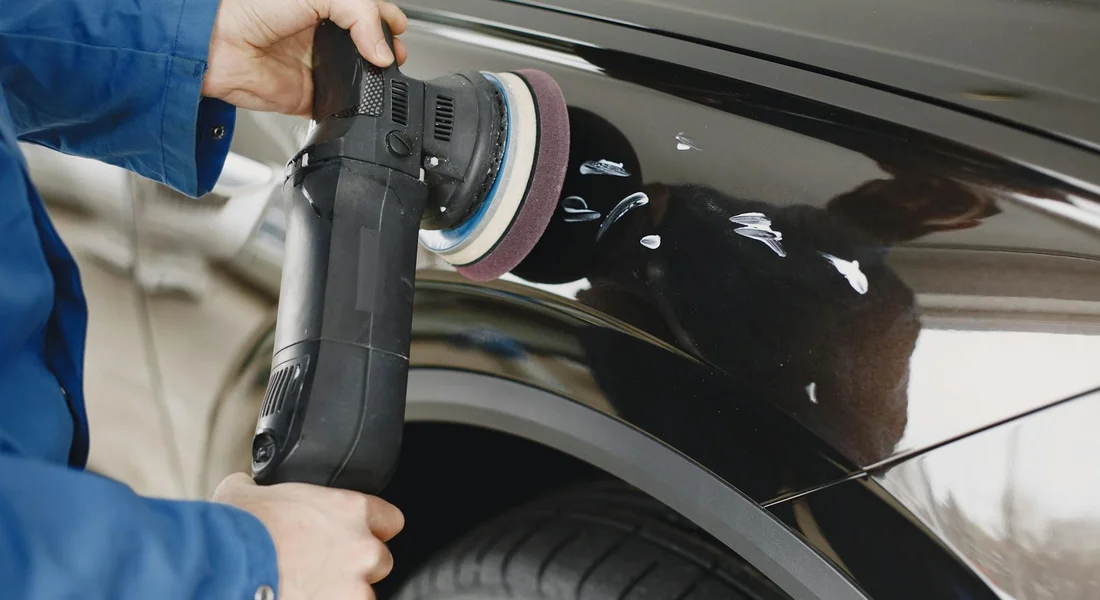
I get the urge to fix a scratch. You see it every time you walk to your car. But in your rush to make it disappear, it’s easy to do more harm than good. If the damage goes beyond a superficial scratch, repairing clear coat damage is the next step. Your clear coat is only about as thick as two sheets of printer paper. Treat it with care. Here’s how to avoid common errors that turn a small problem into a big one.
Using Too Much Pressure or the Wrong Cloth
This is where most people fail. Toothpaste is an abrasive, and your goal is to gently polish, not grind. Pressing down hard with all your might doesn’t make the scratch go away faster. It just heats up the paint and digs the abrasive particles deeper into the surface. You are not sanding wood; you are polishing a delicate, thin layer of clear plastic.
On my black BMW, I learned this the hard way. I tried to rub out a light mark with an old t-shirt and too much elbow grease. I created a cloudy, swirled halo that was far more noticeable than the original scratch. The cloth matters as much as the pressure. A soft, clean microfiber towel is designed to lift and hold particles. A rough terry cloth or paper towel acts like sandpaper.
- Use the pad of your finger, not a fingernail, for hand application.
- Let the paste and the cloth do the work. Apply firm, even pressure, but never lean into it.
- Always fold your microfiber towel into quarters. This gives you a clean, soft surface to work with and traps the spent toothpaste and paint residue.
Working on a Dirty or Hot Surface
This mistake guarantees new scratches. If there is a layer of dust or grit on your paint, rubbing toothpaste over it is like using a polishing compound mixed with sand. You will instantly create a web of fine scratches. The surface temperature is just as critical. Never attempt this in direct sunlight or on a panel that is warm to the touch.
Heat softens the clear coat, making it much more susceptible to marring and holograms. I only work in my garage in the shade, and I always feel the panel with the back of my hand first. If it’s warm from the sun, I wait. This rule applies to everything, from my kid-hauling Odyssey to the garage-queen Porsche.
- Wash and thoroughly dry the entire panel first. A clean surface is non-negotiable.
- For best results, use a detailing clay bar on the area after washing to remove any bonded contaminants you can’t see or feel.
- Work in a cool, shaded environment. Early morning or late afternoon in a garage is ideal.
Expecting Miracles and Over-Working an Area
Toothpaste has limits. It can only address defects within the top microns of your clear coat. If you can catch your fingernail in the scratch, it is through the clear coat and toothpaste will not fix it. The biggest danger is not knowing when to stop. If you don’t see clear improvement after 2-3 minutes of careful buffing, the scratch is too deep for this method.
Continuing to grind away at it serves no purpose. You are just thinning the surrounding clear coat, creating a low spot or “divot” that will always look dull. On my F-150’s hood, I have a few of these battle scars from branches. I’ve learned to clean them, touch them up if needed, and protect them with wax. They are part of the truck’s story now, not a reason to ruin the paint around them.
- Set a mental timer. Work the paste in small, overlapping circles for no more than three minutes.
- Wipe clean with a fresh side of your microfiber and inspect under good light.
- If the scratch is still visible but shallower, you can do one more very light pass. If it’s unchanged, stop. Accept that it needs professional correction or a touch-up pen.
When Toothpaste Fails: Next Steps for Stubborn Scratches
You tried the test spot. You rubbed diligently. The scratch is still there. I have been in this exact spot more times than I can count. Do not get discouraged. This is not a failure. It is valuable information. It tells you exactly what you are dealing with. Now you can choose the right tool for the job.
For Deep Scratches You Can Feel
Run your fingernail across the scratch. If it catches, you are feeling the base coat or even the bare metal or plastic underneath. No amount of polishing will fill that canyon. Toothpaste cannot help here. You need paint.
For small stone chips or key marks, a touch up paint pen is your friend. Clean the area with isopropyl alcohol first. Apply the paint in several thin layers, letting each dry. Do not glob it on. It will dry uneven and look like a blob. For a better finish, some detailers use a fine-tip brush. The goal is to make it less noticeable from five feet away, not perfect.
For larger damage, like a door ding that went through to the metal, professional repainting is the only permanent fix. I have one on the sliding door of my grey Honda Odyssey, the “Kid Hauler.” Someone opened their door into it in a parking lot. The scratch was deep and white, a stark line on the grey paint. I touched it up to prevent rust, but from certain angles, you can still see the dent and the repair. A body shop would need to sand, fill, and blend new paint across the entire panel for it to disappear. For deep scratches that catch your nail, your choices are strategic touch up or professional repaint; polishing is a waste of effort.
This leads to a common question I get. “My car has really deep scratches, what shall I do?” The answer is straightforward. If your fingernail catches, stop polishing. Assess the size. A few isolated chips? Use a touch up pen. A long, deep gouge or large scratched area? Get a quote from a reputable body shop. Protecting the bare metal from rust is your immediate priority.
For Light Scratches That Need More Help
Your fingernail does not catch. The scratch is visible but shallow, sitting only in the clear coat. Toothpaste made it a little better but did not finish the job. This is the most common result. You have confirmed the scratch is removable, but you need the right abrasive.
This is where you graduate from the medicine cabinet to the detailing shelf. Real scratch removal compounds are formulated with precise, controlled abrasives. They are designed to break down as you work, shifting from cutting to finishing. Toothpaste abrasives are not.
Start with a dedicated “scratch remover” or light polishing compound. Brands like Meguiar’s ScratchX or Chemical Guys VSS are good over the counter options. Apply a small amount to a clean, soft foam applicator pad. Work it in a tight, overlapping circular pattern over the scratch with firm pressure. Keep the area small. You will see the product turn clear as the abrasives break down. Wipe it away with a clean microfiber towel. Beyond this, paint compounding techniques can tackle deeper scratches. With the right compound and pad, and careful, slow passes, you can blend the repair into the surrounding paint.
If that does not do it, you may need a stronger compound. I keep a bottle of 3M Rubbing Compound for these tougher jobs on my black BMW, the “Swirl Magnet.” The process is the same, but you must follow it immediately with a polish to restore gloss, as stronger compounds can leave hazing. Stepping up to a real automotive compound gives you controlled cutting power that toothpaste lacks, turning a faded improvement into complete removal.
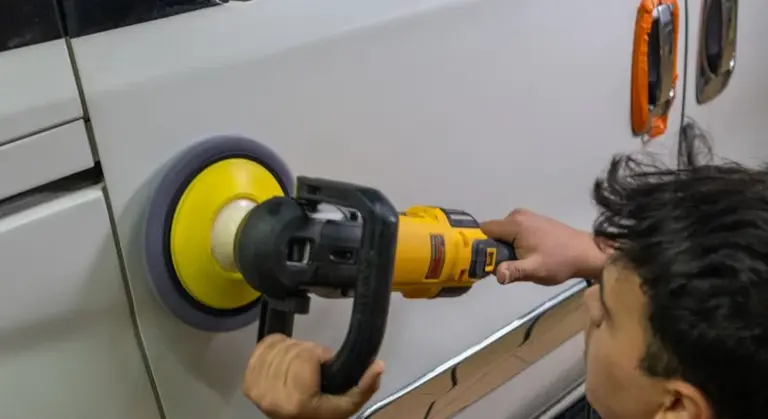
For an entire panel covered in light scratches, consider using a dual action polisher. It makes the work faster and more even. If this feels like too big a step, a professional detailer can perform a paint correction service. This is what I did for my 1995 Mazda Miata’s single stage paint. The results were transformative, bringing the oxidized red back to life in a way no hand application ever could.
Upgrade Your Arsenal: Scratch Remover Product Tier List
Toothpaste is a hack, not a tool. If you want to fix scratches correctly, you need the right gear. For real scratch repair, a rubbing compound is often the right tool. It helps smooth and blend minor scratches so they disappear from the finish. Think of it like this: you wouldn’t use a butter knife to build a deck. Here is a straightforward list of what you should actually use, from a quick fix to a showroom finish.
Budget / “Drive-Through” Tier
This is for the lightest marks, the kind you get from brushing against a bush or a shopping cart that just kissed the paint. The products here are toothpaste’s smarter cousins. They use very fine, controlled abrasives suspended in a paste or cream that’s safe for your clear coat.
- Common Products: Meguiar’s ScratchX 2.0, Turtle Wax Scratch Repair & Renew, Mother’s Scratch Remover.
- How They Compare: These are designed for clear coat. Their abrasives are often aluminum oxide or silica, which are gentler and more uniform than the baking soda or calcium carbonate in toothpaste. They also usually contain polishing oils and fillers. The fillers are key-they temporarily mask deeper scratches by lodging in the groove, making it less visible to the eye after you wipe the excess away.
- The Reality Check: They work only on superficial clear coat scratches. If your fingernail catches in the scratch, this tier won’t remove it. Use them by hand with a clean microfiber applicator, applying firm, focused pressure in a back-and-forth motion over the scratch. Always follow with a spray wax to protect the area you just worked.
Enthusiast / “Weekend Detailer” Tier
This is where real correction happens. If your car looks like my black BMW-a galaxy of fine swirls and spiderwebs under the sun-this is your starting point. You move from masking scratches to literally removing a microscopic layer of clear coat to level the surface.
- The Tool: A Dual-Action (DA) Polisher. Brands like Griot’s Garage, Porter-Cable, or Rupes are staples. A DA polisher oscillates and rotates randomly, making it very difficult to burn through paint, which is why it’s the safe choice for beginners.
- The Compounds: You need a light polishing compound and a finishing polish. Think of them as sandpaper in liquid form. A one-step product like Griot’s Garage Correcting Cream or Meguiar’s Ultimate Compound cuts defects then finishes down clear. For best results, a two-step system (a compound then a separate polish) is superior.
- Why It Works: The machine’s consistent speed and pressure, paired with the correct foam pad, allows the compound’s abrasives to evenly abrade the high points of the scratch away. This is the only reliable method to permanently remove swirl marks, light scratches, and oxidation from paint. You must clay bar and decontaminate the paint first, and you must finish by applying a sealant or wax.
Show Car / “Professional” Tier
This is for perfection, for concours events, or for protecting a flawless correction for years. It’s also where material knowledge is everything. A scratch on my Porsche’s paint protection film (PPF) is handled completely differently than a scratch on the Miata’s single-stage paint.
- Multi-Step Systems: Pro-grade lines like 3D, Sonax, or CarPro offer compounds and polishes with precisely engineered abrasive technology that cuts faster and finishes clearer. The process often involves three or more steps with different polishers and pads.
- Ceramic Coatings: After a multi-step correction, a professional-grade ceramic coating (like Gtechniq Crystal Serum or CarPro Cquartz) is applied. It’s a semi-permanent, rock-hard layer of silica that bonds to the paint. It doesn’t remove scratches, but it makes the surface so slick and hard that future scratches become much less likely.
- The PPF Exception: Remember the Porsche? If a car has a paint protection film, most scratches are only in the film’s top layer. You can often polish them out gently with a dedicated PPF cleaner or a very fine polish. If the scratch cuts through the film, the only fix is to replace that panel of film. Never use heavy compounds on PPF.
So, what is the best DIY scratch remover? It depends on the scratch and your ambition.
- For a single, faint line you can barely feel, a Budget Tier cream is a safe, quick fix.
- For an entire car covered in swirls, the Enthusiast Tier with a DA polisher is your real solution. It’s an investment in skill and tools that pays off every time you wash.
- For a flawless finish or a car with special materials like PPF, the Show Car Tier is often best left to a trusted professional. The risk of causing damage with advanced techniques is real.
Keeping It Clean: Daily Habits to Shield Your Paint
Fixing a scratch is one thing. Not getting one in the first place is better. Prevention is the most effective form of paint care, and it starts with simple daily habits. I learned this the hard way with my jet black BMW. Every swipe with a dirty towel showed up. Now, I focus on keeping paint clean and shielded. If a scratch does slip through, knowing how to repair car paint scratches can save time and money in the long run. A quick, proper repair restores gloss and prevents further damage.
Wash Technique is Everything
Most scratches happen during the wash. You grind dirt into the paint. I tell everyone the same thing. Your wash method matters more than your wax. Make sure you avoid using brushes that can cause scratches.
The two-bucket method with grit guards is your best defense against washing swirls. One bucket has your soapy water. The other is just clean water for rinsing your mitt. The grit guards trap dirt at the bottom so you don’t pick it back up. After every panel, dunk your mitt in the rinse bucket. Watch the dirt sink. It is a simple trick that saved my BMW’s finish.
Your tools matter just as much. A cheap sponge grinds dirt like sandpaper. Use a clean, high-quality microfiber wash mitt instead; its deep fibers lift and trap dirt away from the paint surface. I have a dedicated mitt for each of my cars. It feels soft in your hand, and that gentleness transfers to your clear coat. It’s especially important when you’re trying to restore dull car paint.
Adding a Protective Layer
A bare paint surface is soft and vulnerable. Think of protection like a raincoat for your car. It adds a slick, hard layer that takes the hit instead of your paint.
A spray wax or sealant creates a slippery barrier that resists light marring from dust, pollen, and minor contact. On my white Tesla, I use a quick spray wax after every wash. It takes five minutes. The surface feels so slick that water beads up and dirt just slides off. This barrier makes light scratches from bushes or loose clothing much less likely to dig in.
This is not just about shine. A well-maintained coat of wax or sealant makes future clean-ups easier, as grime has a harder time sticking to the protected surface. Bird droppings or bug splatter on my F-150’s hood wipe off with less pressure, which means less chance of etching the paint underneath.
Mind Your Environment
Your driving and parking choices directly affect your paint. Be strategic. It costs nothing.
- Park at the far end of the lot, away from shopping carts and other car doors. The walk is good for you.
- Never use automatic brush car washes. Those swirling brushes are full of grit from every car before yours. They will scratch your paint. I use touchless drives only when desperate, and even then, I follow up with a proper wash.
- Keep a safe distance from gravel trucks or on loose roads. Speed kicks up stones.
- When cleaning off light dust, use a gentle touch. A quick detailer spray and a plush microfiber towel is safer than dragging a dry cloth across the paint.
So, can you prevent car scratches? You cannot stop every single one, but with careful washing, consistent protection, and smart parking, you will stop almost all of them. Understanding the causes of scratches—dust, grit, and improper washing or drying—lets you prevent them at the source. Addressing those causes means fewer marks between deep cleans. My kids’ Honda Odyssey faces constant assault. These habits keep it looking good between deep cleans. They work for any car, from a daily driver to a garage queen.
Final Thoughts on Toothpaste for Scratches
Save the toothpaste for only the faintest clear coat scratches, the kind you see on my black BMW in certain light. For anything more, you need the right abrasive and tool to safely restore the finish—don’t rely on DIY tricks like toothpaste.
Use it incorrectly, and you will permanently dull your paint.
Deep Dive: Further Reading
- r/Cartalk on Reddit: Toothpaste to fix car scratches
- The Urban Legend of Toothpaste to Remove Car Scratches – Ceramic Pro
- 4 DIY Methods To Remove Car Body Scratches | Mazda of Fort Walton Beach
- Toothpaste For Removing Car Scratches: Myth or Truth? – Lake Elsinore Honda Blog
- Myth Busting |Toothp Scratches? | BMW of Fort Walton Beach
- Does toothpaste remove scratches? – Quora
Max Gunther
Max is an automotive enthusiast having worked as a car mechanical and in interior detailing service for over 25 years. He is very experienced in giving your old car, a new fresh vibe. He has detailed many cars and removed very tough smells and stains from all kinds of cars and models, always ensuring that his work and advice helps his customers. He brings his first hand experience to his blog AutoDetailPedia, to help readers breath new life into their car interiors.