How Do You Restore and Refinish Faded, Cracked, or Discolored Car Exterior Trim?
That sun-bleached plastic or chalky rubber around your windows and bumpers makes your whole car look worn out, and I get it.
We will cover identifying your trim material, the crucial cleaning and sanding steps, applying a lasting restorer, and sealing it properly.
Without the right approach, you will just mask the problem for a week before it fades again, worse than before.
What Kind of Trim Do You Have? Identifying Your Materials
That faded grey plastic on your bumper is not the same as the cracked seal around your window. I see people make this mistake all the time. They buy a one-size-fits-all product and get frustrated when it streaks, peels, or does nothing. Restoration starts with knowing what you are touching.
The material dictates the method, and using the wrong one can cause more damage.
Here are the common types you will find.
- Unpainted Thermoplastic Olefin (TPO): This is your modern bumper covers, fender flares, and side moldings. It feels slightly flexible. It fades from UV exposure as the oils and colorants on the surface break down. My Ford F-150 has large sections of this on the lower bumper. It goes from a rich black to a chalky, light grey.
- Unpainted ABS Hard Plastic: Think of grilles, mirror caps, and some interior pieces. It is rigid. You can usually press your fingernail into it and leave no mark. It fades too, but it can also become brittle and crack over time.
- Rubber Seals and Gaskets: These are the soft, pliable seals around your windows, sunroof, and sometimes doors. They dry out, turn grey, and can harden or crack. My old Mazda Miata’s window seals get this dry, crusty feel if I neglect them.
- Vinyl Decals and Stripes: These are thin films adhered to the paint. They discolor, fade to pink or white, and the edges lift and crack. They require a different approach than solid plastic.
- Textured Composite: A rough, pebbled plastic often used for lower body cladding on SUVs and trucks. It holds dirt and wax stain like a sponge. The texture makes applying any product evenly a special challenge.
Do the fingernail test. Press your nail into an inconspicuous spot. If it dents slightly and springs back, you likely have TPO or rubber. If it is hard and unyielding, it is ABS. This simple test saves you from using a flexible trim coating on a rigid part where it might not bond correctly.
So, what are the common types that fade or crack? In my garage, it is always the TPO on the F-150, the rubber on the Miata, and the textured composite on the Odyssey’s lower panels. Sun and weather attack them relentlessly.
The Trim Restorer’s Arsenal: Tools & Chemicals
You would not paint a house with a toothbrush. You need the right tools for trim work. This is not a place to use your old wax applicators. Contamination is the enemy of a lasting finish.
Keep a separate kit just for trim to avoid getting wax, sealant, or polish residue embedded in the material. That residue causes blotchiness and prevents new products from sticking.
Here is my specific list, built from years of trial and error.
- Soft Bristle Detailing Brush: A boar’s hair or very soft synthetic brush. You use this to agitate cleaner deep into textured composite and TPO. It scrubs without scratching.
- 360-400 GSM Microfiber Applicator Pads: This weight is perfect. It is thick enough to hold a good amount of product but thin enough that you can still feel the texture of the trim underneath your fingers. You need that feedback to apply evenly.
- 70% Isopropyl Alcohol: Your final prep step. After cleaning, you wipe the trim down with an alcohol-dampened microfiber. This removes every last trace of cleaner, dirt, and oils so your restorer or dye can make direct contact with the plastic. It is non-negotiable.
- pH-Neutral Trim Cleaner: Do not use all-purpose cleaners or dish soap here. They can leave residues. A dedicated trim cleaner is formulated to lift grime without degrading the material.
- Plastic Adhesion Promoter: This is a clear primer in a can. If you are using a permanent trim dye or coating, you wipe this on first. It slightly etches the plastic surface, creating a chemical bond so the color sticks for years instead of months.
Two more specialized tools have a place in the arsenal. A heat gun is a powerful tool for temporary restoration on faded grey TPO. The heat brings oils to the surface. I will talk about the method and its risks later. For now, just know it is a tool that demands respect. You can melt trim in seconds.
For trim that is beyond a simple restorer, you need dedicated plastic primer and paint. These are formulated to flex with the material. If the plastic on your mirror cap is cracked and the color is gone, cleaning and dressing it will not work. You must sand, prime, and paint it. It is a commitment, but it is the only permanent fix for badly damaged pieces. Be sure to remove any polish or paint residue from previous applications before starting the new paint job.
The Non-Negotiable First Step: Deep Cleaning Your Trim
I see this mistake every single week. Someone brings me a car with gray, chalky trim and asks for a magic potion to make it black again. The first thing I do is run my finger across it. It feels gritty, like sandpaper. Applying any trim restorer or dressing to a dirty surface is a complete waste of your time and money, and it permanently seals that grime into the pores of the plastic. To truly tackle faded black plastic trim, you need a clean, restore, protect approach. That clean, restore, protect sequence is what you’ll see explained next. You are not restoring trim. You are making a dirty, greasy shell.
Think of it like painting a wall. You would never slap a fresh coat of paint over old, peeling paint and dirt. You scrub, you sand, you start clean. Your car’s trim needs the same respect. On my 2018 Ford F-150, the dark plastic running boards and bumper covers collect a concrete-like mix of salt and mud. If I don’t strip it all off first, any product I use just sits on top and washes away.
Follow this order of operations like a recipe. Do not skip steps.
- Wash the entire vehicle with a dedicated car shampoo. This removes the loose, top layer of dirt. Use a pH-neutral shampoo in a bucket with a grit guard. A basic wash sets the stage.
- Apply a dedicated All-Purpose Cleaner (APC) or a trim-specific cleaner. Dilute the APC as the bottle says, usually 10:1. Spray it directly onto the dry trim. For heavy buildup on wheel arches, I use a stronger mix. Always wear gloves and work in a shaded, ventilated area.
- Agitate with a soft-bristle detailing brush. A firm toothbrush works for small areas. I use a broader brush for the big panels on my Honda Odyssey. Scrub in small circles until you see the cleaner foam turn brown with lifted dirt.
- Rinse thoroughly with clean water. Use a hose or pressure washer on a low setting. You must remove every bit of cleaner and suspended dirt. Any residue left behind will cause problems later.
- Wipe the trim dry with a clean, absorbent microfiber towel. This prevents water spots and lets you see the true surface. A waffle-weave towel is perfect for this.
- Wipe the trim down with Isopropyl Alcohol (IPA). Dampen a fresh, clean microfiber towel with a 70% IPA solution. Wipe the trim firmly. This final wipe strips away every trace of old, deteriorated dressings, waxes, and oils, revealing the plastic’s bare, honest condition.
Here is the beautiful part. For probably half the cars I see, this deep clean is the only “restoration” they need. What the owner thought was permanent UV fading was just a thick layer of oxidized dressing and embedded pollution. The trim on my kid’s Odyssey often looks faded, but after this clean, it returns to a consistent, satin gray. The color was there all along, hiding under the grime.
Detailer’s Pro-Tip: The Lighting Angle Check
After that IPA wipe, do not make a single move. Do not reach for the restorer bottle yet. You need to diagnose the patient. Grab a work light or simply use the sun. Position the light so it shines across the trim at a very low, glancing angle. Get your eyes down to the same level.
Look closely. This sidelight reveals the texture and true color of the plastic like nothing else. If the surface looks uniform and just a little dull, the fading was superficial. Your deep clean did the job. If you see a blotchy, chalky, or whitish layer that seems part of the material itself, you have deep UV damage. The plastic itself is degraded.
On my black BMW, the window trim felt rough even after cleaning. The low-angle light showed millions of tiny, white cracks in the surface. That told me I needed a different, more permanent solution. This simple check takes ten seconds and saves you hours of applying the wrong product. It tells you exactly which path to take next.
Choosing Your Weapon: Trim Restorer, Heat, or Permanent Dye?
Gray, chalky trim makes your whole car look tired. I get it. You run your fingers over it, and it feels dry and rough, not smooth and rich. On my 1995 Mazda Miata, the plastic trim had turned almost pink from sun damage. To fix it, you need to pick the right method. Each one works for a different level of damage. Choose wrong, and you will waste your afternoon or leave the trim looking worse.
Let us compare the three main ways to bring your trim back.
Trim Restorer or Dressing
Think of a trim restorer like lotion for dry skin. It is a topical coating you wipe or spray on. Use this for mild fading or to keep good trim looking new, especially on flexible pieces. The restorer sits on the surface, filling in tiny cracks and adding a dark, wet look. On my Honda Odyssey, the grey bumper trim gets a dressing every few months. It looks deep black again in minutes. But it does not last forever. Sun, rain, and car washes will slowly wash it away.
- Pros: Easy and fast to apply. Safe for rubber and vinyl. Non destructive.
- Cons: Temporary. Lasts only weeks to months. Can attract dust if over applied.
- Ideal Use: Slight sun fading, routine maintenance, or on parts that bend, like weather stripping.
Clean the trim well with soap and water first. A dirty surface makes the dressing streak. Apply it with a microfiber applicator for an even coat.
The Heat Gun Method
Some people use a heat gun to darken trim. The heat is supposed to bring natural oils to the surface of the plastic. This method is a gamble with a high risk of melting the plastic or creating blotchy, temporary results. I tried it on a hidden part of my Ford F 150’s bed rail. It darkened for a week, then faded right back. The heat can also make the plastic brittle over time. It only works on certain types of hard plastics, not all. For discoloration and aging, ceramic coating for plastic trim is another option worth considering. It can provide UV protection and a durable finish that helps keep trim color more consistent over time.
- Pros: No cost if you own a heat gun. Can work quickly on some plastics.
- Cons: Very easy to overheat and melt the trim. Results are often uneven and short lived.
- Ideal Use: Only for testing on a small, hidden area to see if your specific trim reacts well.
If you try it, use the lowest heat setting. Keep the gun moving constantly. Never hold it in one spot.
Permanent Trim Dye or Paint
When the trim is severely faded, chalky, and has lost its pigment, you need a permanent solution. This is not a coating. It is a dye or paint that soaks into the plastic. This is the only way to permanently restore color to trim that is bleached white or gray by the sun. On my BMW 3 Series, the black trim was so gone it looked charcoal. A trim dye brought it back to a deep, factory black that has lasted years. It takes more work. You must clean, sometimes lightly sand, and apply it carefully.
- Pros: Permanent color restoration. Can last for years. Looks OEM when done right.
- Cons: More labor intensive. Requires good prep and masking. Mistakes are hard to fix.
- Ideal Use: Severe UV damage, chalky and porous plastic, or rigid trim pieces like mirror caps and window surrounds.
Always work in a well ventilated area. Wear gloves and a mask. Products like SEM Trim Black are made for this job. Apply thin, even coats and let it dry completely between layers.
So, what are the differences? A trim restorer is a temporary top coat, like wax for your paint. The heat gun is a risky trick that might revive oils briefly. Permanent dye is a colorant that changes the plastic itself, like staining wood. For quick refresh, use a restorer. For a test, use heat with caution. For a fix that lasts, use dye.
How to Bring Back Black Plastic Car Trim with a Dressing or Restorer
Think of trim dressing like shoe polish. You wouldn’t slather it on a dirty shoe and expect a good result. The technique matters more than the bottle. Getting it right means your trim looks fresh for months, not just a week. Getting it wrong leaves streaks and attracts dust.
I learned this lesson the hard way on my Ford F-150. I once sprayed a restorer directly onto a hot bumper in the sun. It flashed off instantly, left blotchy purple streaks, and washed away in the next rain. Now, I treat it like a careful hand-wax.
The Step-by-Step Method for Lasting Results
- Start with a perfectly clean, dry surface. Wash the trim with car shampoo and dry it. For faded trim, I often use a dedicated plastic cleaner or isopropyl alcohol (diluted 1:1 with water) on a microfiber to strip any old, failed products. This is the most important step.
- Find shade and let the car cool. Never apply to a hot surface. Heat causes the product to absorb unevenly and evaporate before you can work it in. Early morning or a garage is perfect.
- Apply with an applicator pad, not by spraying the car. Spray a little product onto a foam or microfiber applicator pad. This gives you control. Spraying the trim directly leads to overspray on your paint or glass, creating a greasy mess you’ll have to clean later.
- Work in very small sections. Focus on one area, like a bumper corner or a single mirror housing. Use the pad to really massage the product into the plastic’s texture. Press it into the pores and grain. You’re not just wiping it on the surface.
- Buff off the excess immediately, before it hazes. Take a clean, dry, premium microfiber towel and wipe the section you just worked on. Buff it to a uniform, satin or matte finish (depending on the product). If you wait too long and it dries to a haze, it’s already too much product and will be difficult to level.
- Repeat the process around the entire car. Move methodically: front bumper, mirrors, door handles, window trim, rear bumper. Apply, massage, buff. It is slower, but it is the only way to ensure an even, durable coat.
The Critical Detail Everyone Misses
The single biggest mistake is using too much product. It feels generous to lay it on thick. This creates a sticky, oily layer on top of the plastic that quickly collects dust, runs in the rain, and slings onto your paint. That layer is what fails.
You want the product to absorb and condition the plastic, not just coat it. The buffing step is non-negotiable. You are removing everything the plastic couldn’t absorb. What’s left is deep in the material, protected from a simple wash.
How to Properly Apply a Trim Restorer for Long-Lasting Results
Longevity comes from preparation and restraint. If you want the black to stay black through washes and weather, follow this mindset.
- Clean deeper than you think. Old dressing blocks new dressing.
- Always apply to a cool car in the shade. Period.
- Use multiple thin coats, not one thick one. Apply a first coat, buff. Let it cure for 15 minutes, then apply a second super-thin coat. This builds protection.
- Choose the right sheen. For bumper trim and fender flares, a natural matte or satin finish looks correct and resists streaking. High-gloss dressings are best for engine bays or undercarriages, not exterior trim.
- Maintain it. When you wash your car, use a pH-neutral soap. Strong wash chemicals or wheel cleaners that run over the trim will degrade the dressing faster.
On my Honda Odyssey, the grey plastic trim sees everything. With this method, a good trim sealant keeps it looking new for an entire season of kid chaos and car washes. It is a quiet victory in the detailing world.
The Permanent Fix: How to Prep and Paint Plastic Trim
Products and heat guns can work wonders. For plastic that is deeply faded, cracked, or that you want to change the color of completely, painting is the only permanent answer. It is a weekend project that demands patience, but the results can last for years.
I did this on the lower grey plastic trim of my Honda Odyssey. It was stained and blotchy from years of road grime and kid spills. Bringing it back to a uniform, satin black made the whole van look newer. The process is the same for mirror caps, bumper trim, or door handles.
Step-by-Step Guide to Permanent Trim Painting
Gather your supplies: isopropyl alcohol (IPA), a fine grey scuff pad (about 3000-grit), microfiber towels, tack cloth, plastic adhesion promoter, and trim-specific paint (aerosol or airbrush). Work in a clean, dust-free, and well-ventilated space.
- Final IPA Wipe. After a thorough wash and decontamination, wipe the entire trim piece down with IPA. This removes every trace of wax, silicone, and oils. The surface must be perfectly clean.
- Light Scuffing. Use the fine scuff pad to gently abrade the entire surface. You are not trying to remove texture, just to create a microscopic “tooth” for the paint to grip. On textured trim, go with the grain. The plastic should look uniformly dull when you’re done.
- Tack Cloth Wipe. After scuffing, dust is your enemy. A tack cloth picks up the fine plastic dust a microfiber will leave behind. Gently drag it over the surface.
- Apply Adhesion Promoter. This is the non-negotiable step. Adhesion promoter is a chemical primer that soaks into the plastic, creating a bondable layer that paint can stick to. Without it, even the best paint will peel and flake off in sheets. Apply one or two light, even coats as directed on the can.
- Apply Trim Paint. Shake the can thoroughly. Apply the first coat as a light “mist” coat. It will look spotty. Let it flash off for a few minutes. Apply second and third coats in steady, side-to-side motions, keeping the can moving. Multiple light coats prevent runs and yield a more durable, even finish than one heavy coat.
- Allow Full Cure. This is the hardest part. The paint may feel dry in an hour, but it needs 24 to 48 hours to fully cross-link and harden. Do not reassemble or expose it to weather during this time.
To answer the common question, “How do you prep and paint plastic trim for a permanent color change?” you follow these exact steps. The key is the adhesion promoter and proper scuffing. The paint does the color change, but the prep work makes it permanent.
How Do You Repair Deep Cracks or Physical Damage?
Sometimes trim is not just faded, it’s damaged. A shopping cart gouge in a bumper trim or a deep scratch on a mirror cap needs a different approach. Remember, we are fixing cosmetics, not structural integrity.
For deep cracks in flexible bumper plastic, a professional might use a plastic welding kit from behind. For us, dealing with gouges in hard trim, the process is about filling and blending.
Take the gouge on my F-150’s rear bumper trim. Here is how I made it less noticeable:
- Clean the gouge deeply with IPA to remove all debris.
- Fill it with a flexible plastic filler or bumper repair compound. Overfill it slightly, as it will shrink as it cures.
- Once fully hardened, begin sanding. Start with a coarser grit like 800 to level the filler flush with the surrounding trim. Then move to 1500-grit, and finally 3000-grit to blend the repair zone smoothly into the factory texture.
- Wipe clean, and then follow the permanent paint steps starting with the adhesion promoter. The texture will be slightly different, but the color will match.
The realistic goal is not an invisible repair, but one that blends in and stops your eye from being drawn to the damage. From a few feet away, a well-executed fill-and-paint job makes the damage disappear.
How Do You Protect Black Plastic Trim on a Car After Restoration?
This is the maintenance chapter. All that scrubbing and dressing you just did means nothing if you walk away now. Protecting the trim is what makes your effort last for months, not weeks. I know the feeling. After I restored the faded plastic on my Ford F-150’s bumpers, I thought I was done. A few weeks in the sun, and it was already looking tired again. You have to lock in that fresh, black look.
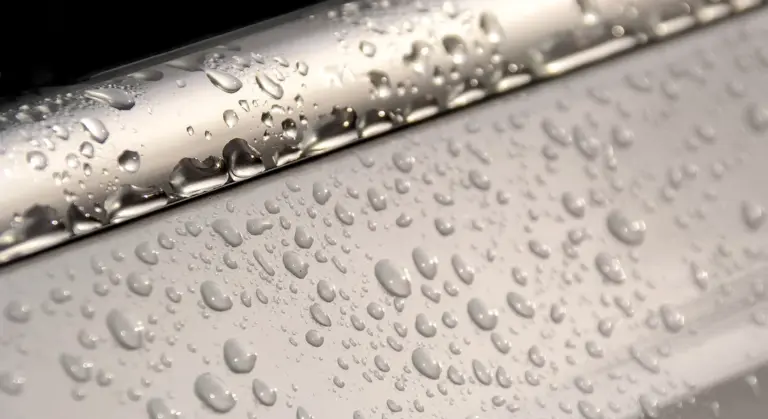
The single most important step is to apply a dedicated protectant right over your restored surface. Do not just use a regular car wax. Look for a trim sealant or a ceramic coating made specifically for plastics. These products bond to the surface, creating a hard shell that blocks UV rays and chemical stains. On my cars, I use a spray-on trim coating. It goes on wet, cures to a matte finish, and makes water bead up like crazy. That beading is a telltale sign of car wax protection and water beading in action. A hydrophobic coating makes water bead and roll off, helping keep the surface cleaner and looking new.
Best practices are simple but non-negotiable. Follow this routine.
- Use a dedicated trim sealant or ceramic coating formulated for plastics. This is your primary shield.
- Reapply a water-based dressing every two or three washes to replenish the surface and add depth. Think of it like a moisturizer for your trim.
- During every wash, when you dry the car, use a spray wax or quick detailer that is safe for all surfaces. A light mist on the trim adds a subtle, extra layer of UV protection as you wipe the panels dry.
What you avoid is just as critical as what you apply. Strong all-purpose cleaners and wheel acids are the enemies of restored trim. They will strip your protection and can even bleach the plastic. When you clean your wheels, rinse the trim thoroughly afterward. On my BMW, I keep wheel cleaner far away from the black window trim. A pH-neutral car shampoo is all you need for maintenance washes.
So, what are the best practices for protecting and maintaining trim after restoration? It boils down to a simple system. Seal it with a proper product made for plastic. Top it up with a gentle, water-based dressing every few weeks. And keep harsh chemicals off it. Your trim will stay a deep, rich black. It will feel slick to the touch and repel dirt. That is how you make a restoration job stick.
Keeping Your Trim Restored for Good
Always degrease and decontaminate the trim completely before applying any restorer. This clean slate is what allows a quality product to soak in and protect, not just sit on top. Using wax strippers or degreasers made for automotive finishes can lift old wax and contaminants without harming the paint. This paint decontamination step helps ensure the restorer bonds properly.
Bypass this step, and the new finish will bubble, peel, or wash off, leaving the trim looking worse than when you started.
Citations and Authoritative Sources
- r/AutoDetailing on Reddit: What is your go-to trim restorer?
- Car Exterior Cleaner Wax & Detailing Products| Turtle Wax
- Exterior Trim & Metal Restoration | Autogeek.net
Max Gunther
Max is an automotive enthusiast having worked as a car mechanical and in interior detailing service for over 25 years. He is very experienced in giving your old car, a new fresh vibe. He has detailed many cars and removed very tough smells and stains from all kinds of cars and models, always ensuring that his work and advice helps his customers. He brings his first hand experience to his blog AutoDetailPedia, to help readers breath new life into their car interiors.