How Do You Pick the Right Car Paint and Stay Legal with a Color Change?
Choosing a new paint or wrap for your car feels great, but the wrong pick can hurt your wallet and your ride. I know the stress of weighing options against local laws.
We will cover how to compare modern finishes like ceramic coatings and vinyl wraps, select paint based on your climate and cleaning routine, and follow the legal steps to report a color change to your state.
Without this guide, you could end up with a finish that stains easily or a car that’s not street legal.
Key Takeaways: Your Paint Change Cheat Sheet
- Comparing paints is about judging long-term durability, depth of gloss, and your willingness to maintain it, not just picking a color you like.
- You can legally paint your car any color, but in most states, you must report the new color to the DMV to update your registration and title.
- A full, high-quality repaint is a major, invasive project. A vinyl wrap is a far less permanent and reversible option for a color change.
- Special finishes like matte, satin, or chrome require unique, dedicated cleaning products. Using standard wax or polish on them will cause permanent damage.
- Your finish choice directly impacts your detailing life. A high-gloss black paint will show every flaw, while a metallic silver is much more forgiving.
- Always compare the total cost, including the specialized maintenance products and potential for higher insurance premiums, not just the initial paint job price.
Car Paint Basics: Types, Finishes, and What They Mean for You
Before you think about color, you need to understand what paint is made of. Most modern cars use a basecoat/clearcoat system. The basecoat provides the color—the metallic flakes, the pearl essence, the solid hue. The clearcoat is a transparent, protective layer sprayed over it. Your clearcoat is the armor that takes all the UV rays, bird bombs, and swirling from bad wash techniques. It’s what you polish and protect. My 2016 BMW and 2020 Tesla are perfect examples of this system. There are many car paint protection myths out there that can mislead buyers. Understanding the real protections helps you separate hype from reality.
Older cars, like my 1995 Miata, often used single-stage paint. The color and the protective resin are all in one layer. It oxidizes and fades over time, turning my Miata’s red into a chalky pink, but it can be brought back to a deep shine with careful polishing.
Finishes change everything. A solid gloss finish, like on my black BMW, has a deep, liquid, mirror-like look. It’s classic and stunning when perfect, but it shows every single swirl and scratch. A metallic finish, like the Dark Blue on my F-150, has tiny aluminum flakes in it. These flakes add sparkle and help hide minor scratches and imperfections in the surface. A pearlescent finish has special mica particles that shift color depending on the light and viewing angle, giving it a luxurious, multi-dimensional glow.
Then you have the special satin and matte finishes. These have little to no gloss reflection. They look flat, velvety, and modern. They feel different to the touch. The critical detail to remember is that you cannot polish or compound a true matte finish; you will permanently gloss it and create shiny spots. Cleaning must be done with specific, non-glossing products. It’s a high-commitment choice.
The Paint Finish Comparison Table
OEM Paint vs. Aftermarket: Is There a Difference?
Factory OEM paint is applied in a near-sterile, climate-controlled environment. Robots apply it with precise, consistent thickness. The baking process is perfect. This is why a factory finish, when properly cared for, is often the gold standard for durability and uniformity.
Aftermarket paint, for a repair or full respray, is a different story. The quality lives and dies by the painter’s skill and the shop’s environment. A top-tier shop using premium materials can match or even exceed OEM quality, but a cheap job in a dusty garage will fail prematurely. The clearcoat may be soft, orange-peel texture may be excessive, or it may not bond correctly.
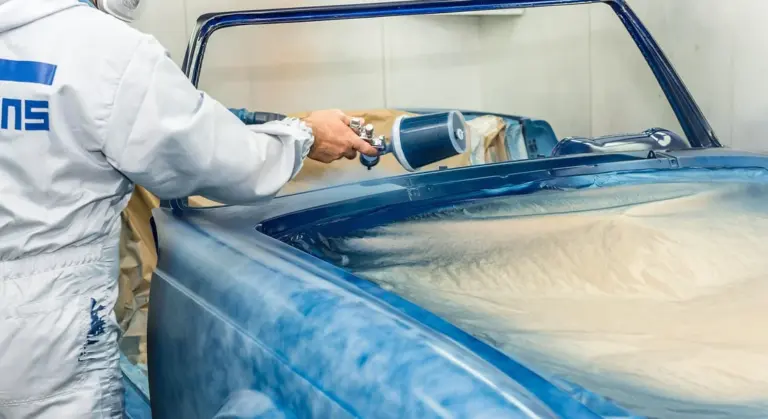
This is where the detailer’s eye matters. For any repair, color matching is an art. A good painter will “blend” the new paint into the adjacent panels so your eye can’t see the transition. On my F-150’s hood repair, they blended into the fenders flawlessly. On a full color change, a quality shop will disassemble door handles, trim, and lights to paint underneath edges, preventing a tell-tale line of the old color. If they quote you a price for a “full respray” but aren’t removing trim, you’re getting a cheaper, incomplete job that will not last or look right.
The Detailer’s Guide to Comparing and Selecting Car Paint
Think of choosing paint as a process, not a single decision. I break it down into three steps every time, whether I’m touching up my F-150 or planning a full restoration on the Miata. It always starts with one question.
What is your goal? Is this a spot repair for a door ding, a complete color change for a fresh look, or a faithful restoration to bring old single-stage paint back to life? Your answer sets everything that follows.
Step 1: Assess Your Car’s Current Condition and Use
Look at your car and be honest about its life. Is it a daily driver that battles commuter traffic and weather? A show car that lives in a climate-controlled garage? Or a work truck like my blue F-150 that hauls lumber and sees mud?
The paint you choose must match the abuse it will take, or you’ll be fixing it again soon.
This is how I pick a car paint or color for my own vehicles. For the F-150, I need a hard, chemical-resistant finish that can handle tree sap and road salt. For my red Porsche 911, a softer, deeper clear coat is fine because it’s rarely in the sun. Consider your climate and resale value, too. A neutral color might help a future sale, but your happiness matters most. Choosing a car paint color is a balance of aesthetics and practicality. Consider how a shade ages and fits your climate and daily routine when you decide.
Step 2: Compare Paint on Durability, Application, and Upkeep
When you compare car paints, look beyond the color chip. You’re comparing a set of properties that affect your life for years.
- UV Resistance: Will the color fade in the sun? Modern clears are good, but some pigments are weaker.
- Chemical Resistance: How does it handle bird droppings, bug splatter, or fuel spills? A harder paint resists etching better.
- Hardness: A hard paint resists scratches but can be brittle. A softer paint is easier to correct but swirls faster, like on my black BMW.
- Flexibility: Important for bumpers and panels that flex. A rigid paint might crack.
Brand and product line matter. A budget store brand might save money upfront, but a professional line from a known supplier typically offers better UV stabilizers and consistency. The application environment is everything. A professional spray booth with filtered air is ideal. Painting in a home garage, even with plastic sheeting, risks dust nibs and contamination in the finish.
Step 3: Get Real About Budget and Long-Term Costs
Break down the costs. It’s never just the paint.
- Materials (primer, basecoat, clear coat, thinners).
- Labor (your time or a pro’s).
- Prep work (sanding, masking, cleaning). This is 80% of the job.
- Clear coat quality (this is your shield; never cheap out here).
Now, think long-term. This is your compare car maintenance costs moment. A high-quality paint with a robust clear coat might only need a spray wax every few months. A cheaper job might oxidize quickly, demanding frequent compounding and sealing. It’s like floor wax. A cheap one needs reapplication every month. A good one lasts a year.
Comparing paint properly means adding up the initial cost plus the future hours and products you’ll spend maintaining it.
Can I Paint My Car Any Color? The Legal and Practical Realities
Yes, you are allowed to paint your car a different color. You can paint your car another color. I get this question all the time. The freedom is there, but it comes with a very specific set of rules and practical steps you cannot ignore. If you’re changing your car color with paint, the prep and finish matter. The next steps will cover paint types, color matching, and rules.
The Practical How-To of a Color Change
You have a few paths. Each has a different level of commitment and skill.
- Full Repaint: The most permanent and thorough. Every panel is stripped, prepped, and sprayed. This is what I did for the Miata’s oxidized red.
- Partial Repaint with Blends: For changing color but saving cost, painters might blend new paint into adjacent panels. The match must be perfect.
- Vinyl Wrap: A thick, adhesive film applied over your existing paint. It’s removable and protects the original finish. Great for bold colors or matte finishes on my Tesla.
- Hydro Dipping: For complex patterns like carbon fiber on interior trim. Less common for entire cars.
A wrap is a commitment you can reverse; paint is forever. No matter the method, surface prep is king. Painting over oxidation, like my Miata had, is a waste of money. The new finish will fail. And while wraps have their advantages, car wraps can sometimes damage the paint underneath if not applied or removed properly.
Legal Rules You Must Follow
Here is the non-negotiable part. Your vehicle’s color is a registered identifier with the state, like your VIN or license plate.
The universal rule is this: after a color change, you must update your vehicle registration and title with the new color.
The process and timeframe vary by your state or province. Some require an inspection. Some just need a form. Your first stop should be your local DMV or RMV website for their specific rules. Do not wait. You typically have a short window, like 30 days, to report the change.
Some colors are illegal or restricted. Certain shades of blue that resemble police vehicles, extremely reflective finishes that can distract other drivers, or colors reserved for emergency vehicles can get you in trouble. Also, remember that a vinyl wrap changes the apparent color of the car. The law sees it the same as paint, so you must update your registration for a wrap, too.
Insurance, Warranty, and Resale Value After a Change
This section tackles the fear head on. Will a new color void your coverage or warranty? Let’s get straight to the point.
Will Insurance Cover a Car with a New Paint Job?
First, let’s kill a common myth. Changing your automotive paint does not refuse insurance coverage. I have heard this worry for years. It is simply not true.
A standard color change, done by a professional shop, typically does not void your insurance policy. But you absolutely must notify your provider. Call them and tell them about the modification. If you have a claim later and they did not know, it can complicate things.
Understand what insurance actually covers. It is based on your car’s actual cash value, not the cost of the new paint job itself. If your car is totaled, they pay its market value. They do not reimburse you for a custom paint job you chose to get. The only exception is if the repaint is part of a repair from a covered accident claim. Then it is included.
For special paints or expensive custom work, like a multi-stage pearl on my Porsche, you need to think about extra coverage. Talk to your agent about adding an “agreed value” rider or a stated amount policy. This sets a specific value for your car that includes the custom paint. It costs more, but it protects your investment properly.
Factory Warranty and Repaint Worries
People always ask me, will I void my warranty if I repaint my car? Here is the real answer.
A repaint generally does not affect your mechanical or electrical factory warranty. Your engine, transmission, and infotainment system are still covered. The factory paint warranty on the panels you repaint is a different story. That warranty will likely be void for those specific areas. The manufacturer is not responsible for defects in paint they did not apply.
I learned this lesson with my Jet Black BMW. After I had its hood resprayed, I kept every single record. Always document the work with detailed receipts from the shop and clear before-and-after photos. If there is ever a dispute about whether your modification caused a problem, this paperwork is your best defense. Keep it in your glove box or a file at home.
Paint Job vs. Vinyl Wrap: A Cost and Maintenance Comparison
Choosing between paint and wrap is a major decision. Let us compare them directly, like choosing between two different waxes.
Comparing Upfront Costs and Lifespan
Think of this as a simple list. The numbers are not exact, but the comparison is clear.
- Paint Job: Permanent. More expensive upfront. A quality job can last 10 years or more with good care.
- Vinyl Wrap: Temporary. Less expensive initially. A good wrap lasts 3 to 7 years before it needs replacement.
The technology is similar to the Paint Protection Film on my red Porsche. A wrap is just a colored version of that protective film. The cost difference is real. A full, high-quality repaint can easily cost several thousand dollars. A full vinyl wrap often costs half that, or even less.
When you think about comparing car maintenance costs over time, consider this. A wrap protects the original factory paint underneath, so you avoid future paint correction costs. You wash it with the same two-bucket method, but use a gentle, streak-free shampoo made for vinyl. You can use specific spray sealants designed for wraps to boost protection and make washing easier.
Long-Term Maintenance Face-Off
Caring for paint is a familiar routine. You wash it, you might polish it once a year to remove light swirls like on my BMW, and you protect it with a wax or ceramic coating. It needs this periodic refresh to stay glossy.
Caring for a wrap is different. You must use cleaners and detailers labeled as safe for vinyl wraps. Never use traditional car wax, polishing compound, or abrasive cleaners on a wrap. They can dull or damage the film. A quick wipe with a dedicated vinyl detailer keeps it looking new. For a wash that’s safe for a vinyl wrapped car, use a mild soap and a soft microfiber mitt. More on the proper wash steps can be found in the next section.
Fixing damage shows another big difference. A deep scratch in paint requires a professional to sand, blend, and repaint the whole panel to hide the repair. With a vinyl wrap, damage is often fixed by simply replacing the single damaged panel of film. It is faster and much less expensive.
The wrap has one killer advantage for resale value. When you peel it off after five years, the original paint underneath is perfectly preserved. For a modern car like my Tesla, that means the factory finish is still there, untouched by sun or scratches. That is a powerful selling point. That protection directly boosts resale value, since a pristine factory finish is a strong selling point. In short, wraps help resale value by preserving the original paint and enabling a quick, like-new presentation at sale.
Product Tier List: From Budget Drives to Show Car Shines
Choosing paint or a wrap feels overwhelming. There are so many cans, codes, and claims. I break it down by what you’re trying to accomplish. This list is about the type of product, not a specific brand name. The right tier for your garage isn’t always the most expensive one.
Tier 1: Budget-Friendly / DIY Repair Kits
This is for the stone chip on your hood or the door ding from a shopping cart. Think small, contained fixes. These are usually pre-mixed paints in a pen, brush-cap bottle, or small aerosol can. They get you close.
The single most important step with any Tier 1 product happens before you open the bottle: surface preparation. A quick wipe with alcohol isn’t enough. You must decontaminate and lightly sand the chip to create a surface the new paint can grip. If you skip this, the touch-up will flake off in a month.
Limitations are real here. Factory paint has multiple layers and a specific application process. A touch-up pen lays down a thick blob of color. It will not have the same depth or smoothness as the surrounding factory finish. Color match can be off, especially on metallics or tri-coats, because the orientation of the metallic flakes is different. The clear coat in these kits is also less resistant to UV rays and chemicals. It’s a cosmetic fix, not a permanent restoration.
Use these for what they are: a way to make a flaw less noticeable from five feet away. On my F-150’s bumper, I use them to cover rock chips before applying a sealant. It keeps the metal protected from rust, even if the finish isn’t perfect.
Tier 2: Enthusiast-Grade / Professional Single-Stage
This tier is for the garage project. We’re talking about painting a bumper, a hood, or even a full respray on a restoration car. These are typically professional-grade paints sold in quarts or gallons that you reduce and activate yourself. They require a proper spray gun, a compressor, and a decently clean space.
These products offer dramatically better performance than Tier 1. They have higher-quality resins and stronger UV inhibitors designed to last for years. Gloss retention is far superior. Many in this category are single-stage paints, meaning the color and the clear are mixed together. This is what I used on my ’95 Miata. Single-stage is fantastic for classic cars because it builds depth and can be cut and polished forever as it oxidizes. You’re not afraid of burning through a thin clear coat.
You can also get basecoat/clearcoat systems in this tier. The skill ceiling is higher here. Applying a smooth, even clear coat is an art. The results, when done right, are a huge leap forward. The finish will be harder, more chemical-resistant, and have a deeper, wetter look than anything from a rattle can. This is where a skilled amateur can achieve near-professional results with patience and practice.
Tier 3: Show Car / Custom Shop Quality
This is the top shelf. We’re talking about the paints and films used on vehicles built for concours events or high-end custom shops. The differences are in the details and the durability.
Paints in this tier often feature high-solids clear coats. This means more protective resin and less solvent. The result is a thicker, harder, and more brilliant clear layer that can be wet-sanded and polished to an almost liquid, mirror-like clarity. Custom pigment mixes, candies, and chameleon flakes fall here. The chemical resistance is exceptional, standing up to harsh cleaners and solvents without hazing.
For wraps, this tier includes premium cast vinyl films with advanced air-release channels for flawless installation and built-in ceramic coatings. They feel different to the touch-smoother and more dense. They resist staining and are easier to clean, much like the Paint Protection Film on my Porsche’s front end. The goal with Tier 3 materials is not just to look stunning on day one, but to look stunning with minimal degradation for many years.
This leads directly to the common question: “What is the best car paint brand?” The truth is, there is no single “best.” A Tier 1 brand’s touch-up pen might be perfect for a quick chip repair, while that same brand’s Tier 3 clear coat could be a shop’s secret weapon. The “best” product is the one specifically formulated for your job and that you have the skill and environment to apply correctly. When you’re choosing car paint types, consider the finish, durability, and how you plan to apply it. This will help ensure you pick a product that matches your project and your capability. A $1,000 gallon of show car clear will run and sag if sprayed by a novice. A master painter can make a Tier 2 product look like a million bucks. Focus on the tier that matches your project’s scope and your own capability.
Paint That Lasts and Obeys the Law
Pick a paint system based on your car’s real-world duty, like the hard ceramic coating on my daily-driven F-150, not just its brochure shine. Before any color change, confirm the rules with your local motor vehicle agency-it’s the only way to guarantee your project is street legal. Also, consider how a new paint job affects ownership records and disclosures when you sell or transfer the car. Some places may require updating the title or noting modifications for insurance—it’s worth checking those rules early.
Overlook this, and you’ll likely face premature fading, peeling clear coat, or a costly citation for an unapproved modification.
Citations and Authoritative Sources
- Can Your Car’s Paint Job Get You Pulled Over? – FindLaw
- r/legaladviceofftopic on Reddit: Are there laws on car paintjobs
- Illegal Paint Colors | Supra Forums
- Why is Vantablack not allowed on vehicles? Is it because of its optical properties or other laws? – Quora
- Why It’s ILLEGAL to Paint a Ford GT This Color!
- r/AutoDetailing on Reddit: Is it illegal to change the color of your car with a respray?
- What Color Is Illegal to Use on Cars | Find Out Now
Max Gunther
Max is an automotive enthusiast having worked as a car mechanical and in interior detailing service for over 25 years. He is very experienced in giving your old car, a new fresh vibe. He has detailed many cars and removed very tough smells and stains from all kinds of cars and models, always ensuring that his work and advice helps his customers. He brings his first hand experience to his blog AutoDetailPedia, to help readers breath new life into their car interiors.