What Are the Best Car Cleaning Methods, Tools, and Products?
You see a dirty car and grab whatever soap or rag is nearby, but that quick fix can leave lasting scratches or haze on your paint. I understand the urge, but after years of correcting my own mistakes on cars like my jet black BMW, I know there’s a better way.
This guide breaks down my real-world testing into clear steps, covering gentle washing methods, the non-negotiable tools, selecting safe soaps and detailing sprays, the truth about using Dawn dish soap and alcohol, and picking cloths that clean without marring surfaces.
Use the wrong combination, and you will gradually dull your finish or strip protective coatings you paid good money for.
The Right Foundation: Your Core Washing Method
How you wash your car matters more than anything else you will ever do. It is the single most important skill to prevent swirls and scratches. You can have the best wax in the world, but if you grind dirt into the paint every week, you are just polishing a scratched surface. My black BMW taught me this the hard way.
The Two-Bucket Method, Start to Finish
This is not just a suggestion. For any car that sees the real world, this is the standard. You need two buckets, each with a Grit Guard insert at the bottom. One bucket holds your clean shampoo solution. The other is your rinse water, for cleaning your mitt.
Here is how you do it, step by step.
- Rinse the entire car first with a hose or pressure washer. This removes loose grit.
- Wash the wheels and tires first with dedicated brushes and cleaner. This is the dirtiest job. You do not want that grime in your paint wash buckets.
- Soak your high-quality wash mitt in the soap bucket. Start washing the roof, then windows, then hood and trunk. Work your way down the sides, finishing with the lower rocker panels and bumper. Dirt is heaviest at the bottom.
- After you wash one panel, rinse your mitt in the second bucket. Rub it against the Grit Guard to knock dirt loose into the bottom. Then, dip it back into the clean soap bucket to reload.
- Use a clean mitt surface for every panel to avoid dragging contaminants.
- Rinse the soap off the car as you go, section by section, before it dries.
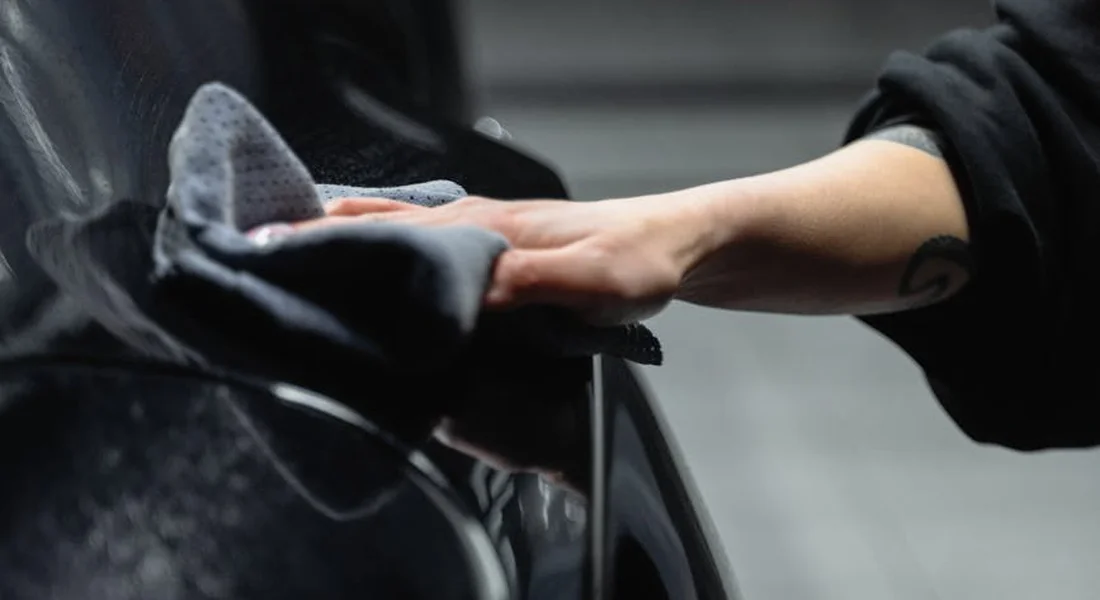
Drying is the final, critical step. Letting water air-dry guarantees spots, especially on hard water. I use a large, clean plush drying towel and a spray detailer as a drying aid for extra lubricity. Gently glide the towel over the surface to soak up water.
When a Full Wash Isn’t Needed: Rinseless and Waterless
For my garage-kept Tesla or Porsche, a full two-bucket wash is often overkill. For light dust, pollen, or post-rain splash, rinseless or waterless methods are perfect.
Rinseless wash uses a special solution in a single bucket. You soak multiple microfiber towels in it, use one folded towel per panel, and then dry. The solution encapsulates dirt safely. Waterless wash is a spray-on, wipe-off product for even lighter contamination.
Use these methods only on a cool surface in the shade for a car with light, fresh dust. They are safe for my Tesla after a week in the garage. They are not safe for my F-150 after a muddy road, or any car with caked-on salt, sand, or heavy road grime. When in doubt, do a full two-bucket wash.
Your Tools & Chemicals Arsenal: A Spec Sheet
Think of this as your detailing toolkit. Having the right item for the job makes it faster, safer, and gives better results. Here is what I actually use on my own vehicles.
Cloths & Towels: GSM, Pile, and Purpose
GSM stands for grams per square meter. It is a measure of density. A higher GSM towel is thicker and more absorbent.
- Low-GSM (300-400): These are thin, lightweight towels. I use them for removing wax or sealant, like the spray wax on my F-150. They have less pile, so they buff off product without leaving residue.
- High-GSM (500-700+): These are your plush, thirsty drying towels. You need one or two good ones. They feel soft and are for final paint drying and delicate surfaces.
- Glass Towels: Use a specific woven glass towel with a waffle weave. It leaves zero lint and absorbs cleaner perfectly.
- Interior Towels: A soft, medium-pile microfiber is ideal for dashboards and screens.
Cheap, rough towels from a big-box store are the number one cause of fine scratches. They feel coarse to the touch. Your paint will feel it too.
Brushes, Mitts, and Pads
Your tools are extensions of your hands. They must be gentle.
- Wheel Woolies: These are long-handled, soft bristle brushes that reach behind spokes to clean barrels. Essential for the complex wheels on my Porsche.
- Detail Brushes: Small, soft brushes (like a makeup brush) for cleaning badges, vents, and tight grille areas on the Odyssey.
- Wash Mitt: Choose a high-quality microfiber or lambswool mitt. It holds soap and lifts dirt away. I have a dedicated one for paint and another for lower body panels.
- Foam Cannon: This attaches to a pressure washer or hose. It coats the car in a thick shaving cream-like foam. This foam helps loosen and float away dirt before you touch the paint. It is a great pre-wash step.
Chemicals Decoded: pH, Lubricity, and Purpose
Chemicals are not magic. They are science. Understanding pH and lubricity tells you what to use and when.
pH measures acidity or alkalinity. A pH of 7 is neutral.
- High-pH (Alkaline): Strong cleaners for stripping old wax or cutting heavy grease. Use sparingly.
- Neutral-pH: Your standard car shampoo. It cleans without stripping protection. This is what you use 90% of the time.
- Low-pH (Acidic): Designed for dissolving mineral deposits and brake dust. Most wheel cleaners are mildly acidic.
Lubricity is slickness. A product with good lubricity, like a proper shampoo or clay lubricant, lets your mitt or clay bar glide over the surface. This lifts dirt instead of grinding it in. Dish soap has poor lubricity. That is why you should never use it to wash your car.
Here is my core chemical list:
- Car Shampoo: A neutral-pH, high-lubricity soap is your bread and butter.
- Wheel Cleaner: A pH-balanced or iron-removing formula for brake dust (especially on the BMW and Porsche).
- Iron Remover: A spray that dissolves embedded iron particles from brake dust. It turns purple as it works. Vital for white or light-colored cars.
- Tar Remover: A solvent-based spray for sticky road tar spots. Use on a cloth, not directly on paint in the sun.
- Clay Lubricant: A slick spray used with a clay bar to decontaminate paint before polishing.
- Quick Detailer: A light spray for removing light dust or as a drying aid. It adds lubricity for safe wiping.
The Product Tier List: Budget to Show Car
Forget searching for a single “best” product. The best product is the one that matches your goal and your effort level. I organize my own shelves this way. Here is how I break it down for you.
Get By & Drive Through Maintenance
This is for the person who washes their car four times a year. You want it clean, protected, and you do not want to spend a fortune or think about it too much. The goal here is good performance and great value.
You need just three core products in this tier to handle about 90% of basic cleaning.
- A Quality Concentrate Shampoo: Look for a brand like Meguiar’s Gold Class or Chemical Guys Mr. Pink. They are concentrated, which means one bottle lasts years. They create plenty of suds, which helps lift dirt away safely. Most importantly, they rinse clean without leaving a film. Do not use Dawn dish soap for your regular washes. It strips all protection, including wax, and can dry out trim over time. I keep a bottle of this for my kid’s Odyssey and my F 150 when they just need a simple, effective wash.
- A Dilutable All Purpose Cleaner (APC): This is your workhorse. Simple Green or Super Clean (used cautiously) are classics. You dilute it with water in a spray bottle. A 10:1 mix (10 parts water) is safe for most interior plastics, rubber mats, and engine bays. A 4:1 mix tackles tougher grime on wheel wells. It is versatile and cheap per use.
- A Basic Spray Wax: After you wash and dry the car, a product like Turtle Wax Hybrid Solutions Spray Wax is a game changer. It takes two minutes to mist on and wipe off. It adds a light layer of protection and shine that makes the next wash easier. It is the single biggest upgrade from a “just washed” look to a “cared for” look with minimal effort.
Enthusiast’s Choice
You notice the difference in how water beads. You feel how slick the paint is after a wash. You are willing to spend a little more and use a few extra steps for a noticeably better result and longer lasting protection.
This tier is about specialization and a tangible upgrade in performance and feel.
- pH Neutral Shampoo with High Lubricity: This is where you start protecting your paint during the wash. A shampoo like CarPro Reset or Gyeon Bathe Essence is engineered to be super slippery. This lubricity suspends dirt particles so your wash mitt glides over them instead of grinding them into the clear coat. It is a must have for dark colored cars like my black BMW, where every micro scratch shows.
- Dedicated Fallout Remover:
You know those tiny orange specks that stick to your paint, especially on white cars? That is industrial fallout and brake dust, and it bonds to the paint. A dedicated iron remover like CarPro Iron X or Sonax Fallout Cleaner dissolves it. You spray it on, watch it turn purple as it reacts, and rinse it off. Using this two times a year makes claying the paint much easier and safer. It is a profound deep clean step.
- Ceramic Infused Detail Spray: This is your go to for quick touch ups between washes. A product like Griot’s Garage Ceramic 3 in 1 Spray Wax or Adam’s Polishes Ceramic Spray Coating does more than just add shine. It layers on silica based protection that beads water fiercely and resists light contamination. I use this on my Tesla after a quick rinse to deal with bug splatter, keeping the front end slick and protected.
Show Car & Perfectionist
This is for the garage queen, the concours contender, or the detailer who demands the absolute best tool for a specific job. These products are often expensive, but they deliver flawless, specific results that cheaper products cannot match.
You are not buying a cleaner, you are buying an outcome with zero compromises.
- Coating Maintenance Shampoos: If you have a ceramic coating or graphene coating, you must maintain it with the right chemistry. Shampoos like Gtechniq W4 Citrus Foam or Kamikaze Collection Over Coat Shampoo are formulated to cleanse without stripping the coating. They enhance hydrophobicity and are often totally soap free, using other agents to clean. I use these exclusively on my Porsche and its paint protection film.
- Dedicated Material Cleaners: This means a pH balanced leather cleaner for real hides, a specific Alcantara cleaner for microsuede, and a vinyl wrap cleaner with no alcohols or harsh solvents. A one size fits all APC can degrade these materials over time. For my Porsche’s Alcantara steering wheel, I use only Sonax Alcantara & Suede Cleaner with a specific brush. It lifts the grime without damaging the delicate nap.
- High End Pure Carnauba Waxes: Modern sealants last longer, but nothing duplicates the warm, deep, liquid glow of a premium carnauba wax on dark paint. A product like Swissvax Crystal Rock or Zymöl Concours is an experience. You apply it by hand, let it haze, and buff it off to reveal a finish that looks three dimensional. It is less about protection and all about achieving the ultimate aesthetic for a show. This is what I use on the Miata when I want that classic, deep red to look its absolute richest.
Household Products Exposed: Dawn, Alcohol, and Fabuloso
We all have that bottle under the sink. It’s cheap, it’s handy, and it seems like it should work. Using household cleaners on your car is a common shortcut, but it’s often a shortcut to damaged surfaces and expensive fixes. I’m going to give you the straight truth on these, because I’ve seen the results in my own shop.
Think of your car’s finish like the skin on your face, and household cleaners are the industrial-strength degreasers you’d never put there.
Can I Clean My Car with Dawn Dish Soap?
The blue bottle is a legend. People swear by it. Here’s the reality: Dawn is a powerful degreaser designed to cut through baked-on food grease on plates. Your car’s paint has a protective layer of wax or sealant, and its clear coat needs specific lubricants to stay scratch-free.
Using Dawn dish soap on your paint is like using bleach on your hair; it will get it clean by stripping everything out, leaving it dry, brittle, and defenseless. For car paint safety, avoid dish soaps like Dawn and opt for cleaners formulated for automotive finishes. This helps protect the clear coat and maintain gloss over time.
Dawn doesn’t just clean dirt, it actively removes every bit of wax, sealant, or spray coating you’ve worked hard to apply. Your paint will feel squeaky-clean and utterly naked. Without that protection, water won’t bead, contaminants will bond easier, and UV rays will fade the color faster.
I keep a bottle in my detailing cart for one job, and one job only.
- The ONLY Safe Use Case: A single, deliberate “reset” wash. If you are about to apply a brand new ceramic coating, a dedicated sealant, or even a traditional wax, you want a perfectly bare surface. One wash with Dawn will strip the old protection away, giving your new product a perfect foundation to bond to.
- The Immediate Next Step: You must apply your chosen protectant immediately after that Dawn wash and full dry. Leaving the paint unprotected for even a day invites problems.
- The Warning: If you use Dawn for your regular Saturday wash, you are systematically destroying your paint’s defense system. Your black BMW will become a true “swirl magnet,” drying out and scratching with every touch.
Is Alcohol Safe to Clean My Car?
This question usually means Isopropyl Alcohol (IPA), not vodka. The answer is a firm “sometimes, and very carefully.”
Rubbing alcohol is a potent solvent. In the detailing world, we use it diluted as a final prep step. A 10-15% IPA solution (mixed with distilled water) is the professional’s tool for removing any last residues before a coating, ensuring perfect adhesion. I use it on paint and glass. That’s it.
Where people get into trouble is using it on interiors. IPA wipes are great for your hands, not for your dashboard.
- On Interiors: A Hard No. Alcohol will rapidly dry out vinyl, leased leather, and plastics. It accelerates cracking and fading. That sticky console in your Honda Odyssey needs a dedicated interior cleaner, not a solvent that removes its essential oils.
- On Paint: For Prep Only. After polishing a panel on my Miata’s single-stage paint, I wipe it down with my diluted IPA mix. This removes polishing oils so I can see the true finish and ensures my glaze sticks perfectly.
- On Glass: Yes, but Diluted. A light IPA spray is excellent for cleaning windows and mirrors without streaks.
So, can you use alcohol wipes to clean your car? Only on glass or bare metal trim. Never, ever on your seats, dash, steering wheel, or door cards.
What About Glass Cleaner or Fabuloso?
Let’s take these one at a time.
Glass Cleaner (like Windex): It says it right on the bottle. For glass. Ammonia-based formulas can haze certain tint films and will smear terribly on paint or plastic. Even “ammonia-free” versions leave surfactants that create a filmy mess on anything other than glass. For your windshield, a dedicated auto glass cleaner or my diluted IPA trick works best. For tinted windows, use the proper product.
Fabuloso and Multi-Surface Cleaners: I get the appeal. It smells strong, so it feels like it’s cleaning powerfully. These products are designed for hard, non-porous surfaces like tile and countertops. Your car’s interior is a different universe of sensitive materials.
These cleaners are often far too harsh. They can leave a sticky residue that actually attracts more dust. Their heavy fragrances are designed to mask odors in a room, not to be sealed inside a hot car cabin, which can lead to headaches. Using them on your car’s interior is a gamble with the longevity of your plastics and vinyl, offering no real benefit over a pH-balanced auto interior cleaner. Consider clean car household products designed for interiors as well as homes. They’re gentler on plastics and vinyl while still tackling spills. For the milk spills and crayon marks in the minivan, a proper fabric cleaner or all-purpose interior detailer is the safe, effective choice.
Paint Damage Prevention: The Five Most Common Mistakes
I have put swirl marks and water spots on cars so you do not have to. Consider this a list of lessons I learned the hard way, often with a groan and a polishing machine in my hand afterwards.
Washing in Direct Sunlight or on a Hot Surface
On my black BMW, the “Swirl Magnet,” I learned this lesson permanently. I was in a hurry one summer afternoon. The sun was high, and the hood was hot enough to fry an egg. I started my usual two-bucket wash. Before I could even rinse the first panel, the soap and water evaporated. They left behind a chalky, streaky film that bonded to the clear coat. Washing a hot car makes soap and water dry almost instantly, trapping dirt and leaving stubborn mineral deposits that can etch the paint. Your only fix then is a full paint correction. Work in the shade, in the early morning, or in a garage. If you must wash a warm car, keep it constantly flooded with water and work in very small sections.
Using One Bucket, or No Grit Guards
This is the single biggest cause of those fine spiderweb scratches. One bucket means you are dunking your dirty wash mitt back into your clean soap water. You are essentially painting the car with a slurry of grit. I use Grit Guards in both my wash bucket and my rinse bucket. They act as a settling plate, trapping heavy contaminants at the bottom. The two-bucket method with Grit Guards is not a detailing luxury; it is the foundational practice for keeping your paint scratch-free. My F-150’s dark blue paint would be a mess of swirls without this simple system. It takes an extra minute and saves you hours of correction later.
Dropping Your Clay Bar on the Ground
You are claying your car, feeling the smooth paint, and then… fumble. The clay bar hits the driveway. Your instinct is to pick it up, maybe rinse it off. Do not do that. I dropped a brand new bar while working on my Porsche. That soft, pliable material is a magnet for every piece of sand, pebble, and metal fragment on the ground. If you drop your clay bar, you must throw it away immediately. Using a contaminated bar is like sanding your clear coat with fine-grit sandpaper. It will inflict deep, straight-line scratches that are a nightmare to remove. Consider it a cheap lesson. Cut your clay bar into smaller pieces before you start, so a dropped piece is less of a loss. That’s why choosing a clay bar that’s safe for car paint matters. A safe clay bar protects your finish as you remove contaminants.
Using the Same Towel for Wheels, Then Paint
Your wheels are the dirtiest part of your car. They collect brake dust, which is often metallic, and road grime from the tires. The towels you use there become permanently contaminated. I have a set of cheap, black microfiber towels that live in my wheel cleaning kit. They never, ever touch painted surfaces. Designate specific, colored towels for specific jobs: wheels, paint, glass, and interior. This simple color-coding system prevents a devastating mistake. I learned this after using a “clean” wheel towel to buff a sealant on my Miata. The faint, gray scratches it left in the single-stage red paint were a permanent reminder.
Letting “Waterless Wash” Products Dry on the Surface
Waterless or rinseless wash products are fantastic for light cleaning. But they have a critical rule. The product must stay wet and lubricated as you wipe. On my Tesla’s flat front bumper, I was doing a quick clean-up of some light dust. I got distracted, and a small section of the product dried to a haze. When I finally went to buff it off, it was gummy and difficult. These products are designed to encapsulate dirt while wet; once they dry, that dirt can get dragged across the paint. Always work panel by panel, or even half-panel by half-panel. Spray, wipe immediately with a folded, clean microfiber towel, and then flip to a fresh side. Never let it sit and evaporate.
Interior & Specialty Surface Guide
Now we move inside the cabin. Interior surfaces are not like paint. They are more delicate and face constant contact from hands, spills, and sunlight. You need gentler, more targeted products here to clean effectively without causing cracks, discoloration, or a greasy feel.
Fabric, Leather, and “Vegan” Synthetic Seats
Start by identifying your material. Using the wrong cleaner here can cause permanent damage.
For fabric seats, you have two cleaning levels. Surface cleaning lifts dirt from the top fibers with a spray and a microfiber towel. Extraction is for deep stains and ground-in grime. You use a wet vacuum or extractor to pull soap and dirt from the seat’s base. This is the core of a deep clean for fabric car seats. For persistent odors, adding an enzyme cleaner helps neutralize them at the source. For organic stains and odors, like the spilled milk in my Honda Odyssey, an enzyme cleaner breaks down the proteins so you can extract them completely, eliminating the smell at its source.
Real leather requires a two-step process. First, use a dedicated leather cleaner with a soft brush to lift dirt from the grain. Wipe it clean. Second, apply a leather conditioner to replenish oils and prevent drying and cracking. Never use an all-purpose cleaner on leather; it strips the natural oils and leads to a stiff, damaged surface.
Synthetic or “Vegan” leather, like in my Tesla Model 3, is different. It is a coated plastic. Use only a gentle, pH-balanced interior cleaner. Spray it on a microfiber, wipe the surface, and dry it. Do not use a leather conditioner on synthetic seats; it will not absorb and will just leave a slippery, greasy film that attracts more dust. Conditioning is only for real leather.
Plastics, Vinyl, and Touchscreens
Dashboards, door panels, and consoles are mostly plastic and vinyl. These materials degrade easily. Always choose products labeled for automotive interiors to avoid finishes that are too shiny, greasy, or damaging over time. A matte, natural look is what you want, not a slick glare.
For modern touchscreens, treat them like your smartphone or tablet. Dust them first with a dry, soft microfiber. For smudges, a dedicated automotive screen cleaner is safest. If you prefer a DIY mix, a light spray of isopropyl alcohol diluted with distilled water (about 10:1 ratio) on a microfiber cloth works well, but never spray directly onto the screen to avoid liquid seepage.
Wheels, Tires, and Plastic Trim
These areas face the harshest dirt. Always clean your wheels first with separate buckets and brushes to avoid contaminating your paint wash.
Wheels collect brake dust that embeds itself. For my Porsche’s alloy wheels, I use an iron-removing spray. It turns purple as it dissolves the metallic particles, making stubborn brake dust rinse away easily. Let the product dwell for a minute, but don’t let it dry, and always work in a shaded, cool area to prevent etching.
Tire dressings come in two types. Water-based dressings give a rich, matte black finish and are less likely to sling off. Solvent-based dressings provide a high-gloss, wet look but can brown tires over time if not cleaned properly. Your choice depends on the shine you prefer.
For faded black plastic trim, like on bumpers or window seals, you have options. Temporary “blackening” products like a trim gel coat the surface and wash off over time. Dedicated trim restorers actually penetrate and rejuvenate the plastic for a longer-lasting, deeper black finish, but they often require more thorough surface prep.
The Right Tools Make All the Difference
The single most important rule is to match the cleaner to the task—use products designed for automotive surfaces with the gentlest effective method. Great results come from the right car soap, soft microfiber cloths, and dedicated detail sprays, not household shortcuts that can compromise your paint or interior over time.
Ignore this, and you will slowly introduce swirl marks, strip away protective coatings, and dull the very surfaces you are trying to clean.
Relevant Resources for Further Exploration
- r/AutoDetailing on Reddit: if there a “best” method of maintenance washing?
- The best car cleaning tips – Halfords
- How to Keep Your Car Really Clean via @ConsumerReports
- How to wash a car like a pro
Max Gunther
Max is an automotive enthusiast having worked as a car mechanical and in interior detailing service for over 25 years. He is very experienced in giving your old car, a new fresh vibe. He has detailed many cars and removed very tough smells and stains from all kinds of cars and models, always ensuring that his work and advice helps his customers. He brings his first hand experience to his blog AutoDetailPedia, to help readers breath new life into their car interiors.