Where Can I Purchase Automotive Paint Supplies for Detailing Projects?
You have the drive to make your car’s paint shine, but the hunt for the right polishes, sealants, and wraps can feel confusing and frustrating. Let me point you in the right direction.
Based on my time correcting the paint on my Jet Black BMW and protecting my Ford F-150, I’ll show you how to shop smart. We will cover local auto parts stores, specialized detailing suppliers, major online retailers, and buying direct from manufacturers.
Choose poorly, and you could spend good money on products that scratch your finish or fail to last through a single season.
Key Takeaways: Your Paint Supply Cheat Sheet
Let’s cut through the noise. You don’t need to overcomplicate this.
- Local big-box stores are for “I need it today” fixes. Their selection is limited, but it gets the job done for a small chip.
- Online detailing retailers are for selection, bulk buys, and serious paint correction gear. This is where your hobby grows.
- Professional auto paint stores are your secret weapon for expert advice and perfect color matches. Build a relationship.
- Not all paint is the same. A tiny touch-up pen and a bottle of clear coat for a fender are completely different products. Match the product to the job size.
- Safety is non-negotiable. Always use proper ventilation, nitrile gloves, and a respirator with organic vapor cartridges when using paints, clears, or strong solvents. Your health is worth more than a perfect chip repair.
Product Tier List: Matching the Store to Your Project
Think of this as picking the right tool. You wouldn’t use a sledgehammer to fix a watch. Don’t buy show-car paint for a rock chip.
| Budget/Quick Fix | This tier is for stopping rust and making small flaws less obvious. We’re talking single stone chips on your F-150’s bumper or a short scratch on a door edge. The goal is functional protection, not invisible perfection. You’ll find pre-mixed touch-up pens, small vials of color, and basic clear coat at any major auto parts chain or large hardware store. The color match is often just “close enough.” |
| Enthusiast/Detailing | This is where you live if you care about swirls. You’re doing paint correction on your black BMW or applying a ceramic coating. Your suppliers are the major online detailing specialists and local professional auto paint stores. Here you find professional-grade polishes, compounding liquids, premium sprayable clear coats for blend panels, and higher-quality touch-up paints with better color libraries. The staff at a pro paint store can often give you better mixing advice than any online guide. |
| Show Car/Pro-Level | This is for custom colors, full panel resprays, or concours-level restoration. You need an exact factory match or a custom blend. You go to dedicated automotive paint supply houses. They use spectrophotometers to scan your paint, create a custom mix, and make a “spray-out card” so you can see the match before you buy. They sell professional reducers, hardeners, and the same materials body shops use. This is for the Porsche’s new front bumper or bringing the Miata’s single-stage red back to life. |
Let’s break down what you’ll actually find and how to navigate each of these places.
First, Ask Yourself: What Am I Actually Trying to Fix?
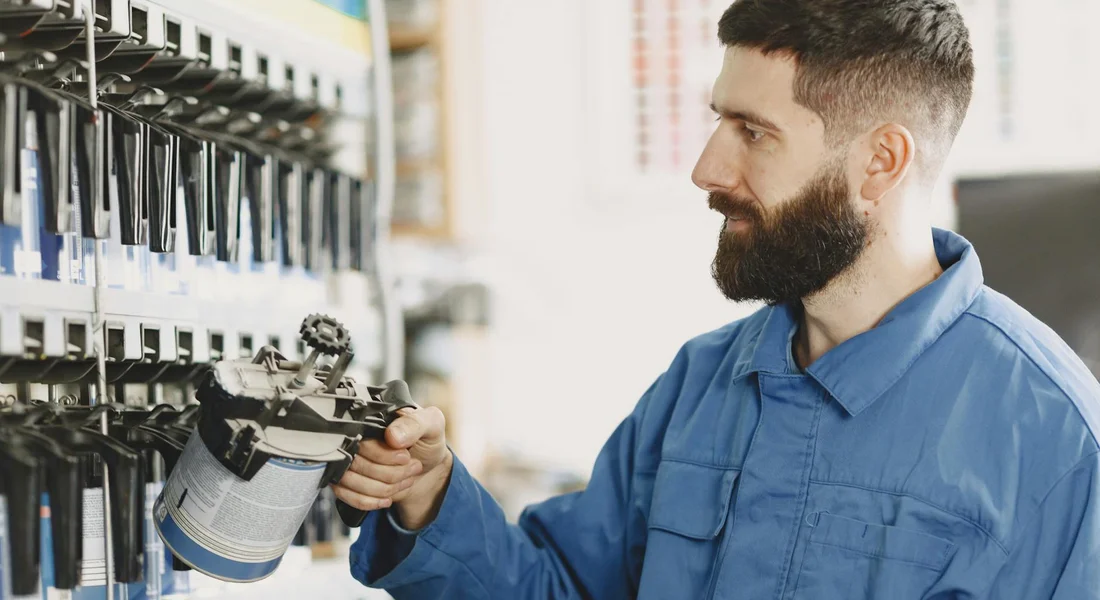
Walking into a store without a plan is a recipe for wasted money and frustration. The right answer on where to shop comes from your specific problem.
You need to diagnose the job first. This isn’t just about a product name. It’s about the paint system on your car and the level of correction or protection it needs.
Let me give you some examples from my garage.
The hood of my 1995 Miata looked pink and chalky. That’s single-stage paint oxidation. Rubbing it with your finger left a red stain. For that, I needed a specific heavy-cut compound and a lot of pads. A basic “scratch remover” from a parts store wouldn’t touch it.
My black BMW, the swirl magnet, has a different issue. Its clear coat is covered in fine spider-webbing visible in sunlight. That requires a fine polish and a dual-action polisher to gently level the clear coat without burning through it. The store needs to sell the right tools, not just the liquid.
For a single stone chip on my F-150’s bumper, the goal is different. I need a precise touch-up paint pen in the exact factory color code and a clear coat pen to seal it. That’s a very specific purchase.
Your goal dictates the tools, and the tools dictate where you should shop.
- Cleaning & Basic Protection: You need car wash soap, spray wax, interior cleaner. Any auto parts store or big-box retailer has you covered.
- Paint Correction (Removing Scratches & Swirls): You need a machine polisher, compounding and polishing liquids, and a variety of foam pads. This usually requires a specialty detailer’s website or a professional paint supply store.
- Applying a Ceramic Coating: This is a serious commitment. You need specific surface prep chemicals, coating applicators, and the coating itself. You will almost always buy this online from a dedicated detail supplier.
- Paint Repair (Chips, Scratches): You need touch-up paint, clear coat, and fine sanding papers. An auto parts store might have your color code, but a professional paint supplier will have higher-quality materials.
- Maintaining Specialty Finishes: Caring for the Paint Protection Film on my Porsche requires film-specific sealants. Cleaning the Alcantara on its steering wheel needs a special low-pH cleaner. These are niche products found at specialty retailers.
Stop and look at your car in good light. Run your hand over the paint. Feel for roughness. Is it just dirt, or is it embedded contaminants that need clay? Are the defects deep, or do they disappear when the panel is wet? This simple test changes everything.
Buying the wrong product from the right store is still a mistake that can ruin your car’s finish. A heavy-duty compound meant for my oxidized Miata would instantly destroy the delicate clear coat on my Tesla. Knowing the job is your first and most important step. Everything else, including where you go, follows from that.
Buying Local: When You Need It Now
You need paint, and you need it today. I get it. Maybe you found a new scratch on the Odyssey’s bumper in the grocery store parking lot. The instinct is to search for “automotive paint supplies near me” right away. For immediate, in-person shopping, you have a few good options. Each serves a different purpose.
What Can I Find at Auto Parts Stores?
Yes, AutoZone sells car paint. So does NAPA, O’Reilly, and Advance Auto Parts. They are the first stop for most owners. What you find are touch-up paint pens, small vials with brushes, and basic aerosol cans matched to factory color codes. You’ll also encounter different automotive paint types, such as single-stage enamel, basecoat/clearcoat, and urethane finishes.
These are perfect for a quick, small repair. They saved me when a rock chipped the hood of my Ford F-150. It took two minutes to dab it in and make the white primer spot less glaring.
Their real strength is convenience for hiding small rock chips and scratches, not for performing a show-quality repair.
You will also see “hobby-grade” spray guns, basic sandpaper, and consumer rubbing compounds. They work. I used a store-brand compound to clean up some light oxidation on my Miata’s single-stage paint before a car show. It did the job.
But know the limits. The color from a pre-mixed bottle is rarely a perfect match. Factory paint fades, and batches vary.
The goal with a touch-up pen is to make a chip less obvious from five feet away, not to make it disappear under close inspection.
This is the right place for the Odyssey’s bumper scratch or the F-150’s door ding. It is not the source for the professional-grade polishes and clears you’d need to correct the entire hood of the black BMW.
What About Big-Box Hardware Stores?
You might ask, does Home Depot have car paint? Does Lowe’s sell car paint? The answer is yes, but it’s different.
These stores stock general-purpose paints, primers, and clear coats in spray cans. They have every grit of sandpaper, rolls of masking tape, and plastic sheeting you could want. I buy all my masking supplies and sanding blocks there.
This is your destination for projects where color matching is not the goal. Painting brake calipers red, refreshing a rusty engine bay bracket, or coating a trailer hitch are perfect examples. The paint is tough and works great on clean, prepared metal or plastic, unlike some alternative car painting methods that require more precision and preparation.
It is not for factory-matched repairs. Do not try to blend a Dupli-Color Universal Black into your BMW’s Jet Black bumper. It will look wrong.
One of their best uses is for safety gear. They are a reliable source for N95 respirators, nitrile gloves, and safety glasses. I always grab a bag of wooden paint mixing sticks here, too. They are cheap and endlessly useful.
The Gold Standard: Professional Automotive Paint Stores
This is the “local paint and body supply” store. It is a different world. Walk in, and you smell the chemicals. You see the spray booth filters on the wall and the giant shaking machines for paint mixing.
These shops serve the local body shops and serious restorers. They also welcome knowledgeable weekend warriors. This is where I go for real projects.
They can scan your paint code with a spectrophotometer and custom-mix a pint, quart, or gallon of your exact color. They sell professional 2K clear coat with separate hardener, reducers for different temperatures, and top-tier sanding and polishing systems like Meguiar’s Professional or 3M.
For a project like restoring the faded single-stage paint on my Miata, this is the only place to start. They will sell you the correct reducer and the high-quality polish needed to bring the color back without burning through. From here, you’ll see how to prep the panel for restoring faded car paint and bring back that showroom shine. We’ll cover the steps to choose the right compounds and techniques to finish the job without damage.
Need to wet-sand a deep scratch on the Porsche’s clear coat? They have the film-grade sandpaper. Looking for a specific foam pad for your polisher? They have them.
Stores like this exist everywhere if you know what to search for. Look for “automotive paint supply” in places like Roanoke, VA, near Baltimore, MD, in Adelaide, and Dandenong. Do not just search for “paint store.” That might get you a place that sells house paint. The folks behind the counter here are experts. Tell them about your BMW’s swirls or your F-150’s scratch, and they will point you to the right product and explain how to use it safely. Bring your paint code. Be ready to learn.
Buying Online: For Selection, Research, and Bulk
The internet is your library and your warehouse. You go online when you need to learn about a new technique or find a very specific product. I spend hours here before I buy anything new. Reading detailed reviews, comparing ingredient lists on different sealants, watching application videos. This research is how you avoid wasting money on the wrong product for your car’s specific paint. Online shopping is perfect for the planning stage of any major detailing project.
The Major Online Detailing Retailers
Think of these sites as the specialty shops that only sell car care. They don’t carry motor oil or floor mats. Their entire business is built on curating the best polishes, pads, coatings, and tools for enthusiasts and professionals. When I needed to correct the holograms in my black BMW’s paint, I bought my dual-action polisher, the specific foam cutting pads, and the fine finishing polish all from a retailer like this.
Their real strength is in paint correction and protection supplies. You won’t find gallons of basecoat for a full repaint, but you will find every abrasive compound, ceramic coating, and applicator you could need. The value is in their expertise. They provide the detailed guides and videos that teach you how to use the products correctly. They help you choose the right polish for your Tesla’s soft clear coat versus your truck’s harder factory paint.
- Ideal for: Polishers, pads, compounds, professional-grade waxes and sealants, ceramic coatings, specialty brushes.
- My go-to for: Any new paint correction project. I trust their product descriptions and tutorials.
The Everything-Store Online Giants
The big marketplaces are incredibly convenient. You can get a clay bar, a pack of microfiber towels, and a hose nozzle all in one cart. The selection is vast, and delivery is fast. I have bought plenty of bulk microfibers and generic spray bottles from them.
You must be a savvy shopper here. This is the most important rule. Counterfeit products, especially of popular detailing brands, are a real problem on large open marketplaces. A fake ceramic coating or polish will not work and could ruin your paint. Always check the seller’s rating and history. Look for “Ships from and sold by” the brand itself or a known, authorized dealer.
These sites are excellent for certain, simpler items. Branded touch-up paint pens, bulk packs of all-purpose cleaner, basic washing mitts, and generic clay bars are generally safe bets. For critical chemicals like a cutting compound or a pH-neutral wash soap, I still buy from an authorized specialty retailer. I want to be sure the product is fresh, authentic, and formulated correctly.
- Ideal for: Touch-up paint, bulk microfiber towels, buckets, grit guards, generic tools, hose accessories.
- Buy with caution: Brand-name polishes, coatings, sealants. Verify the seller is authorized.
Direct from Niche or Professional Brands
Some of the best products are not in any store. Certain high-end ceramic coatings, proprietary paint protection films (like what’s on my Porsche), and professional-grade abrasive systems are sold only directly from the manufacturer or through a very tight, authorized network. When you buy a professional coating for your car, you are often also buying access to technical support and certified installers.
Purchasing direct guarantees you get the authentic, latest version of the product. There is no middleman. If you have a question about the cure time or application temperature, you call the company that makes it. For my most serious projects, like applying a multi-year coating, I go direct. The peace of mind is worth it. You know exactly what you are getting on your paint.
Going direct is the best way to ensure product authenticity and to get expert support for complex applications. This is the route for the detailer who wants the absolute best and is willing to follow the instructions to the letter.
What About Dealerships and Body Shops?
People often ask me if they can just walk into a dealership and buy the exact paint for their car. The answer is usually yes, but with some important details you should know first.
Most dealership parts departments stock the factory touch-up paint for current and recent models. You’ll find it as a small vial or a pen applicator with the OEM logo right on it. For a simple rock chip on my 2020 Tesla or a door ding on the family Odyssey, this is my go-to move. It’s convenient. The color match for a newer car is typically perfect, which saves a lot of headache.
For quick, precise fixes on modern factory paint, an OEM touch-up pen from the dealership is often the easiest and most reliable solution.
There is a trade-off. You pay for that convenience and branding. A tiny pen for my BMW might cost what a 4-ounce mixed bottle of the same paint costs at a professional supply store. If you’re planning to address more than a few tiny chips, or if you need paint for custom trim work, the dealership option becomes very expensive, very fast.
This is where a relationship with a local automotive paint supply store pays off. Give them your car’s paint code, and they can mix you a small batch of the exact same color for less money per ounce. I did this when restoring the single-stage red on my ’95 Miata. I needed more than a pen could offer, but far less than a full quart. A good store can do that.
For any detailing project requiring more than spot-touch-ups, a local paint store will give you more product and better value for your money.
Don’t overlook the body shop attached to a large dealership. Some of them operate their own paint mixing and selling desks for the public. It never hurts to call and ask. If they say yes, you get a great hybrid: the exact OEM color formula mixed fresh in the quantity you need. Just be ready for them to ask what you’re using it for. Tell them you’re doing detailing touch-up work. They appreciate knowing it’s not for a full backyard respray.
One last piece of advice from the shop: whether it’s from a dealership pen or a custom mix, always test the paint on an inconspicuous area first. Let it dry completely. Color can look different in the bottle versus on your car’s weathered clear coat. And remember, proper prep-cleaning, degreasing, and lightly scuffing the chip-matters more than where the paint comes from.
No matter the source, always test and prep. The best paint in the world will fail over a dirty, unprepared surface.
Technique Tweak: The Secret to a Perfect Paint Match
You can buy all the right supplies, prep the panel flawlessly, and spray with a surgeon’s hand. If the color is off, it will haunt you every time you walk past the car. The paint on my 2016 BMW 3 Series, that Jet Black “Swirl Magnet,” taught me this the hard way. I once tried a small touch-up that looked perfect in the garage. In the noon sun, it looked like a dark grey smudge.
That mistake cost me hours of wet-sanding and redoing the work. Now, I never start a paint correction or repair without one tool that isn’t even my own. It’s a spray-out card.
A spray-out card is a simple piece of cardboard or plastic. A professional paint store sprays it with your exact, custom-mixed color and the clear coat you plan to use. You take this card to your vehicle before you spray a single drop on the metal. This small step is the single biggest factor in achieving an invisible repair, not just a close one. It’s crucial to use the right spray paint for automotive surfaces to ensure durability and proper adhesion.
Why Your Eyes Will Deceive You
Fresh, wet paint is not the final color. All paint undergoes a chemical change as the solvents evaporate and the film cures. This process, called “flashing,” can shift the color tone. A metallic flake may settle differently. The color on the can lid or a dab on a stick is a lie. It shows you the wet color, not the cured result.
A spray-out card is sprayed under controlled conditions and allowed to fully cure. It shows you the true, final color and gloss level. Without it, you are guessing. Guessing leads to a ghosted panel-a repair that looks okay from one angle but screams “repair” from another.
How to Get One and Use It
This isn’t a product you buy off a shelf. It’s a service you request. When you get your paint mixed at a dedicated automotive paint supplier, ask them to make you a spray-out card. Some charge a small fee. It’s worth ten times the price.
Once you have the card, your real work begins. Do not check it in one light.
- Take it outside in direct sunlight. Look at it head-on, then from an angle.
- Check it in the shade of your garage or a tree.
- Look at it under your LED garage lights at night.
- Hold it right against the door jamb or an untouched area of the panel you’re fixing. Move it around.
If you see any difference in shade, hue, or metallic pop, go back to the paint store with the card and your car. Have them adjust the formula. This is the moment to be a perfectionist. It is far easier for them to add a few drops of tint to the mix now than for you to sand off a botched panel later.
A Real-World Example: The BMW
With my black BMW, the spray-out card revealed the factory paint had a faint, almost imperceptible blue hue to it after ten years of sun. A straight “Jet Black” mix would have been too neutral, too sterile. We added a minuscule amount of blue toner to the mix, sprayed a new card, and only then did it disappear against the rear bumper. The extra half-hour and five dollars saved the entire job.
Treat this card with respect. It is your color master. Keep it clean, and store it flat. For multi-stage paints like pearls or some reds, the card is even more critical, as the relationship between the base and mid-coats is everything.
Skip this, and you risk all your careful prep and labor. Do it, and you move from a weekend warrior to someone who understands the craft. Your paintwork will stop being a series of repairs and start being seamless restorations.
Putting It All Together: A Project Roadmap
Let’s take the theory off the shelf and put it on the car. The best way to decide where to shop is to look at the job in front of you. Here’s how I think through it with my own vehicles.
Scenario 1: The BMW’s Scratch
I find a deep scratch on the driver’s door of my black BMW. It catches my fingernail. This isn’t a job for polish. I have two paths.
If I just need it to look okay from five feet away for a car meet tomorrow, I take the fast road. I DIY some touch-up paint. I drive to the local auto parts store. I find the touch-up paint display, flip through the color book, and grab the pen for Jet Black. Ten minutes later, I’m carefully dabbing paint into the scratch. It’s not perfect. It will be slightly raised and the color match is generic, but it kills the bright white look of the primer.
For a result that makes the scratch nearly disappear, I go to a professional auto paint store. I bring the car so they can use a spectrophotometer to mix my exact shade, accounting for years of sun fade. I leave with a custom 2oz bottle of basecoat, a small bottle of clear coat, a set of fine abrasive pads, and a precision applicator. The process is longer. That’s essentially how you repair car paint scratches—careful blending and sealing to restore the finish. With the right tools and patience, the result looks almost indistinguishable from factory paint. I feather the edges of the scratch, apply the custom color in thin layers, let it cure, then apply the clear. I sand it level and polish it smooth. The scratch is gone to anyone but me.
Scenario 2: The Miata’s Oxidation
The single-stage red paint on my old Miata has turned pink and chalky. This is a full correction project. I need a machine polisher, several types of foam pads, a cutting compound, a finer polish, and a mountain of clean microfiber towels.
This isn’t a one-stop-shop trip. I need selection, quality, and trusted advice. I head to a major online detailing retailer. I read product descriptions and watch tutorial videos from the retailer’s own detailers. I choose a medium-grade compound for the heavy oxidation and a fine polish for the final gloss. I add a backing plate for my polisher and a variety of pads. I might even call their help line to ask about pad compatibility.
For a multi-step paint correction, the specialized knowledge and curated product range of a detailing retailer is your best tool. They sell the specific products made for this exact, delicate work. A hardware store buffer and a can of rubbing compound will only make a mess of the soft, old paint.
Scenario 3: The F-150’s Bed Rails
The aluminum bed rails on my work truck are scuffed down to bare metal in spots, with a little surface rust starting. I don’t need a show finish. I need armor. This is a functional repair.
My local hardware store has everything. I grab 220-grit sandpaper to knock down the rust and feather the edges. I get a small bottle of rust converter to treat any remaining spots. Then I go to the paint aisle for a can of aerosol truck bed liner. I don’t worry about color matching. I just want a textured, durable coating.
After cleaning the area with isopropyl alcohol, I spray on two even coats. It dries to a tough, rubberized finish that will handle tools and lumber. The total cost is low, and the job is done in an afternoon. A pro paint store would be overkill here.
Let the project itself point you to the right source. A quick cosmetic cover-up, a delicate restoration, or a tough functional repair each send you to a different place with a different cart. Know your goal, and you’ll know where to go.
Finding Your Trusted Source for Paint Care
Your paint’s finish depends entirely on the quality and suitability of the products you use. That’s why the single most important step is to purchase from dedicated automotive retailers or professional detail suppliers who understand the chemistry behind their products.
Choose a vendor based only on price, and you risk introducing harsh chemicals that can permanently dull your clear coat.
Industry References
- Automotive Paints and Coatings
- Buy Automotive Car Paint Supplies | Vehicle Paint Online
- Auto Paint HQ: Shop Custom Automotive Car Paint Kits & Products
- Automotive Paint Supplies – Auto Body Toolmart
- Auto Paint Supplies | Since 1998
- Automotive Paint, Primers and Clear Coat
- Automotive Paint Supply | NAPA Auto Parts
Max Gunther
Max is an automotive enthusiast having worked as a car mechanical and in interior detailing service for over 25 years. He is very experienced in giving your old car, a new fresh vibe. He has detailed many cars and removed very tough smells and stains from all kinds of cars and models, always ensuring that his work and advice helps his customers. He brings his first hand experience to his blog AutoDetailPedia, to help readers breath new life into their car interiors.