What’s That Smell? How to Identify and Eliminate Bad Odors from Your Car
That strange, unpleasant odor in your car is more than just a nuisance; it feels personal, like your vehicle is betraying you every time you get in. I get it, because I’ve climbed into my kid-hauling Honda Odyssey after a forgotten milk spill and faced that same sinking feeling.
Using lessons from my own fleet, this guide will walk you through systematically finding the source, choosing safe and effective cleaners for each material, and deploying professional-grade techniques to ensure the smell is gone for good.
Let that odor linger, and it will only deepen, embedding itself into every fabric and plastic surface you touch.
Key Takeaways: Your TL;DR for a Smell-Free Car
Listen, I know you want to just spray something and have the smell disappear. I have been there. But that air freshener is just a mask, not a cure. Sometimes the issue isn’t a quick spray but a lingering antifreeze-like odor from the air freshener itself. If you’re trying to remove air freshener antifreeze odors, you’ll want to tackle the source rather than masking it with more fragrance.
Odor removal is a process, not a single product; you must find and eliminate the source first, or the smell will always come back.
Think of it like cleaning up a spilled drink. You would not just wipe the table and call it a day. You would lift the placemat, clean underneath it, and make sure nothing dripped on the floor. Your car is no different. The smell is a symptom. Your job is to find the cause.
Your plan follows three simple phases: Investigate, Eradicate, Protect. First, you become a detective. Then, you do the dirty work. Finally, you set up rules so it does not happen again.
I need to be honest with you. Some battles are not worth fighting alone. If you open the door and get hit with a strong, damp, earthy smell that makes you cough, you might have a serious mold problem. If a mouse family made a home in your vents, you have a biohazard. Deep mold or animal infestations often need a professional with the right tools and protective gear from the start. Your health is more important than a DIY win.
For a standard bad smell, a full DIY treatment will take you a solid afternoon, maybe four to six hours if you are thorough. A professional detailer with an ozone generator and extractor can often do it in two or three. It is okay to call for help.
The Odor Elimination Protocol: Your Step-by-Step Checklist
This is the exact order I follow in my shop. Skip a step, and you risk wasting your time. Do them in order, and you have a real shot at a fresh car.
Step 1: The Total Empty.
Everything comes out. I mean everything. Floor mats, kid’s toys, old napkins in the door pocket, the gym bag in the trunk, the spare change in the cupholder. You cannot clean what you cannot see. Take this stuff inside your house or garage. Sort it there. This step alone removes a huge amount of hidden odor sources.
Step 2: The Sniff Test.
With the car empty, get in and close the door. Sit in each seat. Lean down near the floorboards. Stick your nose near the air vents. Open the glove box and center console. Your nose is your best tool for locating the strongest odor zones, which points you directly to the source. Does it smell like old milk near the back seat? Is it a wet dog smell coming from the passenger carpet? Write it down or make a mental map. This tells you where to focus your attack.
Step 3: Source Removal.
Now you clean what you found. For my Odyssey, the “Kid Hauler,” this meant extracting spilled apple juice from the fabric of the second-row seat. You need to physically remove the mess. For solid debris, vacuum it up. For stains, use a proper interior cleaner and a microfiber brush to agitate, then blot or extract the moisture. For sticky surfaces, an all-purpose cleaner works. This step is not about making it smell good. It is about getting the gunk out.
Step 4: Cabin Air Filter Check.
This is the lung of your car’s air system. It is usually behind the glove box or under the hood near the windshield. If your car smells musty when you turn on the fan, this filter is often soaked with those smells. Pull it out. If it looks dirty or smells bad, replace it with a new one. It is a cheap and easy fix that makes a big difference. A clean filter also helps in Step 6.
Step 5: Targeted Neutralization.
Now you treat the odor you identified. This is where you pick your weapon.
- For organic smells (vomit, milk, food, urine): Use an enzymatic cleaner. The enzymes eat the bacteria causing the smell. You must let it soak and work for the time listed on the bottle.
- For smoke or fuel smells: Use a odor bomb or fogger designed for those purposes. It circulates a neutralizing agent.
- For general mustiness: A spray of diluted white vinegar or a fabric-safe disinfectant can work. Always test in a hidden spot first.
Apply these cleaners directly to the zones you found in your sniff test.
Step 6: The Nuclear Option.
For smells that are everywhere, like cigarette smoke or a persistent musty smell, you need a broad-spectrum treatment. An ozone generator is the professional’s tool for this. You must follow strict safety rules: never be in the car while it runs, and air out the car thoroughly afterwards. Ozone is a powerful oxidizer that breaks down odor molecules at their source. You can rent these. For less severe cases, leaving an odor-absorbing bag of activated charcoal in the car for several days can pull smells from the air.
Step 7: Prevention Routine.
You did the hard work. Now keep it fresh. Do not let wet things sit in the car. Keep a small trash bag handy. Vacuum the interior monthly. Consider a reusable silica gel dehumidifier bag under a seat to combat moisture, which is the root of most mildew smells. A clean car does not just look good. It smells good, too.
Become an Odor Detective: How to Identify the Source

You cannot defeat an enemy you cannot find. The first step is not grabbing a spray, it is getting on your hands and knees. Open all the doors, roll down the windows, and let the interior air out for a few minutes. Then get close.
Start smelling specific areas like you are on a search grid. Do not just sniff the air.
- Get your nose right down on the carpet, especially under the floor mats. Moisture hides there.
- Smell along the seatbelt webbing and the cold metal of the buckle.
- Check under every seat, along the tracks where crumbs and spills slide.
- Do not forget the trunk or cargo area. An old gym bag or forgotten grocery can be the culprit.
Pay attention to how the smell feels in your nose and throat. A musty odor is damp and earthy, like an old basement. It often means mold. A sour smell is sharp and unpleasant, like spoiled milk. An acrid smell burns slightly, like cigarette smoke or electrical fire. A sweet, sickly smell is chemical, like antifreeze.
Your nose is the best tool you have, and using it methodically is how you identify a bad smell right away.
I learned this with my grey Honda Odyssey, the kid hauler. A sour smell lingered for days. Spraying the seats did nothing. It was only when I put my face against the second-row seat cushion and took a deep breath that I found it. A spill had soaked deep into the foam where the seatback meets the bottom cushion. The surface was clean, but the smell lived deeper. No amount of surface cleaning would remove the stubborn odor from the seats.
There is one major clue. If the bad smell is strongest in the first few seconds when you turn on the air conditioning or heat, the source is likely your HVAC system. The evaporator coil behind the dashboard is a dark, cold place that collects condensation. It is a perfect breeding ground for mildew. A clogged cabin air filter can also hold smells and blow them throughout the car.
Common Odor Sources and Their Telltale Signs
Once you have a general location, look for these specific signs. Each type of odor leaves evidence.
Food and Drink Spills
Look beyond the obvious. Check in the crevices of the center console, under cupholder inserts, and deep within seat seams. Sticky spots attract more dirt and begin to sour. Use a flashlight to look for crumbs or stains under seat tracks. In my Odyssey, a single french fry under a seat track once caused a mystery smell for a week. Even after removing it, I had to work on the cloth seats to completely eliminate the odor.
Mold and Mildew
This smell means moisture. Feel the carpet with your hand. Is it damp to the touch, even slightly? Look for condensation on the inside of windows on a regular basis. A musty puff of air from the vents is a sure sign. Often, a water leak from a sunroof drain, door seal, or clogged AC drain tube is the root cause. You must find and fix the leak or the mold will return.
Pet Accidents
Old urine is a tenacious odor. Your eyes may not see it, but a UV flashlight in a dark garage will make it glow. Turn off all lights and slowly scan carpets, seats, and especially the base of door panels. The stain will fluoresce a pale yellow or green. This trick reveals the exact boundaries of the problem area so you can treat all of it.
Cigarette or Cigar Smoke
Smoke residue is oily and clingy. Run a white microfiber towel across the headliner. If it comes down with a gray or yellowish tinge, that is nicotine and tar. You will feel a slight film on windows and all hard plastic surfaces. The smell gets into every soft fabric, like seats and carpet. It has an ashy, stale feel that is hard to mistake.
Coolant/Antifreeze
That sweet, syrupy smell is a warning. It usually means a leak from the heater core inside your dashboard. You might also see a faint, oily film on the inside of the windshield or notice your windows fogging up easily with a sweet smell. This is not just a detailing issue, it is a sign of a mechanical problem that needs a professional check.
Don’t Overlook This: Can a Dirty Cabin Air Filter Make Your Car Smell?
Can a dirty cabin air filter make your car smell? Absolutely. Here is how.
Think of the cabin air filter as your car’s nose. It sits in the HVAC system, right before the air blows into your face. Its job is to catch the junk you do not want to breathe. We are talking pollen, road dust, and tiny mold spores. It is a good system when the filter is clean and dry.
The problem starts when that filter gets clogged and damp. A little moisture from rainy weather or high humidity gets trapped in all that captured debris. It becomes a perfect little petri dish for mildew and bacteria to grow. Every time you turn on your fan or air conditioning, you are blowing the smell of that microscopic garden right into your cabin.
You will recognize this smell. It is not a sharp, chemical smell. It is a damp, musty odor. It often smells like an old book or a basement. You notice it most in the first thirty seconds after you start the car and the fan kicks on. If you get a whiff of something earthy and dusty when the air blows, your cabin filter is a prime suspect.
Checking it is one of the easiest things you can do. On most cars, the filter lives behind the glove box. You usually just empty the glove box, squeeze the sides of it to let it drop down, and you will see a plastic cover. Pop that cover off, and the filter slides right out.
Here is what to look for. A new filter is bright white or off white. It looks like a folded piece of dense, clean paper or fabric. A dirty filter is a different story. It will be gray or even black. You will see a mat of dirt, leaves, and maybe even bugs plastered against it. If it feels damp or has dark spots, that is your smell factory.
If you are chasing a musty smell, replacing this filter is your first and cheapest move. It is a twenty dollar part you can swap in ten minutes with no tools. I just did this on my Tesla Model 3. The old filter had a visible line of gray grime across it. The new one went in, and that initial blast of stale air was gone. You do not need to start with expensive ozone machines or deep cleaners. Always rule out the simple stuff first. Turn the car off, open the glove box, and take a look. You might solve your problem before you even break out the cleaning sprays.
Hands-On Cleaning: Removing Stains and Smells from Every Surface
Before you pour a single product, gear up. I keep a box of nitrile gloves in my detailing cart. Wear them. Work with the doors open or in a well-ventilated garage. Never, ever mix cleaning chemicals, as some combinations can create dangerous gases.
Odors cling to different materials in unique ways. You must attack each surface with the right tool.
- Fabric Upholstery & Carpet: This is where smells live. A general-purpose cleaner can lift dirt, but for organic smells, you need a specialist. An all-purpose cleaner (APC) diluted 10:1 is your first pass. Follow it with a dedicated fabric shampoo or, for serious odors, an extractor. The heat and suction pull the smell from deep within the fibers.
- “Vegan” & Leather Surfaces: My Tesla’s white seats taught me this. Use a pH-balanced leather or interior cleaner. Spray it on your microfiber towel, not directly on the seat, to avoid oversaturation. Gently wipe, then follow with a damp towel to rinse. For genuine leather, a conditioner after cleaning restores suppleness.
- Plastics, Vinyl, and Hard Surfaces: Smoky film and old spills coat these areas. A diluted APC on a soft brush gets into vents and textured plastic. Wipe clean with a separate microfiber. For sticky residues, a dedicated citrus-based cleaner cuts through without harsh fumes.
Listen carefully. For smells from vomit, milk, urine, or spoiled food, a standard cleaner is a temporary fix. An enzymatic cleaner is non-negotiable because it uses live bacteria to literally eat the odor-causing proteins, eliminating the source. Anything else just masks it.
Tackling Specific Nasty Smells
Vomit, Milk, and Food Spills
This is the worst. I know from my Honda Odyssey, the kid hauler. A sippy cup of milk leaked under a seat last summer. Two days later, the sour smell hit you like a wall.
Here is the only process that works.
- Blot. Use clean, absorbent towels to remove every bit of solid or liquid mess you can. Do not rub, as that pushes it deeper.
- Apply Enzymatic Cleaner. Soak the area thoroughly. You want it to penetrate deep into the foam under the fabric or carpet backing.
- Let it Dwell. This is the hard part. Wait. Follow the product’s instructions, often 15-30 minutes. The enzymes need time to work.
- Agitate. Use a soft-bristled brush, like a carpet or upholstery brush, to work the cleaner into the fibers. This helps it reach every hidden particle.
- Extract. This is critical. Use a wet/dry vacuum or a dedicated extractor to pull the now-dissolved mess and cleaner out. Go over the area several times with clean water in the extractor until the suction water runs clear.
After the Odyssey incident, I ran a fan in the car overnight to ensure everything was bone dry. The smell was gone for good.
Smoke and Cigar Residue
Smoke smell is a coating, not a spill. It’s a greasy film on every single surface, especially the headliner. A simple odor bomb or spray will fail.
You must manually clean every inch. Start by wiping all hard plastics, glass, and vinyl with a diluted APC. The yellow film on the windows will surprise you. For the headliner, use a gentle fabric cleaner and a very light touch with a soft brush or microfiber, as a soaked headliner can sag or separate.
Shampoo all fabric seats and carpet. Only after this full mechanical cleaning should you deploy an ozone generator. The ozone will neutralize any remaining odor molecules in the air and deep in the vents. Running the AC on recirculate during an ozone treatment helps clean the entire system.
Musty Mold and Mildew
This smell means moisture won. A leaky sunroof drain, a spilled water bottle that rolled under a seat, a floor mat that never fully dried. Mold needs moisture to live.
Your first job is not to clean, but to dry. Completely.
- Use a wet/dry vacuum to remove any standing water or soaked moisture.
- Pull out all floor mats and seats if possible.
- Use portable fans and a dehumidifier inside the car for at least 24 hours. Crack the windows slightly if it’s safe to do so.
For severe cases where the padding is soaked, professional drying or even replacement of the padding may be the only real solution to prevent health risks and permanent damage. Once completely dry, you can treat any remaining stains with an appropriate cleaner and use an ozone treatment to eliminate the final musty odor.
Product Tier List: Budget, Enthusiast, and Show Car Odor Solutions
Fighting a bad smell is like a war. You need the right weapon for the right job. Buying a pro-grade ozone generator to handle a forgotten french fry is overkill. Using a cheap spray to tackle a milk spill is a waste of time and money.
This tier list sorts tools by their job, not just their price tag. It is based on years of turning foul-smelling cars back into pleasant spaces, from my kid-hauling Odyssey to client cars that smelled like a forgotten gym bag.
Budget / Drive-Through Tier: The First Line of Defense
These are your maintenance tools. They are great for refreshing a car that just needs a pleasant scent or tackling very mild, surface-level odors. Think of them like a quick wipe-down, not a deep clean.
- Baking Soda Boxes: The classic for a reason. An open box absorbs ambient odors in confined spaces. It is slow, passive, and works best in a closed car overnight. It will not pull smell out of fabric, but it can help neutralize the air after you have cleaned. Just remember to remove it before driving.
- Vent Clips & Basic Fabric Sprays: These are masking agents. They release a stronger, nicer smell to cover up the bad one. If the source of the odor is still present, the bad smell will return as soon the fragrance fades. I keep a citrus-scented spray in my F-150 for a quick refresh after hauling gear.
- The Vinegar Question: Many people ask about using white vinegar. It is a natural, cheap disinfectant that can neutralize some odors, like mild mildew. The problem is the smell it leaves behind. You trade one sour smell for another. It can also dry out leather and certain plastics if used too strong. If you try it, use a diluted 50/50 mix in a spray bottle on a non-porous surface, and be ready to air the car out for a long time.
- Do Car Odor Bombs Work? Those aerosol cans that fog up your interior? They mostly belong here. They are a more aggressive form of masking. They coat every surface with a heavy fragrance that can last weeks. If you have not found and removed the physical source of the smell-a stain, spoiled food, mold-the original odor will eventually bleed back through. They are a temporary solution, not a cure.
Enthusiast Tier: Where DIY Battles Are Won
This is the toolkit for anyone serious about fixing a problem, not hiding it. The products here actively destroy odor molecules or the sources that create them. This is where I solved the infamous spilled milk incident in the Odyssey.
- Enzymatic Cleaners: These are your biological warfare agents. They use live bacteria or enzymes to literally digest organic matter-milk, urine, vomit, food-that is causing the smell. You must apply them to the exact source, let them dwell (sometimes for hours), and let them work. They do not mask; they eliminate the food source for odor-causing bacteria. This is a must-have for any parent or pet owner.
- Concentrated Odor Neutralizers: Look for brands like Meguiar’s D11001 or Chemical Guys Nonsense. These are not perfumes. They are chemical compounds designed to bind with and neutralize odor molecules at a molecular level. You dilute them and use them in a spray bottle or add them to your extractor. They are fantastic for treating entire cabins, carpets, and headliners after you have cleaned a stain.
- Rechargeable Charcoal Bags: This is baking soda on steroids. Activated charcoal has a massive surface area that actively pulls odors from the air. The rechargeable ones can be placed in the sun to “bake out” the captured smells, making them a sustainable, long-term maintenance tool. I keep one under the seat of every car, including the 911, to keep the cabin air fresh.
For 90% of the unusual smells people encounter, a thorough clean followed by an enzymatic treatment or a concentrated neutralizer will provide a permanent solution.
Show Car / Pro Tier: The Nuclear Options
These tools are for extreme cases or for businesses that need guaranteed results. They are powerful, often expensive, and require respect and safety precautions.
- Ozone Generators: This is the ultimate weapon for stubborn, airborne odors like smoke, deep mildew, or lingering death smells. Ozone (O3) is a reactive gas that oxidizes and destroys odor molecules. It is incredibly effective. It is also dangerous to breathe. You must run the machine in a sealed car with no people, pets, or plants nearby. After treatment, you must air out the car thoroughly before entering. It is a pro tool that requires careful handling.
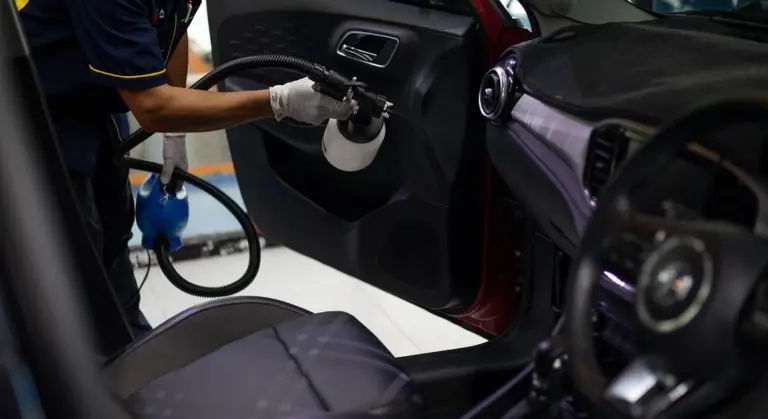
- Thermal Foggers: These machines vaporize a special odor-neutralizing solution into a fine fog that fills the cabin and penetrates every nook, like the HVAC system and deep into foam seats. The fog seeks out and neutralizes odor particles. Like ozone, this is a leave-the-area treatment, but it is slightly more targeted. It is excellent for pervasive smoke smells.
- Industrial Extractors: While often used for cleaning, a hot water extractor is a phenomenal odor removal tool. It injects hot water and cleaner deep into upholstery and then powerfully suctions it back out, removing the moisture, dirt, and odor-causing residues that surface cleaning misses. It is a physical removal process, making it one of the most effective and safe methods for fabric-based odors.
I used an ozone generator once on a used car I bought that had been owned by a heavy smoker. It took two treatments, but it worked where every spray and wipe had failed. You just have to follow the safety rules like your health depends on it, because it does.
Considering a Pro? What Car Odor Removal Services Really Do
Sometimes, a smell fights back. You’ve scrubbed every surface. You’ve tried every spray from the store. But the odor, faint or foul, always returns after a few days. That’s when you know it’s in the air you can’t see. This is a professional’s battleground.
A pro detailer doesn’t just have stronger cleaners. They have different weapons. At home, you might have a spray bottle. A pro has an industrial ozone generator, a machine that creates a gas to attack odors at their source. You might have a carpet cleaner. They have a thermal fogger that fills your entire cabin with a deodorizing mist that seeks out every crevice. You have a steam cleaner for countertops. They have a deep extraction machine that pulls years of moisture and gunk from your seats’ very core.
The most important tool they bring is a trained eye and a systematic process you cannot replicate in your driveway.
The Professional Odor Removal Process
It starts with what you did, but goes miles further. They will remove your seats. They will pull up sections of carpet. They will access the bare metal floor pan, which is often the source of hidden mildew from a forgotten spill. Every piece of fabric and foam gets a deep, hot-water extraction. All hard plastics are steamed and scrubbed.
Only after this surgical cleaning do the advanced tools come out. An ozone machine runs inside the closed car. Ozone (O3) is an unstable molecule. It seeks to become normal oxygen (O2), and in doing so, it rips apart the molecules of the odor itself. It doesn’t mask the smell of smoke or rot. It destroys it. A thermal fogger works similarly, sending a dry, deodorizing vapor into the headliner, the vents, and the padding under the carpet.
This one-two punch-deep physical removal followed by molecular neutralization-is what makes a professional service effective where DIY methods fail.
What Does Car Odor Removal Service Cost?
You pay for time, expertise, and that industrial equipment. For a standard sedan or SUV with a moderate odor problem-say, lingering pet or food smells-expect a range. It often starts around $250 and can go to $500 or more. This usually includes a full interior detail plus the ozone or fogging treatment.
Severe cases cost more. Smoke damage from cigarettes requires significantly more labor and multiple ozone treatments. Suspected mold or a mystery odor from a flooded carpet requires exploratory work. For my “Kid Hauler” Odyssey after a major milk spill seeped under the seats, a full extraction and ozone treatment was a $400 lifesaver. The price reflects the vehicle’s size and the hours needed to win.
When Should I Call a Professional?
Make the call in a few specific situations. If the smell disappears after your cleaning but comes back in a week, the source is still active. If you’re dealing with cigarette or cigar smoke residue, that’s a tier of difficulty all its own. If you suspect mold or mildew in the HVAC system-you turn on the fan and get a damp, musty blast-that requires disinfection few can do at home.
You should also call a pro if you simply don’t have the time or stomach for the job. Some odors, like biological waste or severe vomit, are a health hazard and an emotional chore. There’s no shame in handing that off to someone with the gear and the grit to handle it.
How to Find a Reputable Odor Removal Service
Don’t just search for “car wash.” Look for “auto detailing” or “interior detailing” services. Read their service lists carefully. A good shop will specifically mention “odor removal,” “ozone treatment,” or smoke removal right on their website or menu.
Call them. Ask questions. “What is your process for a persistent food odor?” Listen for the key steps: deep cleaning first, then an oxidizing treatment (ozone or fogging). If they just say, “We spray a nice scent,” thank them and hang up. You want a technician, not a perfume clerk. A detailer confident in their odor work will explain it to you plainly, because they’ve seen it all before.
Make It Last: Simple Tips to Prevent Odors from Returning
Getting rid of a bad smell is a victory. Keeping it from coming back is the real win. It is about habits, not just heroic cleaning sessions.
Start with the basics. I have a simple rule in my cars: no eating. It sounds strict, but one forgotten French fry under a seat will teach you why. For the family van, my Honda Odyssey, this rule is impossible. The compromise is organization. I use heavy-duty seat-back organizers for every kid. Snack wrappers, juice boxes, and used tissues go in there, not on the floor. Empty them every time you get gas. Containing the mess at the source is the single easiest way to prevent future odor battles. Keep a small, powerful portable vacuum in your garage or trunk. A two-minute vacuum after a road trip makes a huge difference.
Control the Climate Inside
Moisture is the enemy. It turns old spills into mildew and makes your car smell like a basement. In damp climates, or if you track in snow, you need to manage humidity. I use rechargeable silica gel dehumidifiers in my cars during the wet months. They are cheap, silent, and you just plug them in to dry out every few weeks. For a simpler fix, toss a few large silica gel packs (the kind that come with new shoes or electronics) under the seats. Pulling moisture from the air stops mildew before it can start, protecting your carpets and seat foam.
Do Not Forget the Filter
Your cabin air filter is your car’s nose. It catches dust, pollen, and spores from the outside air. A dirty, clogged filter cannot breathe. It makes your fan work harder and can let old, trapped smells recirculate. Check your owner’s manual and change it on schedule. I put a reminder in my phone’s calendar for every 15,000 miles or once a year, whichever comes first. For my Tesla Model 3 and the kid-hauling Odyssey, I do it even more often. It is a ten-minute, low-cost fix with a big payoff for air quality.
Commit to a Simple Rhythm
You do not need a full detail every month. But a consistent, quarterly interior refresh keeps everything in check. Every three months, block out thirty minutes. Do a thorough vacuum, paying special attention under the seats and in the crevices. Wipe down all the hard plastics, vinyl, and leather with a quality interior cleaner. Follow up with a protectant. This routine stops grime from building up and becoming a permanent, smelly fixture. Think of it like changing your bedsheets. It just makes everything feel fresher.
My best tip is about speed. Odors come from stains that sit. In my F-150, I keep a spray bottle of diluted all-purpose interior cleaner and a microfiber towel in a door pocket. When a coffee spills or a muddy boot marks the sill, I clean it right then. Stopping the stain within minutes stops the smell from ever taking hold. It is the most effective odor prevention tool I own, and it costs almost nothing.
Securing a Fresh-Smelling Interior for Good
Your most powerful tool against any bad smell is a methodical search for its origin, not a can of air freshener. I treat every odor in my Odyssey or Model 3 like a puzzle, eliminating the source first so the final clean actually lasts.
Mask a smell instead of removing it, and you guarantee it will return, often worse, as trapped moisture or bacteria keeps growing.
Citations and Authoritative Sources
- r/cars on Reddit: Tips for removing odor(s)?
- How to Rid Your Car of Odors and Smells via @ConsumerReports
- Amazon.com: The Stink Solution Car Deodorizer Odor Eliminator For Strong Odor: Quickly Banish Smoke, Pet, Food, Body Odor, & Other Foul Smells! Safe Car Freshener for Seats & More! – 2 16 oz Bottles Midnight : Automotive
- Tips to Keep Your Car Fresh and Clean | Honda of Denton
- Gone in 60 Smells: How to Eliminate Bad Odors from Your Car Fast
- Amazon.com: Meguiar’s Whole Car Air Re-Fresher,Odor Fighting Mist, Fights Off Strong Vehicle Odors,Air Freshener, New Car Scent – Three 2 Oz Spray Bottles : Automotive
- How to Remove Various Odors From Your Car | Longo Toyota
Max Gunther
Max is an automotive enthusiast having worked as a car mechanical and in interior detailing service for over 25 years. He is very experienced in giving your old car, a new fresh vibe. He has detailed many cars and removed very tough smells and stains from all kinds of cars and models, always ensuring that his work and advice helps his customers. He brings his first hand experience to his blog AutoDetailPedia, to help readers breath new life into their car interiors.